How to Choose Your First Real Kitchen Knife Under $30
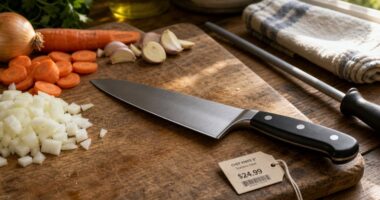
The factors that matter when picking a sub-$30 kitchen knife: blade type, steel hardness, tang, and handle. Plus how the right two knives cover most everyday prep.
Common Knife Mistakes That Ruin a Good Blade (Even an Expensive One)
The everyday sharpening, cutting, storage, and cleaning habits that quietly dull and damage a blade, plus the small changes that keep an edge sharp for years.
How Long Should a Kitchen Knife Last? (And When to Replace It)
A well-maintained chef knife can last decades, while a cracked tang or a profile ground past its bevel ends it. Here is how to tell which stage your knife is at, and when replacing beats restoring.
How premium Japanese chef knives earn their price: the high-hardness steel and thin 15-degree edge that hold sharpness longer, the chipping trade-off, and when a budget Victorinox is the smarter buy.
Knife Sharpener Methods That Actually Work (The Pros’ Approach)
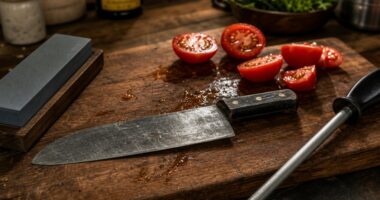
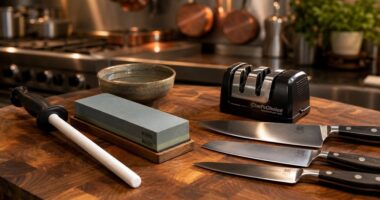
How whetstones, honing rods, pull-through and electric sharpeners each affect a blade, and which method to use for soft European steel versus thin Japanese edges.
Why the Victorinox Fibrox Beats Premium-Tier Knives (The Pro Consensus, Explained)
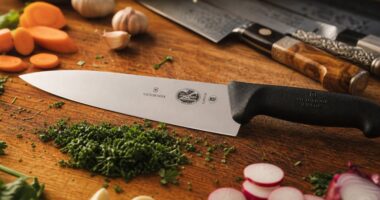
Why professional cooks favor the budget Victorinox Fibrox over premium-tier knives, and how its softer X50CrMoV15 steel, thin stamped grind, and no-bolster design outperform pricier blades in daily use.
How to Pass Down Cast Iron (Heritage Care for the Pieces You’ll Inherit)
How to care for, restore, and document inherited cast iron so a skillet stays usable across generations: seasoning, rust removal, storage, and a care record for the next owner.
How to Tell If Cheap Lodge Cast Iron on Amazon Is the Real Thing
How to tell a genuine Lodge cast-iron skillet from a counterfeit on Amazon. The seller, weight, casting marks, and heat-ring checks all catch a fake before you cook on it.
Is Cast Iron Worth the Trouble? An Honest Cost-Per-Use Analysis
An honest cost-per-use breakdown of a budget cast-iron skillet: the real maintenance load, the decade math versus nonstick, and when the upkeep is and isn’t worth it.