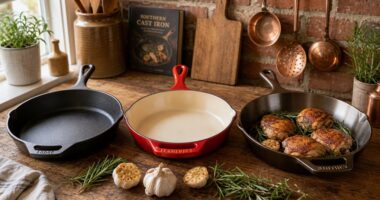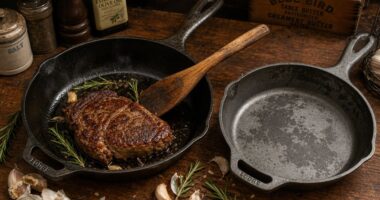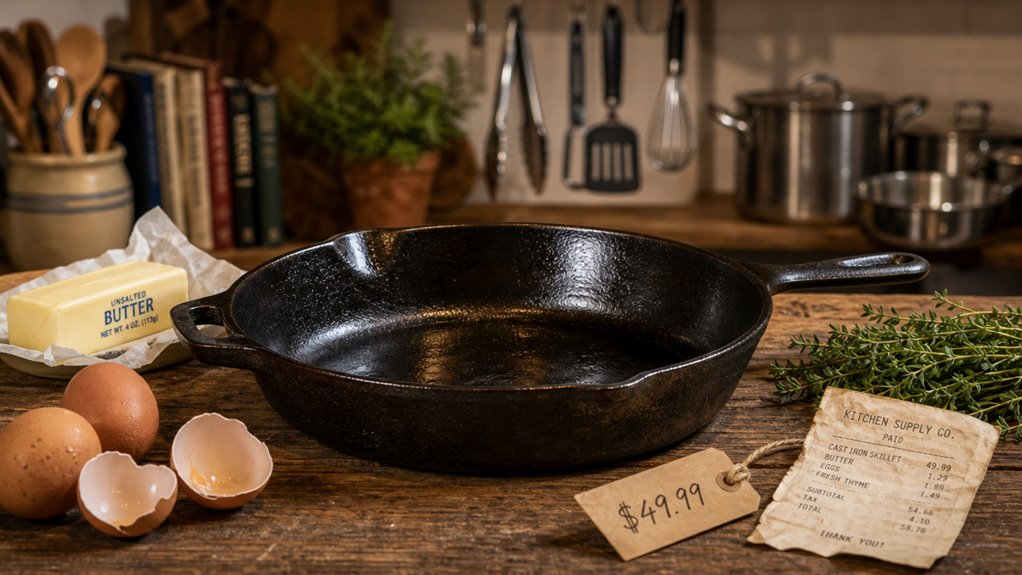
Cast iron cookware is a heavy-gauge metal cooking surface that retains and distributes heat at temperatures suitable for high-heat searing. A budget-tier skillet typically costs under thirty dollars and can last for decades with routine maintenance.
- Seasoning builds a protective layer on the cooking surface that prevents rust and improves food release over time.
- Heat retention allows cast iron to sustain temperatures around 550 °F, making it suitable for searing tasks that lighter pans cannot handle consistently.
- Cost-per-use drops significantly over years of regular cooking, often falling to a fraction of a cent per session for a pan purchased at a budget price tier.
Cast iron moves from stovetop to oven without modification, which expands its range beyond what nonstick surfaces typically allow. The material handles high-heat searing reliably and holds a stable cooking temperature once it reaches the target range.
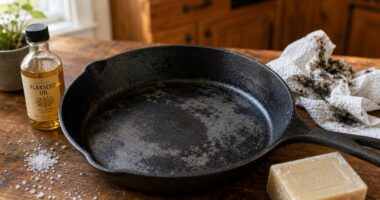
The maintenance routine requires roughly five minutes after each use. That process involves cleaning, thorough drying, and applying a thin coat of oil to preserve the seasoning layer. Acidic foods can degrade the seasoning over time, so cooks who frequently prepare tomato-based or citrus dishes may need to re-season the surface more often.
The trade-off centers on weight and upkeep. Cooks who prioritize high-heat performance and long-term value often find the maintenance worthwhile.
Cast iron cookware has been in documented use for roughly two and a half thousand years, with early examples recovered from ancient Chinese foundries dating to around the fifth century BCE.
Cheap or expensive is the wrong question. Cost per use is the honest one. Check out our new Calculator.
Cost-Per-Use Calculator →The short answer: cast iron is worth the trouble for cooks who sear, roast, and bake often and will spend about five minutes on cleanup, because a budget skillet amortizes to roughly a cent per cook over a decade while a nonstick replaced every few years runs several times that. It is not worth it for cooks who want a truly low-maintenance pan or who struggle with a 4 to 8 pound skillet, and carbon steel is the lighter alternative that keeps most of the searing benefit.
Key Points
- Cast‑iron pans amortize to under ¢0.01 per cook over ten years, far cheaper than non‑stick’s 3‑6 ¢ per use.
- Routine cleaning, drying, and light oiling add ~5 minutes per use but prevent rust and keep maintenance costs low.
- High thermal mass enables sustained 550‑600 °F searing, producing superior crusts that non‑stick pans cannot achieve.
- Weight (4‑8 lb) and handle heat require mitts and make maneuvering harder, while acidic foods can degrade seasoning.
- Carbon‑steel offers similar searing performance with lighter weight and faster heating, though it may warp under prolonged high heat.
| 6‑Inch Cast Iron Skillet – Pre‑Seasoned Oven‑Safe Grill‑Ready |  | Budget-Friendly Pick | Material: Cast iron | Pre‑Seasoned Surface: Pre‑seasoned with vegetable oil | Oven‑Safe: Oven‑safe (primary spec) | VIEW LATEST PRICE | Read Our Analysis |
| Lodge 6.5″ Cast Iron Skillet – PFAS‑Free Non‑Toxic |  | Professional Grade | Material: Cast iron | Pre‑Seasoned Surface: Pre‑seasoned with natural vegetable oil | Oven‑Safe: Oven‑safe | VIEW LATEST PRICE | Read Our Analysis |
| 8 Inch Round Medium Pre-Seasoned Cast Iron Skillet |  | Best Durability | Material: Cast iron | Pre‑Seasoned Surface: Pre‑seasoned (proprietary oil blend) | Oven‑Safe: Oven‑safe | VIEW LATEST PRICE | Read Our Analysis |
Links to Amazon are affiliate links. Buying through one costs you nothing extra and helps fund the research.
What “Worth the Trouble” Really Means for a Cast Iron Pan
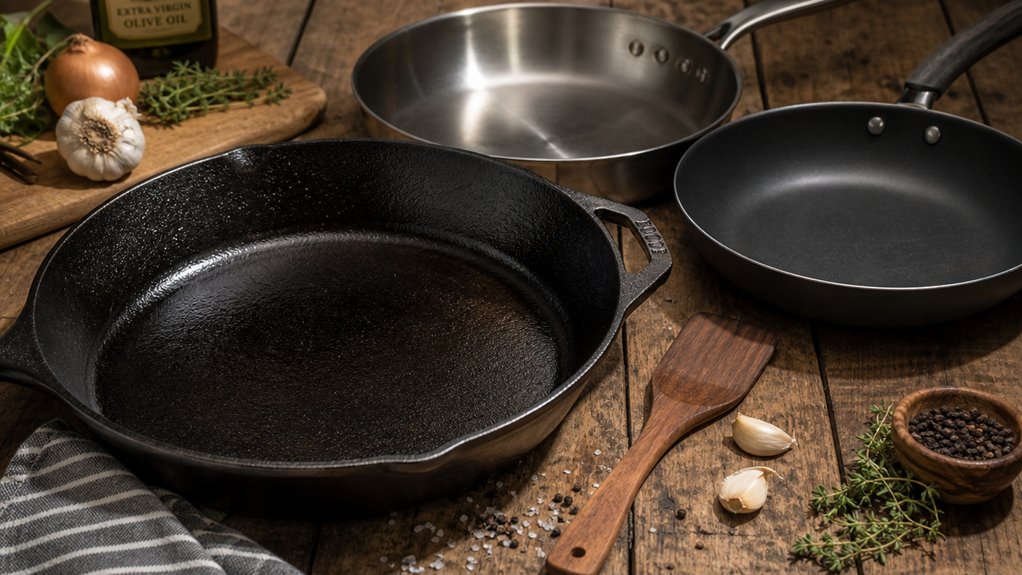
Cast iron is worth the trouble when the maintenance routine becomes automatic, which typically happens after the first few weeks of use. The core steps — cleaning, drying immediately, and wiping on a thin coat of oil before storage — are straightforward once the habit forms.
Early seasoning work feels front-loaded because a dull or uneven surface requires attention before the polymerized oil layer stabilizes. After that point, the ongoing cost of upkeep drops sharply, and the pan holds heat and releases food reliably with minimal intervention.
The details that shape how quickly a pan reaches that stable condition are worth understanding before committing to the process. Modern smooth‑surface pans such as Finex provide a more even surface that reduces the initial seasoning effort.
The Real Maintenance Load: Drying, Oiling, and Re-Seasoning
Usually you’ll spend a few extra minutes after each meal just to dry your cast‑iron pan, but that step isn’t optional if you want to avoid flash rust.
You towel‑dry, then heat it for three to ten minutes until no moisture remains. After it cools, you wipe a thin, almost invisible layer of neutral oil over the cooking surface, sides, and handle, buffing off any excess in one to three minutes. That routine adds roughly five minutes to cleanup, which is modest compared to the pan’s lifespan.
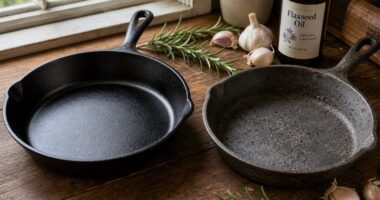
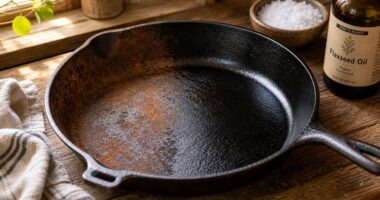
When seasoning wears thin or rust appears, you’ll need a full oven re‑season: coat, bake upside‑down at 450–500 °F for an hour, then cool. The full cycle takes about two hours total, done only a few times a decade.
Those steps keep maintenance manageable and the cost per use low. Adding a thin layer of oil after each use helps polymerize the seasoning and prevents rust buildup.
The Learning Curve Most Beginners Quit Before Clearing
If you skip the pre‑heat and fat steps, the pan will stick and the experience feels like a chore, so most beginners quit before they ever taste a proper sear.
The learning curve centers on three things: getting the temperature right, using enough oil, and waiting for the crust to form before you flip.
You’ll need five to ten minutes of steady, low‑to‑medium heat before the surface is ready; visual cues replace a thermometer.
A thin, even layer of fat creates a temporary non‑stick surface while the seasoning builds.
Patience is key—food will release only when a brown crust appears.
Mastering this routine proves cast iron is worth it for beginners, and each successful sear adds confidence to the seasoning process.
Cast iron heats differently and retains heat strongly.
| Pre-Seasoned Cast Iron Skillet 5 Inch Mini Deep Pan with Handle Black |  | Compact Choice | Material: Cast iron | Pre‑Seasoned Surface: Pre‑seasoned natural non‑stick | Oven‑Safe: Oven‑safe | VIEW LATEST PRICE | Read Our Analysis |
| MIRRO 6in Cast Iron Preseasoned Skillet | 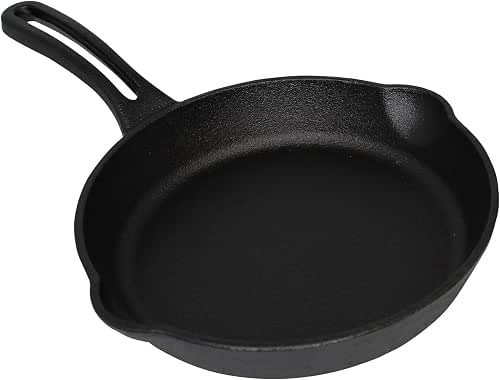 | Best Ergonomics | Material: Cast iron | Pre‑Seasoned Surface: Pre‑seasoned interior | Oven‑Safe: Oven‑safe up to 500 °F | VIEW LATEST PRICE | Read Our Analysis |
| Pre-Seasoned Cast Iron Skillet Black 6 Inch Mini Frying Pan with Handle |  | Outdoor Ready | Material: Cast iron | Pre‑Seasoned Surface: Pre‑seasoned natural non‑stick | Oven‑Safe: Oven‑safe (max 250 °C) | VIEW LATEST PRICE | Read Our Analysis |
Links to Amazon are affiliate links. Buying through one costs you nothing extra and helps fund the research.
The Cost-Per-Use Math Over a Decade of Cooking
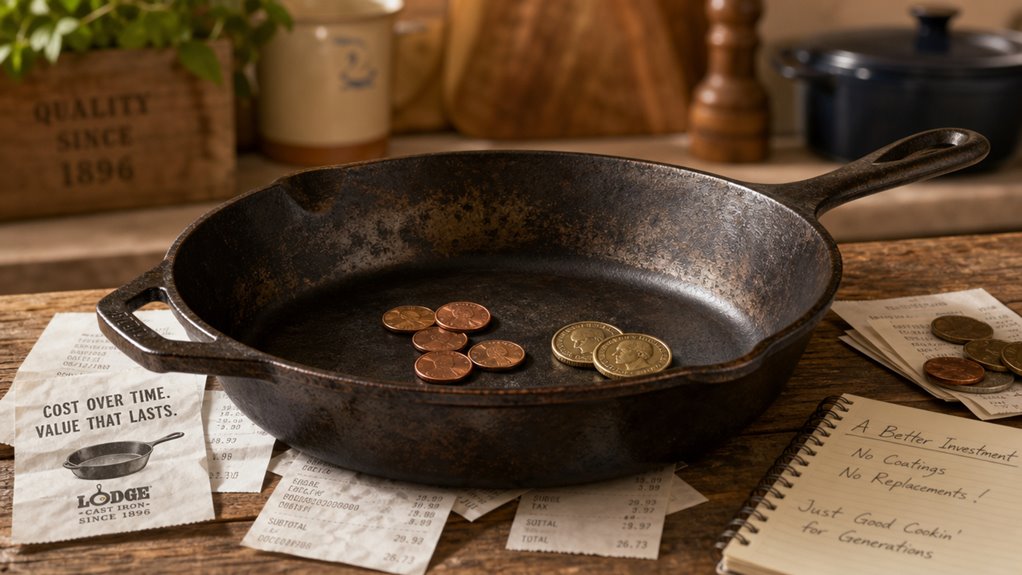
Cast-iron cookware typically delivers a lower cost-per-use over a decade than nonstick alternatives because a single pan can last through thousands of cooking sessions without replacement.
| Cookware | Example outlay | Replacements over 10 years | Approx. cost per cook |
|---|---|---|---|
| Budget cast iron | Budget tier, under the $30 ceiling | None — one pan lasts the decade | About a cent (~$0.01) |
| Budget nonstick | A comparable budget price, each | 3–4 pans (coating wears out every 3–5 years) | 3–6 cents (~$0.03–$0.06) |
A mid-range cast-iron skillet spread across around 3,650 daily uses reduces its per-cook cost to a matter of pennies, while a comparable nonstick pan replaced every few years accumulates roughly three times its original purchase price over the same period.
The replacement cycle of nonstick cookware is the key variable that drives lifetime cost upward, since the material degrades under heat and wear in ways that cast iron generally does not.
Longevity, replacement frequency, and daily use patterns together determine whether a pan’s upfront price reflects its true expense over time.
The sections below examine how these factors interact across different cookware materials and cooking habits.
Electrolysis tank runs almost 24/7, making labor and energy costs a significant factor in restoration pricing.
Why a Lodge Skillet’s Cost-Per-Decade Approaches Pennies a Cook
Most people who keep a Lodge skillet for a decade end up paying just a few hundredths of a cent per cook. You’ll spend a budget-tier amount on a Lodge skillet, use it five times a week, and after ten years the cost‑per‑decade drops to roughly a cent per cook.
If you bump usage to seven meals a week, it slides toward a fraction of a cent, edging toward pennies. The math stays simple: divide the purchase price by total uses.
Even a step-up model stays under two cents per cook at moderate frequency. The only real downside is the upfront effort to season and dry it after each wash, but that’s a one‑time habit.
Over a decade the expense becomes negligible, proving the skillet’s value is in its longevity, not hype. The company’s automated molding process has been in place since 1965, ensuring consistent quality for each skillet.
Nonstick Replacement Cycles Versus One Pan That Outlasts Them
Because a nonstick skillet’s coating wears out in three to five years, you end up buying a new one every few cycles, and that cost adds up quickly.
Over ten years you’ll likely purchase three to four budget nonsticks, each a budget purchase, which adds up over the decade. That’s about three to six cents per use if you cook 300 times a year.
A cast iron pan, by contrast, can survive the whole decade with proper seasoning, for a modest one-time outlay and yielding thousands of uses. Its cost per use drops to under two cents.
The math shows nonstick replacement cycles eat your budget, while one well‑maintained cast iron pan amortizes to pennies per cook.
The trade‑off is effort: you must dry, oil, and occasionally re‑season the iron, but you avoid the recurring purchases and performance loss of nonstick.
What a Cast Iron Pan Does Better Than Nonstick or Stainless
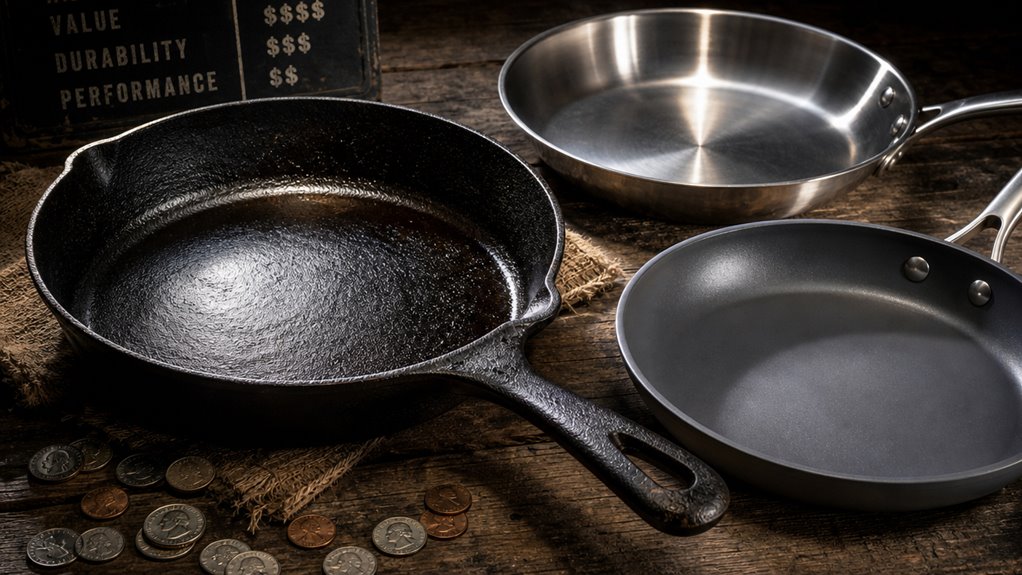
Cast iron outperforms nonstick and stainless steel in situations that demand sustained, high heat and stable cooking temperatures — it tolerates searing temperatures around 550 °F without a coating breaking down, and its thermal mass resists temperature drops when cold food hits the pan, which is how a firm, even crust forms.
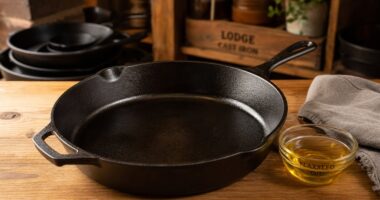
That same thermal mass makes cast iron well suited for moving from stovetop to oven, so a dish can finish cooking and go straight to the table without losing heat. A Lodge skillet is one example of this design, where the heavy construction serves both bakers and those cooking over high heat.
The trade-off is real: a pan that holds heat well and weighs several pounds requires more oil and careful timing when cooking delicate foods like eggs. The details behind each of these advantages and limitations are worth examining closely.
Searing, Heat Retention, and the Crust That Nonstick Can’t Build
You’ll notice that a cast‑iron skillet stays hotter longer than a typical PTFE nonstick pan, and that extra heat translates directly into a deeper, more uniform crust on meat.
The iron’s mass gives it excellent heat retention, so when you drop a cold steak the surface temperature barely dips, keeping the Maillard reaction in the sweet spot.
Nonstick pans can’t reach the same 500°F+ range without risking coating damage, so their crusts stay pale and soggy.
Stainless steel can sear, but thin bases lose heat quickly between batches, forcing you to re‑heat constantly.
With cast iron you get a steady, even sear that locks juices and builds flavor without frantic temperature checks.
The downside? The whole pan gets hot, so you’ll need a handle cover or mitts.
Oven-to-Table Range and Thermal Mass That Holds Temperature
The heat you built up in a cast‑iron skillet doesn’t just stay on the stovetop; it carries over into the oven and even the dining table. Its high thermal mass stores energy, so once you preheat, the pan stays hot while you finish a roast or bring a dish to the table. The retained heat slows cooling, giving you a longer serving window without a warming drawer. You’ll notice less “stall” when cold veggies hit the pan, and the oven‑to‑table transition feels seamless because the pan’s mass buffers temperature swings.
| Material | Approx. Mass (lb) | Heat Retention |
|---|---|---|
| Cast iron | 4‑8 | Long, steady |
| Nonstick | 2‑3 | Quick loss |
| Stainless | 2‑4 | Moderate |
You’ll appreciate the evenness that develops over minutes; the pan’s thick walls keep edge and center temperatures close, which thin sheets can’t match. The downside is the whole pan gets hot, so you’ll need a handle cover or mitts. This trade‑off is worth it if you value a reliable, oven‑to‑table temperature range.
Why Lodge Cast Iron Beats Teflon Nonstick for Searing but Loses on Eggs
A Lodge 10.25‑inch skillet lets you crank the burner up to 550 °F without worrying about a coating melting, so you can lock in a true Maillard crust on steak or burger. For searing, the iron’s high thermal mass holds heat, letting the surface stay hot even after a cold piece of meat hits it. That means a steady, even crust and quick recovery between flips. The rough surface also encourages better browning than the slick, low‑heat Teflon.
However, the same mass makes the pan slow to cool, so delicate eggs stick and over‑cook before the pan can be lowered. Nonstick pans stay cooler, release eggs cleanly, and require less oil, but they can’t sustain the 500 °F+ temps needed for true searing. The trade‑off is clear: use Lodge for meat, keep a nonstick for eggs.
Where Cast Iron Falls Short and the Trouble Is Real
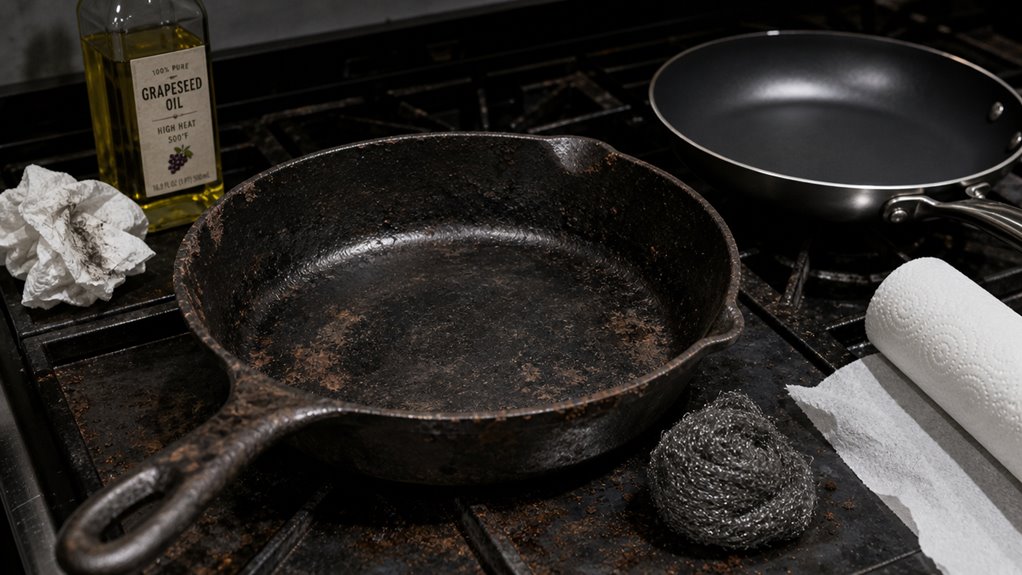
Cast iron’s most practical drawbacks stem from its weight, heat behavior, and surface chemistry — three factors that compound each other in daily kitchen use.
A typical cast iron pan weighs between 4 and 8 pounds, which can strain the wrist when moving it from stovetop to oven, and the handle often retains heat long after the burner is off.
Acidic ingredients like tomato-based sauces break down the seasoning layer, requiring more frequent re-seasoning to maintain a functional cooking surface.
Because the material heats slowly and holds that heat stubbornly, fine temperature control for delicate dishes becomes difficult, and the pan’s bulk adds friction to storage and everyday maneuvering.
Understanding how these limitations interact helps clarify when cast iron is the wrong tool for the job.
Weight, Handle Heat, and Why Some Cooks Find Lodge Too Heavy
Because cast‑iron’s thick walls give it the heat‑mass you love for searing, they also add a hefty 4‑8 lb to a 10‑inch skillet, and that weight shows up every time you lift, tilt, or pour.
You’ll feel the strain when flipping a steak or moving a skillet from stovetop to oven, especially if you have smaller hands or arthritis. Lodge’s classic 10.25‑inch model sits near the top of the weight range, often heavier than lightweight alternatives.
The handle, cast from the same metal, climbs past 400°F, so you need a mitt or silicone sleeve each time you grip it. That heat, combined with a straight, narrow grip, can make a full pan feel like a barbell, increasing the chance of a slip or drop.
These ergonomic drawbacks are why many cooks ask, “is cast iron worth the trouble?” when considering Lodge.
Acidic Foods, Slow Heating, and the Honest Limitations
When you simmer a tomato‑rich sauce in a bare Lodge skillet for more than a half‑hour, the acid starts to eat away at the seasoned layer, leaving patches of raw iron that can taste metallic and stick. The polymerized oil layer that protects the pan erodes quickly, especially on a new or lightly seasoned surface.
In a cast iron vs stainless steel comparison, stainless steel holds its finish and doesn’t leach iron, so it stays neutral for long braises. Acidic foods also expose cast iron’s slow heating: the pan takes longer to reach a boil, then cools slowly, extending the acid‑metal contact time.
You’ll need to clean, dry, and re‑oil promptly, or the seasoning will thin, demanding extra maintenance cycles. For short sautées or quick deglazes, it’s fine, but for all‑day tomato sauces or overnight stews, the limitation is real and worth noting.
Who Cast Iron Is Worth It For and Who Should Skip It
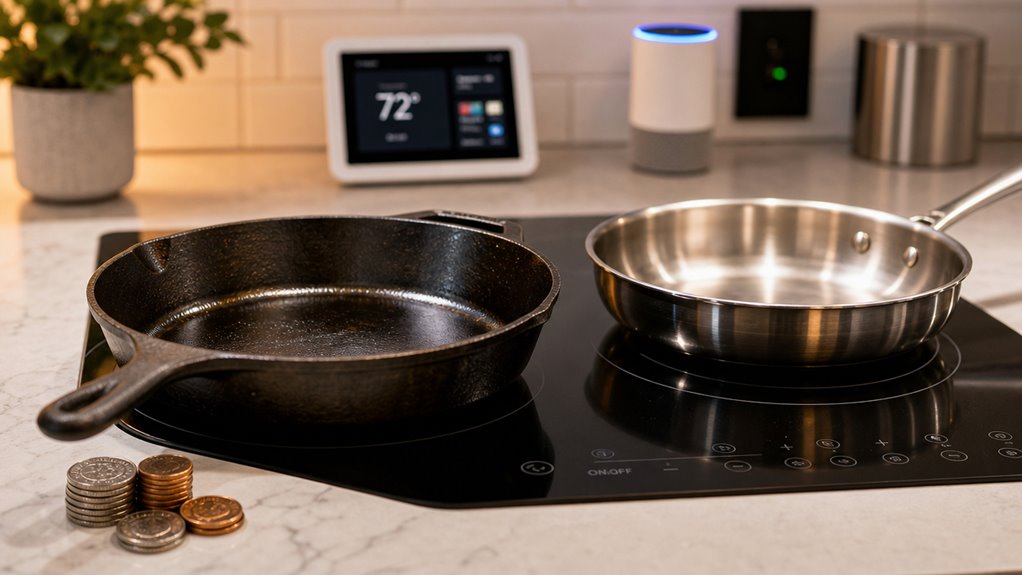
Cast iron suits cooks who regularly sear meat, bake in the oven, and are willing to maintain a seasoned surface through occasional re-seasoning — those habits let a budget-tier pan amortize to near-negligible cost over years of use.
The material’s durability is its main argument, but that same density creates real drawbacks for anyone managing limited grip strength or an iron-overload condition.
Carbon steel offers a comparable durability profile with less weight and faster heat response, making it a practical alternative when everyday sautéing demands quicker temperature control.
A truly low-maintenance surface, such as a nonstick coating, remains the more straightforward choice for cooks who want to minimize upkeep.
The sections ahead examine each of these trade-offs in closer detail.
The Home Cook Who Sears, Bakes, and Keeps Tools for Decades
Start by looking at how often you actually fire up the stove. If you’re searing, baking, and roasting three to seven times a week, the modest upfront price of a Lodge skillet melts into a few cents per use after a year. You’ll love the Maillard crust and the oven‑to‑table heat, but you must dry the pan immediately and oil it lightly after each wash. Those steps are the maintenance load that keeps the seasoning alive.
| Use | Frequency |
|---|---|
| Sear steaks | 3‑5 × /week |
| Bake cornbread | 2‑4 × /week |
| Roast veggies | 1‑3 × week |
The trade-offs are clear: durability, thermal mass, and chemical-free cooking versus the whole-pan heat and occasional seasoning loss on acidic dishes. If you keep the pan for decades, the cost‑per‑use becomes negligible, making it worth it for you.
When a De Buyer Carbon Steel Pan Beats Cast Iron for Everyday Agility
You’ve probably noticed that a De Buyer carbon‑steel skillet heats up faster than the same‑size Lodge cast‑iron, thanks to its higher thermal conductivity and thinner 2.5 mm gauge. The lighter mass means you can preheat on a standard burner in minutes, not ten, and you’ll feel less strain when tossing vegetables or flipping a quick omelet.
Its smooth, seasoned surface gives low‑stick performance with minimal fat, so you can cook multiple batches without waiting for the pan to recover temperature. The French‑style handle adds mechanical advantage, making one‑handed sautéing comfortable.
The trade‑off is that the thinner steel can warp if you leave it on high heat too long, so you’ll need to watch the flame.
A pan you keep for decades works out differently to one you replace. Check yours.
Open the calculator →Frequently Asked Questions
How Many Minutes of Preheat Does a Cast‑Iron Need for a Proper Sear?
You’ll need about five to eight minutes of preheating on medium‑high, starting low for three minutes then cranking up. Water should sizzle instantly and oil shimmer before you add the steak.
Can I Use a Cast‑Iron Pan on Induction Without a Magnetic Base?
You might think you need a separate disc, but you don’t—any ferrous cast‑iron skillet works on induction. Just test with a fridge magnet; if it sticks, you’re ready to heat directly.
Does Seasoning Affect the Pan’s Non‑Stick Performance for Eggs?
Yes, seasoning directly boosts egg release; a thin, well‑polymerized oil layer creates a smoother surface, while proper heat and quick drying preserve that layer, keeping eggs from sticking.
What’s the Average Weight Difference Between a 10‑Inch Cast‑Iron and Carbon‑Steel Pan?
A 10-inch carbon-steel skillet weighs about 2-3 lb, while its cast-iron twin sits 4.3-5 lb, roughly 1.5-2.5 lb heavier.
How Often Should I Re‑Oil a Cast‑Iron After Cooking Acidic Dishes?
You should re‑oil immediately after washing and drying the pan, applying a thin coat before it cools. For acidic dishes, do this after each use, not just when rust or dullness appears.
Conclusion
You’ll get a pan that lasts a decade if you season it right; a budget cast-iron skillet can handle 1,500 meals, which works out to under two cents per use. That’s cheaper than a nonstick that needs replacement after about 400 meals. The trade-off is the upfront effort. Think of it as a marathon, not a sprint. If you’re okay with a little oil, occasional rust checks, and a 4‑lb heft, the math pays off. If you need instant, no‑maintenance cookware, stick with the non‑stick.
| Cast Iron Skillet with Lid Scrubber and Oven Mitts (8.5″) |  | All‑In‑One | Material: Cast iron | Pre‑Seasoned Surface: Pre‑seasoned (seasoned cast iron) | Oven‑Safe: Oven‑safe | VIEW LATEST PRICE | Read Our Analysis |
| 10‑Inch Cast Iron Skillet with Pour Spouts Natural Nonstick |  | Best For Beginners | Material: Cast iron | Pre‑Seasoned Surface: Unseasoned (requires initial seasoning) | Oven‑Safe: Oven‑safe (any temperature) | VIEW LATEST PRICE | Read Our Analysis |
| Victoria 6.5″ Pre-Seasoned Cast Iron Skillet |  | Best Overall | Material: Cast iron | Pre‑Seasoned Surface: Pre‑seasoned with kosher flaxseed oil | Oven‑Safe: Oven‑safe up to 750 °F | VIEW LATEST PRICE | Read Our Analysis |
Links to Amazon are affiliate links. Buying through one costs you nothing extra and helps fund the research.

Michael Haralson worked in professional kitchens from 1979 to 1992: San Diego restaurants, six years with a catering company beside an Austrian chef, and two summers as a cook on the Finland to Sweden cruise route. He then built a fifteen-year career at Nokia. It began in product marketing and product management, where technical specifications and supplier evaluation were part of the work, and grew from a few countries to a region to global roles, then into sales and corporate strategy. That took him to Beijing for three years, where he spent many weekends in a different province trying the local food and took cooking classes. He has eaten in more than 40 countries and has been shown the kitchens of restaurants in Southern Europe. At home in Finland he cooks Cantonese, Sichuan and Mediterranean food, and still uses the cast iron skillet he bought in 1992. He is the author of Buy It Once, Book One of The Researched Kitchen, and writes here about the balance between kitchen tools that cost too much and those that fail too soon.