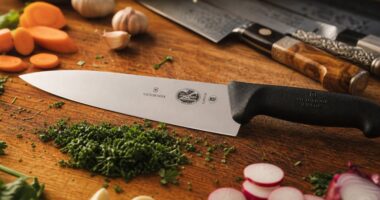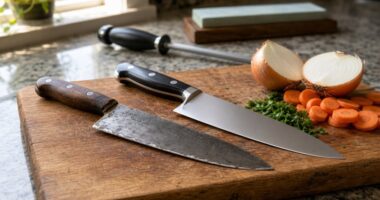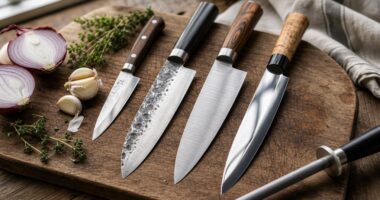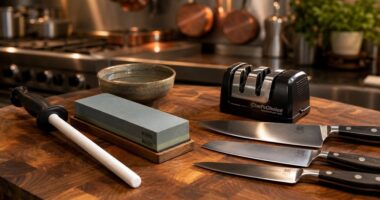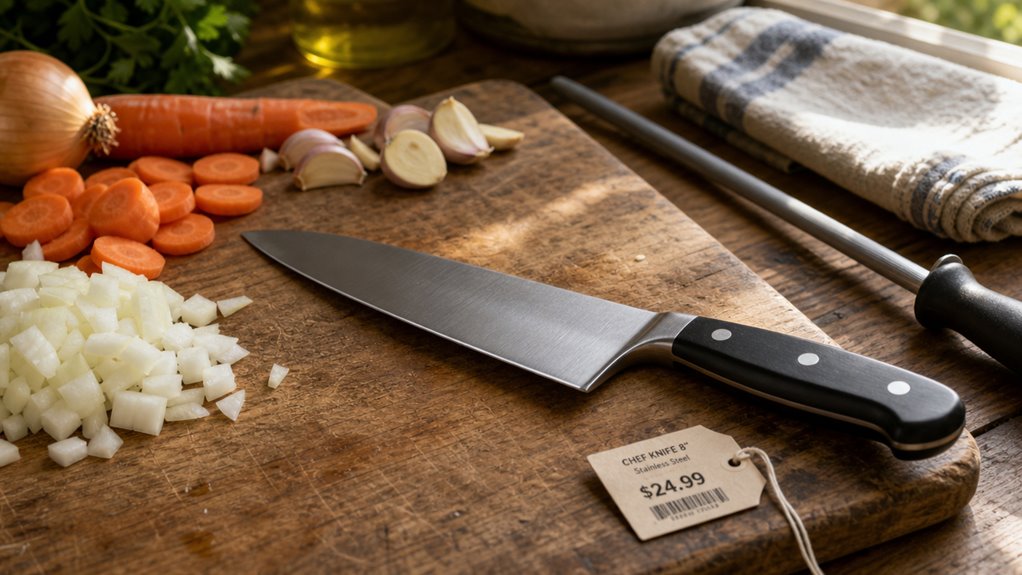
Choosing a first kitchen knife under $30 requires matching blade type, steel quality, and handle design to everyday cooking tasks. Two knives cover most needs: an 8-inch chef’s knife for chopping, slicing, and dicing, and a 3-inch paring knife for peeling, trimming, and detail work.
- Stamped construction keeps weight low and cost down, though the steel rolls faster than forged alternatives under repeated use.
- Stainless steel resists corrosion and sharpens quickly, making it a practical material choice for budget blades used daily.
- Full or partial tang runs the steel from blade through handle, distributing weight and improving control during cutting tasks.
Blade geometry affects how long an edge holds between sharpenings. A blade angle around 18 to 20 degrees and a hardness rating of roughly 55 to 56 HRC typically produce an edge that cuts cleanly and responds well to a honing rod after several uses.
Handle material and storage habits extend knife life noticeably. A textured polymer grip provides control without absorbing moisture, and storing blades with individual guards prevents dulling from contact with other tools.
Maintenance keeps budget knives performing longer than most owners expect. Hand-washing, immediate drying, and regular honing after a few uses prevent rust and preserve the edge between more thorough sharpenings.
Steel hardness in kitchen knives is typically measured on the Rockwell C scale. Blades in the 55 to 56 HRC range are generally considered easier to resharpen at home than harder steels rated above 60 HRC.
Cheap or expensive is the wrong question. Cost per use is the honest one. Check out our new Calculator.
Cost-Per-Use Calculator →Choosing your first knife under $30 comes down to five moves:
- Buy the chef’s knife first. An 8-inch stamped stainless chef’s knife covers 80 to 90 percent of everyday prep.
- Check the steel and edge. Look for about 55 to 56 HRC hardness and an 18 to 20 degree per-side edge, soft enough to sharpen at home yet firm enough to hold a working edge.
- Confirm the build. A full or partial tang plus a textured, water-resistant polymer handle gives stability and a grip that stays secure when wet.
- Add a 3-inch paring knife second. It handles the peeling, trimming, and detail work the longer blade fumbles.
- Keep both alive. Hand-wash, dry immediately, and hone every two or three sessions.
Key Points
- Prioritise a stamped 8-inch stainless chef’s knife for versatile bulk tasks; it covers 80‑90 % of everyday prep.
- Choose a blade with an 18-20° per‑side edge angle and 55‑56 HRC hardness for easy sharpening and reasonable edge retention.
- Ensure the knife has a full or partial tang and a textured, water‑resistant polymer handle for stability and control.
- Add a 3‑inch paring knife after the chef’s knife for precise peeling, trimming, and decorative work.
- Maintain the knives by hand‑washing, drying immediately, and regularly honing with a stone or pull‑through sharpener.
| Kiwi Brand Stainless Steel 8 inch Thai Chef's Knife No. 21 |  | Classic Thai | Blade Length: 8 in | Blade Material: Stainless steel (forged) | Edge Type: Plain | VIEW LATEST PRICE | Read Our Analysis |
| OLULU 8″ Chef Knife with Ergonomic Handle |  | Lightweight Performer | Blade Length: 8 in | Blade Material: German stainless steel | Edge Type: Plain | VIEW LATEST PRICE | Read Our Analysis |
| Farberware Edgekeeper 8″ Chef Knife with Self-Sharpening Cover |  | Self-Sharpening | Blade Length: 8 in | Blade Material: High-carbon stainless steel | Edge Type: Plain | VIEW LATEST PRICE | Read Our Analysis |
Links to Amazon are affiliate links. Buying through one costs you nothing extra and helps fund the research.
Why a Paring Knife and a Chef’s Knife Cover Most First Kitchens
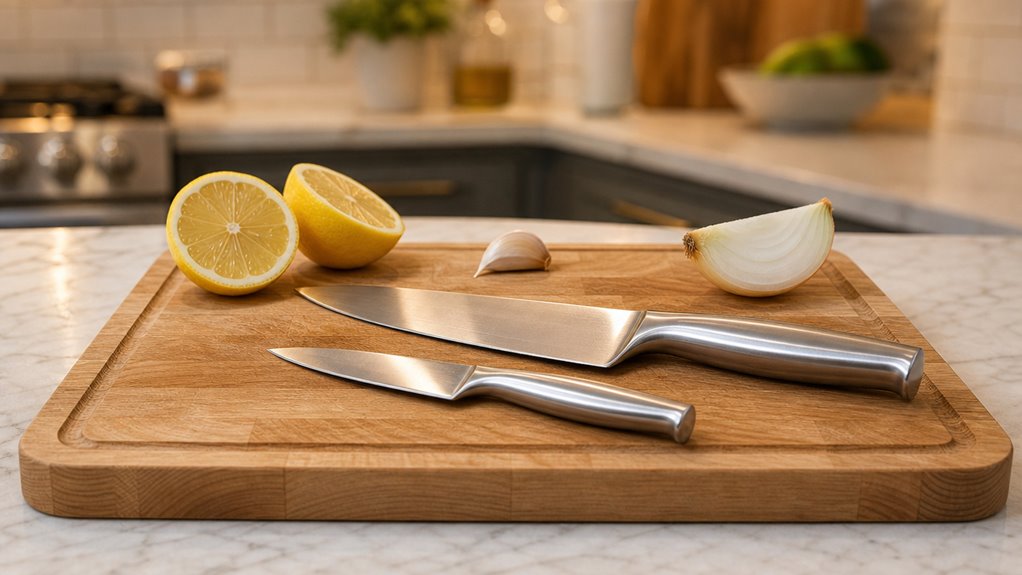
A paring knife and a chef’s knife together handle the overwhelming majority of everyday kitchen prep, making them the two most practical starting points for a first kitchen.
An 8-inch chef’s knife manages chopping, slicing, and mincing across most ingredients, while a 3-inch paring knife handles peeling, trimming, and detailed work in tight spaces where a longer blade loses control.
Because each knife addresses the limitations of the other, the pairing reduces the need to fill a drawer with specialty tools.
Blade length shapes which tasks each knife suits, and understanding that division helps a cook use both more deliberately.
The details below explore how each knife functions and what to look for when choosing one.
The Two Blades That Handle Nearly Every Task
When you strip away the clutter of a full block set, the chef’s knife and a paring knife are the only blades you really need to tackle 80‑90 percent of everyday prep. The chef’s knife handles bulk chopping, slicing, and dicing with an 8‑inch curved blade that lets you rock‑chop efficiently. Its stainless, stamped construction stays sharp enough for home use and re‑sharpening is easy with a basic honing rod.
The paring knife, usually 3‑4 inches, excels at peeling, trimming, and precise garnish work where a larger blade would be unwieldy. Both knives should have a full tang and a textured polymer handle that stays grippy when wet. Victorinox’s Fibrox line is the best-known example of that handle type, but the property you are buying is the textured, non-absorbent grip rather than any particular brand’s version of it. Together they replace six to eight specialty knives, keeping your drawer light and your budget under $30. The only drawback is the paring knife’s short blade can feel flimsy for tougher tasks, but you’ll rarely need more power in that size.
What a Paring Knife Does That a Big Blade Cannot
The chef’s knife already covers chopping, slicing and dicing, but its length and heft turn tiny tasks into a clumsy affair.
The 3‑inch blade is what makes the difference here. Its short, narrow tip lets you peel a strawberry, trim a grape, or remove a potato eye without the big blade’s bulk getting in the way. You can work in‑hand, turning an apple while you peel, something a heavy chef’s knife can’t do safely.
The slim profile gives clear visibility of the work area, so you place cuts exactly where you want them. For decorative garnishes, deveining shrimp, or scoring dough, the paring knife’s precision beats the chef’s knife’s sweeping motion, while still being easy to sharpen and maintain. It also excels at coring small fruits such as tomatoes or citrus, where a larger knife would be unwieldy.
| 8-Inch Professional Chef Knife with Ergonomic Handle | 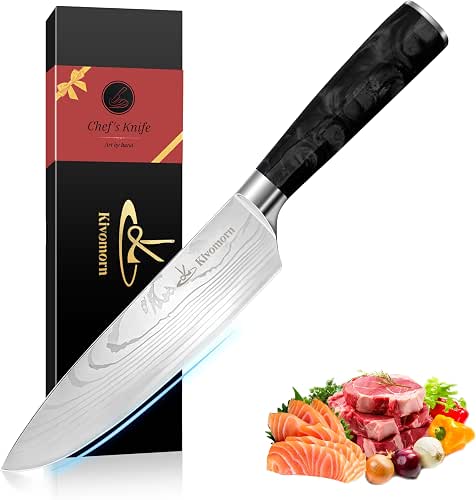 | Ergonomic Choice | Blade Length: 8 in | Blade Material: High-carbon stainless steel | Edge Type: Plain | VIEW LATEST PRICE | Read Our Analysis |
| Sunhouse 7.5″ Chef Knife – Ultra Sharp Ergonomic Handle | 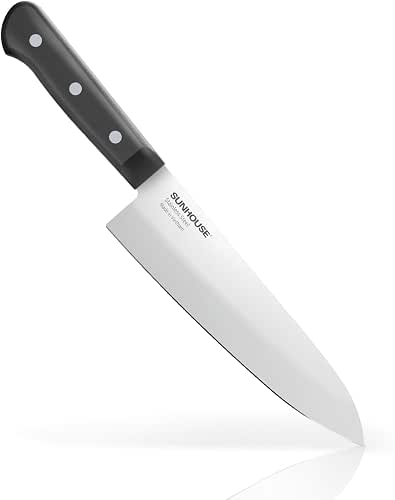 | Compact Sharp | Blade Length: 7.5 in | Blade Material: High-carbon stainless steel | Edge Type: Plain | VIEW LATEST PRICE | Read Our Analysis |
| Leking 8″ Chef Knife with Sharpener and Guard | 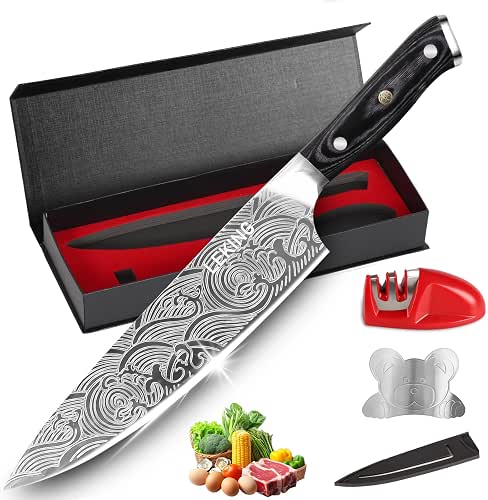 | Professional Grade | Blade Length: 8 in | Blade Material: High-carbon stainless steel | Edge Type: Plain | VIEW LATEST PRICE | Read Our Analysis |
Links to Amazon are affiliate links. Buying through one costs you nothing extra and helps fund the research.
What to Look for in a First Knife Under $30
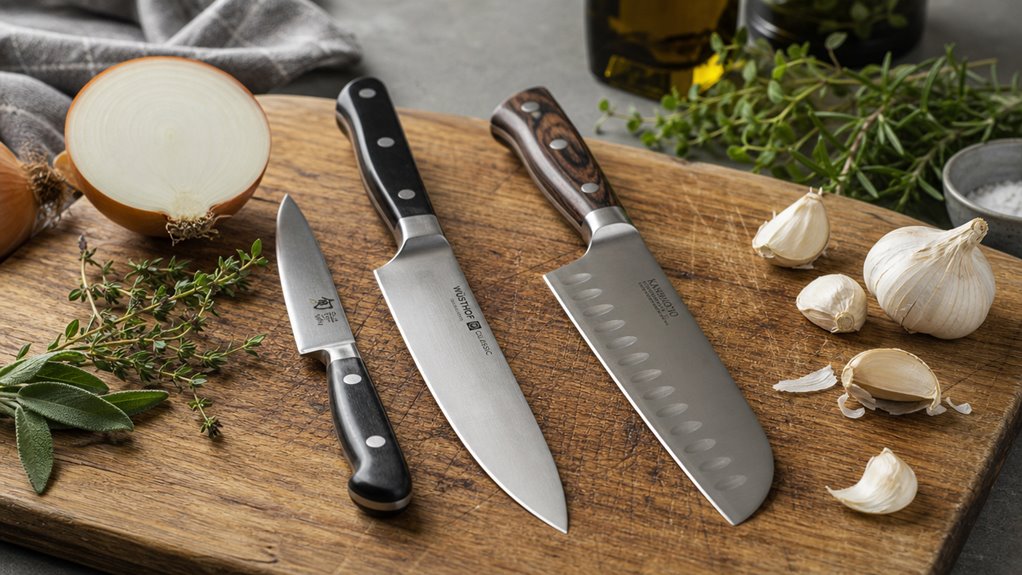
A first knife under $30 should have a stainless steel blade, a tang that extends into the handle for structural stability, and a textured grip that holds securely when hands are wet.
Blade construction matters because stainless steel can be sharpened at home without specialized equipment, keeping maintenance accessible for beginners.
Tang length affects how force transfers through the knife during use, and a full or partial tang reduces the flex and wobble that undermines control.
Handle material shapes grip reliability more than aesthetics at this price tier, and a textured polymer surface outperforms smooth or decorative finishes in practical kitchen conditions.
Weight distribution also influences fatigue and technique, since a lighter knife allows the rocking motion used in everyday chopping without strain.
Each of these factors connects to a broader set of tradeoffs worth understanding before making a decision.
Harder steels, above about 56 HRC, hold an edge longer but take more work to sharpen; the mid-50s range recommended here trades a little edge retention for easy home sharpening.
Stamped Stainless, Comfortable Grip, and a Full or Partial Tang
A stamped stainless chef’s knife under $30 gives you a thin, lightweight blade that’s easy to sharpen and won’t tire your wrist during a long prep.
The stamped blade is cut from sheet steel, so it stays light and flexes enough for veggies without feeling flimsy.
Look for a full tang that runs the entire length of the handle; this gives solid resistance and lets you feel the blade’s balance in your palm.
A comfortable grip usually means a textured polypropylene or rubberized TPR handle that stays dry when you’re chopping onions.
The steel, often a 420-series stainless such as 420J2 or a comparable grade like 3Cr13, is soft enough to hone quickly, though it will not hold a razor edge for weeks.
Keep the knife clean and dry, and you’ll have a reliable workhorse that won’t break the bank.
Forged blades are often sharper out of the box, though at this price point the heat treatment matters more than the forming method, which is why a well-made stamped blade holds up.
Why a Light Knife Beats a Heavy One for a Beginner
Often you’ll find that a light, thin‑blade chef’s knife feels more like an extension of your hand than a heavy, clunky tool.
A lightweight blade cuts momentum, so slips don’t turn into deep cuts, and you need less grip force, which keeps your wrist neutral and your control steady. The thinner spine lets the edge glide through onions or carrots with little drag, letting you rock‑chop or tip‑work without tiring your forearm.
For a beginner, the best budget chef knife usually weighs 150–220 g, stays balanced near the pinch grip, and sharpens easily because the steel is softer. You’ll practice longer, make cleaner slices, and avoid the fatigue that a bulky knife forces on you.
How a Paring Knife Earns Its Spot in the First Two You Buy
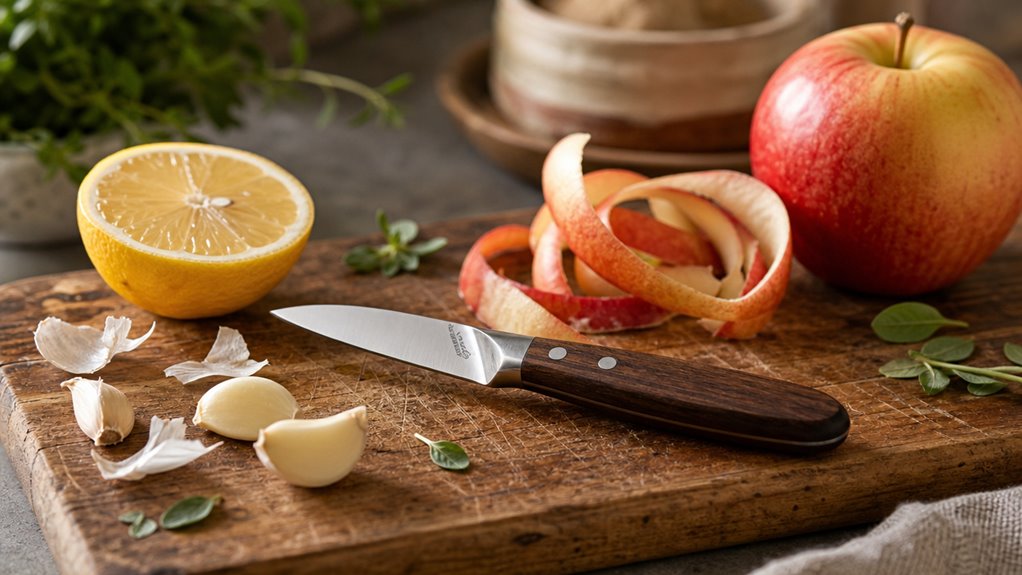
A paring knife earns its place as a second knife because its 3- to 4-inch blade handles the close, controlled cuts that a chef’s knife can’t manage cleanly — peeling apples, trimming garlic skins, and shaping small garnishes where a longer blade introduces unwanted movement.
The chef’s knife covers chopping and slicing across most everyday prep work, but its 8-inch blade becomes a liability the moment precision matters more than leverage.
A stamped paring blade keeps the tool lightweight and maneuverable, which is what makes detail work reliable rather than frustrating.
Together, both knives stay well within a budget-friendly price range without sacrificing the functional coverage a home cook actually needs.
The sections ahead look more closely at what separates a capable paring knife from one that falls short. Which ones actually manage that is covered in this roundup of paring knives that keep their edge.
Peeling, Trimming, and the Detail Work That a Chef’s Knife Fumbles
When you try to peel a potato with a chef’s knife, the blade’s length and heft get in the way, and you end up with more waste than you’d like. A paring knife solves that.
Its 3‑4‑inch blade lets you make shallow, controlled cuts, so you keep more of the fruit or veg. Lightweight and nimble, it reduces hand fatigue during long peeling sessions. The fine tip scores tomatoes and removes citrus pith without tearing.
It also trims stems, shapes garnish pieces, and handles tiny tasks a chef’s knife fumbles.
- Precise peeling
- Controlled trimming
- Detail work on herbs and fruit
A cheap kitchen knife that lasts gives you this precision without breaking the bank.
Why a Chef’s Knife Earns the First Slot Before a Paring Knife
Grab the chef’s knife first because it covers the bulk of everyday prep. It’s the workhorse that lets you slice, dice, and rock‑chop most veggies, fruits, and proteins on a board.
A stamped 8-inch stainless blade stays under $30, offers a full tang, and sharpens easily with a ceramic stone, which is exactly what a first knife needs. Victorinox’s Fibrox is the most commonly recommended example in that bracket, though it is not the only one. You’ll learn the pinch grip and rocking motion on this blade, and those skills transfer to any other knife later.
The chef’s knife also handles small‑produce trimming, garlic smashing, and protein portioning, so you won’t need a paring knife for 80‑90 % of tasks. The order is clear: start with the chef’s knife, then add a 3‑inch paring for fine, in‑hand work.
The Build Details That Decide Whether a Cheap Knife Lasts
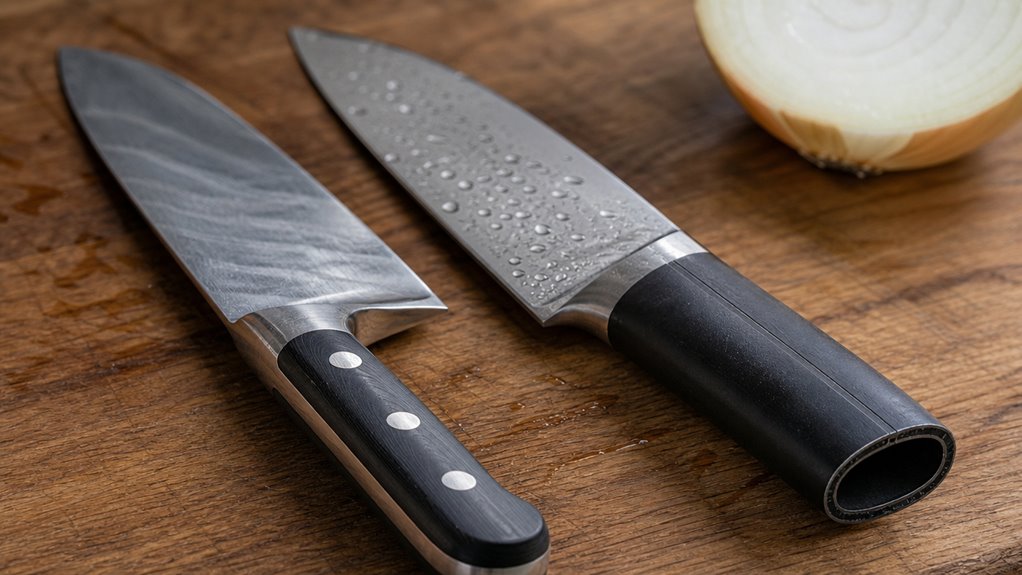
Stamped blade construction, steel hardness, edge angle, and tip geometry are the build details that determine whether a budget knife holds up through regular use or degrades quickly. Those same details decide which blades make the cut in this roundup of chef’s knives that hold an edge.
A stamped knife typically lands in the 55–56 HRC hardness range, which keeps the blade easy to re-sharpen at home but also means the edge rolls faster under repeated stress than harder forged steel would.
The shallower edge angle, often around 15–20 degrees per side, reduces cutting resistance but depends on that softer steel to stay manageable during honing.
Lighter weight and lower manufacturing cost make stamped construction practical for beginners, though the thinner tip can bend under lateral pressure.
The details behind each of these factors shape long-term performance in ways worth understanding.
Edge Angle, Steel Hardness, and Re-Sharpenability
If you want a cheap chef’s knife that stays useful beyond the first few weeks, look at the edge angle, steel hardness, and how easily you can re‑sharpen it.
A balanced edge bevel of about 18–20° per side gives you a sturdy enough edge for chopping while still slicing cleanly.
Mid‑range Rockwell hardness HRC around 55–56 means the steel isn’t so soft that it rolls quickly, yet it’s soft enough to sharpen on a cheap stone or pull‑through sharpener.
- Edge angle – 18–20°/side for durability.
- Steel hardness – 55–56 HRC for easy maintenance.
- Re‑sharpenability – softer stainless takes a few strokes, not hours.
These three factors decide whether a $30 knife stays a workhorse or becomes a drawer ornament.
Why a Stamped Blade Beats a Forged One on a Beginner’s Budget
Start with a stamped blade and you’ll get a lighter, thinner knife that’s easier to control for everyday prep. The thin profile means less hand fatigue when you’re chopping herbs or slicing tomatoes, and the lack of a bulky bolster lets you rock‑chop with minimal effort.
For a beginner’s budget, the real advantage isn’t the label but the heat treatment and steel quality. A well‑treated stamped blade can hold an edge as long as a cheap forged one, while staying under $30. Forged knives often feel heavier because of added mass, but that extra weight doesn’t translate to better sharpness or durability at low price points.
In short, for a beginner the stamped option gives you control, easy maintenance, and reliable performance without the unnecessary cost.
How to Keep a First Knife From Going Dull or Rusting Fast
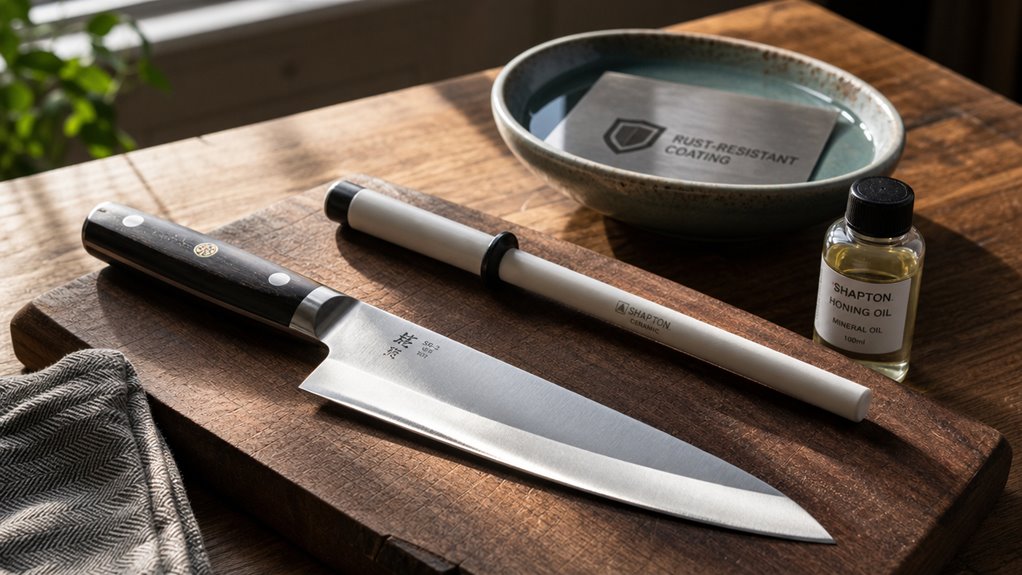
Keeping a first knife from dulling or rusting comes down to consistent care in three areas: how you clean it, how you store it, and how often you maintain the edge. Hand-washing the blade immediately after use and drying every surface — including the spine — prevents moisture from triggering rust on carbon or stainless steel alike.
Loose drawer storage and hard cutting surfaces are two of the most common causes of premature edge damage, while a dishwasher exposes the blade to heat and humidity that accelerates both dulling and corrosion.
Regular honing on a ceramic rod realigns the edge before it degrades enough to require full sharpening, which typically extends the interval between sharpen sessions by weeks or months. The sections that follow cover each of these factors in the detail a new knife owner needs.
Hand Washing, Drying, and Safe Storage
When you finish using a budget chef’s or paring knife, the first step is a quick hand wash with warm‑hot water and a mild dish soap; harsh detergents or bleach can strip the stainless finish and weaken the grip. Use a soft sponge, wipe the blade away from the edge, and rinse thoroughly.
Dry immediately with a clean towel, wiping from spine to edge to keep moisture out of the handle‑blade junction. Store the knife where the edge won’t rub against other tools.
- Hand wash with warm‑hot water and mild soap.
- Dry right after rinsing, using a dedicated towel.
- Store in a block, tray, or magnetic strip with edge guards.
These steps keep your stainless steel blade sharp and rust‑free without extra hassle.
The Honing Habit That Keeps an Edge for Months
Most home cooks find that a quick honing every couple of meals keeps a budget chef’s knife from turning dull in a week.
You’ll want a honing rod that matches the 15–22° angle most Western blades need; 20° works well for a typical Western stamped chef’s knife, such as one from Victorinox’s Fibrox line. Hold the rod vertically, place the heel on it, and draw the blade to the tip in a smooth motion, alternating sides for 5–10 strokes. Light pressure is key. Too much creates a burr and fatigues the edge.
A ceramic rod or fine‑steel rod, 8–10 inches long, will realign the microscopic edge without shaving metal, extending sharpness for months.
Hone after 2–3 cooking sessions, then give the blade a quick rinse and dry to keep rust at bay. This routine saves you from full sharpening every few weeks.
Frequently Asked Questions
Do Stamped Knives Hold an Edge as Long as Forged Ones?
You’ll find stamped knives can hold an edge as long as forged ones if the steel, hardness, and heat treatment are comparable; otherwise, softer stamped steel may roll faster, needing more frequent honing.
Can I Sharpen a Cheap Knife With a Manual Sharpener?
Yes. Use a manual sharpener’s coarse slot first, then the fine slot, and keep the angle steady for consistent results.
Is a Full Tang Necessary for a $30 Chef’s Knife?
No, you don’t need a full tang at $30. Focus on solid stainless steel, comfortable grip, and easy sharpening. A well‑made stamped blade gives ample performance without the extra cost of a full tang.
What Handle Material Is Safest for Food Contact?
You’ll find the safest food‑contact handle in seamless, NSF‑approved synthetic composites such as textured polypropylene or similar moulded polymers, because they are non-porous, moisture-resistant and stay clean without harbouring bacteria.
Will a Stainless Steel Blade Rust if Left in the Drawer?
Yes, it can rust if you stash it wet or dirty. Dry it thoroughly, wipe off food residues, and keep the drawer low‑humidity. A clean, dry stainless blade stays rust‑free for years.
Conclusion
You’ve got a paring and a chef’s knife that together handle most prep work, and they stay sharp enough for everyday use if you hone them regularly. A full tang and a textured polymer grip give balance, while the softer stainless lets you sharpen at home without a professional stone. Expect the paring to edge faster than the chef’s, but both will last years if you dry them after washing. Think of them as a reliable pair of work boots—simple, sturdy, and ready for the kitchen.
| Mercer Culinary M22608 Millennia Black Handle 8-Inch Chef's Knife | 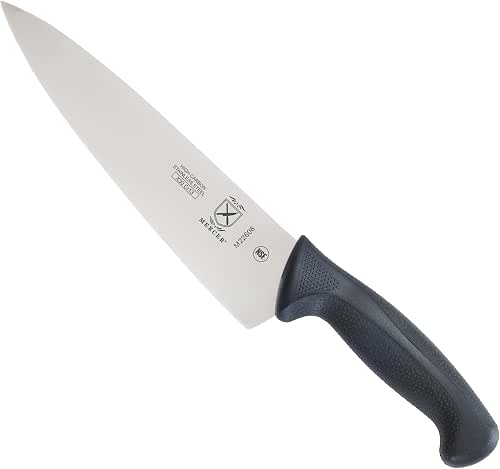 | Reliable Classic | Blade Length: 8 in | Blade Material: High-carbon Japanese steel | Edge Type: Plain | VIEW LATEST PRICE | Read Our Analysis |
| Cuisinart 8″ Stainless Steel Chef's Knife Guard | 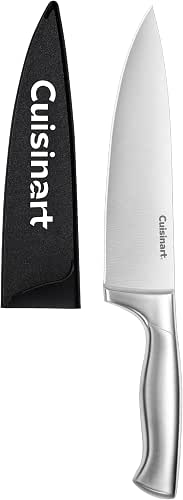 | Best Value | Blade Length: 8 in | Blade Material: Stainless steel | Edge Type: Plain | VIEW LATEST PRICE | Read Our Analysis |
| Amazon Basics 8″ High Carbon Stainless Steel Chef's Knife |  | Everyday Essential | Blade Length: 8 in | Blade Material: High-carbon stainless steel | Edge Type: Plain | VIEW LATEST PRICE | Read Our Analysis |
Links to Amazon are affiliate links. Buying through one costs you nothing extra and helps fund the research.

Michael Haralson worked in professional kitchens from 1979 to 1992: San Diego restaurants, six years with a catering company beside an Austrian chef, and two summers as a cook on the Finland to Sweden cruise route. He then built a fifteen-year career at Nokia. It began in product marketing and product management, where technical specifications and supplier evaluation were part of the work, and grew from a few countries to a region to global roles, then into sales and corporate strategy. That took him to Beijing for three years, where he spent many weekends in a different province trying the local food and took cooking classes. He has eaten in more than 40 countries and has been shown the kitchens of restaurants in Southern Europe. At home in Finland he cooks Cantonese, Sichuan and Mediterranean food, and still uses the cast iron skillet he bought in 1992. He is the author of Buy It Once, Book One of The Researched Kitchen, and writes here about the balance between kitchen tools that cost too much and those that fail too soon.