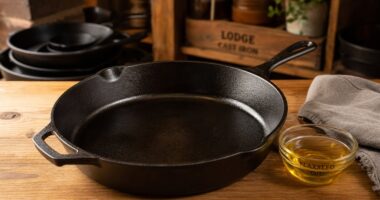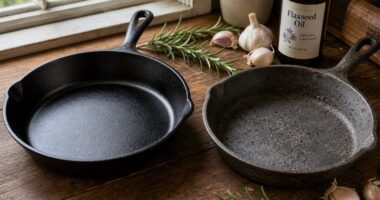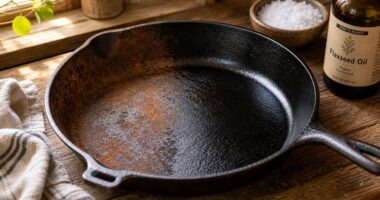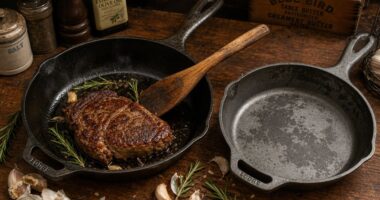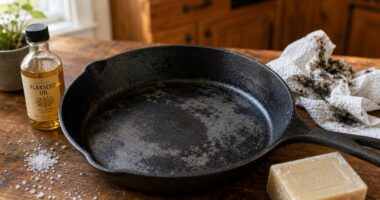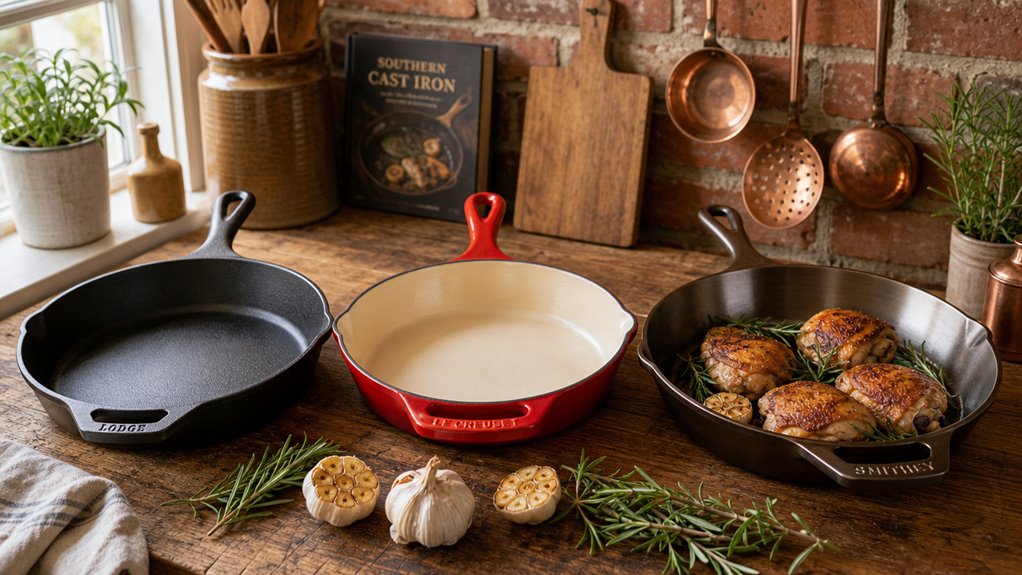
Choosing a cast iron skillet depends on three core variables: surface finish, seasoning behavior, and heat retention. Sand-cast, enamel-coated, and machined-smooth cast iron skillets each handle those variables differently, which shapes how they perform over years of daily use.
- Sand-cast surface develops a pebbled texture that builds a durable, self-repairing seasoning layer through repeated use.
- Enamel coating eliminates the need for seasoning but can chip over time, exposing raw iron underneath.
- Mirror-polished cast iron accepts seasoning quickly but builds a thinner film, so it needs topping up more often. It is still bare iron and can be stripped and rebuilt like any other.
Heat retention is one of the most practical measures of skillet performance. Thick cast iron walls hold and distribute heat evenly during searing, which reduces hot spots and warping over time. A pan with reliable heat retention performs consistently whether it moves from stovetop to oven.
Price tier also shapes the long-term value of a cast iron skillet. Budget-friendly options can outlast generations of cooks when maintained with basic seasoning practice. Mid-range and premium options often offer surface refinements, but those refinements carry trade-offs in durability and repairability.
Seasoning behavior separates cast iron options more than any single design feature. A rough, pebbled surface anchors fat molecules during cooking, which gradually builds a non-stick layer that heals when damaged. A machined-smooth bare surface seasons faster but builds a thinner film, and an enamel coating does not season at all and cannot be rebuilt once chipped.
Cast iron cookware has been produced using sand-casting methods for roughly two centuries, and seasoned raw cast iron pans have been documented lasting well over 100 years with standard maintenance.
Cheap or expensive is the wrong question. Cost per use is the honest one. Check out our new Calculator.
Cost-Per-Use Calculator →The short answer: for most home cooks, the Lodge is the one actually worth buying, because it delivers the best performance for the money and can be re-seasoned for life. The other two win only in specific situations.
- Lodge wins on everyday value. Its sand-cast, pebbled surface builds a durable, repairable seasoning, sears at high heat, and can last a century with basic care, all at a budget price.
- Le Creuset wins on acidic, low-and-slow cooking. The enamel never needs seasoning and resists rust, so it handles tomato, wine, and citrus braises cleanly, but it chips permanently and carries a premium price.
- Smithey wins on a polished, low-maintenance feel. Its machined-smooth interior seasons quickly and releases food fast, though the film is thinner and the price is far higher than Lodge.
Key Points
- Lodge’s sand‑cast, pebbled surface builds a durable, repairable seasoning, excels at high‑heat searing, and can last a century with proper care.
- Smithey’s polished interior seasons faster but creates a thinner film that needs topping up more often. It is bare iron, so it re-seasons exactly like a Lodge; the difference is upkeep frequency, not durability.
- Le Creuset’s enamel coating never seasons, resists acidic foods, and avoids rust, but it chips under impact and cannot be restored once damaged.
- For everyday high‑temperature cooking (steaks, burgers, quick sautés), Lodge provides the best performance‑to‑price ratio; Smithey is a premium option whose polished surface releases food readily from the start, at the cost of more frequent seasoning top-ups.
- Overall value depends on cooking style: choose Lodge for rugged, long‑term use; Smithey for sleek, quick‑seasoning needs; Le Creuset for acid‑friendly, low‑heat dishes where durability isn’t critical.
| Lodge 6.5″ Cast Iron Skillet – PFAS‑Free Non‑Toxic |  | Professional Grade | Material: Cast iron | Pre‑Seasoned Surface: Pre‑seasoned with natural vegetable oil | Oven‑Safe: Oven‑safe | VIEW LATEST PRICE | Read Our Analysis |
| Lodge Seasoned Cast Iron Griddle 10.5″ Round | 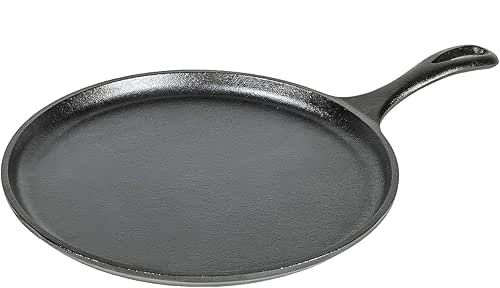 | Heavy-Duty Performer | Material: Cast iron | Pre‑Seasoned Surface: Pre‑seasoned (iron and oil only) | Oven‑Safe: Oven‑safe | VIEW LATEST PRICE | Read Our Analysis |
| Victoria 6.5″ Pre-Seasoned Cast Iron Skillet |  | Best Overall | Material: Cast iron | Pre‑Seasoned Surface: Pre‑seasoned with kosher flaxseed oil | Oven‑Safe: Oven‑safe up to 750 °F | VIEW LATEST PRICE | Read Our Analysis |
Links to Amazon are affiliate links. Buying through one costs you nothing extra and helps fund the research.
What Sets Lodge Cast Iron Apart From Le Creuset and Smithey
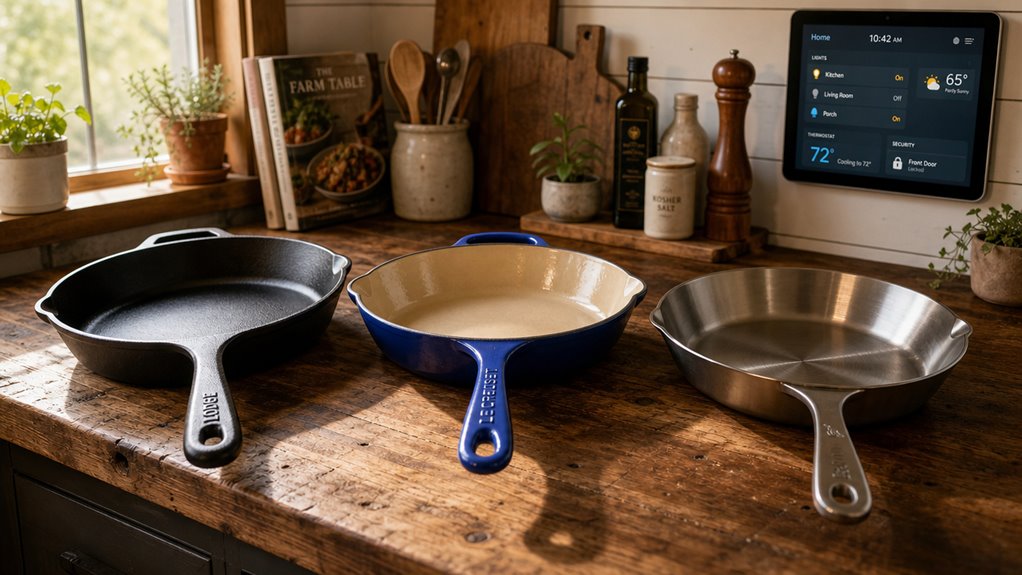
Lodge cast iron stands apart from Le Creuset and Smithey through differences in surface finish, price tier, and long-term maintenance requirements. Lodge uses a bare sand-cast surface that the cook seasons and rebuilds over time, while Le Creuset bonds enamel directly to the iron and Smithey machines the interior to a smooth polish.
Each approach shapes how the pan handles rust, durability, and everyday upkeep. Bare iron resists damage from drops but requires a break-in period, enamel skips that process but chips under impact, and a machined surface feels slick without delivering a measurable cooking advantage over seasoned iron. Lodge’s faster heat‑up is due to its thinner wall thickness and lower thermal mass. Price reflects these choices, with Lodge sitting in the budget range, Le Creuset in the premium tier, and Smithey in the mid-to-high bracket. The sections below go deeper into how each of these factors plays out in practice.
Bare Sand-Cast Iron, Enameled Cast Iron, and Machined Smooth Surfaces
When you compare a Lodge skillet to a Le Creuset or a Smithey, the first thing you notice is the surface finish. Lodge cast iron arrives as bare sand‑cast iron, a pebbled texture that feels rough to the touch. That texture gives seasoning oil plenty of micro‑porosity to cling to, so the pan builds a durable, though initially less slick, layer. The contrast between enameled and bare cast iron is stark: Le Creuset coats the same iron with a glass‑like enamel that never seasons, stays non‑reactive with acidic foods, but can chip if dropped. Smithey’s machined smooth interior is polished to a mirror finish right out of the box, producing a thin, uniform seasoning that releases food quickly but requires you to sand and polish any Lodge you want to match. The rough Lodge surface is heavier and more forgiving to DIY repairs, while the enamel offers convenience at the cost of repairability. The pebbly texture of a modern Lodge pan is a direct result of automated sand casting, which is far faster than the hand-finishing and milling that gave older pans their smoother interiors.
The Price Tiers: Budget, Mid, and the Premium Comparison Anchors
If you start by looking at the price tags, the differences line up cleanly: Lodge sits under $30, Le Creuset hovers around $200‑$400 for comparable sizes, and Smithey lands in the $100‑$200 range.
You’ll notice the budget tier is anchored by Lodge’s sand‑cast, pre‑seasoned skillet that you can re‑season forever. The premium tier, Le Creuset, offers enamel that never needs seasoning but chips if you drop it, making it ideal for acidic braising but fragile.
The mid-to-high tier, Smithey, brings a machined surface that feels lighter and smoother out of the box, yet its higher price isn’t matched by a proportional durability boost.
- Lodge: under $30, 4.5 lb, sand‑cast, unlimited re‑seasoning.
- Le Creuset: $200‑$400, heavy enamel, acid‑safe, chip‑prone.
- Smithey: $100‑$200, machined polish, lighter, boutique price.
- Longevity: Lodge >100 years, enamel ~20 years if intact, machined comparable.
Independent reviewers found that Lodge’s seasoning durability consistently outperformed the enamel and machined finishes across a range of cooking tasks.
| 8 Inch Round Medium Pre-Seasoned Cast Iron Skillet |  | Best Durability | Material: Cast iron | Pre‑Seasoned Surface: Pre‑seasoned (proprietary oil blend) | Oven‑Safe: Oven‑safe | VIEW LATEST PRICE | Read Our Analysis |
| Cast Iron 10″ Skillet with Pour Spouts and Silicone Grip |  | Premium Quality | Material: Cast iron | Pre‑Seasoned Surface: Pre‑seasoned (PFAS‑free) | Oven‑Safe: Oven‑safe | VIEW LATEST PRICE | Read Our Analysis |
| Mercer Culinary Pre-Seasoned Cast Iron Skillet 8-Inch |  | Chef’s Choice | Material: Cast iron | Pre‑Seasoned Surface: Pre‑seasoned with natural vegetable oil | Oven‑Safe: Oven‑safe | VIEW LATEST PRICE | Read Our Analysis |
Links to Amazon are affiliate links. Buying through one costs you nothing extra and helps fund the research.
How the Surface Finish Changes Cooking and Seasoning
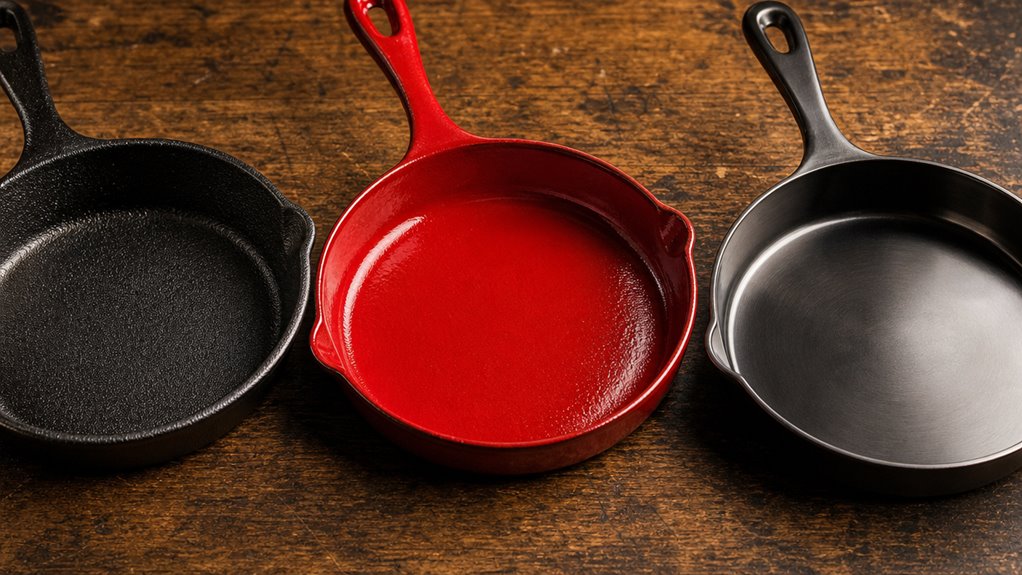
Surface finish determines how seasoning oil bonds to cast iron and how quickly a non-stick layer develops over time.
Lodge’s pebbled texture creates small valleys that trap oil, allowing seasoning to build gradually into a resilient coating that holds up through repeated use.
Smithey’s factory-polished interior spreads oil more evenly across the cooking surface, which produces faster initial release but a thinner film that can wear away sooner.
Le Creuset’s enamel glaze eliminates the need for seasoning entirely by forming a non-porous barrier, though that glaze can chip under impact.
The details behind each finish type, and how cooking technique interacts with them, go deeper than a single comparison can cover.
Type in what a kitchen tool cost you, how often you use it, and how long you expect it to last. The math answers whether the price was worth it.
The tool you are weighing
Enter a price to run the numbers.
Lifespans above 50 years are capped at 50 for this calculation.
The cheaper version
Enter a price to run the numbers.
Lifespans above 50 years are capped at 50 for this calculation.
Your result appears here after you press Calculate.
Why Lodge’s Pebbled Texture Holds Seasoning Differently Than Smithey’s Polish
Usually the pebbled surface on a Lodge skillet gives the seasoning a better grip than the polished finish on a Smithey.
That roughness creates micro-valleys that lock polymerized oil in place, where a polished surface gives it far less to key into. Those pits act as tiny reservoirs, so the film stays thicker and tolerates scraping or high heat without exposing bare iron.
On a Smithey, the smooth, polished surface offers fewer anchoring points, so the seasoning leans on chemical bonding and sits thinner, which means topping it up more often rather than losing the ability to season at all. The result is a more forgiving, thicker film on Lodge and a slicker but thinner one on Smithey, which is a difference in how often you top it up rather than in whether it can be rebuilt.
- Peaks and valleys on Lodge trap oil.
- Polished Smithey sheds excess fat.
- Lodge’s film stays dark after repeated sears.
- Smithey needs careful, incremental seasoning.
This mechanical advantage shows up across long-term durability reviews, while a polished surface demands meticulous upkeep. Gentle cleaning helps preserve the thin oil layer essential for seasoning.
Le Creuset Enamel and Why It Never Needs Seasoning at All
Le Creuset’s enamel is a glass‑based coating fused to the cast‑iron body at high temperature, so the metal is sealed from air, moisture and food. The enamel coating creates a non‑porous, chemically inert surface that never needs an oil‑based seasoning layer.
You can wash it with soap, heat it, and cook acidic sauces without worrying about rust or iron leaching. Because the surface is smooth, food sticks less than on bare cast iron, but a light film of high‑smoke‑point oil still helps with searing.
Preheat a bit longer than you’d with a seasoned pan, then cook on low to medium heat to protect the enamel. The only drawback is that enamel can chip if you drop the pot, exposing the iron underneath.
Comparing Lodge Cast Iron on Durability and Repairability
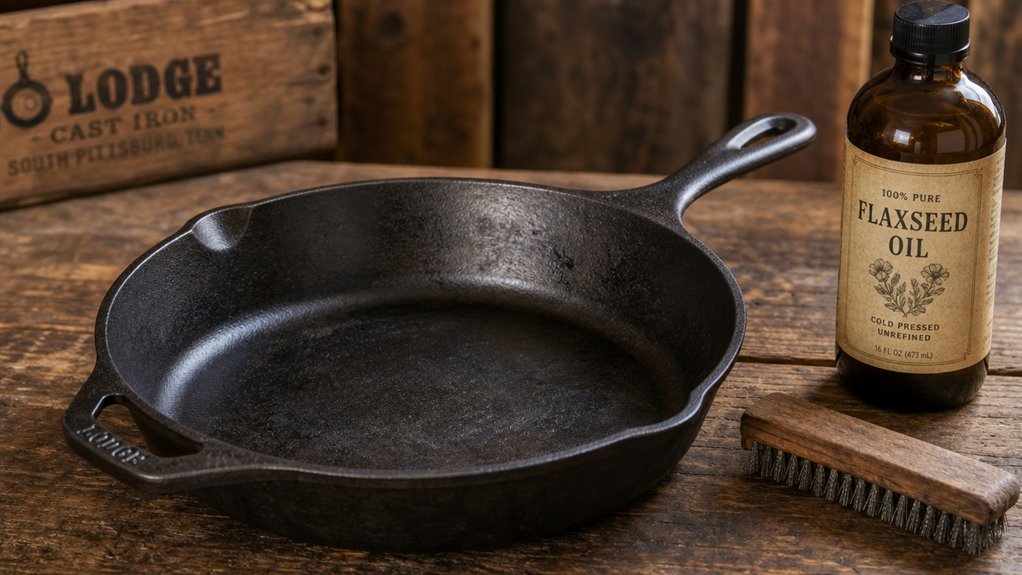
Lodge cast iron earns its durability reputation through sand-cast construction and a straightforward re-seasoning process. When the surface wears, it can be stripped back and rebuilt without professional help or replacement. That repairability is a meaningful advantage over enameled cast iron, where a chipped or damaged coating can’t be restored, leaving the pan permanently compromised.
Single-piece construction reinforces the long-term value of bare cast iron, since there are no bonded layers or coatings to degrade over time. Lodge’s published limited lifetime warranty covers seasoned cast iron and carbon steel that cracks or warps, and names casting defects such as excessive grind marks, holes and metallic projections. What it does not cover is seasoning loss, which is maintenance rather than a defect. A polished interior, such as the one found on the Smithey, can lose its seasoning more quickly than a rougher sand-cast surface, which means a higher purchase price doesn’t always translate into lower maintenance over years of use.
The sections below examine how these material and design differences play out across specific conditions.
Chipped Enamel on Le Creuset Versus a Lodge You Can Strip and Re-Season
If a chip shows up in the interior enamel of a Le Creuset, you’re looking at a glass‑based coating that can’t be stripped and re‑seasoned the way a bare Lodge skillet can. Enamel chipping exposes raw iron, and you can’t simply apply a polymerized oil layer to fix it. Home kits only mask the flaw. A Lodge pan lets you scrub away rust, heat‑clean the surface, and rebuild the seasoning from scratch, so the same scratch that would ruin a Le Creuset becomes a routine maintenance step.
- Drop a utensil → enamel cracks, spiderweb lines appear.
- Heat shock → interior chip, rust starts at the edge.
- Professional re‑enameling → costly, rare, often exceeds replacement price.
- Lodge strip → oven self‑clean, lye bath, then a fresh polymerized oil layer restores protection.
Lifetime Warranties, Heritage, and What Actually Fails First
The chip you saw in the Le Creuset enamel shows why a coated pan can hit its breaking point before the iron underneath ever gives out. Lodge’s bare cast iron has no enamel layer, so its first “failure” is usually seasoning loss or surface wear, which you can strip and re-season yourself. Lodge publishes two warranties: enameled cast iron is replaced if it chips, cracks or is otherwise damaged during cooking, and seasoned cast iron is replaced if it cracks or warps or shows named casting defects. Le Creuset and Smithey each publish their own terms; check the current wording on each brand’s site rather than taking a comparison table, including this one, as authoritative. What is common to all three is that seasoning wear is maintenance, not a warranted defect.
| Brand | First Failure Mode | Warranty Coverage |
|---|---|---|
| Lodge (bare) | Seasoning loss/rust | Limited lifetime: cracks, warping, casting defects |
| Lodge (enameled) | Enamel chipping | Limited lifetime: chips, cracks, damage during cooking |
| Le Creuset | Enamel cracking/chipping | Check the brand’s current published terms |
| Smithey | Seasoning wear (maintenance, not a defect) | Check the brand’s current published terms |
Why a Sub-$30 Lodge Is Enough for Most Home Cooks
Often you’ll find that an under-$30 sand-cast Lodge skillet does everything most home cooks need, because what makes bare cast iron last is the metal and the seasoning, not the surface polish. The bare iron is thick, heavy, and seasons into a protective layer you can scrub off and rebuild.
When rust appears, a little steel wool and salt, or a vinegar soak, bring it back to life, with no costly service call. Smithey’s machined interior is also bare cast iron, so it can be stripped and re-seasoned in exactly the same way. The honest difference is what you get for the extra money: a smoother factory surface, a lighter pan, and a finish some cooks much prefer. What the extra money does not buy is a fundamentally longer-lived pan, because both are the same material with the same repair path.
In daily use, either will tolerate drops, high heat and neglect. The Lodge simply costs a fraction as much, which is why it is the sensible default rather than the superior object.
- Thick sand‑cast walls resist dents.
- Seasoning is a repairable surface.
- Rust removal uses household tools.
- No fragile enamel or polish to crack.
Which Cast Iron Is Worth It for Your Kitchen and Budget
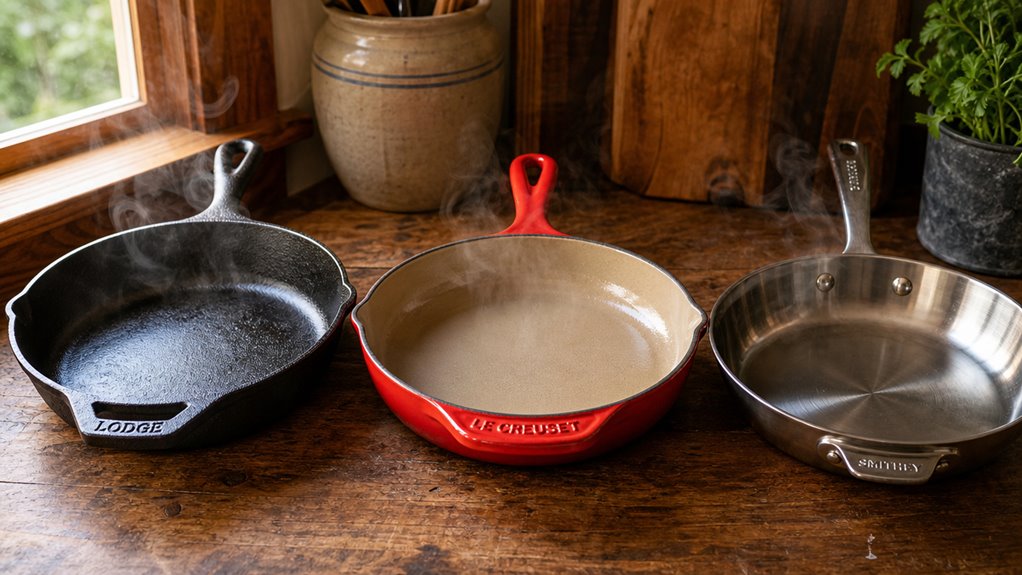
Cast iron skillets vary enough in price, surface finish, and intended use that matching the right pan to your cooking habits and budget matters more than buying any single brand by reputation.
A budget-tier sand-cast skillet, such as those from Lodge, offers solid heat retention and straightforward re-seasoning, making it a practical choice for everyday searing. An enamel-coated option like Le Creuset handles acidic braising well because the coating prevents reactive seasoning from interacting with the food, though enamel can chip under impact, which limits its value to that specific use case. A smoother interior, as found on Smithey pans, speeds up the seasoning process but comes with higher cost and added weight that may not suit all kitchens.
The details ahead clarify which features justify the price difference.
The Everyday Searing Pan Most Home Cooks Should Buy First
If you’re looking for a single skillet that handles everyday searing without breaking the bank, the Lodge sand‑cast 10.25‑inch pan is the logical starter. You’ll get a pre‑seasoned, pebbled surface that builds a natural non‑stick layer, and the 4.5‑lb weight feels solid without being a gym‑workout.
Compared to a premium brand, the Lodge’s cost‑per‑decade is pennies per cook, and you can strip and re‑season it if the coating ever wears thin. It won’t hold up to acidic braising like a Le Creuset enamel, but for steaks, burgers, and quick sautés it’s more than adequate.
- Heat response – fast temperature shifts, good for quick sautés.
- Durability – sand‑cast pebble resists warping, lasts decades.
- Maintenance – occasional re‑seasoning, no enamel chips.
- Budget – under $30, a practical choice for most kitchens.
For everyday searing, the budget pick wins on practicality and value.
When Le Creuset’s Enamel Earns Its Premium and When It Doesn’t
When you’re cooking acidic sauces or slow‑braised stews, the enamel on a Le Creuset actually does something you can’t get from bare cast iron: it blocks iron from leaching and keeps the flavor pure. You’ll notice the benefit most when simmering tomato‑based soups, wine‑braised ribs, or citrus‑infused stews, with no metallic aftertaste, and the light‑colored interior shows browning clearly.
The enamel also resists rust, so you can store the pan wet or in the fridge without worrying about corrosion. However, if you spend most of your time searing steaks at max heat or grilling, the enamel can discolor and offers no advantage over a seasoned Lodge skillet.
It’s also vulnerable to chipping if you drop it, and a chip cannot be repaired. In short, Le Creuset’s enamel earns its premium for low‑and‑slow, acidic dishes, but it’s unnecessary for high‑heat searing or budget‑focused cooking.
Why Lodge Wins on Value Where Le Creuset Wins on Braising
Often you’ll find the price gap between a Lodge skillet and a Le Creuset Dutch oven is wide enough to make you pause. Lodge gives you a pre-seasoned, sand-cast pan for under $30, so each cook costs pennies and replacing it outright, in the unlikely event you ever needed to, costs less than a single premium pan. Le Creuset’s enamel lets you braise tomatoes, wine, or citrus without ruining seasoning, but the same size piece costs $200‑$400 and will chip if you drop it. The trade‑off is clear: budget versus acid‑safe convenience.
- Cost per decade – Lodge amortizes to pennies per meal.
- Heat retention – Lodge holds heat well enough for searing; Le Creuset distributes low‑and‑slow heat evenly.
- Maintenance – Lodge needs seasoning; Le Creuset needs no rust care but must avoid metal tools.
- Durability – Lodge can be stripped and re‑seasoned; Le Creuset can’t be repaired once the enamel chips.
Common Mistakes That Ruin Any Cast Iron, Cheap or Premium
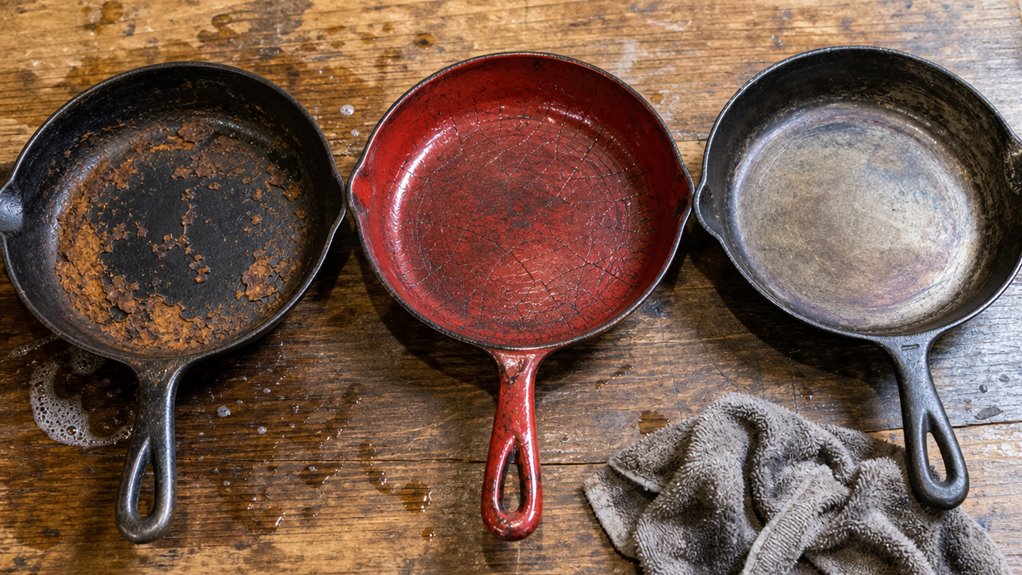
Cast iron and enamel cookware fail predictably when exposed to a short list of handling errors: thermal shock, trapped moisture, and stripping seasoning through harsh cleaning.
Dumping cold water onto a hot bare-iron pan like a Lodge or a Smithey causes rapid temperature shifts that can crack the metal or compromise the surface, while an enamel-coated pan like a Le Creuset risks chipping that exposes the underlying iron to corrosion.
Moisture left on unseasoned iron after washing accelerates rust formation, and even a brief dishwasher cycle or detergent scrub removes the polymerized oil layer that protects the cooking surface and prevents sticking.
Enamel requires its own care, since chips in the coating, from impact or improper storage, create entry points for damage that a seasoned surface handles differently.
The mistakes that follow cover each failure mode in detail.
Thermal Shock, Cracking, and Why You Never Pour Cold Water on Hot Iron
If you dump cold water on a scorching‑hot skillet, the sudden temperature swing forces the outer metal to contract while the core stays expanded, and the resulting tensile stress often exceeds cast iron’s low shock resistance.
The shock creates micro‑tension that can turn into cracking, warping, or even a fracture that ruins the pan’s seasoning and structural integrity.
You’ll see the same damage whether you rinse a Lodge, a Le Creuset enamel, or a Smithey machined piece.
The rule is simple: keep temperature changes gradual, and never pour ice‑cold liquid onto a red‑hot surface.
- Rinse with warm water, not ice.
- Heat the pan slowly, avoid a sudden burner blast.
- Let the skillet sit on a cool countertop before washing.
- Never transfer a frozen pan straight to a hot oven.
Storing Enameled and Bare Cast Iron Without Chips or Rust
After a wash, you need to dry your skillet completely before tucking it away; any lingering moisture will spark rust on the bare iron and can even seep through a chipped enamel spot.
For bare cast iron, towel‑dry, then heat the pan on low for a minute; a thin coat of neutral oil afterward seals the surface.
With enameled cast iron, make sure the rim, handle screw, and any chip are bone dry, then store the lid ajar or use a silicone spacer to let air circulate.
Never stack pieces directly. Place a towel or silicone trivet between them to protect enamel edges.
Keep lids separate for long‑term storage, and avoid humid zones near dishwashers.
This routine stops rust rings, prevents enamel chipping, and keeps both budget and premium pans ready for the next cook.
Frequently Asked Questions
Do Sand‑Cast Lodge Pans Rust if Not Seasoned Properly?
Yes, sand‑cast Lodge pans rust if you skip proper seasoning; moisture reaches bare iron, and without a polymerized oil film the pores absorb water, oxidize, and form rust quickly.
Can Le Creuset Enamel Be Repaired After Chipping?
You can only do a cosmetic fix. Small chips may be filled with food‑safe epoxy, but the enamel won’t truly restore, and large chips are fundamentally unrepairable, so replacement is usually needed.
Does Smithey’s Machined Surface Affect Heat Distribution?
The machined surface doesn’t change heat spread; you’ll feel smoother release, but heat distribution still hinges on mass, thickness, and pre-heating, not polishing.
How Does Thermal Shock Impact Each Cast‑Iron Brand?
You’ll see Lodge tolerate the most heat swings, handling up to 650°F if you preheat gently; Le Creuset’s enamel can crack under sudden changes, while Smithey’s bare iron lacks specific shock data, so treat it like any bare cast iron.
What’s the Cost‑Per‑Use Difference Between Lodge and Smithey?
You’ll see Lodge’s cost‑per‑use roughly half Smithey’s if you cook a few times a month; the gap narrows only when you sear daily, spreading Smithey’s higher price over many meals.
Conclusion
You’ll find Lodge gives you solid heat retention and a re-seasonable surface for a fraction of the price; its rougher sand-cast finish is the trade, and it is a cosmetic one. Le Creuset’s enamel stays smooth and resists rust and acid, but it cannot develop a true seasoning patina, it chips permanently under impact, and its heavy walls make it less nimble. Smithey’s polished interior feels refined and releases food readily; it is bare iron like the Lodge, so it re-seasons the same way, and what the premium buys is the finish rather than a longer life. In everyday use, Lodge offers the best cost‑per‑decade value, while the others suit niche needs.
| 6‑Inch Cast Iron Skillet – Pre‑Seasoned Oven‑Safe Grill‑Ready |  | Budget-Friendly Pick | Material: Cast iron | Pre‑Seasoned Surface: Pre‑seasoned with vegetable oil | Oven‑Safe: Oven‑safe (primary spec) | VIEW LATEST PRICE | Read Our Analysis |
| Utopia Kitchen Pre-Seasoned Cast Iron Skillet with Lid (10″) |  | Most Versatile | Material: Cast iron | Pre‑Seasoned Surface: Pre‑seasoned (additional seasoning recommended) | Oven‑Safe: Oven‑safe | VIEW LATEST PRICE | Read Our Analysis |
| MIRRO 6in Cast Iron Preseasoned Skillet | 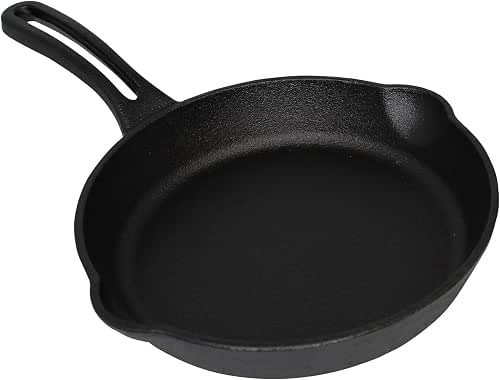 | Best Ergonomics | Material: Cast iron | Pre‑Seasoned Surface: Pre‑seasoned interior | Oven‑Safe: Oven‑safe up to 500 °F | VIEW LATEST PRICE | Read Our Analysis |
Links to Amazon are affiliate links. Buying through one costs you nothing extra and helps fund the research.

Michael Haralson worked in professional kitchens from 1979 to 1992: San Diego restaurants, six years with a catering company beside an Austrian chef, and two summers as a cook on the Finland to Sweden cruise route. He then built a fifteen-year career at Nokia. It began in product marketing and product management, where technical specifications and supplier evaluation were part of the work, and grew from a few countries to a region to global roles, then into sales and corporate strategy. That took him to Beijing for three years, where he spent many weekends in a different province trying the local food and took cooking classes. He has eaten in more than 40 countries and has been shown the kitchens of restaurants in Southern Europe. At home in Finland he cooks Cantonese, Sichuan and Mediterranean food, and still uses the cast iron skillet he bought in 1992. He is the author of Buy It Once, Book One of The Researched Kitchen, and writes here about the balance between kitchen tools that cost too much and those that fail too soon.