Knife Sharpener vs Honing Rod: Why Your Knife Goes Dull So Fast
Knife dulling: it happens faster when you treat a sharpener like a maintenance tool instead of a last resort.
- Honing rod — realigns a rolled micro-edge with minimal metal removal
- Whetstone — removes worn steel and rebuilds full edge geometry
- Sharpening frequency — directly controls how fast a blade wears down
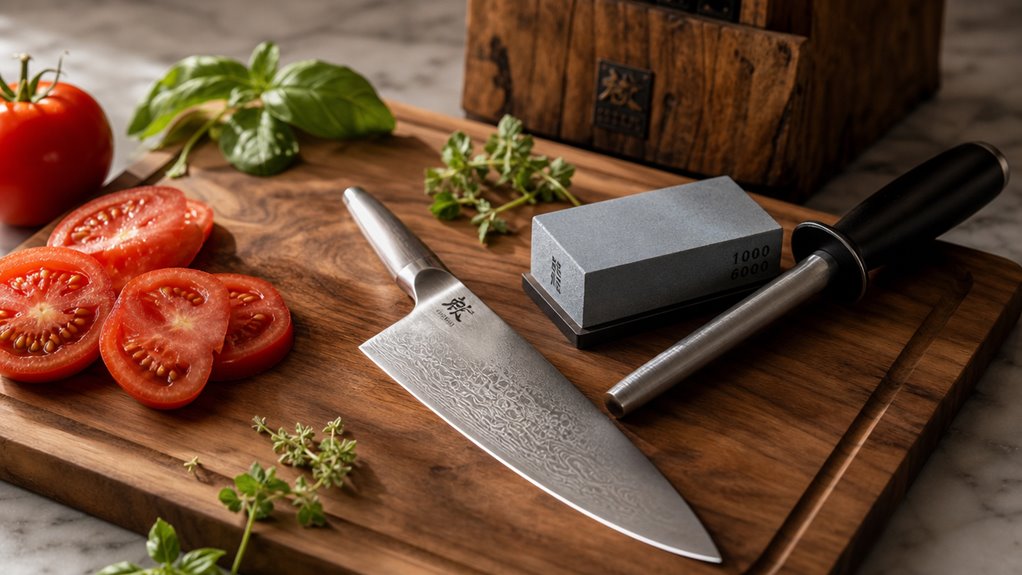
A honing rod keeps a blade straight between deeper sessions. Tools like the Victorinox Fibrox Pro honing steel realign the micro-edge after each use. The blade retains its geometry longer when honing replaces daily sharpening.
A whetstone removes steel. Brands like King Whetstone and Sharp Pebble produce stones that rebuild a worn edge from scratch. Local kitchen supply shops such as Sur La Table and Williams Sonoma carry both entry-level and professional-grade options in most cities.
The whetstone session causes wear. Repeated sharpening shortens blade life. Limit whetstone work to one or two times per year for most home cooks.
Thirty seconds of honing before cooking solves most dullness. A quick pass on a Lansky honing rod before a meal keeps the edge aligned. The problem resolves without removing steel at all.
Hone often. Sharpen rarely. The blade lasts years longer.
Interesting Fact: A properly honed knife edge, viewed under a microscope, shows teeth-like serrations that actually improve cutting grip on food surfaces — meaning a honed blade often outcuts a freshly sharpened one for everyday slicing tasks.
Key Points
- Sharpeners remove steel and rebuild geometry, while honing rods realign a rolled edge with minimal metal removal.
- If you sharpen too often, you wear the edge faster, causing dullness sooner than routine honing would.
- Most “fast dull” is micro-edge rolling from cutting pressure and friction, which a honing rod can realign quickly.
- Hitting hard surfaces or cooking abuse accelerates damage and chips, requiring whetstone sharpening when honing can’t restore sharpness.
- Use a ceramic rod before each cook (light, 6–10 strokes per side at ~15–20°) and switch to whetstone sharpening only periodically.
The Critical Difference Most Beginners Miss
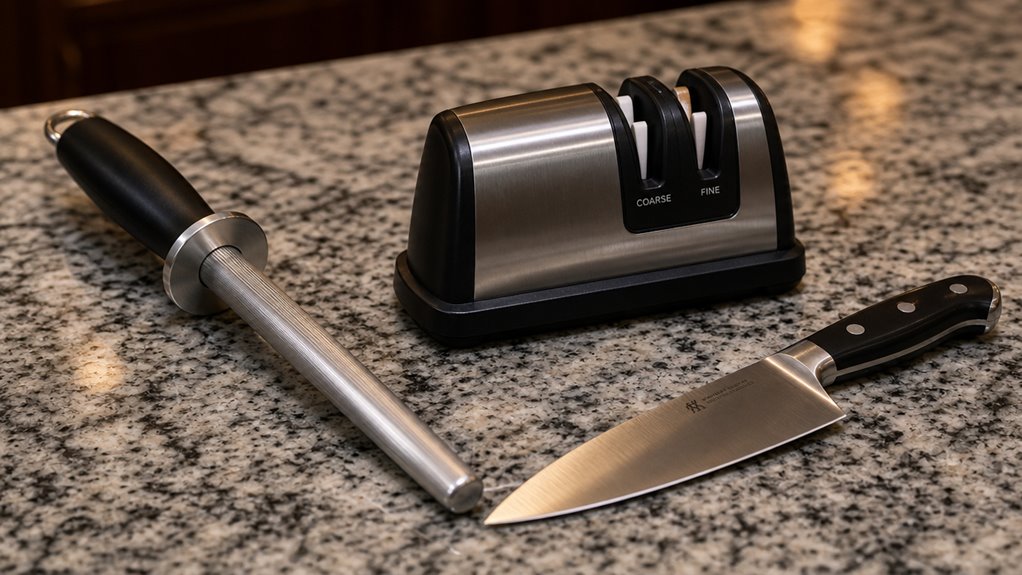
You can’t treat honing and sharpening like the same job: sharpening removes steel to rebuild the edge geometry, while honing just realigns a rolled edge without taking metal off. If you only sharpen “whenever it feels dull,” you end up doing expensive steel-loss work far more often than you need, which makes the knife seem like it dulls fast. Not necessary before every cooking session; in most households, honing helps keep the edge aligned between true sharpening sessions. Daily honing beats quarterly sharpening because it restores alignment in about 30 seconds per knife, so real sharpening is closer to once or twice a year. honing realigns a blade’s microscopic edge to keep it cutting smoothly.
What Sharpening Actually Does to a Knife Edge (Steel Removal)
Sharpening doesn’t “fix” your edge by bending it back into shape. When you sharpen, you do abrasive steel removal to recreate the apex, changing edge geometry. You grind away fatigued and rolled metal, so you expose fresh facets. Coarser grits remove more steel fast; finer grits take off less, mostly refining. If you keep shifting angles, micro-bevels stack up and the edge feels duller. Abrasion in slicing is a primary driver of how edges become dull in everyday use, because repeated material contact wears down the apex and contributes to edge degradation. Edge geometry is therefore what ultimately determines how quickly the blade re-forms into a stable, cutting-ready edge versus how soon it starts to roll or lose bite again.
What Honing Actually Does (Edge Realignment, No Metal Removal)
A honing rod doesn’t recreate a new edge the way a whetstone does; it straightens and refines the edge you already have. The rod is intended to straighten the burr, not a true rolled apex. You get edge realignment when the apex gets rolled from cutting, and you form a tiny micro-bevel by honing at a slightly higher angle.
There’s minimal metal removal, so it can’t fix chips or rounded geometry like true sharpening can. In other words, steel vs ceramic honing steels work by restoring keenness rather than taking off enough material to repair major damage.
Why Daily Honing Beats Quarterly Sharpening Every Time
Daily honing beats quarterly sharpening because most “dullness” at home isn’t the bevel wearing away—it’s the edge rolling out of alignment after normal cutting on boards, especially plastic or glass. Using a honing steel helps straighten that rolled edge for cleaner cutting. Honing realigns the existing edge without removing material. If you hone often, the knife edge stays aligned, cutting stays smooth, and sharpening frequency drops.
Aim for honing regularly as part of routine knife care before use or every 1–2 weeks, then sharpen only 1–2x per year.
How a Knife Actually Goes Dull (And Why It’s Mostly Reversible)
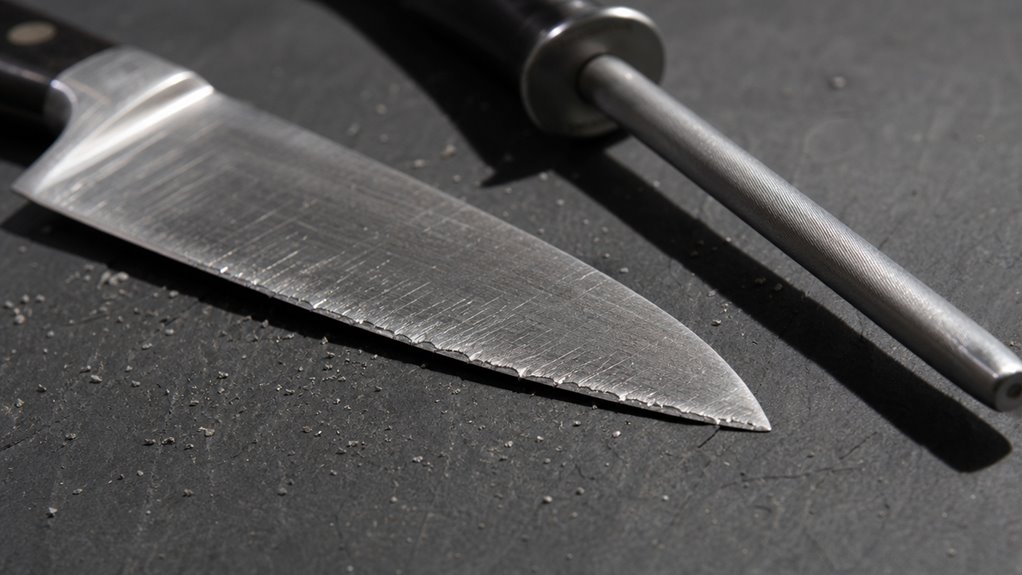
When you cut, the first real “dulling” you notice is usually microscopic edge rolling from cutting pressure, not your blade magically vanishing away. If you keep chasing that feel with a sharpener, you start paying steel-loss tax to rebuild the edge geometry, which fixes the problem but permanently removes metal. The good news is that if you keep your edge aligned with regular honing, it stays sharp for a long stretch of real kitchen work, and you only need real sharpening much less often.
Using friction dulling during cutting as microscopic metal particles rub off the blade edge, repeated use gradually rounds the sharp cutting edge and makes the knife feel less keen over time. If the knife is hitting hard surfaces like stone or glass, the edge gets damaged faster and dulls sooner.
Edge Rolling From Cutting Pressure (The Microscale Damage)
It’s not that your knife magically “runs out” of sharpness overnight; it usually dulls because the very tip of the edge gets bent sideways from cutting pressure. That’s edge rolling: plastic microscale damage at the apex that shifts the bite line, often visible as a thin bright reflection under light. It can happen quickly after relatively light use, and the edge may look keen until you inspect the apex more closely with magnification. Edge rolling can be made worse by repeated cutting stress that doesn’t allow the apex to “relax” back into alignment. 1. Hundreds–thousands MPa stress. 2. Twisting boosts rolling. 3. Soft steels roll more. 4. Fix with honing, not sharpening.
Steel Loss From Sharpening (The Permanent Loss)
Edge rolling from cutting pressure usually looks like the knife “needs a touch-up,” and honing fixes that because it just re-aligns the bent apex. When you sharpen instead, you create fresh geometry via steel removal. Every pass causes edge thinning and reshapes the bevel, and sharpening grit impact matters: coarse stones grind much faster than fine. Heat generation can happen at the edge during powered grinding because the knife edge has an extremely small volume, letting even brief exposure soften the apex. Tempering stresses arise with every quench; air cooling is preferred during tempering. Heavy electric use can drop blade height within years.
Why a Properly Honed Knife Stays Sharp Across Hundreds of Cooks
So what makes a knife seem to go dull after you’ve treated it “right”? You’re usually dealing with rolled, not truly worn, edges—your apex gets bent from board contact, so sharpness feels worse. Use a honing rod for edge realignment on a steady honing schedule. That keeps the apex radius tight for hundreds of cooks, delaying steel-loss grinding.
- Realignment before wear
- Apex radius stays small
- Less steel removed
- Sharpen only 1–2x/year
Investing in a quality sharpener with angle guides can help you sharpen precisely when you truly need to remove steel.
The Honing Schedule That Keeps Knives Sharp for Decades
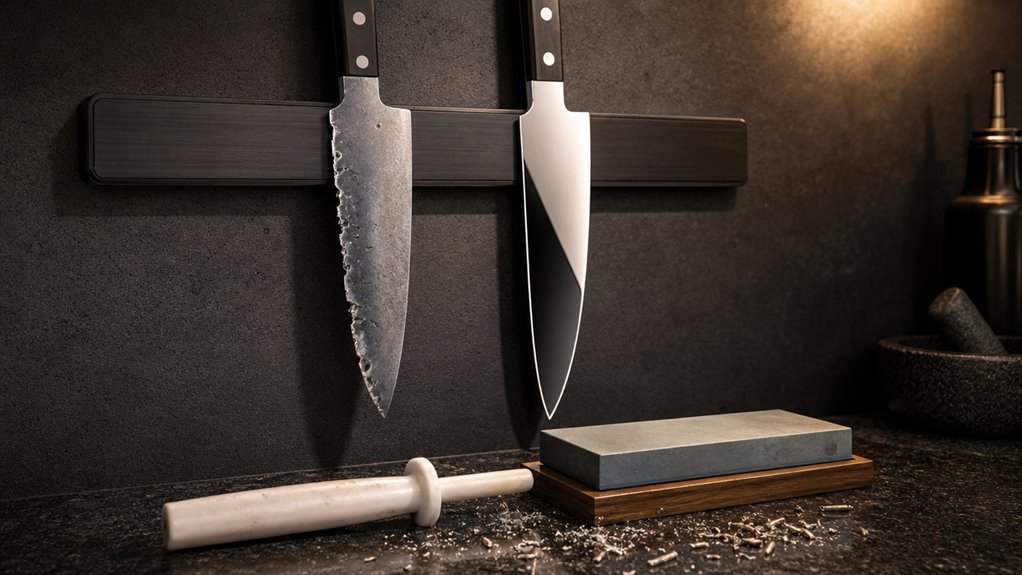
You should honing before cooking, about 30 seconds per knife, to keep the edge aligned without removing metal. If you’re a daily-driver household, aim for weekly realignment at minimum, and for heavy use (big prep sessions) do it more often, even mid-week. honing before use is technically better to prevent edge regression, so consider doing a quick realignment right before you start your serious prep. When honing stops making the knife feel “grabby” in a good way—like you can’t slice tomatoes cleanly anymore—then it’s time to sharpen with a whetstone because the real problem has become wear, not just a rolled edge.
Before-Cook Honing as 30-Second Daily Maintenance
Before every cook, take 30 seconds to hone your knife—because honing rod work is about straightening that rolled micro-edge, not grinding off metal. Do daily honing with light, heel-to-tip strokes to get edge realignment back on track. Add 1 new sentence to this routine: honing realigns the edge for better straightness and cutting performance, taking about 10 seconds to complete. 30-second daily maintenance realigning the blade’s cutting edge with a honing steel or rod helps restore the original shape with just a few light strokes. 1. 6–10 strokes per side 2. Hold ~15–20° per side 3. Use smooth or fine ceramic/steel 4. Stop short of pressure; pull-throughs remove steel
Weekly Realignment for Daily-Driver Households
Weekly realignment is what keeps a daily-driver knife from slowly drifting out of shape after your 30-second pre-cook honing. Do weekly honing every Sunday, using a honing rod, not a sharpener. You’re doing edge realignment, not removing steel. Keep passes light, then inspect for snagging. This preventative routine preserves geometry and delays sharpening, which fixes wear later. If you see chips, switch to whetstone soon.
When Honing Stops Working (And Sharpening Is Genuinely Needed)
Eventually, honing stops working when your edge stops behaving like a simple “rolled” tip and starts behaving like worn-out geometry. You can do edge realignment with a ceramic rod, but it won’t fix flat spots, micro-chips, or an apex that won’t bite. When slicing performance fades fast, visible dull “shiny line” appears, or nails slip, switch to abrasive sharpening—because you need new geometry, not more passes.
- Flat spots show in strong light.
- Micro-chips don’t “push back.”
- Paper won’t sever cleanly.
- Apex feels smooth, not grippy.
The Tools You Actually Need (And the Ones to Skip)
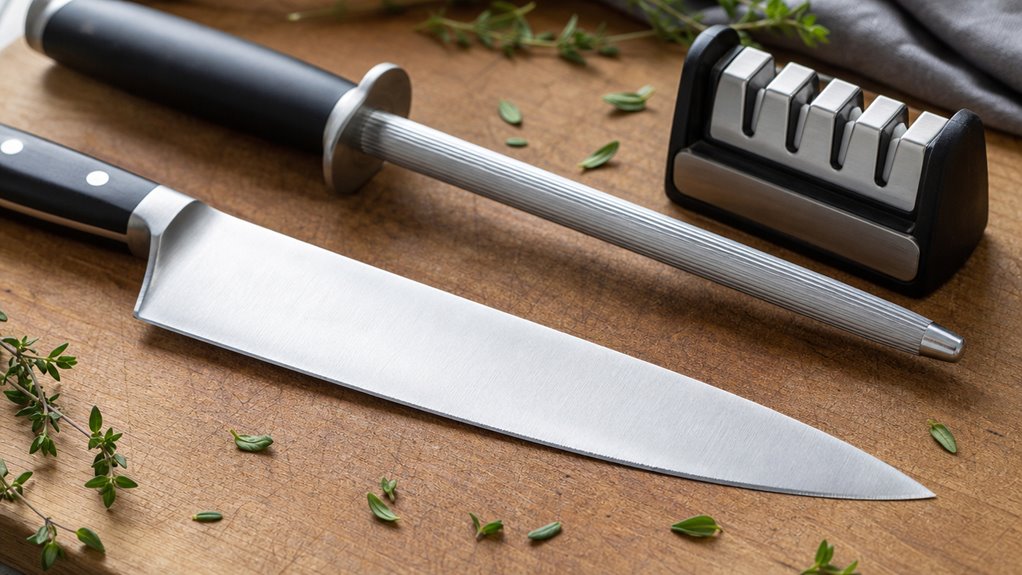
You actually need just two tools: a $15 ceramic honing rod for quick daily edge realignment, and a $20 steel rod if you want a slightly faster reset but you’ll have to watch pressure because it’s more aggressive. If you keep reaching for diamond rods or pull-through sharpeners, you’re usually trading “maintenance” for unnecessary steel removal and quicker geometry damage, especially when the blade only needed straightening. For each tool you buy, be clear about the job it does: ceramic for rolling, whetstone-level sharpening only when honing stops bringing the crisp feel back.
Ceramic Honing Rod at $15 (The Daily-Driver Pick)
If you want the simplest daily-knife habit that actually fixes what dullness does, a $15 ceramic honing rod is usually the right tool. You get edge realignment—no steel loss—using light pressure and 5–10 passes per side. It’s a daily-driver fix for rolled edges, not wear.
- 10–12 in length fits most chef knives
- Fine grit refines bite
- Clean glazing with an eraser
- Limitation: dropping it can crack ceramic
Steel Honing Rod at $20 (Slightly Faster But Less Forgiving)
A $20 steel honing rod can feel a bit faster than ceramic because its micro-ribbed surface grabs the edge more aggressively and helps straighten a rolled or fatigued bevel with fewer strokes.
You get quick honing rod steel rod edge realignment in 3–6 per side, but it’s less forgiving: overpressure or wrong angle can burr, roughen, and slowly wear edges faster later.
Why Diamond Rods and Pull-Through Sharpeners Damage Knives Daily
Diamond rods and pull-through sharpeners don’t “maintain” your edge the way people hope—they mostly act like tiny sharpeners. You remove extra steel, grind past the rolled edge, and shorten edge life. Diamond rods can micro-chip hard steels if you press, and coarse grits scratch the apex. Pull-through sharpeners force fixed angles and uneven bevels.
- Too much metal loss per use
- Worse edge geometry
- Faster dulling from deep scratches
- Heat stress on thin edges
The Combined Sharpening + Honing Schedule
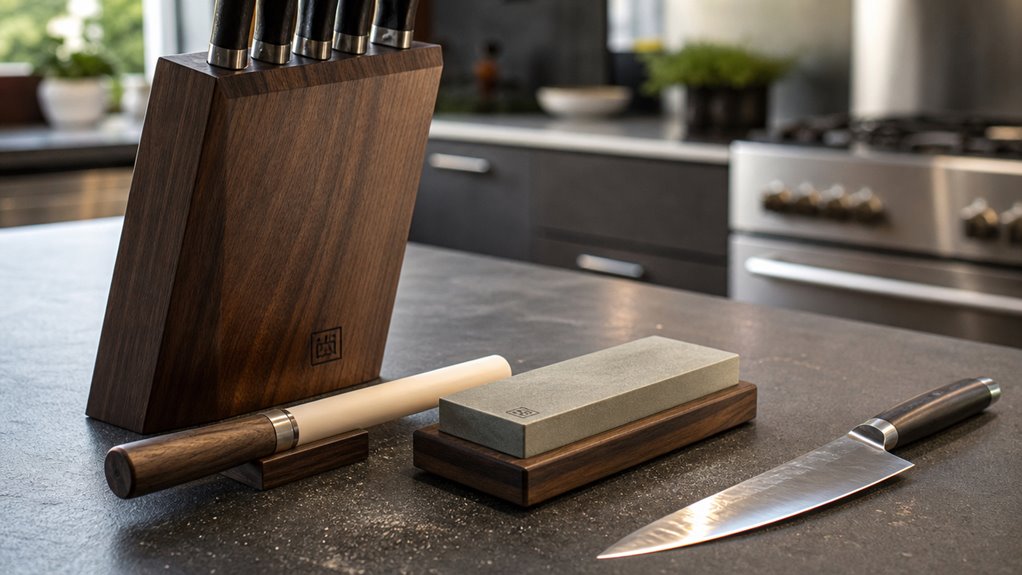
You should treat honing and sharpening as two different jobs: you hone every cook (or at least several times per week for regular home use) to fix rolled edges, and you sharpen only once or twice yearly on a whetstone to remove the worn-out steel that honing can’t fix. If you run a high-volume kitchen, you’ll likely hone daily and sharpen every 1–2 months, because performance starts slipping when edge wear stacks up. Keep that discipline and you’ll usually get a decade (or more) out of a knife, while the person who “sharpens” quarterly with metal-removing tools just shortens the blade faster.
Full Sharpening Once or Twice Yearly (Whetstone Required)
Once or twice a year, you’ll need to do real sharpening with a whetstone, not because honing stops working, but because honing only realigns the rolled edge. That’s the honest honing vs sharpening difference in knife edge maintenance. If honing won’t restore bite, you need whetstone sharpening.
- Use 1000 then 3000-6000 grit
- Repair chips with coarse first
- Spend 15–20 minutes
- Expect 1–2 yearly cycles
Honing Every Cook for High-Volume Households
If you’re cooking for a busy house, your knife usually doesn’t “go dull” first. In high-volume households, you fix rolled edges with an honing rod for edge realignment before real dullness sets in: 5–10 strokes per side daily for the main knife, every 2–3 days for others.
Use weekly 15–20 strokes; switch to whetstone when honing stops helping.
Limit: ceramic rods won’t correct chips.
Why a Decade of Honing Discipline Outlasts the Knife That Sees Quarterly Sharpening
A honing rod and a sharpening wheel don’t fail your knife in the same way, and that difference shows up fast once you look at wear over time. If you hone often, you realign the rolled edge without metal loss, so knife dull fast slows for years. But a quarterly sharpening schedule grinds away steel repeatedly and rebuilds geometry.
- Weekly 30 sec honing
- 5–10 strokes/side
- Semi-annual whetstone
- Avoid pull-throughs
Frequently Asked Questions
Can I Hone a Knife Without It Feeling Sharper?
Honing realigns a rolled edge but does not remove metal to create a new edge. A knife can regain its bite and cutting ability without feeling dramatically sharper. If the edge is chipped, rounded, or severely worn, honing will not restore sharpness. Only whetstone sharpening grinds away metal and creates a fresh apex.
What’s the Correct Angle for Honing and Does It Differ by Brand?
Honing angles vary by knife type: Western knives typically require ~20° per side, Japanese knives ~15° per side. Brands differ: Wüsthof recommends 14°, Shun/Kai 16°, Global 10–15°. Always match the honing angle to the knife’s original bevel.
Will Honing Wear Out My Knife or Remove Any Steel?
Honing realigns a rolled edge rather than removing steel. Minimal metal loss occurs with light pressure and a smooth ceramic or steel rod. Aggressive abrasive rods or excessive pressure will remove steel.
How Do I Know When Honing Isn’T Enough and Sharpening Is Needed?
Honing is not enough when the knife fails to slice cleanly after honing. A dull edge that tears food, fails the paper test, or requires excess cutting pressure signals the need for sharpening. Visible damage like chips, nicks, or flat spots on the blade also confirm sharpening is necessary. At that point, a whetstone is required to restore the edge.
Are Electric Pull-Through Sharpeners Ever Safe for Daily Maintenance?
Electric pull-through sharpeners remove too much metal for daily use. They are not safe for regular maintenance. A honing rod is the correct tool for daily edge upkeep. Pull-through sharpeners should only be used occasionally when a blade is severely dull. After using one, follow up with a honing rod or whetstone to refine the edge.
Conclusion
You don’t need a new sharpener every time your knife feels “off.” Most dullness is a rolled edge you can fix with honing, usually in about 30 seconds, without shaving off steel. Pull-through sharpeners grind and permanently change the edge angle, so they can make things worse if you used them for alignment. Keep a honing routine, then sharpen only when honing can’t restore the bite.