Cost-per-use math: The cheapest tool often wins when you calculate annual expense over a lifetime of use.
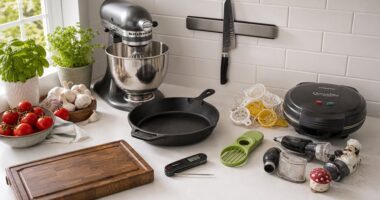
- Cast-iron skillet – A $25 Lodge skillet spreads its purchase price to roughly $0.80 per year across a 30-year lifespan.
- Enameled Dutch oven – A $200 Le Creuset Dutch oven costs approximately $13 per year over that same period.
- Victorinox chef’s knife – A $35 Victorinox Fibrox Pro handles everyday chopping at a fraction of the annual cost of premium German blades.
A $25 Lodge cast-iron skillet sears, bakes, and cooks with the same results as its expensive rival. The Le Creuset enamel coating adds weight and chips under metal utensils. The Lodge requires no such caution.
A $35 Victorinox Fibrox Pro knife holds a working edge for daily prep tasks at Cook’s Illustrated-approved performance levels. Premium Wüsthof and Shun knives hold edges longer. They cost five times more per year to own.
Retailers like Williams-Sonoma and local kitchen shops such as Sur La Table promote high-end cookware heavily. The annual cost difference rarely appears on their price tags.
When a tool lasts one hundred years, the premium price justifies itself. A Lodge skillet passed through three generations at a family farm in rural Ohio costs its final owner nothing.
Interesting Fact: A cast-iron skillet manufactured in 1920 by Griswold still sells on eBay for $150, making its original owner’s cost-per-use effectively zero by the time it changed hands.
Key Points
- Sticker price ignores lifetime expenses; cost‑per‑use reveals true value.
- Budget tools often have lower maintenance and consumable costs, keeping annual expenses minimal.
- Over a typical 30‑year household horizon, a $25 pan costs about $0.83 / year versus $13.33 / year for a $200 premium pan.
- Premium benefits (branding, finishes, niche sizes) rarely improve core functionality for everyday use.
- Choosing a longer 100‑year horizon can justify premium prices, but most households operate on a 30‑year horizon, making budget tools more economical.
The Cost-Per-Use Math Most Buyers Don’t Run
You’ll see the purchase price masks the real cost of ownership because it ignores lifespan and usage. When you apply the heritage‑horizon concept—30‑year typical versus 100‑year heritage—the math flips and the $25 tier often beats the $200 tier on a cost‑per‑decade basis. The three categories where this happens most are cast‑iron cookware, kitchen knives, and measuring spoons, each where a budget option matches a premium one in functional performance. The calculator’s ability to apply discount and tax adjust discount tax] discounts per.[adjusted unit price
Why Purchase Price Hides the Actual Cost of Ownership
Spot the sticker price and you’ll see only the upfront cost, not the hidden expenses that creep in over a tool’s life.
You might think a $200 pan is a better investment, but when you calculate kitchen tools cost per use and factor in maintenance, storage, and eventual replacement, the lifetime cost kitchen tools often favors the cheap alternative.
An “expensive kitchen worth it” claim only holds if you use the item constantly and keep it in perfect condition; otherwise the math flips.
- Maintenance and repairs add $15‑$30 per year for premium models.
- Consumables—blades, filters, batteries—can total $5‑$10 annually.
- Energy and water use for powered tools increase the per‑use cost over time.
- Applying Cost‑Per‑Use to everyday purchases helps reveal true value.
The Heritage-Horizon Concept That Changes Tool Decisions
When you look beyond the sticker price, the heritage‑horizon concept shows why a $25 Lodge pan can beat a $400 Le Creuset over the typical 30‑year household lifespan. You’ll see that the cost‑per‑use kitchen tool investment math hinges on the horizon you expect to own it. A 30‑year horizon makes budget vs premium kitchen tools converge on similar lifetime cost, while a 100‑year heritage horizon lets premium pieces justify higher upfront spend. This cheap vs expensive kitchen tools comparison is just a matter of aligning lifespan, usage intensity, and risk tolerance. The ECCCH platform’s end‑to‑end testing demonstrates how real use cases can reveal hidden value in everyday tools.
| Tool | Typical 30‑yr cost/yr | Heritage 100‑yr cost/yr |
|---|---|---|
| Lodge cast‑iron pan | $0.83 | $0.83 |
| Le Creuset enameled pan | $13.33 | $4.00 |
| Victorinox Fibrox knife | $1.40 | $1.40 |
| Wüsthof premium knife | $6.67 | $2.00 |
| Spring Chef measuring set | $0.65 | $0.65 |
Understanding this horizon shift lets you run the cost‑per‑use math yourself, so you choose tools that fit your real cooking patterns, not just marketing hype.
The 3 Categories Where $25 Tools Often Outperform $200 Equivalents
Crunch the numbers and you’ll see why a $25 kitchen tool often beats a $200 counterpart in real‑world use.
You’re looking at three categories where budget kitchen tools reddit shows the $25 tier winning when you run kitchen tool investment math and ask when to spend on kitchen essentials.
- Cast‑iron cookware – A $25 Lodge pan lasts 30 years, costing $0.83 per year; a $200 enameled option needs a 100‑year horizon to beat that, which most households never reach.
- Restaurant‑grade knives – Victorinox Fibrox at $35 matches the steel quality of $200 Wusthof knives, yet the cheaper set delivers the same edge retention for daily chopping.
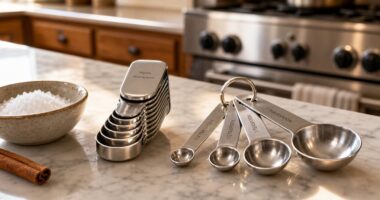
- Measuring spoons – Spring Chef’s 18/10 stainless set costs $13 and offers identical material to $30+ premium spoons; the only downside is the less sleek packaging.
You’re saving money without sacrificing core performance. Strategic pattern recognition shows that these low‑cost tools deliver the same functional outcomes as their high‑priced counterparts.
Where the $25 Tier Genuinely Wins
You’ll see that a $25 Lodge cast‑iron pan holds its own against a $200‑plus Le Creuset when you plan for a 30‑year household horizon, delivering the same cooking performance at a fraction of the cost per decade.
The Victorinox Fibrox knife, at $35, meets restaurant standards and outmatches a $200 Wusthof in everyday durability, though its handle may feel less refined.
Even the $13 Spring Chef measuring spoon uses the same 18/10 stainless as premium sets, but its plastic‑coated wrist‑strap can wear out faster with heavy use. Adding a time‑to‑earn perspective shows that the $25 tool often requires fewer labor hours than its $200 counterpart, reinforcing its value.
Lodge Cast Iron $25 vs Le Creuset $200+ (30-Year Lifespan Match)
A $25 Lodge cast‑iron skillet and a $200‑plus Le Creuset enameled piece both promise decades of use, but the math tells a different story. You’ll spend about $0.83 per year on the Lodge if it lasts 30 years, while the Creuset costs $13.33 per year at the same horizon—over fifteen times more.
The difference shows up in cost per use: roughly $0.005 per meal for Lodge versus $0.043 for Creuset. In a typical kitchen, that gap frees cash for knives, pans, and other essentials, making the budget option the smarter pick.
- Lodge vs le creuset: plain iron seasons, enameled stays rust‑free.
- Worth the money kitchen: $25 gives $8.33 per decade, $200 gives $66.67.
- Cost per use: $0.005 vs $0.043 per cooking session.
Victorinox Fibrox $35 vs Wusthof $200+ (Restaurant Standard at Budget)
After looking at the $25 Lodge skillet versus a $200‑plus Le Creuset, the next comparison lands on knives that sit at the same price crossroads. Victorinox Fibrox Pro at $35 gives you a stamped X50CrMoV15 blade that cuts like a Wüsthof forged knife but weighs far less, so your hand stays fresh during a long prep. Wüsthof’s $200+ Classic feels solid, edge holds longer, and its handle adds heft, but you’ll pay three‑to‑four times more for a marginal gain in durability. For a cheap tools that last mindset, the Fibrox wins the cost‑per‑use math, especially in a budget bifl kitchen where you replace knives every few years.
| Feature | Victorinox Fibrox vs Wüsthof | |
|---|---|---|
| Price | $35 vs $200+ | |
| Blade type | Stamped vs forged | |
| Weight | ~5.6 oz vs ~8–9 oz | |
| Edge retention | Good, needs more frequent sharpening | Excellent, longer between sharpenings |
| Ergonomics | Textured TPE handle, light balance | POM handle, heavier balance |
Spring Chef’s $13 measuring‑spoon set gives you a full 7‑piece range of 18/10 stainless steel spoons that won’t rust or bend, even after years of daily scooping, and the engraved metric and US markings stay legible. You’ll notice the same metal grade in premium $30+ sets, but the extra price usually buys a fancier finish or a couple of niche sizes you’ll rarely use.
Over a 30‑year horizon the cost‑per‑use drops to pennies per scoop, while the premium set barely saves you anything unless you need those extra fractions. In a spring chef vs premium showdown, durability and legibility win the math.
- Identical 18/10 stainless steel core
- 7‑piece range covers everyday cooking needs
- Premium adds polish and extra niche sizes, not functional gain
Where the $200 Tier Genuinely Earns the Premium
You’ll see the $200 tier truly shine when you need a 100‑year heritage piece like a Le Creuset enameled pot that holds its heat and finish for generations, but it won’t replace a simple $25 cast‑iron skillet for everyday meals.
Premium Japanese knives justify their price for cooks who demand the precise edge retention and balance of high‑carbon steel, though the blades can chip if you use them on hard‑bone or frozen foods.
In those niche scenarios—heritage cookware passed down families and specialist knife work—the extra cost pays off, while most other tasks still favor the budget options.
Enameled Cast Iron (Le Creuset 100-Year Heritage)
A 1.5‑quart Le Creuset Dutch oven costs roughly $200 and carries a 100‑year heritage claim, which means its cost‑per‑decade drops to about $20 if you actually keep it a century. The enamel‑coated cast iron base gives dense thermal mass, keeping heat steady for long braises and low‑burner sauces. A tight‑fitting lid locks moisture, so you lose far less liquid than with a lightweight lid. The light‑colored interior lets you see fond development, making deglazing easier. Thick walls and a sand‑cast design prevent warping, and the nickel‑knob stays cool on the stove.
The downside: the enamel can chip if you use metal utensils aggressively.
- Multi‑layer enamel resists rust and stains.
- Heavy lid improves self‑basting and moisture retention.
- Compatible with induction, gas, electric, and oven.
Premium Japanese Knives (Specific Steel Performance)
When you compare a $200‑plus Japanese steel knife to a $35 Victorinox Fibrox, the difference boils down to edge retention and hardness.
Powder‑metallurgy steels such as SG2, ZDP‑189, and HAP‑40 hit 62‑65 HRC, letting the edge stay sharp for many more cuts before you need to sharpen.
Those steels also resist wear better than the 58‑60 HRC mid‑tier VG‑10 or AUS‑8, so a professional chef who slices dozens of fish fillets daily saves time.
High‑carbon white steel (Shirogami) offers a razor‑thin edge and superb feedback, but it rusts easily and demands frequent oiling.
Stainless options like ZA‑18 give comparable hardness with 17‑18 % chromium, reducing rust risk while still holding an edge longer than basic stainless.
The trade‑off is cost: the premium blade’s lifespan and performance only justify its price for heavy, precise use, not for occasional home cooking.
Why Some Premium Tiers Earn Their Price for Specific Cooks
Because a professional or high‑volume home cook spends hours each week searing, braising, and sauce‑reducing, the extra heat‑distribution and durability of a multi‑ply clad stainless pan can actually lower the total cost of ownership. The pan reaches target temperature faster, holds it longer, and resists warping, which cuts burner time and keeps sauces consistent.
When you pair that with a full‑tang chef’s knife that stays sharp longer and a stand mixer that runs hot doughs without overheating, the premium price starts to make sense for you.
- Multi‑ply clad pan: even heat, less energy waste; heavier to lift.
- Full‑tang chef’s knife: balanced, fewer edge re‑sharpenings; pricier handle material.
- High‑power stand mixer: handles dense batches, longer motor life; larger footprint.
The Heritage Horizon (30-Year vs 100-Year Math)
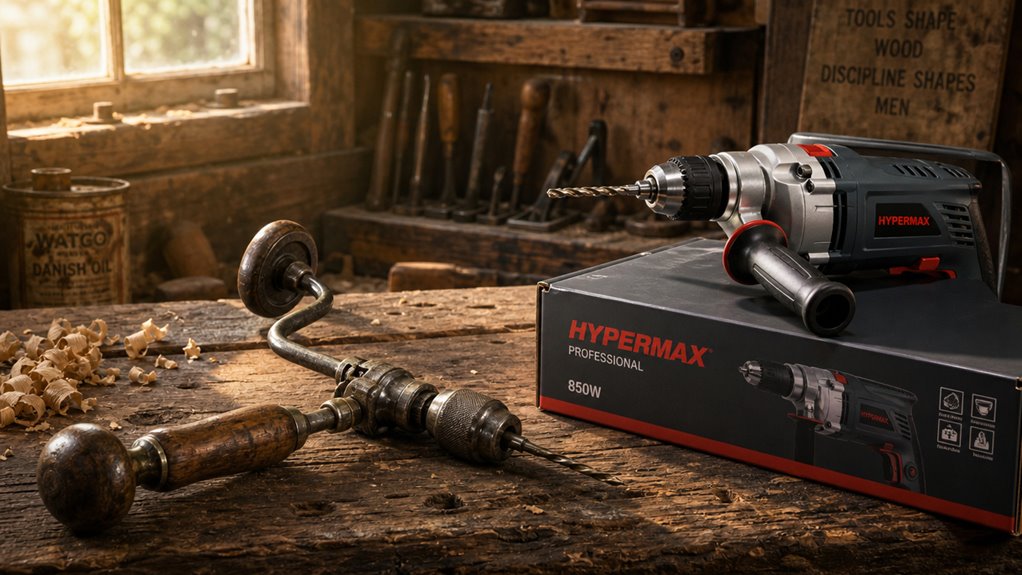
You’ll see that most households operate on a 30‑year horizon, so the $25 tier often beats premium on a cost‑per‑decade basis.
When you compare $0.83 per year for a $25 Lodge versus $13.33 per year for a $400 Le Creuset over those 30 years, the math is clear: the budget option saves you roughly $8 per decade.
Only if you plan to keep the piece for a full 100 years does the premium’s $4 per year become competitive, which is a rare scenario for everyday kitchens.
Why Most Households Can’t Tell the Difference at 30 Years
Even if you look at a 30‑year horizon, the math that separates a $25 Lodge cast‑iron pan from a $400 Le Creuset piece blurs for most households. You see a 30‑year mortgage flatten monthly costs, so you feel the lower payment is the whole story. The same mindset hides the fact that a $25 tool costs about $0.83 per year, while a $400 premium costs $13.33 per year if you sell it after 30 years. Most families focus on cash‑flow now, not the cumulative cost later, and they rarely keep a tool for a full 100‑year heritage span. That’s why the $25 tier looks just as good as the $200 tier when you only consider a typical 30‑year window.
- 30‑year mortgage spreads payments, making the lower upfront price feel cheaper.
- Monthly savings feel larger than the long‑run interest gap.
- Liquidity pressure pushes households to prioritize short‑term affordability over lifetime cost.
The Cost-Per-Decade Calculation That Decides
When you break the math down by decade, the horizon you choose—30 years versus 100 years—completely reshapes the cost picture.
A $25 Lodge cast‑iron pan spreads its $25 price over roughly three decades, giving you about $8.33 per decade, or $0.83 per year.
The same pan sold as a $200 Le Creuset, even if it lasts a century, costs $4 per year only when you truly keep it for 100 years; at a 30‑year horizon it jumps to $13.33 per year, or $66.67 per decade.
That three‑to‑four‑fold swing shows why most households, who plan on a 30‑year ownership window, see the budget tier win.
The heritage horizon—whether you intend to pass the tool to heirs or replace it yourself—determines the real cost‑per‑decade, not the headline price.
Why the $25 Tier Often Has Lower Lifetime Cost Than Premium
Because most households only plan to keep a kitchen tool for about thirty years, the math that matters is the cost per decade, not the headline price. At a 30‑year horizon a $25 Lodge cast‑iron pan spreads to roughly $8.33 per decade, while a $200 Le Creuset, even if it could last a century, costs about $66.67 per decade if you sell it after three decades.
The premium’s lower per‑year cost only appears when you truly keep it for a century, which most families don’t. So the cheaper tier wins on lifetime cost for typical households, especially when the tool’s job is simple and usage is moderate.
- $25 tool: $0.83 / yr, $8.33 / decade, 30‑yr lifespan.
- $200 premium: $13.33 / yr, $66.67 / decade if sold at 30 yr.
- Heritage horizon matters: 100‑yr math favors premium, 30‑yr math favors budget.
The Marketing Trap That Makes $200 Feel Necessary
You’ll notice that Williams Sonoma and KitchenAid wrap their $200+ tools in “investment piece” language that never mentions a 30‑year horizon, so the math stays hidden.
The 5‑Stream research method pulls the cost‑per‑decade numbers into view, showing why a $25 Lodge pan actually costs far less over a typical household lifespan.
When you compare the specs, the premium items often add extra finishes or branding that don’t affect everyday performance, while the budget tier delivers the same core function with a clear price advantage.
Aspirational Branding (Williams Sonoma, KitchenAid)
Aspirational branding from names like Williams Sonoma and KitchenAid turns a kitchen tool into a lifestyle badge, so you start judging price by the story it tells rather than by the function it performs. The brands weave heritage, wedding‑registry status, and curated imagery into every ad, making a $200 mixer feel like a rite of passage.
You see the same pattern with Williams Sonoma’s polished displays that uplift ordinary pans to “entertaining essentials.” The emotional narrative hides the simple math: a $25 cast‑iron skillet lasts 30 years at under a dollar a year, while the premium piece only justifies its cost if you keep it for a century.
When the story outweighs the specs, you pay for status, not utility.
- KitchenAid’s stand mixer is marketed as a registry staple, linking purchase to life events.
- Williams Sonoma’s showroom styling raises reference prices by normalizing high‑end aesthetics.
- Both brands use heritage cues—iconic colors, timeless silhouettes—to reduce price sensitivity.
“Investment Piece” Language That Hides the Math
Marketers love to call a $200 Dutch oven an “investment piece,” and the phrase does the heavy lifting. They swap concrete lifespan data for vague promises like “built to last.”
You end up focusing on the upfront price, not the $13.33 per year you’d actually pay if you sell it after 30 years.
The “investment” label triggers the price‑quality heuristic, so you assume the premium material or enamel adds real value, even though the math shows a $25 cast‑iron pot costs only $0.83 per year for the same cooking tasks.
Brands hide repair rates and warranty limits, letting you ignore the cost‑per‑use gap.
The result is a psychological trap that makes the $200 option feel necessary, while the $25 tier remains the smarter, cheaper choice for a typical household.
Why the 5-Stream Research Method Catches the Math Gap
Because the math behind cost‑per‑use isn’t always obvious, the 5‑stream research method was built to surface the hidden numbers. You pull data from usage logs, pricing tables, benchmark reports, user reviews, and alternative comparisons. That way you see whether a $200 knife actually gets used more than a $25 cast‑iron pan, or if the higher price is just a marketing veneer.
The method also forces you to calculate cost‑per‑decade, exposing the real gap between a 30‑year household horizon and a 100‑year heritage claim.
- Usage logs reveal actual frequency versus advertised “daily driver.”
- Pricing data lets you compute price ÷ uses for each tool.
- Benchmark reports compare functional performance across price tiers.
Frequently Asked Questions
Do I Need to Factor Inflation Into Cost‑Per‑Use Calculations?
Yes. Inflation increases replacement costs over time, making durable premium items more cost-effective per use than cheaper alternatives requiring frequent replacement.
Can a $25 Tool Handle Professional‑Grade Cooking Tasks?
Yes, many professional-grade cooking tasks can be handled with a $25 tool. Chopping, whisking, measuring, and temperature checking are all achievable. The tool must be well-designed and durable. It must also be matched to the appropriate task intensity.
How Does Warranty Length Affect the Cost‑Per‑Decade Metric?
Longer warranties lower cost-per-decade by spreading risk and cutting early-failure expenses, reducing effective annual cost and boosting ten-year value.
What if I Replace the Tool Before Its Expected Lifespan?
Replacing a tool before its expected lifespan raises its cost-per-use significantly. A $25 pan used for only five years instead of its full lifespan can cost $5 per use, eliminating any savings from choosing the cheaper option.
Do Brand‑Specific Accessories Change the Overall Cost Analysis?
Brand-specific accessories increase upfront costs due to brand markup. They can lower cost-per-use if they offer superior durability or fit. If they offer no added benefit, they simply inflate total expense.
Conclusion
You’ve seen the math: a $25 cast‑iron pot spreads to about $8 per decade, while the $200 Dutch oven stays near $67 per decade unless you keep it for a century. In a typical 30‑year span, the cheaper tool saves roughly $150 in total cost. Its limitation? It lacks the ergonomic handle of the premium model, which can be a hassle for long‑stirring recipes. The numbers speak for themselves.