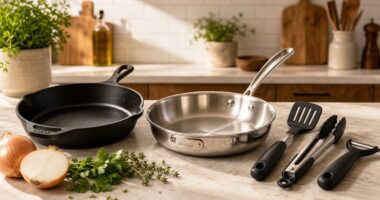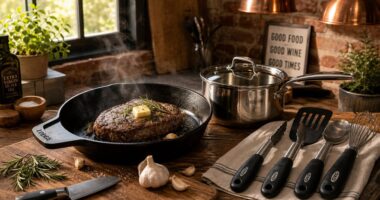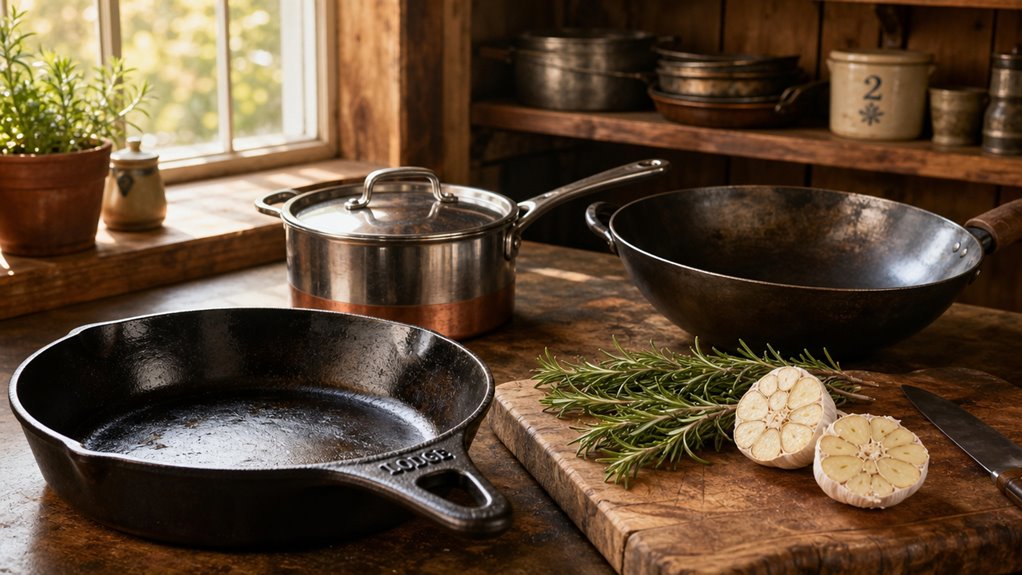

Durable Kitchen Tools: Materials determine longevity, not marketing.
- Lodge Cast Iron — uses ASTM A48 Class 30 gray iron for consistent heat retention
- Tramontina Stainless Steel — relies on 18/10 alloy composition for superior corrosion resistance
- OXO Good Grips — builds handles from Santoprene (TPV) for lasting comfort and chemical resistance
Lodge cast iron cookware contains ASTM A48 Class 30 gray iron, which delivers solid tensile strength across decades of use. The graphite flakes within this iron distribute heat evenly and reduce vibration during cooking. Lodge cast iron is brittle under sharp impact, so dropping a skillet on a hard floor can crack it.
Tramontina, a Brazilian brand sold widely at Walmart and Costco locations across the United States, formulates its cookware from 18/10 stainless steel. The 18/10 designation means 18% chromium and 10% nickel, which produces stronger passivation than the cheaper 18/0 grade. Tramontina stainless steel develops fine surface scratches over time, but the underlying metal remains protected.
OXO Good Grips handles contain Santoprene, a thermoplastic vulcanizate rated under ASTM D8086. Santoprene resists sustained heat and repeated exposure to dish detergents without degrading. The seams on OXO grips can tear if a user applies prying force directly against them.
Interesting Fact: Lodge has manufactured cast iron cookware in South Pittsburg, Tennessee since 1896, making it the oldest surviving cast iron cookware manufacturer in the United States.
Key Points
- BIFL longevity comes from disclosed material grades (e.g., ASTM/ANSI) that define real strength and corrosion resistance.
- Lodge’s cast iron uses ASTM A48 Class 30 gray iron with graphite-flake microstructure for durable wear and stable heat cycling.
- Higher-grade stainless (18/10 vs 18/0) resists rust and pitting better via a self-healing chromium oxide passive layer.
- Coatings and packaging are cosmetic first; they fail before the core metal, so durability depends on the base material.
- Construction details like tri-ply stainless-aluminum cores reduce warping and hot spots, while robust elastomers (e.g., Santoprene/TPV) resist chemical and heat cycles.
The Materials Story Most BIFL Marketing Doesn’t Tell
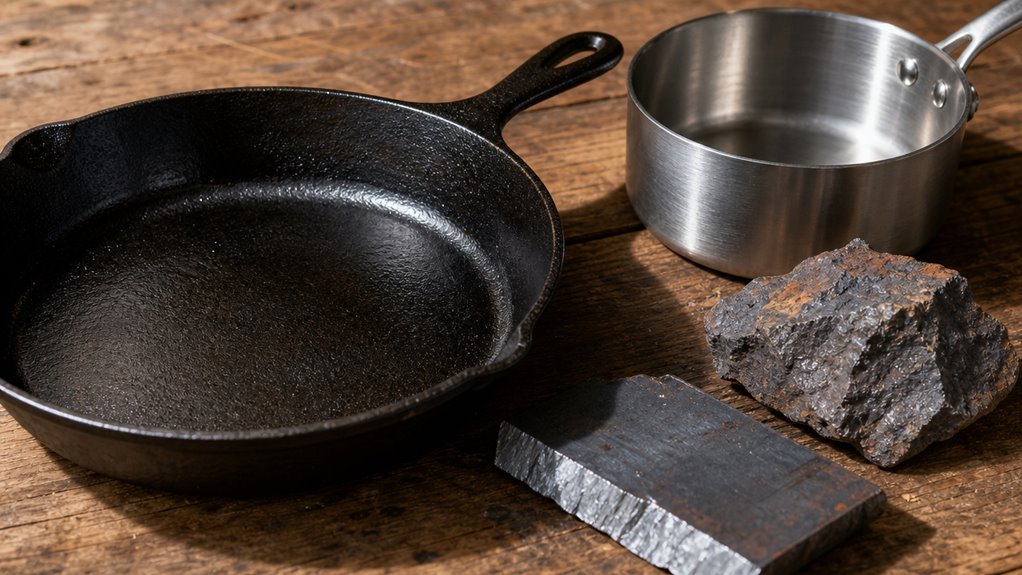
You don’t really buy “brand tier” with BIFL tools—you buy the material grade they’re built to, and that’s what controls failure modes over time.
For example, Lodge’s cast iron body is built around ASTM A48 Class 30 grey iron, Tramontina’s cooking surface uses 18/10 stainless (18% chromium, 10% nickel), and OXO’s rubbery grips rely on Santoprene (ASTM D8086) that’s meant to keep its feel through repeated cycles.
When a company just says “premium” without naming ASTM/ANSI-style specs, you’re usually looking at cost-saving substitutes in the alloy or coating stack—cheap in the fine print, not the cart price (Lodge’s one limitation: plain seasoned cast iron needs seasoning upkeep to stay at its best).
Lodge’s seasoning is specifically made using 100% natural vegetable oil, pre-seasoned to prevent rust in transit, which is part of why its cast iron surface can be nonstick without relying on PFAS-based coatings.
Why Material Grade Determines Lifespan, Not Brand Tier
Material grade sets the real lifespan ceiling, and brand tier just dresses it up. Your durability principle is simple: choose the right core metal. Cast iron and quality stainless resist wear, rust, and pitting better than cheaper grades. 18/10 beats 18/0 because nickel helps corrosion resistance. Coatings usually fail first, so “premium” means little without grade disclosure. In stainless cookware, the passive chromium oxide layer helps protect against corrosion and metal leaching during everyday cooking.
The ASTM and ANSI Specs Behind Lodge, Tramontina, and OXO
ASTM and ANSI standards don’t make brands look fancy, but they do act like guardrails for what you’re buying. You’ll see it in materials, not slogans: Lodge aligns with ASTM A48 cast iron; Tramontina backs 18/10 stainless with corrosion-tested logic; OXO leans on Santoprene that’s built for NSF/ANSI food safety. heat-transfer testing matters for kitchen accessories too—when a trivet can’t keep a safe surface temperature, even “heavy-duty” cookware can turn it into a countertop damage risk.
For Lodge specifically, its Rust Resistant Cast Iron collection is enabled by a patented heat-treating process, which is the boring materials-meets-processing detail behind why some cast iron can better tolerate dishwasher cycles.
| Brand | Spec anchor | Why it matters |
|---|---|---|
| Lodge | ASTM A48 Class 30 | rust resistance under abuse |
| Tramontina | 18/10 + ASTM/ANSI testing | pitting resistance |
| OXO | Santoprene (ASTM D8086) + NSF/ANSI | dishwasher durability |
| All brands | label discipline | fewer surprise downgrades |
| You | check disclosure | trade-offs stay visible |
Limitations: Lodge’s cast iron needs upkeep; OXO peeler blades aren’t for heavy chopping.
How Cheap Materials in Premium Packaging Fool BIFL Buyers
Ever notice how “BIFL” claims seem to start at the shopping-cart level, not the steel level? You see packaging tricks: thick boxes, spot UV, embossed labels, all to sell perceived premium while hiding material grade. Brands may use 201/202/430 instead of 304/316, then print “dishwasher safe” to dodge specs. Limitation: you still pay for the box, not durability.
With packaging material acting as the first brand touchpoint and adding “stylish” protection for storage and transit, it’s easy to confuse attractive presentation with actual tool longevity. Paper bags and wraps and paperboard boxes can be extremely cost-effective and lightweight for sandwiches, baked goods, snacks, and takeaway meals, but they don’t tell you anything reliable about the cookware’s underlying steel or long-term corrosion resistance.
ASTM A48 Class 30 Grey Iron (Lodge’s Material Anchor)
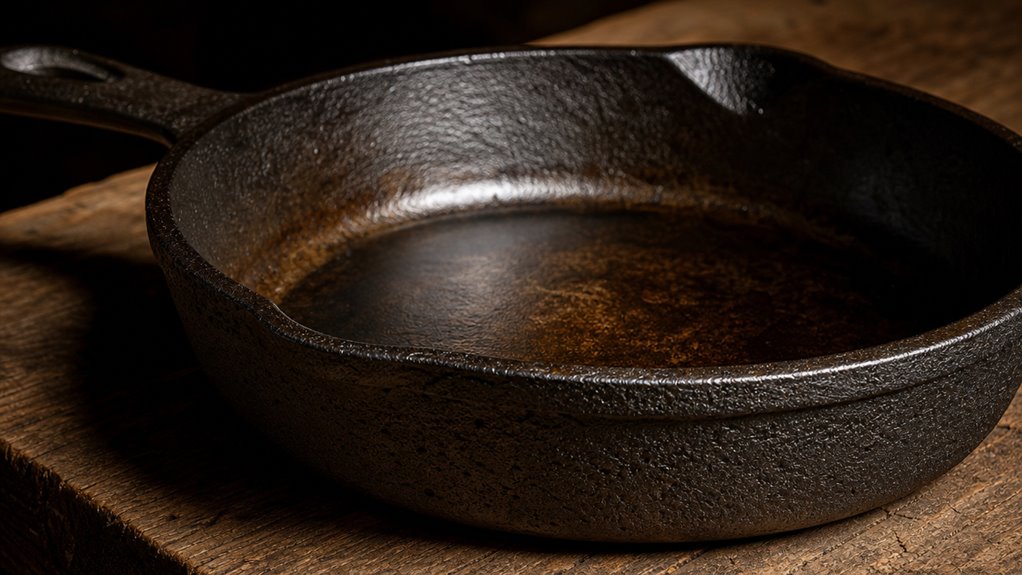
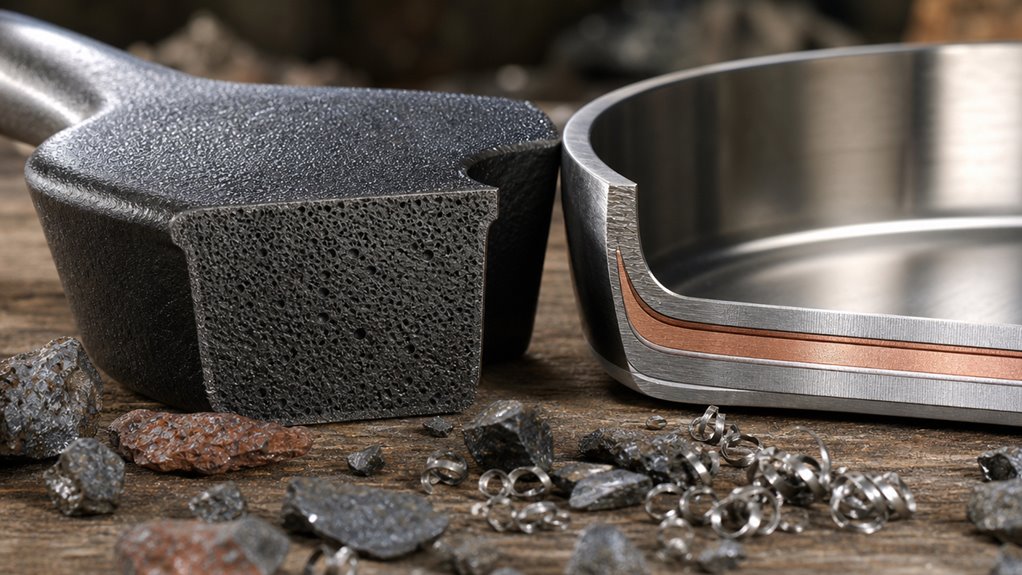
When you see ASTM A48 Class 30 gray iron, the headline 30,000 psi tensile strength tells you the casting has enough baseline “don’t-break” muscle for a heritage pan body, not just a pretty shape. One limitation, though is the usual cast-iron trade-off—your pan is heavy, and that weight can be annoying if you cook for one and hate lugging gear around. Gray iron consists of graphite flakes in a metallic matrix, which is why the fracture color tends to look grayish. Lodge’s edge is the foundry continuity: the spec stays tied to the same material behavior across generations, so you’re buying the same kind of metal even when marketing changes. The lamellar graphite flakes are a key reason gray iron offers strong damping compared with many other engineering materials, helping it absorb vibration during cooking and handling.
What 30,000 PSI Tensile Strength Means for Heritage Pans
What does “30,000 psi” actually mean for a heritage cast-iron pan like Lodge’s ASTM A48 Class 30? It’s gray iron tensile strength for fracture in a test bar, not your everyday pan loads, so you get a big safety margin. That graphite-flake structure also supports heat conduction and durability. CC-1 Class 30 gray iron is typically specified at a nominal tensile strength of about 30,000 psi. What does “30,000 psi” actually mean for a heritage cast-iron pan like Lodge’s ASTM A48 Class 30? It’s gray iron tensile strength for fracture in a test bar, not your everyday pan loads, so you get a big safety margin. That graphite-flake structure also supports heat conduction and durability.
| Grade | Minimum tensile |
|---|---|
| Class 20 | 20,000 psi |
| Class 25 | 25,000 psi |
| Class 30 | 30,000 psi |
| Class 35 | 35,000 psi |
| Class 40 | 40,000 psi |
Why Lodge’s Foundry Continuity Beats Marketing Continuity
Lodge’s durability starts with boring-but-real foundry continuity: they cast to ASTM A48 Class 30 grey iron and treat that like a fixed target, not a yearly vibe. You get gray iron microstructure that stays consistent, so material performance doesn’t swing with marketing. Once tooling, heat input, and machining are tuned, each batch matches older fracture patterns. ASTM A48 Class 30 is a common gray iron designation used to indicate a strength/quality level (Class 30) that keeps expectations grounded in measurable material requirements. Grey cast iron also has relatively low electrical conductivity by %IACS—about 7.4 % IACS for equal-volume values—so you’re looking at a material whose properties are more “process-stable” than “trend-dependent.” Limitation: cast iron still rusts without care.
How the Same Spec Survives Across 128 Years of Production
How does a pan you bought today end up behaving like one your grandparents used, not like some “close enough” alloy? You’re seeing ASTM A48 Class 30 gray iron stayed on spec for 128 years. That grade targets ~30,000 psi tensile and consistent graphite-flake microstructure, so heating, wear, and corrosion behave predictably. Because gray iron derives its name from dull gray fracture surface, the same graphite-flake structure that produces that characteristic fracture also supports reliable vibration damping and thermal performance from casting to casting. – Minimum tensile continuity
- Graphite flake damping
- Similar Brinell hardness range
- Stable thermal cycling response
- Durability you can verify
Limitation: Class 30 gray iron is brittle under impact.
18/10 Stainless Steel (Tramontina’s Material Anchor)
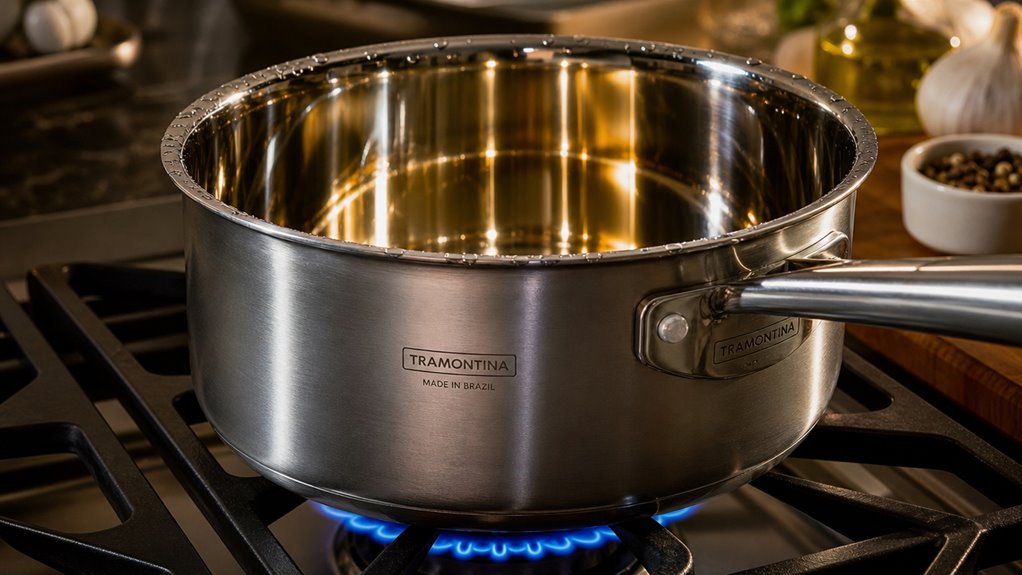
When you see “18/10,” you’re basically getting ~18% chromium and ~10% nickel, which helps the chromium oxide film resist rust and the nickel stability slows pitting from salty or acidic food. 18/10 stainless steel is also known for exceptional corrosion resistance, which is why it’s a common choice for long-lasting cookware. Tramontina’s ProLine uses that 18/10 cooking surface with triply construction (stainless–aluminum–stainless), so it holds shape and resists bonding failure better than cheaper single-ply pans at the same price. Higher nickel generally increases strength and durability, which supports the “last forever” reputation of well-made 18/10 cookware. Just know the trade-off: it can show fine scratches over time, especially if you mix metal utensils with rough cleaning pads.
Why 18% Chromium 10% Nickel Resists Pitting and Bonding Failure
18% chromium and 10% nickel is why 18/10 stainless holds up when your pan sees salt, acids, and the occasional dishwasher cycle that doesn’t get gentle treatment.
You get a chromium passive film that self-heals, cutting chloride-driven pitting resistance and slowing bonding-layer corrosion.
Nickel keeps the austenitic structure tough, so microcracks don’t start delamination.
- Cr₂O₃ barrier blocks moisture ingress
- Higher Cr boosts uniform passivation
- Ni stabilizes FCC for ductility
- PREN ~18–20 supports kitchen conditions
- Trade-off: heavy-chloride use can still pit
In particular, 18% chromium helps maintain the self-healing oxide layer even when the surface is repeatedly exposed to harsh kitchen ions.
It also provides superior corrosion resistance by forming and maintaining that protective barrier against rust and pitting.
The Triply Construction That Distinguishes Tramontina ProLine
After you’ve checked that you’re actually buying 18/10 stainless for the cooking surface, the next place to look on Tramontina ProLine is the triply build: stainless on the outside, aluminum in the middle, and stainless inside. That tri-ply, aluminum core evens heat so sauces scorch less. The magnetic stainless exterior keeps it induction-ready. Oven safe Limitation: it still needs careful handling to avoid dents on the thin outer layer.
Why Tramontina Tri-Ply Stainless Outlasts Cuisinart Single-Ply at the Same Price
If you’re comparing Tramontina tri-ply to a Cuisinart single-ply at the same price, the big difference isn’t the brand name—it’s what’s actually touching your food and how the metal stack behaves over time. Tramontina uses 18/10 stainless on the cooking surface plus a tri-ply aluminum core for steadier heat distribution and less warping than single-ply “mystery” steel.
- 18/10 stainless resists staining and pitting
- Tri-ply spreads hot spots out
- Less overheating means fewer surface micro-cracks
- Thicker cladding resists bulging
- Limitation: it’s heavier than thin single-ply
Santoprene and Stainless (OXO’s Material Anchor)
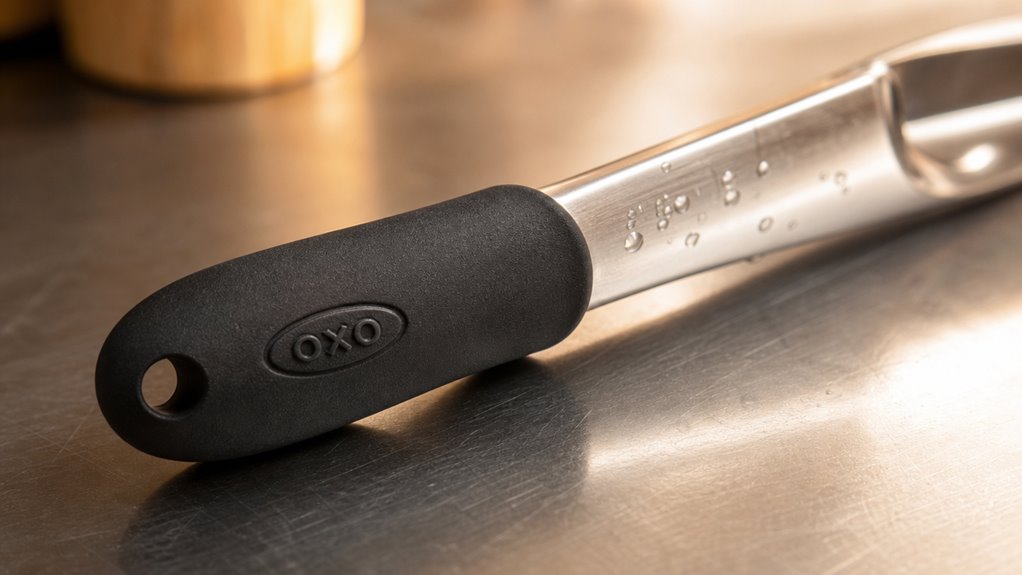
You’ll notice OXO’s “BIFL feel” mostly comes from a material pairing: a rigid stainless steel blade for strength and corrosion resistance, plus a Santoprene (ASTM D8086) grip/handle zone that stays flexible through lots of dishwasher heat and detergent exposure.
Santoprene’s TPV chemistry and low extractables matter here, because it’s designed to resist softening and set changes even after repeated wash cycles.
One limitation to remember: Santoprene grips can tear if you yank or pry them hard at the seam, so you get longevity by using them like tools, not pry bars.
Why ASTM D8086 Santoprene Survives Dishwasher Cycles for Decades
Ever wonder why OXO’s soft-touch grip still feels like “grip” after years of dishwasher abuse? You’re seeing Santoprene (TPV materials) do its job: EPDM rubber dispersed in polypropylene holds elasticity, resists hot water and detergents, and limits permanent deformation. That’s why dishwasher durability lasts, even with cycling heat.
- EPDM+PP TPV morphology resists hardening
- Low compression set preserves feel
- Chemical resistance beats many flex plastics
- Design prevents water-trap edge lift
- Limitation: surface gloss can dull over time
The Stainless Steel Spec Behind OXO Peeler Blades
What keeps OXO peeler blades from turning into little rust factories after a few dishwash cycles is the steel you don’t really see: OXO’s “Japanese stainless steel” blade selection (for both the Steel Swivel and Steel Y peelers) is meant to hold up in hot water, detergents, and occasional chlorides.
That stainless steel grade supports dishwasher safe corrosion resistance and helps edge retention in thin, hardened edges.
Limitation: chlorides can still pit over time.
Why Universal-Design Materials Outlast Aesthetic-Design Materials
So here’s the plain-material reason universal-design tools tend to outlast “aesthetic” ones: you build longevity into the parts that get abused every day. With OXO’s Santoprene, flex cycles, detergents, and acids don’t turn the handle gummy. Pair it with stainless steel joints that resist corrosion and dishwasher heat. This is universal-design, not decoration.
- Flex-stable TPV (ASTM-grade behavior)
- Broad temperature tolerance
- Acid/detergent chemical resistance
- Corrosion-proof stainless structure
- Limitation: Santoprene can scuff visibly
What Material Specs Tell You That Marketing Can’t
When a brand says “premium stainless” but won’t name the grade, you’re stuck guessing—420J2 is often the silent culprit, and nickel-free mixes tend to pit faster once salt or acid hits the surface.
You can spot the BIFL vs marketing-heavy split by the disclosure pattern: the better brands list the actual material (like 18/10 per ASTM-aligned standards) and any food-contact constraints instead of vague claims.
That same habit predicts 20-year longevity because stable, well-characterized specs stay consistent under regulation, while vague language lets “upgrades” become downgrades later.
Why “Premium Stainless” Without Grade Disclosure Hides 420J2
If you see “premium stainless” or “surgical steel” on a product listing but it never names a real grade like 304, 316, or even 18/10, you should assume the spec’s doing some hiding. That vagueness often points to 420J2: 12–14% chromium, harder steel, weaker corrosion. You want grade disclosure.
- Martensitic 420 is magnetic
- Heat treatment changes rust risk
- Chlorides pit faster than 304/316
- No nickel means less toughness at temp
- Kitchen food-contact needs corrosion resistance
The Disclosure Pattern That Separates BIFL Brands From Marketing-Heavy Brands
The real tell on BIFL cookware isn’t the logo—it’s whether the brand actually names the materials and numbers.
Look for material disclosure: ASTM/ANSI grades, alloy ratios, thickness, and handle/fastener details. Those durability signals track wear, pitting, and heat stress.
Marketing-heavy brands say “premium” or “even heating” without manufacturing processes.
Lodge names ASTM A48 Class 30; Tramontina publishes 18/10; OXO specifies Santoprene.
Limitation: fewer models, no surprises.
How Material Spec Disclosure Predicts 20-Year Brand Longevity
Material-spec disclosure is the simplest way to predict whether a kitchen brand can still stand behind its product 10–20 years from now, because marketing can’t tell you what’ll fail first. You’re looking for material disclosure tied to long‑term durability and real kitchen tool construction.
- ASTM/ANSI-grade details
- Alloy, coating, thickness
- Wear failure pathways
- Replaceable parts vs sealed assemblies
- Repeatable QC evidence
Frequently Asked Questions
Does ASTM A48 Class 30 Grey Iron Actually Prevent Warping Over Decades?
ASTM A48 Class 30 grey iron resists warping due to its graphite microstructure, which absorbs thermal stress. Its low thermal expansion coefficient minimizes dimensional changes under heat cycling. Thick casting walls add rigidity. However, improper storage, extreme temperature shocks, or manufacturing defects can still cause warping over decades.
What’s the Practical Difference Between 18/10 and 18/0 Stainless in Real Use?
Does 18/10 last longer than 18/0?
Yes. The extra nickel in 18/10 slows pitting, rust, and surface haze caused by salt, vinegar, and dishwasher cycles.
Does 18/0 stain or pit faster?
Yes. It dulls and pits sooner when exposed to acids and repeated heating cycles.
What keeps 18/10 looking brighter over time?
The higher nickel content resists corrosion and surface haze longer than 18/0.
Can 18/0 still be used effectively?
Yes, but it requires more careful maintenance to avoid premature staining and pitting.
Is Nsf/Ansi 51 Certification Required for Cookware Materials and Handles?
NSF/ANSI 51 certification is not required for home cookware materials and handles. It is a voluntary standard designed for commercial food equipment, and brands pursue certification by choice, not by federal mandate.
How Does Santoprene (Astm D8086) Survive Dishwasher Heat and Detergents?
How does Santoprene (ASTM D8086) survive dishwasher heat?
Santoprene remains stable at temperatures up to approximately 135°C, which exceeds typical dishwasher cycle temperatures.
Why doesn’t Santoprene break down from detergents?
Its chemical structure resists hot alkaline detergents commonly used in dishwashers.
Why doesn’t Santoprene permanently soften after repeated dishwasher cycles?
Crosslinking within the material prevents permanent softening or cracking under repeated heat exposure.
Does Santoprene lose its grip or sealing properties after multiple dishwasher cycles?
No, repeated dishwasher cycles do not degrade its grip or seal properties.
Are “Premium” Claims Without Alloy Ratios a Reliable Downgrade Warning?
“Premium” claims without alloy ratios are a downgrade warning. Reputable manufacturers disclose stainless grades like 18/10 or meet verifiable standards. Missing specifications signal possible cost-cut substitutions and unverifiable corrosion resistance.
Conclusion
You can’t trust hype, but you can read materials. Lodge’s ASTM A48 Class 30 grey iron, Tramontina’s 18/10 stainless, and OXO’s Santoprene + stainless tell you how they’ll wear under heat and water. Those specs outlast slogans, because they drive rust resistance, thermal behavior, and handle survival. Still, each has a trade-off: Lodge’s iron needs seasoning, Tramontina’s heavier stainless takes more effort to heat evenly, and OXO’s Santoprene can soften with constant high heat.