
Kitchen Organization: The 10 Tools That Earn Their Counter Space (And the 10 That Don’t)
Counter space: it determines what you cook, how fast you move, and whether your kitchen works for you or against you.
- Counter-space audit
- 10-tool core system
- Decluttering frequency zones
The counter-space audit operates on three time-based zones. Any tool used within the last 7 days earns its place on the surface. Any tool touched within 30 days moves to the front cabinet shelf. Any tool sitting untouched for 90 or more days gets stored in deep cabinets or removed entirely.
The 10-tool core system centers on these essentials:
- A Wüsthof Classic Chef’s Knife paired with a Boos Block cutting board
- A Lodge Cast Iron Skillet
- A 3-piece OXO utensil set — spatula, wooden spoon, tongs
- One small appliance — a Vitamix blender or Breville toaster oven
- Two staple ingredients kept accessible — quality olive oil and kosher salt
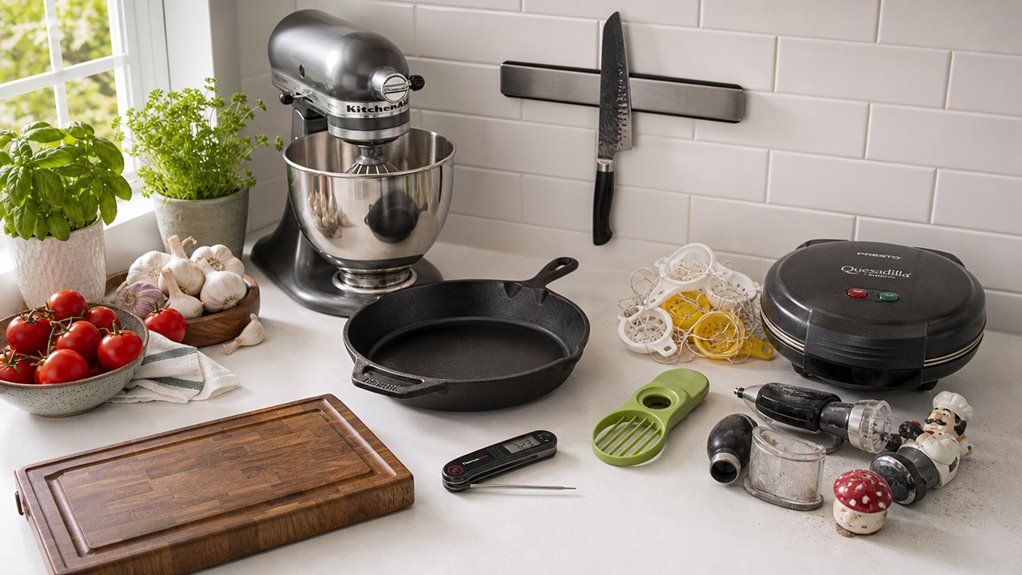
The “don’t” list claims real space without real return. The garlic press sits unused while a knife does the same job. The panini maker, the electric egg cooker, and the countertop yogurt machine all share one truth: used twice a year, they cost daily space.
Atlanta-based kitchen organizer Neat ATL recommends starting the audit on a Sunday morning before grocery shopping, when counters are at their most cluttered and the problem is most visible.
Interesting Fact: The average American kitchen counter holds 17 items at any given time, yet professional chefs typically keep fewer than 6 tools within arm’s reach during active cooking.
Key Points
- Use the 7/30/90-day counter-space test: last 7 days stay out, last 30 front-of-cabinet, 90+ stored or removed.
- Start with a 10-tool counter budget: chef knife and board, cast iron, a 3-tool utensil set, one small appliance, plus two patterns.
- Keep daily “workhorse” tools at arm’s reach to reduce friction and visual clutter; store occasional tools elsewhere.
- Favor counter-earning tools like thermometer, shears, bench scraper, and durable utensil sets over bulky, rarely used gadgets.
- Use the three-question test and replacement-cost mindset to decide if a tool truly earns counter space.
The Counter-Space Test (What Every Tool Has to Earn)
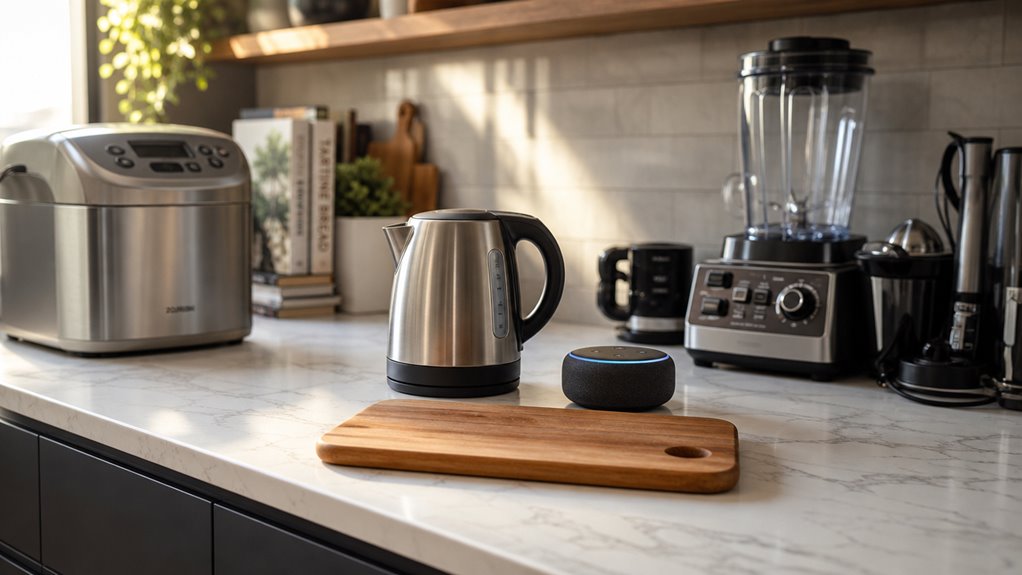
You earn counter space with daily use, not with “useful sometimes,” because cabinet time and visual clutter slow you down and add an ongoing hidden tax. Start with the 10-tool counter budget most apartment kitchens can actually manage: chef knife + cutting board, cast iron, a 3-tool utensil set, one small appliance, plus two patterns your household truly reaches for. Run the quick Counter-Space Test—used in the last 7 days stays out, the last 30 days goes to the cabinet front, and anything you haven’t touched in 90 days gets stored elsewhere or removed. When you’re trying to decide what stays, use declutter and define your essentials first so only the truly daily pieces earn their spots. As you run that test, consider moving one small appliance and its accessories onto a kitchen cart so counter clutter doesn’t creep back in while you cook.
Why “Used Daily” Beats “Useful Occasionally” Every Time
Why keep chasing the “useful someday” tool when counter space charges you every day? If you match frequency-of-use, you win: daily items stay within arm’s reach, cutting setup time and friction. Tools you use only occasionally hide in cabinets, not your prime counter. That keeps decluttering honest, reduces visual noise, and makes cleaning safer and faster. The counter-space test is about making “daily use” tools easy to access while using wall, under-cabinet, and rack-based storage for items that don’t need to sit out. counter essentials should be the only things you leave out, since everything else becomes easier to manage when it’s stored vertically or in pull-out bins.
The 10-Tool Counter Budget Most Apartment Kitchens Actually Have
Most apartment kitchens top out around an 8–12 item “always-out” setup, and the 10-tool counter budget is the simple way to keep that from creeping upward. Run the counter-space test: only tools used 3–5+ days weekly stay out. Then map it like this:
| Day use | Zone | Notes |
|---|---|---|
| Coffee | counter | habit |
| Knife+board | prep | daily |
| Air fryer | stove | frequent |
| Utensils | crock | small footprint |
| Salt/pepper | near heat | fast |
| Toaster | breakfast | quick |
| 1 mult | counter | replaces 2 |
| Kettle | backup | simple |
| Oil bottle | cooking | no spray |
| Sponge | sink | daily hygiene |
This cuts kitchen counter space and appliance clutter.
In a similar way to how a 10×10 kitchen comparison standardizes cabinet budgeting, the counter-space test standardizes what earns prime real estate. In the same spirit, Homestyler can help you plan your layout before committing to counter materials.
Why Counter-Space Cost Is the Hidden Tool Tax
Counter-space acts like a hidden tool tax: every extra appliance or gadget you leave out steals real prep area near the stove and sink, and that’s the zone you actually use. That’s the counter-space cost, your tool tax. Use the counter-space test: daily tools earn counter placement; weekly ones belong away. Clear counters cut grease-dust cleaning surfaces too.
- Redundancy duplicates functions, not usefulness
- Friction makes you grab less, not more
- Clutter shrinks safe knife space
- Workflow wins when tools stay reachable
Counter-space management is a lot like how the home office deduction works: if you keep your business space truly consistent and exclusive, you only “pay” what you can justify—whereas random or shared use doesn’t qualify.
The 10 Tools That Earn Their Counter Space
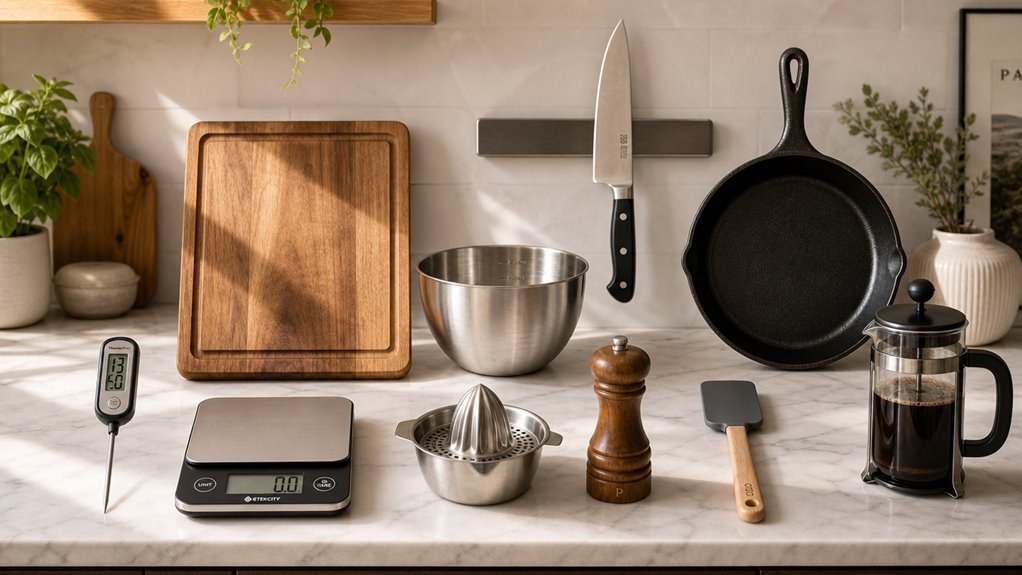
You earn counter space with tools you touch a lot, and you should start with the chef knife + cutting board daily-driver pair plus a cast iron skillet that actually sees the stove. Add your three-tool utensil toolkit (wooden spoon, spatula, tongs) and keep duplicates out unless they pass the “used in the last 7 days” rule. If you’re tempted by a $200 block set, you’ll usually do better with an under-$30 set you’ll really use, because the “might need it” knives become prime real-estate tax. Because of space limitations in small kitchens, it’s helpful to treat tidiness struggles as a design problem you can solve with better storage and workflow. Lodge 10.25 skillet is a best-in-class low-cost, heavy-duty daily driver that’s pre-seasoned out of the box and prized for reliable heat retention and browning when preheated.
Chef Knife and Cutting Board (The Daily-Driver Pair)
How do you stop a kitchen counter from turning into a junk drawer? Keep one chef knife and one cutting board out. They handle most prep (70–80%), and sharpness improves control and safety. Your knife stays longer with honing, hand-washing, and edge-guard storage; your board should be end-grain wood or quality rubber/composite, not glass or granite. Janka hardness strongly affects how quickly your knife edge rolls or rounds over time.
- 8–10 inch full-tang chef knife
- Hone every few uses; sharpen a few times/year
- End-grain wood “self-heals” after cuts
- Rubber/composite boards resist slipping
Limitation: end-grain wood needs occasional oiling
Cast Iron Skillet (Heritage Tool, Daily Use)
Why does a cast iron skillet earn its spot when so many kitchen gadgets don’t? You get steady heat after preheating, so searing, frying, and oven-to-stovetop cooking stay consistent. It works on gas, electric, or induction, and even grills. Proper seasoning builds a natural release for eggs and pancakes. In kitchen organization, it stays on prime counter space, but it’s heavy. Its polymerized seasoning helps create that natural nonstick surface over time. Superior Heat Retention ensures that once it’s hot, it keeps that temperature for more consistent browning and cooking across the whole surface.
Wooden Spoon, Spatula, and Tongs (Three-Tool Cooking Toolkit)
That cast iron skillet earns prime space because it gets used for real cooking moves, not fantasies. Your wooden spoon, spatula, and tongs earn theirs too: the spoon stirs, scrapes, and mashes; the spatula flips and lifts; tongs grip and toss without piercing. Keep one-piece wood, offset spatula, and springy tips. Hardwoods like maple, olive, and oak tend to be more durable, while glued or lacquered woods tend to wear faster. Heat-resistant up to 550ºF is helpful when you want your silicone tools to handle hot cooking reliably. Avoid dishwasher-claimed wood. Prefer FSC or food-safe oils. Use silicone limits, know heat ratings. Stainless for searing, watch nonstick scratching.
Why an Under-$30 Tool Set Earns More Counter Space Than a $200 Block Set
If you’ve ever looked at a $200 knife block and thought, “Sure, I’ll use all of this,” you’re not alone. Those block sets pack overlap, low-use blades, and block set waste that steals counter space. With under-$30 tools, you keep one chef knife, one paring knife, shears, peelers, thermometer, bench scraper, and hone. You cut prep time because fewer choices live out. And when you do need specialty results, an Flavour Shaker lets you crush spices and garlic cleanly without bits flying all over your counter.
The 10 Tools That Don’t Earn Counter Space (Reddit’s Verdict)
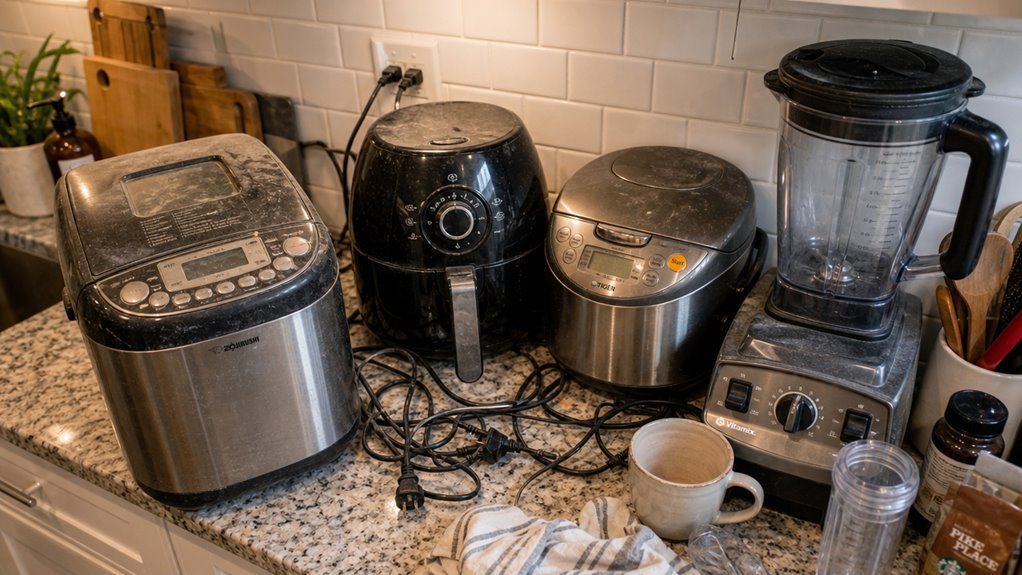
If you’ve got a garlic press, avocado slicer, or similar single-use gadget out on your counter, you’re paying for prime real estate with cleanup and limited payoff—minced garlic is doable with a knife and board, and the press still has small parts to wash.
That same logic hits bread makers and air fryers: if you’re using them “used twice a year” style, you belong them in cabinet storage, because their counter cost adds up while you’re not actually cooking with them.
And while Reddit often agrees that “counter-hog” appliances feel handy, one plain limitation is that bulky baskets and heavy units make them slow to get and harder to share space with prep.
Garlic Press and Other Single-Use Gadgets
Garlic press gadgets get a lot of votes in either direction, but most apartment-kitchen audits land on the same verdict: they don’t earn counter space. You’ll trade speed for messy cleaning, and a knife usually handles the job. As single-use gadgets, most get stored in drawers after a few months. If it’s not truly frequent, you lose the hidden counter-space tax.
- Difficult cleanup in hinges/holes
- Knife and board replace the function
- Low-use tools become junk-drawer clutter
- Some “self-clean” claims don’t prevent residue
Bread Maker, Air Fryer, and Other Counter-Hog Appliances
So you’re thinking about bread makers, air fryers, and similar “counter-hog” appliances, the kind that turn one corner of your kitchen into a permanent parking spot.
Bread makers often go from honeymoon to forgotten; store them in cabinets/back.
Air fryers can be grease-trap basket machines with novelty drop-off.
Prioritize decluttering and multi-function tools, and treat lone countertop appliances as monthly cabinet items.
Why “Used Twice a Year” Tools Belong in Storage, Not on the Counter
“Used twice a year” tools don’t belong on your counter because they steal prime real estate without earning the grab-and-go trade. You’ll get better counter space declutter by treating low-frequency kitchen tools as storage choices. This is storage vs counter residency: you can access them fast enough from a cabinet, but they block prep zones, trap grease, and slow cleanability.
- Store bulky specialty gadgets
- Keep cords and bases off counters
- Use drawers for narrow tools
- Protect landing zones near heat
The Cabinet Storage Strategy for Earned-Their-Place Tools
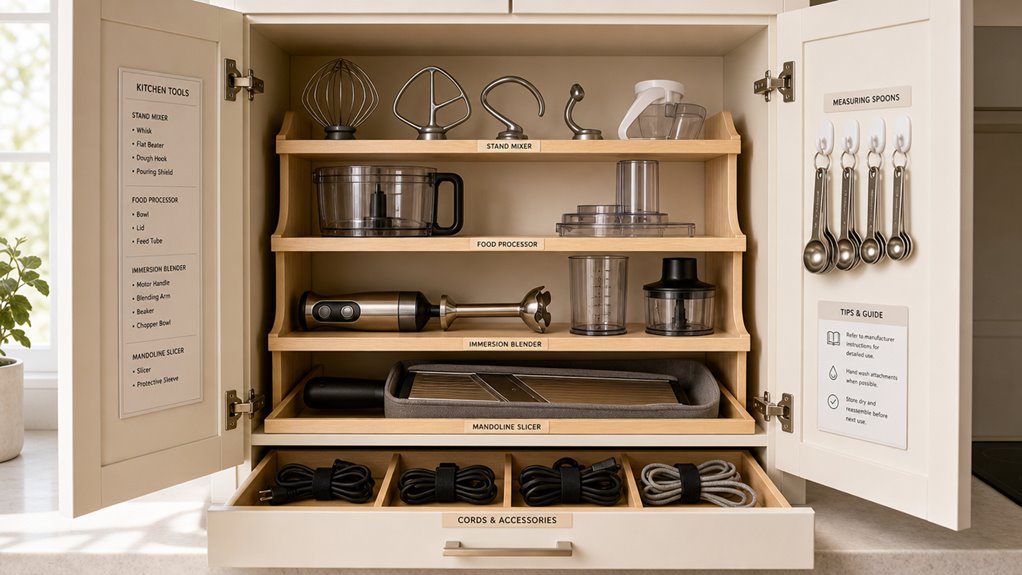
You’ll store earned-the-place tools at arm’s reach by putting true daily-use items in waist-to-eye-level cabinets nearest where you cook and prep, while heavy stuff like cast iron and mixers goes low to avoid strain. heavy items in lower cabinets can make retrieval safer and more comfortable during busy meal prep. Add functional zones so baking, beverages, cleaning supplies, and prepping each have dedicated cabinet areas that match how you actually cook. Hanging a pot rack (or under-cabinet rails) clears prime counter real estate for the tools you actually use every week, but it only works if you can keep the hanging zone curated and reachable. If you want a third option, a magnetic knife strip can beat drawer storage for grab-and-go speed, though it’s not great for super-steel delicate blades or if your wall/backsplash is hard to mount.
How to Store Daily-Use Tools at Arm’s Reach
Storing your daily-use tools at arm’s reach means earning back your cooking momentum by putting them in the cabinet front—right next to the prep zone—rather than letting “maybe someday” stuff creep in.
Use arm’s reach organization: low drawers for spatulas and tongs, upright boards, dividers for spoons. Cut walking time and protect kitchen counter space. Add: cabinet risers, door hooks, pull-outs. dividers help keep smaller items separated and grouped so you can grab the right tool without rummaging.
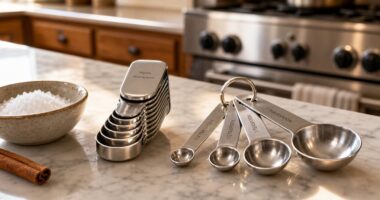
- Knife, board, measuring set in front drawers
- Skillets and colander in low side cabinets
- Cutting boards stored upright near prep
- Risers and pull-outs for fast reach
Why Hanging Pot Racks Free Counter Space for Real Use
Ever notice how your counter fills up with “stuff you need right now,” even when you’re not actually cooking anything?
With vertical storage and hanging pot racks, you move bulky pots, pans, and lids overhead.
You clear base cabinets, so counters stay for prep, not storage.
Individually hung cookware also protects finishes and improves drying, so you replace less and keep your tool count lean.
When the Magnetic Knife Strip Beats Drawer Storage
When you’re trying to earn your counter budget, a magnetic knife strip often beats drawer storage because it frees an entire drawer while keeping knives in your main prep zone. Use it for knife safety, visibility, and easy wiping.
- Fewer drawer steps, faster pick up
- Edge separation reduces micro-chipping
- Knives dry better than enclosed blocks
- Mount high if kids share the kitchen
The Honest Test for Whether a Tool Earns Its Space
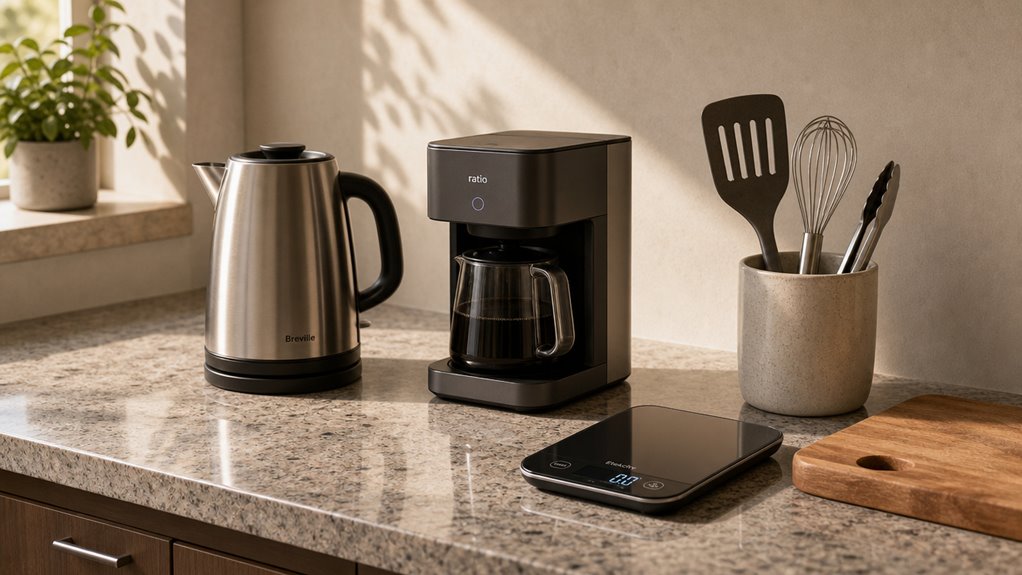
Run the “last time used” check: if you didn’t touch it in the last 30 days, it earns cabinet front; if it sat untouched for 90+ days, it’s a removal candidate. Then ask the “replacement cost” question—if you could buy a safe replacement for under about $15 within 24 hours, the storage hassle usually costs more than the risk of losing it. Finally, use the three-question test (“Do I use it weekly?”, “Does it replace anything essential?”, “Can I replace it fast if I’m wrong?”) to beat the “but I might need it” instinct that keeps counter space hostage.
The “Last Time Used” Question
How do you tell the difference between “I might use this” and “I’m just keeping clutter warm”? Use the last time used rule. If you haven’t touched it in 6–12 months, kitchen decluttering starts. It converts feelings into a date, so you protect counter space for daily tools and move rarely used items to storage.
- Last 7 days: counter
- Last 30: cabinet front
- 90+ : removal candidate
- Seasonal exceptions still need a plan
The “Replacement Cost” Question
Replacement cost cuts through the “I already paid for this” fog and asks a simpler, more useful thing: if this tool disappeared tomorrow, would you buy it again at today’s price for the same real job it does now?
In decluttering, that replacement cost lens favors workhorses you’d re-buy over backups.
If you’d only replace a specialty after a week, it’s costing counter space for no reason.
Why the Three-Question Test Beats the “But I Might Need It” Instinct
Would you use this on an average week? is a more useful question than “what if you need it someday.” After you look at replacement cost and realize that most specialty tools are cheap to rebuy, you can stop paying the hidden counter tax for hypothetical meals you never cook. Use the three-question test to protect counter space and reduce kitchen clutter.
- Used often enough?
- Unique job only it can do
- Easy to store, clean, retrieve
- If not, cabinet or removal wins
Frequently Asked Questions
What Counts as “Using” a Tool—Cleaning It or Actually Cooking With It?
What counts as “using” a tool?
A tool is “used” when its primary function is performed—cutting, mixing, or heating food.
Does cleaning a tool count as using it?
No. Cleaning is maintenance, not cooking.
What if a tool just sat out but wasn’t actively used?
Passive presence does not count as use.
Is rinsing a knife after it touched food considered use?
No. Only the act of cutting counts as use.
Does storing a tool in a prep area count?
No. Physical location does not equal use.
How Do I Decide Where a Tool Belongs: Counter, Cabinet Front, or Cabinet Back?
Where does a tool belong on the counter?
Use it within the last 7 days.
Where does a tool belong in the cabinet front?
Used within the last 30 days.
Where does a tool belong in the cabinet back?
Rarely used items only.
What is the core organizing principle?
A place for everything, and everything in its place.
Should I keep tools “just in case”?
No.
How often should I audit my tools?
Every quarter.
Which Specialty Gadgets Are Safest to Keep if I Bake or Meal-Prep Rarely?
Which specialty gadgets are safest to keep if you bake or meal-prep rarely?
A digital food scale, silicone spatulas, whisks, and a fine-mesh sieve are the safest to keep. They stay compact, serve multiple purposes, and work beyond just baking. A pastry cutter or dough blender is only worth keeping if you regularly make pie crusts or biscuits.
How Many Tools Should an Apartment Kitchen Aim For, Realistically?
Apartment kitchens realistically need 20–35 core items. For 1–2 people, 35–60 total kitchen items is a practical, non-excessive target.
What’s the Quickest Way to Audit My Counter Without Losing Usable Items?
Sweep counter end to end. Dump everything onto a nearby table. Toss expired or broken items. Keep only items used within 7 days on the counter. Store the rest in cabinets labeled “30 days.”
Conclusion
Now you’ve got a simple system: if you used it in 7 days, it earns counter space; 30 days means cabinet front; 90 days without a move is a removal candidate. You’re basically running a “paycheck” check for clutter. The goal isn’t minimalism, it’s speed and sightlines. Be strict, but fair. Start by relocating the obvious offenders first, so you can feel the difference while you cook.