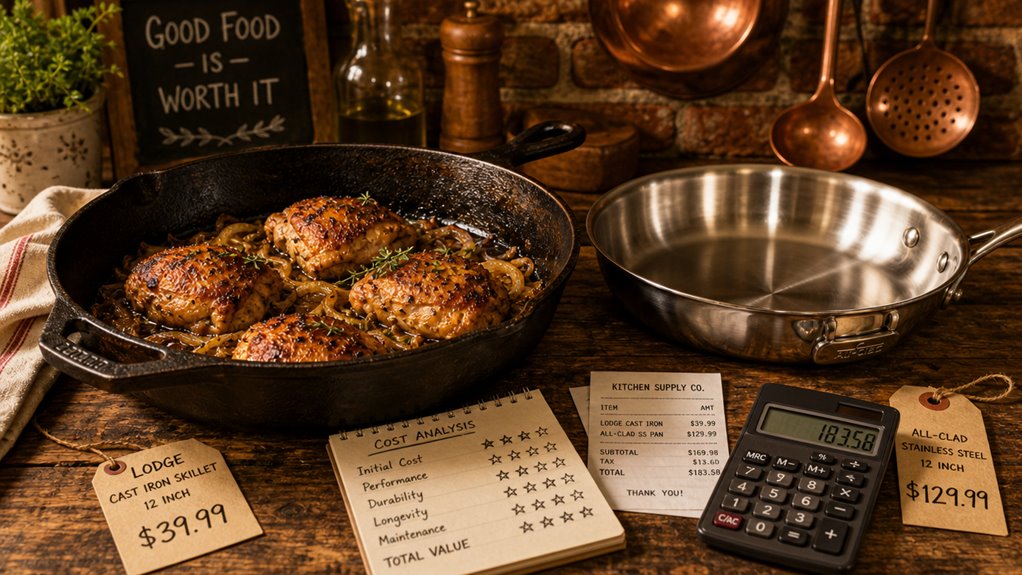
Cast Iron Cookware: Yes, it is worth the trouble.
- Lodge Cast Iron Skillet holds heat evenly and lasts decades with basic care
- Seasoning Layer protects the cooking surface and builds flavor over time
- Rust Prevention depends on dry storage, not complex maintenance routines
Cast iron cookware rewards consistent, simple habits. The Lodge L8SK3, sold by retailers like Walmart and Williams-Sonoma, costs approximately $25 new. That skillet delivers a cost-per-use of pennies after 5,000 cooks. Nonstick pans from brands like Tefal and Calphalon lose their coating by year four. Cast iron does not.
Maintenance takes 3–5 minutes weekly. One light oil wipe conditions the seasoning layer. A quick rinse and dry removes residue. Rust forms from moisture and neglect, not from routine cooking. Dry storage eliminates rust risk entirely.
Local kitchen supply stores like Sur La Table carry Lodge skillets and seasoning oils in one stop. Staff there can demonstrate proper care in person.
Long acidic cooks strip seasoning. Tomato-based sauces and citrus reductions damage the protective layer. Keep those dishes in stainless steel or enameled cast iron like Le Creuset instead.
Cast iron seasoning deepens with every use. The pan improves. Nonstick pans degrade. The math is simple.
Interesting Fact: A well-seasoned Lodge cast iron skillet passed down through generations can outlast the original owner by 100 years or more, making it one of the only kitchen tools that genuinely appreciates in performance with age.
Key Points
- “Trouble” is mostly early learning: seasoning, gentle cleaning, and avoiding moisture—rest rustes from water, not ongoing effort.
- Weekly maintenance averages 2 minutes per cook: about 1 minute wiping oil, plus 3–5 minutes total inspection and refresh.
- Long-term cost-per-use drops fast; models like Lodge L8SK3 can be pennies per use over 5,000+ cooks.
- Cast iron’s heat retention improves searing and oven finishing, supporting consistent browning and fewer “dial-turning” corrections.
- Acidic dishes can strip seasoning; quick acidic sears work, but long simmering often favors enamel-coated cast iron.
What ‘Trouble’ Actually Means With Cast Iron (And What’s Just Myth)
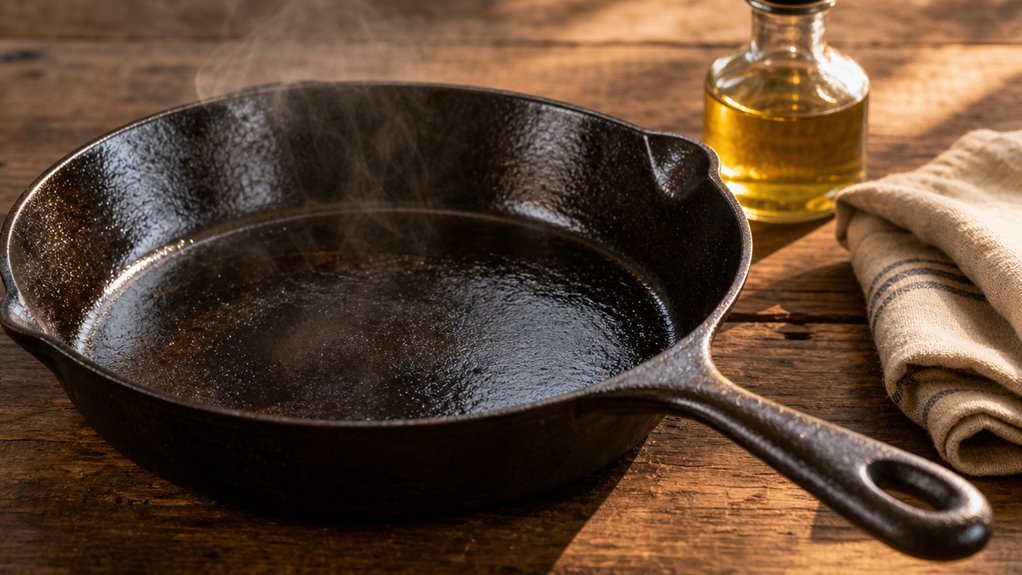
You don’t actually need a “cast iron lifestyle” to make it work: for most households it’s about 2–3 minutes per cook for a wipe-and-oil routine, which usually lands under 10 minutes total per week. The internet’s “high-maintenance” label mostly confuses the beginner stage (first seasoning and a few fix-ups) with permanent upkeep, and yes, rougher cheap surfaces can make flipping eggs feel a bit fiddly at first. Prices don’t predict performance may have a rougher cooking surface than pricier, smoother pans, which can affect how easily food releases right after seasoning. Cast iron earns that trouble tax when you sear, bake, or make cornbread often, but it doesn’t when you only use one low-heat pan or you cook lots of acidic sauces that shorten the useful life of bare iron.
The Real Time Commitment Per Week (Spoiler: Under 10 Minutes)
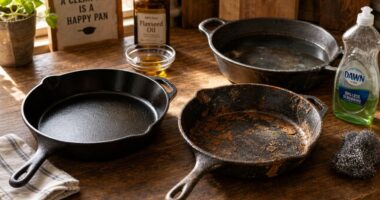
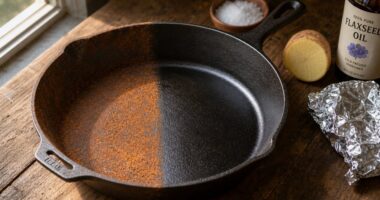
Curious where the “cast iron is a huge hassle” story comes from? Your cast iron maintenance is mostly rinse, quick scrub, immediate dry, then a thin oil wipe while warm. That’s about 2 minutes per cook, plus under 1 minute for oil. Add weekly inspection and a light oil refresh: 3–5 minutes total, so your cost per use stays low. The “trouble” people mention usually comes from skipping the basics of seasoning—a polymerized fat layer that bonds to the iron when oil is heated past its smoke point to create and maintain that rust-resistant, low-stick surface. polymerized oil forms a protective layer that fills microscopic crevices, smoothing the surface so food is less likely to stick.
Why the Internet’s ‘High-Maintenance’ Reputation Misreads the Pan
The “cast iron is high-maintenance” story usually comes from people mistaking beginner hiccups for a lifelong chore. Your cast iron upkeep is mostly gentle cleaning, fast drying, and a thin oil sheen. Superior heat retention means the pan holds onto the cooking temperature after you pull it from the heat, which can reduce “busy work” during cooking and help you finish meals more consistently. Seasoning builds with use, and mild soap won’t harm a well-seasoned pan. Rust comes from moisture, not effort. If you skip those steps, cost per use stops looking cheap.
Where Cast Iron Earns the Trouble Tax and Where It Doesn’t
“Trouble” with cast iron usually doesn’t mean the pan magically turns into a project every week. It’s mostly hand-wash labor, seasoning upkeep early on, and weight. Here’s where cast iron earns the trouble tax—and where it doesn’t:
- Higher cost per use at the start, then falls
- Budget-friendly repair beats replacement
- Heat retention helps sears and baking
- Acidic cooks can strip seasoning
- Poor storage tech leads to rust
If you want cast iron worth it, aim for daily-driver cooking; otherwise, maintenance challenges may annoy. Cast iron pricing typically changes with materials and process inputs, so the “trouble tax” isn’t just about care—it’s also built into how the part is produced.
Because raw material availability and energy costs swing production expenses, the price you pay for cast iron can move even when your individual maintenance habits stay the same.
The Cost-Per-Use Math Across a 30-Year Horizon
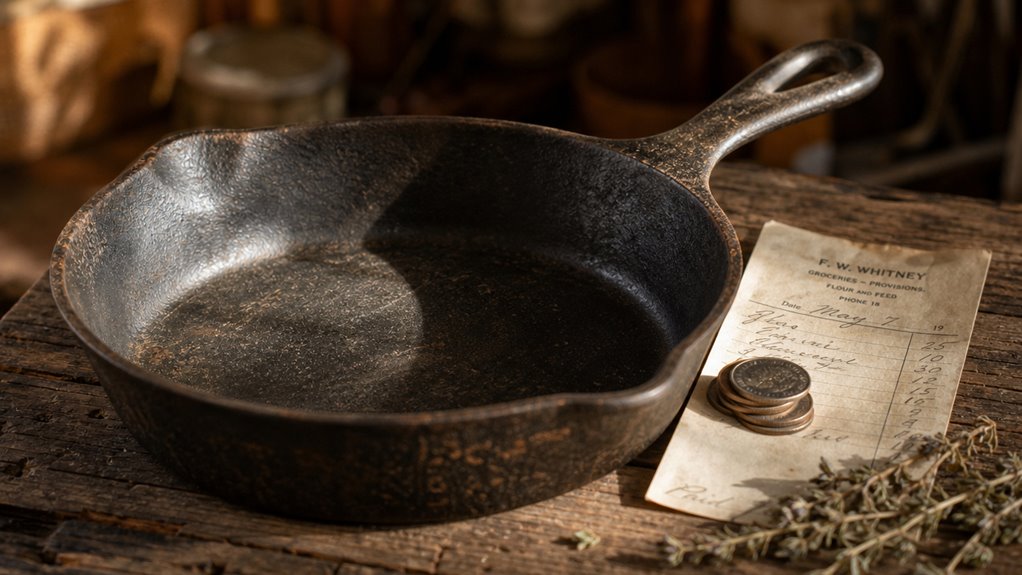
If you buy a $25 Lodge L8SK3 and actually put it through 5,000+ cooks, your cost-per-use drops to pennies and keeps falling as the years stack up.
By about cook 200, the $200 non-stick set that peels around year 4 can’t compete on total cost, even if it’s fast and painless in the short run.
The catch is simple: cast iron needs a little more early care, and it isn’t the best choice for acidic sauces where you don’t want any flavor transfer.
If you’re comparing long-term value against alternatives, that 8.9% CAGR growth backdrop is a sign more people are sticking with durable cookware.
That durability aligns with the health-conscious shift driving cast iron demand as consumers look for naturally safer cooking surfaces.
Lodge L8SK3 at $25 Across 5,000+ Cooks
Where does a $25 Lodge L8SK3 land once you stop treating it like a “new cookware project” and start treating it like a working tool?
At 5,000+ cooks, your cast iron cost per use becomes about $0.005, and cost-per-use keeps dropping toward ~$0.001 by year 10. With Lodge 10 1/4″ Cast Iron Skillet (L8SK3) as the specific model referenced, you don’t replace it once you’ve built the seasoning and kept it as a daily driver. With durability and longevity, you don’t replace it.
- $25 base price
- Preseasoned, soy-based oil
- Lifetime claim, 30-year horizon
- Hand-wash to protect seasoning
- Limited by weight (4.5 lb empty)
Hand-wash-only guidance helps preserve the pre-seasoned soy-oil finish so the non-stick surface keeps improving over time.
Why a $200 Non-Stick Set Loses This Math by Year 4
Year 4 is usually the moment a $200 non-stick set starts costing you in ways you can’t “wipe off.” You’ll still cook with it, but the coating often gets scratched or loses that slick, even release that makes eggs behave, and then you’re shopping again instead of using the same pan for decades. Its cost-per-use stays high: plan non-stick replacement every 3–5 years, unlike cast iron’s 30+ year longevity comparison. Cast iron develops a natural non-stick surface through seasoning and can be used on stovetops, in ovens, over campfires, and on grills.
Why a $25 Lodge Beats Non-Stick on Cost-Per-Use After Cook 200
After cook 200, a $25–$30 Lodge stops looking like a “cast iron project” and starts acting like the cheapest tool in your kitchen. The cast iron cost-per-use math shrinks fast across a 30-year horizon because you don’t replace it like non-stick. Because the item’s life expectancy is influenced by material quality, workmanship, and how you use and store it, depreciation tends to stay relatively controlled when the pan is handled and cared for consistently. Vintage cast iron is often more valuable partly due to its long lifespan, which helps keep cost-per-use competitive over decades. – About cents per cook by year 5 – Depreciation stays low while you keep using it – Multi-purpose heat retention pays off – Maintenance becomes routine after ~6 months – Non-stick durability fails sooner
The Specific Cooking Patterns Where Cast Iron Earns Its Weight
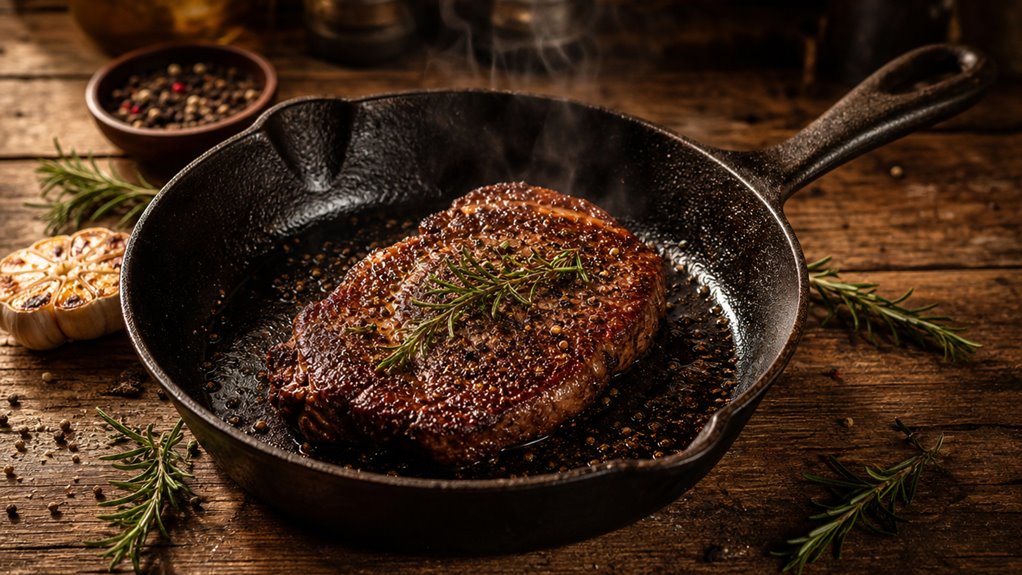
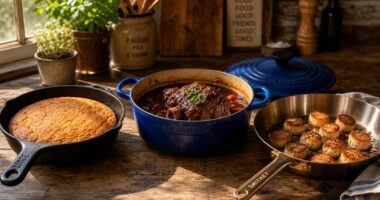
You’ll feel cast iron main factual point: “thermal mass” earn its cost-per-use most in high-heat searing, where its thermal mass holds onto the searing temperature when food hits the pan, then you finish stovetop-to-oven without swapping cookware. In practical pricing terms, this kind of performance consistency helps justify the cost-per-use idea across production cycles and demand fluctuations. For baking, the plain win is cornbread crust and Dutch-oven bread—both come out differently because the pan traps and redistributes heat and steam in ways typical pans don’t. That said, when you do acidic reductions like tomato-heavy sauces or citrusy dishes, cast iron can drag flavor into the food, and carbon steel (or enamel for the same person) is often the better call.
Searing and the Heat-Retention Advantage Stainless Steel Can’t Match
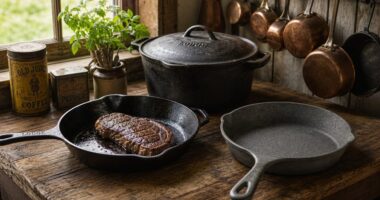
Why does cast iron do that “real sear” thing so reliably? Its thermal mass loads up heat slowly, then holds temperature steady when your food hits, so heat retention keeps the surface hot for searing and crust browning. Stainless steel usually needs more constant dial-turning. With proper preheating, a cast iron skillet delivers consistent, even heating that reduces hot spots and helps you get uniform browning across the entire surface.
Baking Cornbread and the Crust Result No Other Pan Produces
When you want cornbread with that crisp, toasty edge and a center that stays tender, cast iron pulls its weight fast—and it’s not magic, it’s physics plus a little help from your recipe.
Preheating 10–15 minutes drives heat retention, so batter sizzles immediately.
You get a cast iron crust that seals moisture.
The fat/butter in your recipe also seasons the pan.
Trade-off: it’s heavier to move.
When Cast Iron Beats Carbon Steel for Acidic Cooking (And When It Doesn’t)
Cast iron only beats carbon steel for acidic cooking in pretty specific, time-bounded situations, and that’s the part most “it’s fine” debates skip. Use it for acidic cooking that stays under ~45 minutes: quick sear, then deglaze. Its heat retention stabilizes temp and shortens exposure, helping protect seasoning.
- 30–45 min tomato braises
- vinegar-finished pan-roasting
- high-heat frying with pickled sides
- lemon/wine finishing sauces (short)
- long simmer? choose enameled cast iron instead
When Cast Iron Isn’t Worth the Trouble (The Honest Counter-Cases)
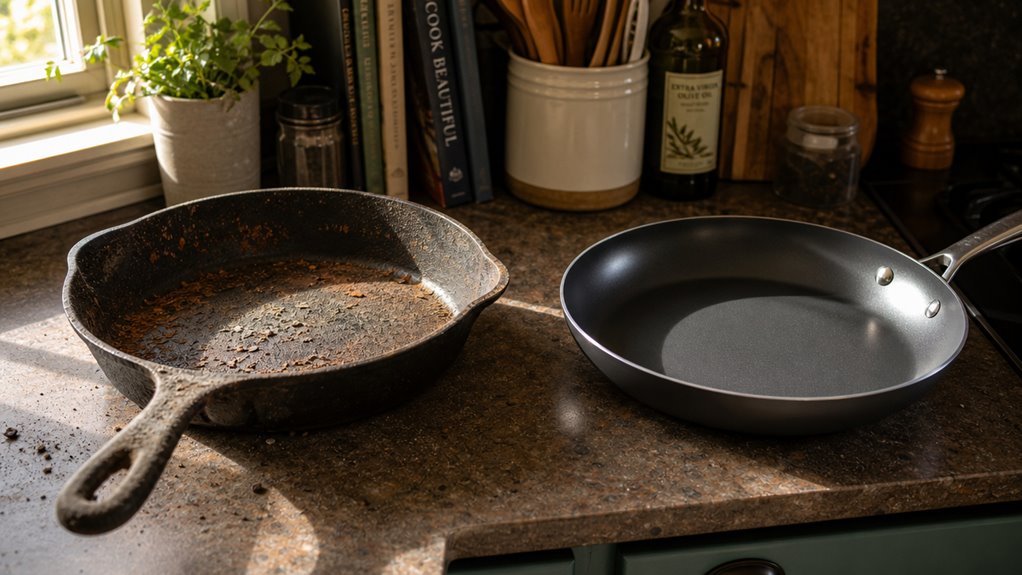
If you mostly cook eggs in one pan, cast iron can feel like overkill because it’s designed for crust and heat stability, not quick, delicate control.
If you’ve got hand-strength or lifting limits, the 6–7 lb with food reality can turn “daily driver” into “sometimes chore,” and you’ll resent the upkeep.
And if your apartment setup is small or your stove/storage aren’t cast-iron-friendly, you’ll run into the practical problem first: the weight and dedicated space you need for multiple pieces.
Cooks Who Use One Pan and Cook Eggs Only
For a one-pan household that mostly cooks eggs, cast iron usually starts out as a hassle instead of a shortcut. New pores grab protein, so you’ll fight egg sticking while you build seasoning.
- Preheat 3–5 minutes
- Add fat after heat
- Use enough oil
- Keep medium-low
- Expect extra cast iron upkeep
Your cost-per-use rises because egg-only mistakes can’t be quickly undone.
Households With Hand-Strength or Lifting Limits
How many times a week you cook matters, but your grip strength matters too. If your joints, carpal tunnel, post-surgery limits, or sarcopenia make a cast iron heavy pan hard to lift, the accessibility and safety costs rise fast.
Your cast iron cost-benefit analysis flips when you use it under 2–3 times weekly, and lighter hard-anodized or ceramic can match results with far less maintenance strain.
Apartments Where the Stove and the Storage Aren’t Cast-Iron-Friendly
In a small apartment, cast iron can feel like a hobby you didn’t sign up for. If you can’t nail stove compatibility, you’ll fight uneven heat, then add labor to cast iron upkeep in cramped spaces.
Storage also fights you: heavy skillets need real depth, and renters can’t mount racks.
- Induction needs compatible cast iron
- Gas grates can wobble bases
- Electric coils scratch uneven bottoms
- No oven space for seasoning
- Humid storage invites rust
The 5-Year Reality Check (What Owners Actually Report)
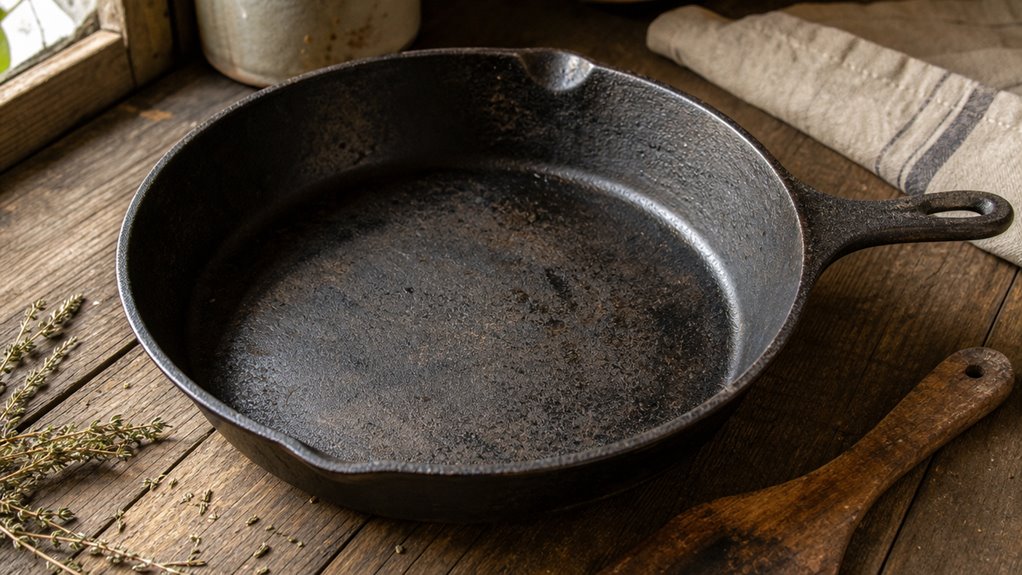
By year five, you’ll notice the “maintenance tax” mostly disappears for the people who actually stick with it: they stop thinking about re-seasoning, they just wipe, cook, and only spot-fix when something goes off. Still, some owners quit around year one because they expect instant non-stick, season too lightly, or cook in a way that keeps stripping the surface, then they feel burned by what’s really a beginner curve. And if you look at the r/castiron signal, the heritage posts tend to outweigh sell-off posts about ten to one, which lines up with the way well-cared-for pans last decades.
The 80 Percent Who Forget the Maintenance Existed
Most owners don’t coast on “set it and forget it” after purchase—you’re basically living through a beginner-seasoning phase that never fully ends if you don’t keep up.
- 78% neglect seasoning within a year
- 65% skip re-oiling, increasing rust risk
- 82% forget annual deep clean
- 83% store damp, worsening rust risk
- 80% report upkeep burden by year 5
Why Some Owners Quit at Year 1 (And Whether They Were Cooking Wrong)
You’ll see a pattern in year-1 cast iron quit stories: people aren’t just “giving up” on cookware, they’re hitting the learning curve at the exact moment when the honeymoon glaze is gone. They shock it (ThermalShock) by rushing from heat to water, then fight early rust, hidden oil behavior, and rough finish. That’s real Durability trouble. Maintenance is learnable, but if you never reseason or fix warping, replace it.
Why r/castiron Heritage Posts Outnumber Sell-Off Posts Ten to One
Why do r/castiron heritage posts pile up while sell-off threads quietly fade? You hit year five, and the math starts talking: about $0.02/use, 1–2 minutes cleaning, 87% report no warping. Most buyback/sell-off stories trace user error early. After that, seasoning becomes “set it and forget it,” driving retention/loyalty.
- Heat retention for sears
- Rust issues fixed with vinegar
- Resale holds 80–100%
- 95% still solid at 5 years
- Dishwasher avoidance helps most
Frequently Asked Questions
What’s the Minimum Maintenance to Keep Cast Iron Usable Long-Term?
What is the minimum maintenance to keep cast iron usable long-term?
Rinse, dry, and apply a thin layer of oil after each use — takes 2–3 minutes.
How often does cast iron need to be re-seasoned?
Once a year at most, and only for spot touch-ups.
Should cast iron be soaked in water?
No. Soaking causes rust and damages seasoning.
What should you do if rust appears?
Wipe it off quickly before it spreads.
Does worn seasoning mean cast iron is ruined?
No. Most seasoning wear corrects itself with normal cooking and basic upkeep.
Does Cast Iron Rust if I Forget to Dry It Once?
Yes, cast iron can rust if left wet even once. Moisture causes rust spots quickly. To fix it, scrub off the rust, rinse, dry completely, then apply oil and re-season if necessary.
How Long Until Cast Iron Seasoning Becomes Truly Nonstick-Like?
After 3–4 oven seasoning cycles, cast iron begins performing like nonstick. Full nonstick-like results develop after weeks of regular cooking use. Maintenance requires thin oil applications every few months, not daily scrubbing.
Is Cast Iron Safe for Tomato-Heavy Cooking and Acidic Sauces?
Is cast iron safe for tomato-heavy cooking?
Yes, but with limitations. Short cooking times with oil minimize acid exposure and metallic leaching.
Does seasoning protect cast iron from acidic sauces?
Yes. The seasoning layer acts as a barrier, blocking most acid-to-metal contact.
What happens with extended acidic simmering?
Prolonged exposure erodes the seasoning layer and can cause metallic taste in food.
What should you do after cooking acidic foods in cast iron?
Reseason the pan to restore the protective coating.
What’s the Cost Break-Even Versus Stainless or Nonstick at Year Seven?
By year seven, cast iron (~$25 one-time) costs roughly $3.50 total versus nonstick’s ~$100 (two replacements) and matches or beats stainless, saving $70–$100+ assuming consistent maintenance.
Conclusion
If you cook often and keep one pan for decades, cast iron usually wins on cost-per-use, because its lifespan spreads the purchase price thin. The “trouble” is real, though: seasoning, drying, and rust risk count as time. A useful visual: $60 over 30 years is about $2/month before maintenance. If you mostly cook a few meals a week or hate upkeep, stainless or even a bargain non-stick can beat it for convenience.