
Cheap Lodge Cast Iron on Amazon: Three Key Indicators Reveal Whether a Listing Is Authentic
Spotting a fake starts before the package arrives. Examine the Amazon listing photos closely for these warning signs:
- Blurry or misaligned LODGE logo — Authentic Lodge Manufacturing Company castings carry a sharp, centered stamp on every piece
- Mismatched specification lines — Real Lodge product pages list consistent dimensions, weights, and SKU numbers that align with Lodge’s official South Pittsburg, Tennessee factory specs
- Suspiciously low pricing — Lodge’s L8SK3 10.25-inch skillet retails between $30–$45 USD at authorized sellers like Walmart, Target, and Lodge’s own website; prices far below this range signal a counterfeit
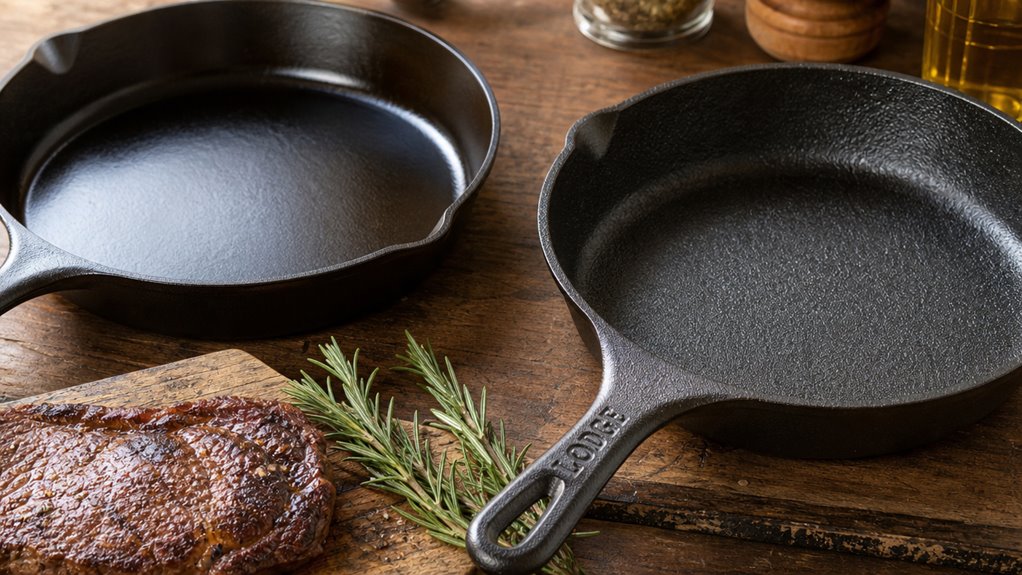
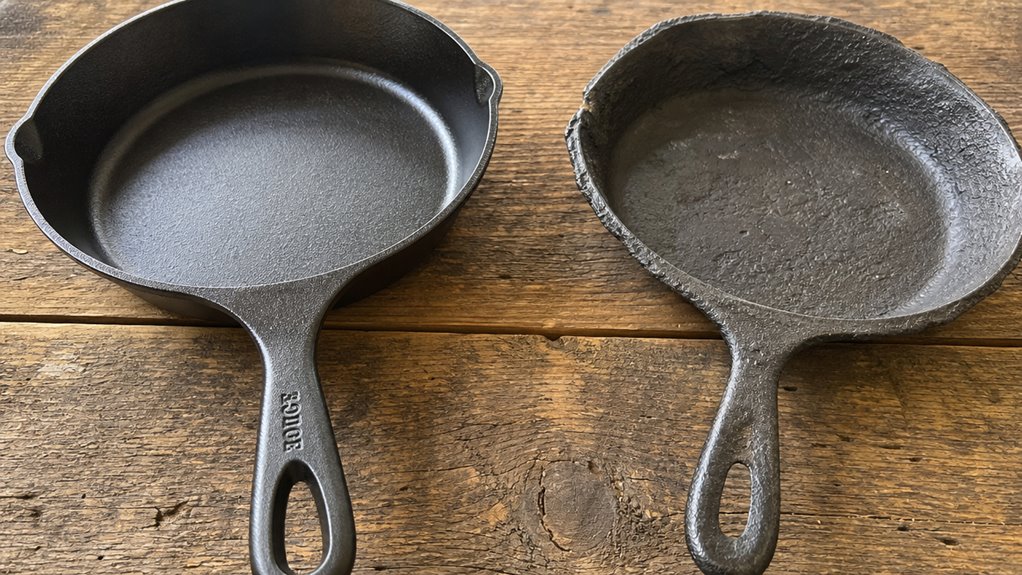
Once the skillet arrives, the Lodge L8SK3 reveals its authenticity through physical verification. Place the skillet on a flat glass or granite surface and test for wobble — a genuine Lodge sits flat without rocking. Weigh the skillet on a kitchen scale; the authentic L8SK3 registers between 4.4 and 4.6 pounds. Inspect the underside casting stamp and handle joint — real Lodge iron carries crisp, centered marks and a clean weld line. Counterfeit skillets use thinner, lower-grade iron that appears rough, powdery, or uneven under light.
Interesting Fact: Lodge Manufacturing Company, founded in 1896 in South Pittsburg, Tennessee, remains the oldest continuously operating cast iron cookware manufacturer in the United States.
Key Points
- Check for glossy, overly smooth surfaces and misaligned logos, model/spec lines, or SKU text on the listing photos.
- Weigh the pan; authentic L8SK3 is typically ~4.4–4.6 lb—under ~4–5 lb suggests a counterfeit.
- Inspect the underside stamp and foundry marks for crisp, centered casting; blurry stamps and pitted roughness are common in replicas.
- Verify pre-seasoning: real Lodge factory pre-seasoning is even matte-black; knockoffs often look patchy, streaky, or powdery.
- After delivery, do a wobble/flatness test on glass or granite; inconsistent casting causes rocking, unlike genuine Lodge.
Why Amazon Lodge Listings Aren’t Always What They Look Like
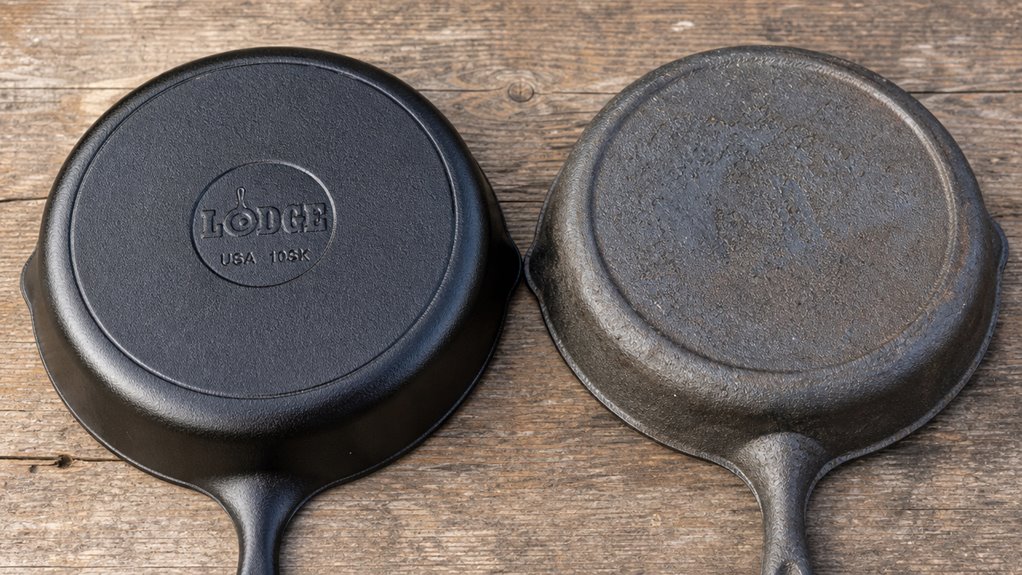
Since 2022, you’ve seen Amazon sellers “ride along” with Lodge branding, but their listings often hide the counterfeit pattern in the photos, font spacing, and odd casting mark placement. If you’re seeing a $19 Lodge on Amazon, look closely at the underside stamp position, the surface texture under raking light, and the pan’s weight—knockoffs commonly come in lighter. Since it’s cheaper, casting flaws or uneven surfaces can also show up in the form of misaligned divots or awkward pours, which are strong signs you’re not looking at a genuine piece. The one limitation: even careful photo checks can miss a well-lit, well-edited listing, so you still need your 5-minute inspection when the box arrives.
The Counterfeit Pattern That’s Grown on Amazon Since 2022
How did so many “Lodge” cast iron skillets on Amazon end up looking legit at first glance but failing the real-world checks?
Since 2022, you’ve faced a counterfeit pattern: Chinese replicas with matching boxes, but thinner iron. Do your verification and authenticity checks fast—weight under ~4–5 lb, rough/pitted underside, blurry stamps, and weak magnet pull. If it lacks Lodge batch codes or looks like plain packaging, skip it.
No-need dough can behave very differently depending on yeast freshness and water temperature, so you may think something is “right” at first glance when it isn’t. Counterfeits can also mirror how earlier cast-iron collectors learn to date and sort genuine pieces by their Griswold-style markings and construction cues, not just the outer look.
Why a $19 Lodge on Amazon Should Make You Look Twice
A $19 “Lodge” skillet on Amazon isn’t automatically a scam, but it should make you slow down, especially after you’ve seen the counterfeit pattern since 2022.
Many cheap listings involve fake branding, counterfeit markings, and foreign casting variability. Because Amazon sellers can ship cast iron made with quality-control standards that don’t match domestic expectations, you can’t assume the listing reflects the skillet you’d buy through authorized channels.
Don’t rely on photos alone.
Do quick verification: check bottom stamps, handle fit, and surface texture, plus weight.
If it seems 50% low, assume risk until proven.
Where Cheap Listings Are Genuine and Where They’re Knockoffs
Not every “cheap Lodge” on Amazon is a fake, but you should treat the listing source like the first clue, not an afterthought. Genuine Lodge authenticity usually shows in “Sold by” Amazon or Lodge Manufacturing and normal pricing. Watch price red flags: under $20, unverified sellers, blurry logos. Do quick seller verification: check returns and “Made in USA” markings. Knockoffs often ship rough and feel lighter.
The 5 Visual Red Flags on the Listing Page
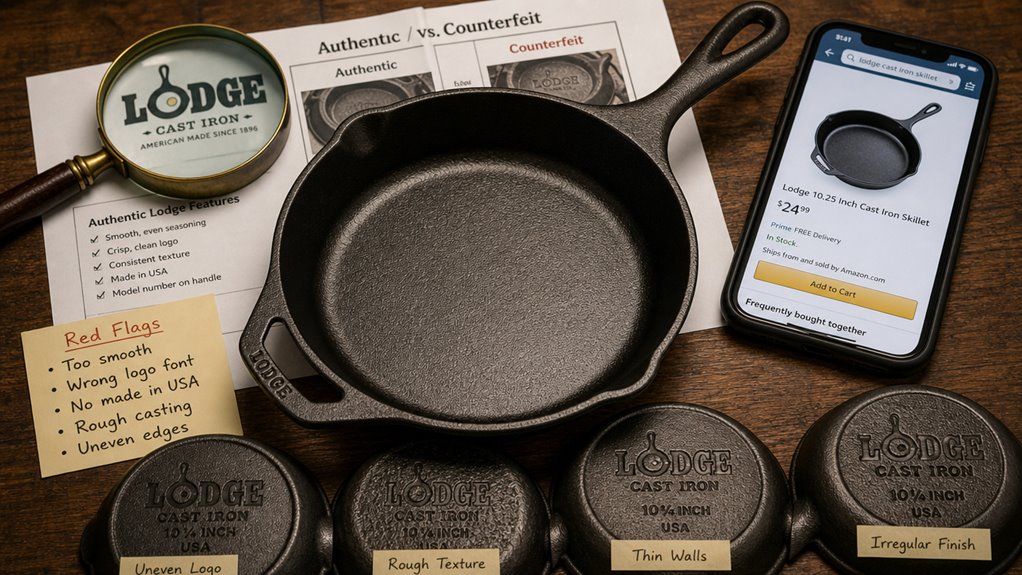
Start by zooming in on the photos, because a glossy, overly smooth surface is a big visual mismatch for Lodge’s usual matte-black look.
Next, compare the logo and underside stamp against known-good images, since off-center or slightly wrong stamping is often the giveaway, especially when lighting looks too polished or color looks “edited.”
Finally, make sure the logo, model/spec list, and even the SKU-style text line up with each other on the page before you trust anything else, because mismatched spec lists usually mean you’re not looking at the same pan.
Photos That Show a Glossy Surface Lodge Doesn’t Make
When you see a Lodge listing with a glossy, mirror-like shine, treat that photo as a warning light, not a selling point. For real lodge cast iron verification, zoom for sparkle crystals, slag bumps, or pitting holes. Those visuals often track cheap casting and poor skimming, which supports fake lodge cast iron concerns. Surface with shiny crystals can indicate inferior iron material from early manufacturing. Any crack compromises the pan’s integrity and usability.
- Glossy sparkle crystals
- Raised slag bumps
- Deep crater-like pitting
Logo Stamping That’s Slightly Off (And How to Compare)
Ever notice how some “Lodge” bottoms look right at a glance, but still feel off once you zoom in on the logo? Check the teardrop handle proportions, then logo alignment: it should sit centered, level, and within 5 degrees. Next, measure engraving depth—real letters are crisp around 0.0625–0.125 inch, not shallow or filled. Add USA manufacturing as another quick sanity check: Lodge’s seasoned cast iron and seasoned carbon steel are made in South Pittsburg, Tennessee, while their Essential Enamel is imported from China or Vietnam under strict standards. Compare to a known photo overlay. If you see maker’s marks, pattern numbers, or ghost marks that don’t match the skillet’s supposed era, that’s a strong clue it may be an inconsistent or misrepresented piece.
Why Logos and Spec Lists That Match Are the First Place to Look
First, don’t trust the logo alone. Scan authenticity indicators by matching product specifications: height, diameter, and capacity to Lodge’s model, and check the listing omits weight, alloy, South Pittsburg TN, seasoning, or lifetime warranty.
Then watch seller patterns: a new generic storefront, blurry specs photos, and price-to-weight that’s too low.
- Wrong dimensions
- Missing spec details
- New-seller review spikes
The Inspection Checklist for When the Pan Arrives
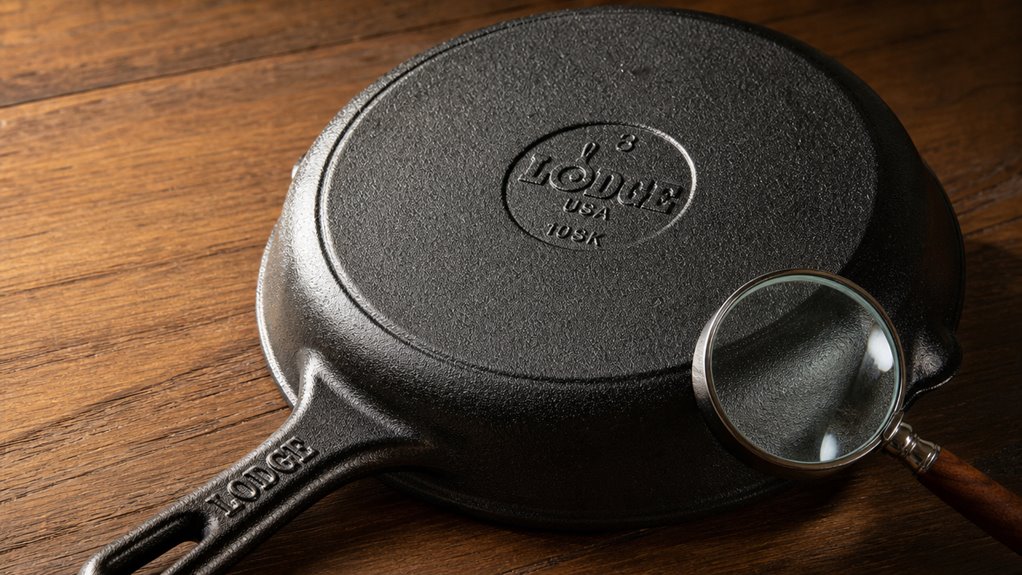
When the pan arrives, start with the underside: look for the crisp Lodge foundry stamp centered above the casting mark near the handle joint, and check that the handle meets the body cleanly with no rough, sharp casting.
Next, use a kitchen scale and the wobble test on a piece of glass or granite—authentic Lodge should land around 4.4–4.6 lb for an L8SK3 and sit flat without rocking.
If it’s noticeably lighter, wobbly, or the stamp/handle joint looks off, you should assume it’s a knockoff; the limitation here is that Amazon shipping can ding the finish without changing authenticity, so rely on the marks and fit, not just cosmetic wear.
The Lodge Foundry Logo on the Underside
Once your Lodge arrives, flip it over and check for the foundry logo on the underside near the edge of the cooking area. For a real LODGE, the logo casts into the iron and stays smooth, not painted or raised. Look for: crisp “LODGE” lettering; off-center or blurry marks; rust/pitting around the logo. If it seems mismatched, compare to Lodge photos or email [email protected]. Lodge’s core cast iron is made in the USA, so the item should align with their USA-manufactured Seasoned Cast Iron claims. Founded in 1896 by Joseph Lodge, Lodge’s long-running South Pittsburg, Tennessee heritage can be a helpful context when you’re verifying whether the casting details look authentic.
The Handle Joint Quality and Casting Mark Position
So you’ve got the pan in your hands—good. Check the handle joint: it should be smooth, seamless, gap-free, and firmly attached, with uniform matte-black seasoning over the weld area. Next, find the casting marks on the underside base, centered and etched (not painted) in the right “Lodge” font. If you see marks on the handle or shiny filler, it’s not authentic Lodge craftsmanship. If the pan is the real Lodge, preseasoned cast iron should show up as a natural seasoned surface rather than patchy paint-like finish. If you’re also using a Red Silicone Hot Handle Holder (model ASHH41), it should be designed to protect hands up to 500°F—not for direct flame or oven use.
| What to see | What it means |
|---|---|
| Smooth weld join | Solid handle joint quality |
| Matte seasoning at joint | Genuine factory finish |
| Etched underside casting marks | Correct casting mark position |
| Shiny rivets/marks on handle | Likely Amazon knockoff |
Weight, Wobble, and the Pan-on-Glass Test
Grab the skillet, note the weight, then do the weight,wobble,pan-on-glass test on a glass cooktop. If it rocks, casting’s inconsistent. Authentic Lodge is typically heavier because its green-sand castings use thicker walls for easier pouring and stacking tolerance. thicker castings Meanwhile, a lighter pan with more wobble often points to inconsistent wall thickness or a cheaper reproduction. Precision cast iron weights can also be used to verify your scale and calibration before you rely on weight differences.
How Real Lodge Differs From Common Amazon Knockoffs
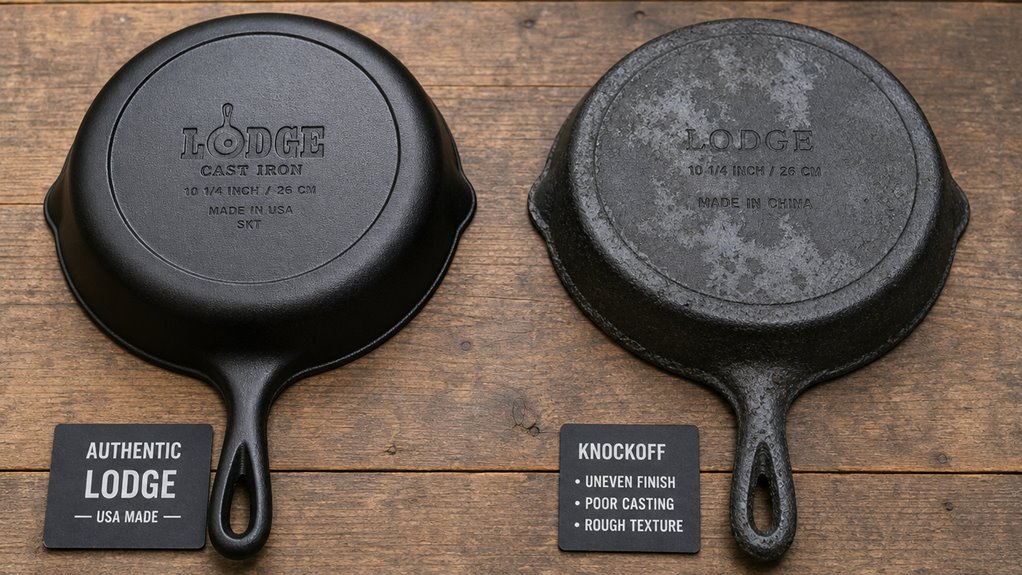
If your “cheap Lodge” starts cracking within 6 months, it usually comes from thinner, lower-quality iron that can’t handle repeated heat cycles the way Lodge’s sand-cast build does. You can often spot the difference because real Lodge ships with a matte-black factory pre-seasoning that’s harder and more even, while knockoffs tend to look patchy or feel rough/powdery and can flake right off after washing. Lodge has been making cast iron cookware since 1896, durability-focused Just remember this one limitation: even genuine Lodge won’t magically hide a bad fit or handling mistake, so you still need to use the right heat and avoid rapid thermal shock.
Knockoff Iron Composition That Cracks Within 6 Months
You can often trace why some “Lodge” cast iron cracks within about 6 months back to how the metal actually gets poured. With knockoff iron composition, higher sulfur, phosphorus, and brittle impurities weaken ductility. Then thermal stress from fast swings over 200°F splits it, often with radial cracks. Density variance ±0.8 g/cm³ brings air pockets and segregation.
- Uneven cooling
- Micro-fractures
- Brittle fracture lines
Why Real Lodge Sand-Cast Texture Outlasts Knockoff Machined Imitations
Ever wonder why “cheap Lodge” listings sometimes look right from the front but still don’t feel as solid after a few heat cycles? Real Lodge keeps its sand-cast texture from the mold, with little variation you can see under light. Knockoffs chase smooth, uniform machining differences that season less evenly. That authenticity mismatch can lead to seasoning delamination before you expect. One limitation: roughness looks ugly early. When you’re trying to recreate sand-cast texture, coarse medium blast and careful surface preparation can help preserve that rugged, mold-like appearance before applying a final finish.
The Pre-Seasoning Colour and Hardness That Real Lodge Ships With
Once you’ve checked the sand-casting texture, the next giveaway is how the pan looks and feels straight out of the box. Real Lodge ships matte-black with even pre-seasoning color, formed by oil polymerization. Knockoffs often look dull, streaky brown, or flake. Confirm fast:
- jet-black shine
- Smooth, slick feel
- No pooling when tilted
Real Lodge’s pre-seasoning is created by oil baked onto the iron through polymerization, which forms the hardened, release-ready surface.
What to Do If You Got a Knockoff (And How to Buy Right Next Time)
If you think you got a knockoff, start by documenting what you saw (photos of the underside markings, weight, and surface finish) and then use Amazon’s return flow for counterfeits so you don’t get stuck; Amazon’s A-to-Z coverage can include fakes with full refund and shipping if the seller doesn’t respond.
If you want to cut the risk down, you buy direct from Lodge.com or from authorized retailers like Walmart/Target instead, since those channels keep the “brand in title, no verification” problem out of the picture.
For the cheaper but legit route, choose Lodge factory seconds (typically 30–50% off on direct channels) over an Amazon “too-good” price, because that discount is real there, but Amazon’s listing format is the limitation that makes verification harder.
The Amazon Return Process for Brand-Counterfeit Items
When your Amazon box turns out to be a brand-counterfeit, you don’t just have to shrug and move on—you can handle it through the return system. Use the return process for counterfeit items, request a return, and choose the counterfeit/fake reason. Then:
- Attach the Amazon return label
- Save receipt and photos
- Use “Report a Problem” for Amazon verification
Refund usually takes 2–3 weeks after they confirm it.
Why Buying Direct From Lodge.com or Walmart Eliminates the Risk
Buying direct from Lodge.com or Walmart lowers your odds of ending up with a fake because you skip the third-party shuffle that’s behind most “Lodge” knockoffs. You get clear AB 1200 disclosure, USA-origin cast iron, and fewer counterfeit risk headaches.
| Source | What you receive | Lodge authenticity |
|---|---|---|
| Lodge.com | Seasoned iron/oil | Verified |
| Walmart | Official stock | Matching specs |
| Amazon (3rd) | Random stock | Higher counterfeit risk |
| Amazon (Sold by Lodge) | Some verified | Often safer |
| Other sellers | Unclear origin | Hard to confirm |
When to Choose Lodge Factory Seconds Over Amazon Listings
Choosing Lodge factory seconds over an iffy Amazon deal often comes down to one simple trade: you save money while staying inside the brand’s quality system, instead of gambling on a “Lodge” listing that might be a knockoff. Choose Factory Seconds when you want proof and the same lifetime warranty.
- “Factory Second” packaging
- 5.5–6 lb weight for 10.25”
- clear Lodge verification
Amazon Knockoffs may skip the stamp, skew lighter, and dodge Verification.
Frequently Asked Questions
How Can I Tell “sold by Lodge” From a Third-Party Seller on Amazon?
Look for “Sold by Lodge Cast Iron” on the product listing page. If it shows a different seller name, it’s a third-party seller.
Do Lodge Factory Seconds Ever Appear on Amazon, or Only Directly From Lodge?
Lodge factory seconds appear primarily on lodge.com and at the South Pittsburg, Tennessee factory outlet store, not on Amazon.
What Underside Stamps Should Match for an Authentic L8SK3?
The underside should display “LODGE” stamped clearly, “USA” adjacent to it, and “L8SK3” raised or engraved near the handle joint above the casting mark.
How Accurate Must My Kitchen Scale Be for a Reliable Weight Check?
How accurate must my kitchen scale be for a reliable weight check?
A kitchen scale should read to at least 1g accuracy; 0.1g is ideal. Weigh the item 3 times and average the results.
What Should I Photograph Before Returning a Suspected Lodge Knockoff?
What to photograph before returning a suspected Lodge knockoff:
- Underside stamps (“LODGE” and “USA” markings)
- Handle joint casting mark
- Sand-cast surface texture (use raking light)
- Box and packing labels
- Product weight (scale photo)
- Wobble test on a flat granite surface
Conclusion
If a “Lodge” skillet looks too cheap, you should treat it like a counterfeit risk. Real Lodge usually stays close to normal retail pricing, so a steep drop is a data point, not a bargain. In one Amazon study, about 1 in 10 listings on big marketplaces were found to violate basic authenticity rules. When your pan arrives, check the underside foundry stamp and weight; if it doesn’t match, stop using it and report it.