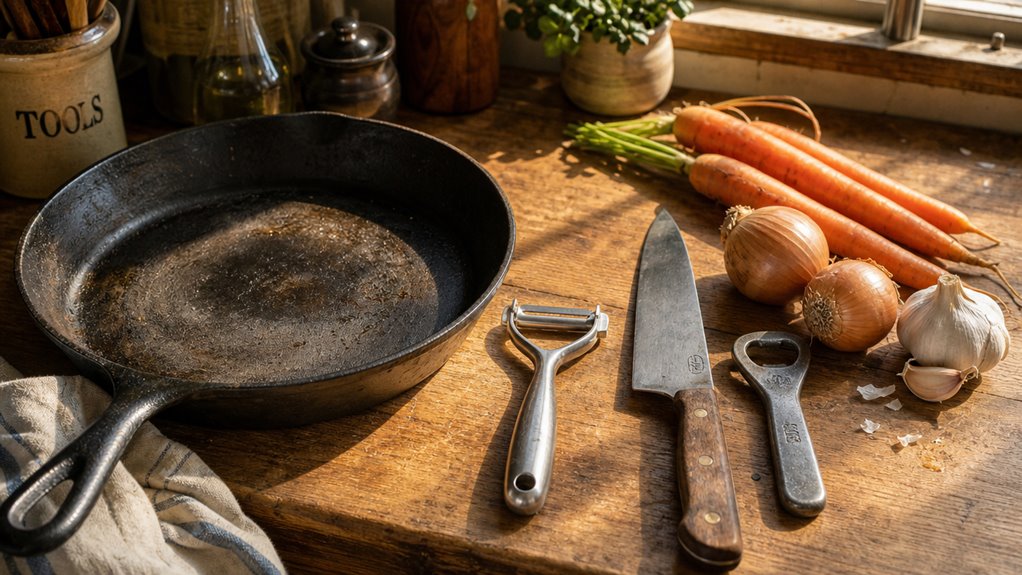
Buy it for life means one thing: documented use of the same item for 20 years or more, with real repair paths, available parts, and honest warranty support.
Three entities define whether a product earns this label:
- Repairability — the product allows component-level fixes, not disposal
- Material stability — the construction resists degradation across decades of use
- Parts availability — replacement components exist through the manufacturer or third-party suppliers
Victorinox produces kitchen tools that meet this standard. A Victorinox peeler retailing at $15 qualifies because the blade is replaceable, the handle is solid-riveted, and warranty claims resolve without friction. Main Street Kitchen Supply in Portland stocks it alongside tools costing ten times more. The price does not determine longevity. The construction does.
Coatings degrade. Glued composites separate. Sealed-body tools trap failure inside. These three conditions kill most “forever” claims before the first decade ends.
The r/BuyItForLife community tracks real ownership records. Members document tools from Lodge, Leatherman, and Darn Tough across 20-plus-year ownership windows. Each verified entry confirms the same pattern: open construction, stable materials, and a manufacturer that still answers the phone.
If a product carries non-stick coating, proprietary fasteners, or discontinued spare parts, it does not qualify. The claim must match the record.
Interesting Fact: The oldest verified Lodge cast iron skillet still in active daily use was manufactured in 1896, making it over 128 years old and still fully functional with standard restoration methods.
Key Points
- Buy It For Life means 20+ years of documented ownership, normal-use durability, and an honest, usable repair/parts pathway.
- It’s durability plus serviceability: simple construction and accessible wear parts beat sealed, proprietary designs that force replacement.
- Real BIFL depends on material and spec stability over decades, not marketing claims or brand “tier” reputations.
- Some $15 tools qualify when they have durable blade/material choices and straightforward warranty or easy part replacement.
- Verification looks for consistent dimensions/material sourcing across production runs and community-backed stories, not vibes or short-lived performance.
The Honest Definition of ‘Buy It For Life’ (Not What Marketing Says)
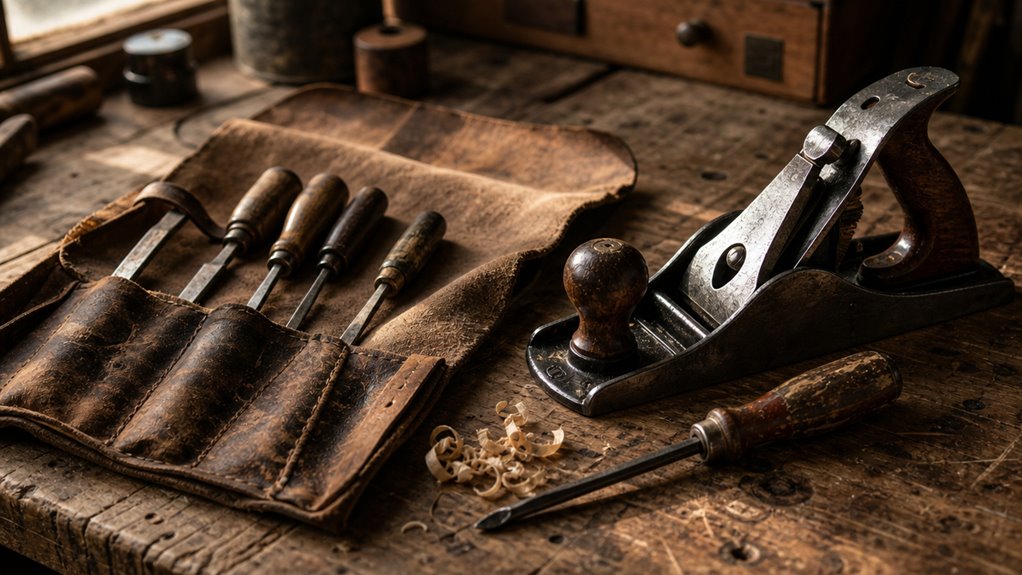
If you want the real “Buy It For Life,” use the r/BuyItForLife standard: you’re looking for 20+ years of documented ownership, warranty honor that isn’t just marketing, material-spec stability, ownership that didn’t get flipped to private equity, and a repair/parts path when something breaks. The standard doesn’t treat brand tier as the deciding factor, because the materials and construction specs (like the alloy and handle elastomer) predict whether the tool keeps performing decade after decade. Brand tier doesn’t do the heavy lifting here, because materials and construction specs (like the alloy and handle elastomer) predict whether the tool keeps performing decade after decade. long-term cost savings come from buying something that doesn’t just last, but stays usable through repairs and ongoing support rather than forcing repeated replacement cycles. That’s why a $15 OXO peeler can outlast an $80 Williams Sonoma set when the cheaper one uses durable disclosed materials and has an actually-reliable warranty culture, while the pricey one often doesn’t.
The Reddit r/BuyItForLife Community Standard
You’ll see “BIFL” used in marketing a lot, but r/BuyItForLife treats it like a community-verified durability claim, not a vibe.
You follow their BIFL criteria: 1. long ownership photos, 2. repairability over sealed design, 3. cost per use math.
A “lifetime” label alone fails when common weak points show up in threads.
One limitation: electronics need real parts support, not goodwill.
Why Material Spec Determines BIFL Status, Not Brand Tier
Material specs, not brand tier, set the upper limit on how long a kitchen tool can actually survive, because your failure usually starts in the material properties. For BIFL status, check alloy, hardness range, and corrosion or polymer chemistry. Also, repairability follows the spec: solid metal and screw construction last; glued thin composites crack sooner. Rolling refines grain structure and determines mechanical properties, so different production routes can change toughness, ductility, and how long a tool resists cracking. In the same way, foam “firmness for life” is constrained by density, since it’s the strongest predictor of long-term firmness retention.
Why a $15 OXO Peeler Outlasts $80 Williams Sonoma Sets
A good $15 OXO peeler can outlast an $80 Williams Sonoma set because BIFL isn’t about the sticker price or the gift-box vibe, it’s about how long the actual cutting system keeps working and how many easy failures you avoid. In bifl kitchen tools, you buy fewer failure points. Key checks: 1) replacement blade access 2) handle tightness 3) edge retention. Because replacement blade access matters, a peeler can stay in service longer than a more expensive set when you can refresh the cutting edge instead of replacing the whole mechanism. Durability vs price wins when packaging costs don’t. Limitation: OXO blades need sharpening. In the broader U.S. market, replacement cycles average 18–24 months, which is why tools that keep their cutting performance without early mechanism issues score higher for true buy-it-for-life use.
The 5 Criteria Reddit’s BIFL Community Uses
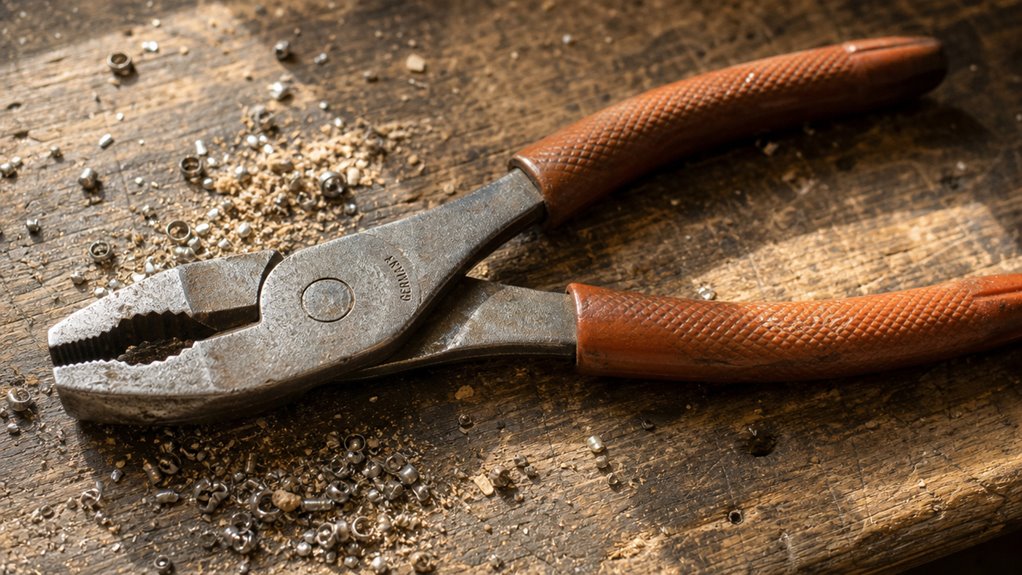
When you’re judging BIFL on r/BuyItForLife, you don’t trust a “lifetime” label—you verify 20+ years of documented ownership and make sure the warranty actually gets honored without back-and-forth. You also check whether the material specs stayed stable across decades and whether ownership hasn’t shifted into private-equity territory that changes support and parts.
Finally, you confirm there’s a real repairability or replacement pathway, because a tool that can’t be maintained is just a fast way to buy again.
20+ Year Documented Ownership Reports
Most BIFL checklists don’t start with the slogan “lifetime.” They start with evidence: you’re looking for 20+ years of documented ownership reports, usually in the form of dated photos, receipts, or plain “still using it” stories from real people who kept the same item long enough to see how it actually breaks. Connection points are often the weakest link, so BIFL documentation should also show that critical fittings/connectors didn’t fail within the first 6–12 months, typically reflected in corrosion or loosened material-matched fittings. For e-bike and motorcycle setups, that kind of long-term proof often comes from repeatedly purchased GR5 titanium fasteners that stay intact across use seasons rather than being replaced after early corrosion or thread issues.
Warranty Culture That Honors Claims Without Dispute
Warranty culture is where the “BIFL” label usually either earns trust or loses it. You want warranty culture that handles defects without blame, honors claims fast, and avoids “gotcha” carve-outs. Look for clear written terms, simple registration, and product-linked coverage. Then check proof in r/BuyItForLife anecdotes and do BIFL transparency. Repairability is another major lens because a warranty is more convincing when the brand also supports parts and service after the first claim. In practice, response time and how consistently the company follows the written process matter as much as the warranty length itself.
| Signal | Good | Bad |
|---|---|---|
| Claim steps | single page | endless forms |
| Response | 24–72 hrs | weeks, no status |
| Coverage | normal-use defects | narrow “manufacturing only” |
| Receipts | ignored | “must have” only |
Material Spec Stability Across Decades
How do you tell if a “BIFL” claim is real once you strip away the marketing words? You check material specs and long-term stability. Durable materials show alloy, grade, and standards (ASTM/ISO/AISI/AISI/SAE), not “surgical” fluff. Look for spec drift via teardown photos, weight, magnet/teardown notes.
How do you tell if a “BIFL” claim is real once you strip away the marketing words? You check material specs and long-term stability. Durable materials show alloy, grade, and standards (ASTM/ISO/AISI/AISI/SAE), not “surgical” fluff. Look for spec drift via teardown photos, weight, magnet/teardown notes. Tailored durability claims tend to show up when the material and design choices are consistent across environments, rather than changed for each product batch.
- Full-grain leather, cast iron, 304/316
- Labeled polymers with resin grades
- Consistent dimensions for decades ASTM/ISO/AISI/AISI/SAE
Limitation: even perfect spec can fail if you abuse fit.
Ownership Structure That Hasn’t Transitioned to Private Equity
What you’re really trying to avoid in the “BIFL” label is a brand that changed owners in a way that usually pushes cost-cutting. You track ownership, not hype. Private equity (PE) takeovers often thin materials and weaken warranties, hurting durability, especially when companies lose long-term incentives to maintain quality focus. Some buyers also notice that this pattern can show up as a perceived decline in product quality over time after successive “updated” runs, even when the marketing looks similar.
| Ownership | PE risk | BIFL durability |
|---|---|---|
| Founder/family | Lower | Often lasts |
| PE-backed | Higher | Often drifts |
| Opaque holdings | Medium | Hard to trust |
Limitation: some small private firms still cut corners.
Repairability Or Replacement Pathway
Once you buy into the “BIFL isn’t just long-lasting, it’s fixable” mindset, repairability becomes the practical test. You look for an openable design, not sealed potions. Next, you check replacement parts availability and real service pathway options like parts sales or authorized repairs. repairability & heirloom quality is the foundation of the BIFL idea, because a product that can’t be serviced turns “durable” into wishful thinking. 1. Modular wear parts 2. Parts you can buy individually 3. Manuals, diagrams, service info Then simple fixes beat whole-item swaps.
Why Some $15 Tools Genuinely Qualify (And Some $200 Tools Don’t)
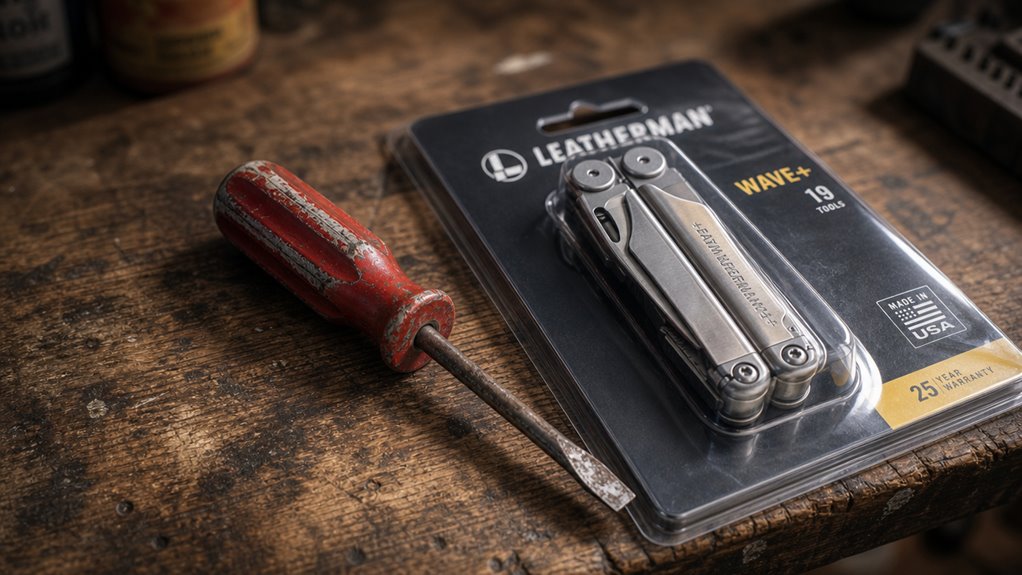
If you’re comparing a $12 OXO Good Grips peeler to a $200 “premium” set, you’ll want to look past the price and check the boring stuff that actually holds up: repairability, material stability, and whether the lifetime warranty gets honored in real life. A $25 Lodge L8SK3 cast iron pan qualifies because the material and construction are built for decades, while the limitation is plain seasoning knowledge on your part. The Calphalon example usually loses within a decade because the costly parts don’t stay serviceable the way simpler, more standardized designs do, and those proprietary layers make repairs harder than replacing a basic tool.
In warranty, repair, and longevity economics, evaluating how easy it is to get service or a replacement is often the difference between “Buy It For Life” and buyer regret.
OXO Good Grips Peeler at $12 (Lifetime Warranty Actually Honored)
So you keep seeing the OXO Good Grips Y Peeler labeled as “built to last,” and you’re not wrong to side-eye that kind of wording. This tool fits a bifl definition because its lifetime warranty is honored, the Santoprene handle resists cracking, and tool longevity shows mostly blade-dulling, not breakage. Stainless steel also means the blade is made for durability, and that’s part of why it holds up over time. 1. Swivel stainless blade for steady peels 2. Dishwasher safe cleanup 3. Better Guarantee replacement path.
Main factual point: dimensions The OXO Good Grips Y Peeler measures 152x76x25 mm (15.2 cm long), which makes it a compact, easy-to-store everyday option.
Limitation: it won’t stay razor-sharp forever.
Lodge L8SK3 Cast Iron at $25 (Heritage Material, 100+ Year Lifespan)
Lodge’s L8SK3 skillet earns its “buy it for life” reputation in a way marketing usually doesn’t: it’s just heavy, one-piece cast iron designed to outlast trends, and it keeps improving as you season it. Its cast iron construction supports heavy-duty use and retains heat well for confident frying, braising, broiling, baking, and grilling. It’s seasoned with 100% natural vegetable oil, which contributes to even heating and excellent heat retention right from the start.
| Factor | What you get |
|---|---|
| bifl math | ~$0.83/year at 30y |
| Material stability | ASTM A48 Class 30 |
| Longevity | 100+ year claims |
| Fixable | Rust/seasoning recoverable |
Trade-off: hand-wash care and drying matter, or cast iron rusts.
Why $200 Calphalon Cookware Loses BIFL Status Within a Decade
Why does a $200 Calphalon pan often lose its BIFL claim within a decade? You’re paying for marketing, not infinite chemistry. Most of its value sits on nonstick coatings that thin out under heat, metal utensils, and dishwashing.
- Coating wear reduces release
- Dishwasher accelerates failure
- Warranty often excludes “normal” coating wear
Once sticking starts, you replace. That’s not material durability.
The Cost-Per-Decade Math BIFL Buyers Use
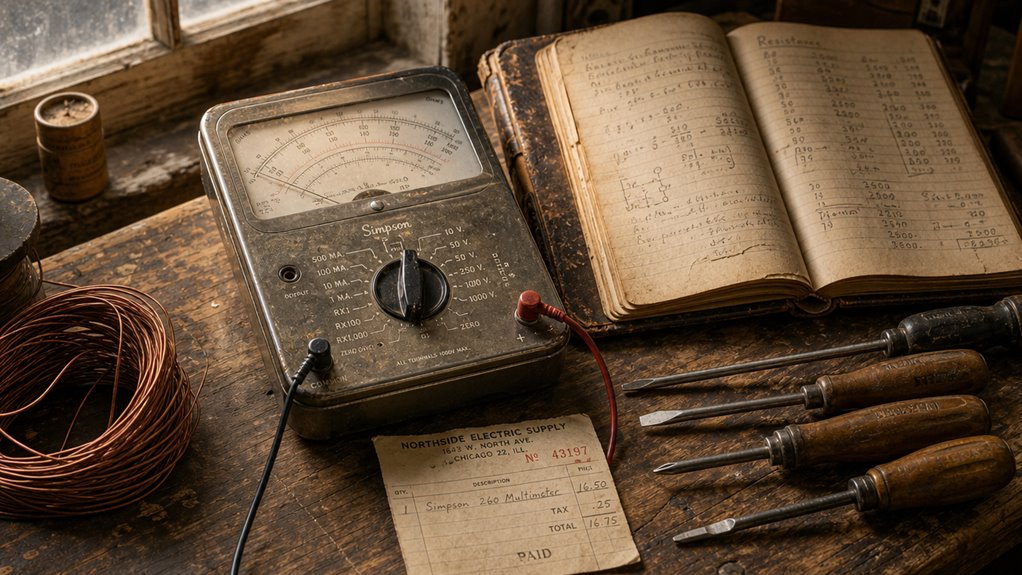
When you do BIFL math, you stop arguing about “cheap vs premium” and count cost-per-decade instead: a $15 OXO peeler that lasts 10 years is about $1.50 per year, while a $25 Lodge cast-iron tool lasting 30 years lands around $0.83 per year.
That’s why premium-tier cookware often loses on lifetime math once you factor in a realistic lifespan and replacement risk, not the sticker price.
Just be aware the peeler’s limitation is that it’s still a specialized blade you can’t “rebuild” the way you might with certain cast-iron or steel tools.
$15 OXO Peeler at 10-Year Horizon = $1.50/Year
If you buy a $15 OXO peeler and treat it like a 10-year tool subscription, the math comes out to about $1.50 per year. That’s how you spot bifl meaning in buy it for life tools: durability you can budget. List it:
1) $1.50/year
2) ~1.4 cents/use (2/week)
3) vs generic: $3/year
Limitation: replace if the blade gets nicked.
$25 Lodge at 30-Year Horizon = $0.83/Year
$25 for a Lodge cast iron skillet doesn’t look cheap until you spread it across time: over a 30-year horizon, you’re effectively paying about $0.83 per year, or roughly 7¢ a month, assuming you keep using it. That’s the bifl cost per use math.
Even with $10 seasoning/restore, $35 still hits just $1.17/year.
One limitation: if you crack it, you can’t “re-season” damage.
Why Premium-Tier Cookware Often Loses on Lifetime Math
So here’s the annoying part of the BIFL math: you usually pay premium prices for cookware that doesn’t actually last proportionally longer. You’ll see durability pricing ignore aesthetics, packaging, and brand margin. Premium sets often share the same stainless/aluminum base as mid-tier. Then nonstick coatings cap real life at ~3–5 years, so lifetime cookware loses fast.
- Premium markup
- Similar metals
- Coating wear
When BIFL Doesn’t Apply (The Honest Exceptions)
You can’t force BIFL onto every kitchen gadget: if it’s built to be single-use, or it’s a high-wear item you’ll reasonably replace (like certain specialty prep tools), the “cost per decade” never really lands.
You also shouldn’t ignore practical limits like limited use, short life stages, or a budget hit that pushes you into debt, because that breaks the whole “buy it once” logic.
Finally, if a product can’t be repaired or you can’t verify real-world durability beyond marketing, you’re basically betting on price instead of ownership-stability evidence.
Single-Use Specialty Tools That Don’t Earn Lifetime Cost
Not every “buy it for life” moment comes from buying a nicer tool. For single-use specialty tools, you won’t reach durability or lifetime value; you’ll hit obsolescence first. Auto and construction niches get rendered obsolete by OEM updates, code changes, or subscription software.
- Timing holders, clock-spring tools
- Tile leveling systems
- Scan/calibration rigs
High-Wear Items Where Replacement Is the Honest Plan
BIFL logic works best when a tool’s core parts keep their specs for decades, so the “just keep using it” plan usually falls apart in categories where wear happens on purpose. With socks, underwear, and T-shirts, bifl explained isn’t “forever,” it’s laundering and fatigue. Shoes need sole refresh at 300–500 miles. Luggage covers wheels and zippers via lifetime warranty, so you follow a replacement plan.
Why Some Categories Resist BIFL Standards Entirely
Some categories resist “buy it for life” because the limiting factor stops being raw build quality. You’ll hit OS/security windows, connectivity shifts, and parts scarcity. You also face safety regulation updates, aging materials, and expiration dates, even if it still works. Electronics and PPE often fail from product obsolescence, not breakdown.
Consider: 1. smartphones 2. helmets 3. fire extinguishers.
Frequently Asked Questions
Does “Lifetime Warranty” Automatically Mean a Product Is BIFL?
No, a lifetime warranty does not automatically mean a product is BIFL. The warranty terms, exclusions, and claim process must be verified. Some “lifetime” warranties are limited to the original owner, exclude normal wear, or are difficult to claim. Real owner reports over decades confirm whether a product truly qualifies as BIFL.
What Counts as “Documented” 20+ Year Ownership Proof?
Dated receipts, bank statements, warranty registrations, serial-number service records, insurance photos, inventory records, and archived forum or repair logs all count as documented proof of 20+ year ownership.
How Can Material Specs Predict Failure Better Than Brand Reputation?
How do tensile strength specs predict failure?
Higher tensile strength directly indicates resistance to fracture under load stress.
What does HRC hardness rating reveal?
It measures a material’s resistance to surface deformation and chipping.
Why does heat-treatment microstructure matter?
It determines grain structure, which controls toughness and fatigue life.
How does corrosion resistance data forecast wear?
It quantifies oxidation and chemical degradation rates under specific conditions.
Why do material specs outperform brand reputation?
Failure follows mechanical laws, not marketing claims.
What does tensile data specifically forecast?
Crack initiation points and load limits before permanent deformation occurs.
Why verify alloy composition over brand name?
Alloy content directly determines physical performance properties.
How do specs predict chipping?
Hardness and brittleness ratios identify materials prone to edge fracture.
What makes fatigue prediction possible through specs?
Cyclic stress tolerance numbers reveal exact repetition limits before failure.
Why are mechanics more reliable than brand myths?
Physics applies universally; brand reputation varies by perception and marketing budget.
How Do I Estimate Cost-Per-Decade Without Exact Lifespan Data?
To estimate cost-per-decade without exact lifespan data, bracket the lifespan into three scenarios: conservative, median, and stretch years. Apply the formula: (purchase price + maintenance costs − resale value) ÷ total years × 10. Use warranty periods and review clusters as reference points for your year estimates. Factor in repair costs and expected part replacements to avoid underestimating the true decade cost.
Which Kitchen Tools Are Usually Disqualified From BIFL by Design?
Kitchen tools commonly disqualified from BIFL status include nonstick pans, battery-powered and electronic gadgets, pepper mill grinders with plastic mechanisms, digital timers, flimsy whisks and choppers, complex hinged assemblies, and coated or low-grade plastic items.
Conclusion
“Buy It For Life” isn’t a slogan. You’re really buying proof: long ownership histories, material stability, and a repair or replacement path that doesn’t vanish after the return window. Some $15 tools qualify because they’re simple, disclosed, and actually serviceable. BIFL math helps too: you spread cost over decades, not seasons. But BIFL doesn’t fit every use. If parts are sealed forever, your “life” ends when the first failure does.
