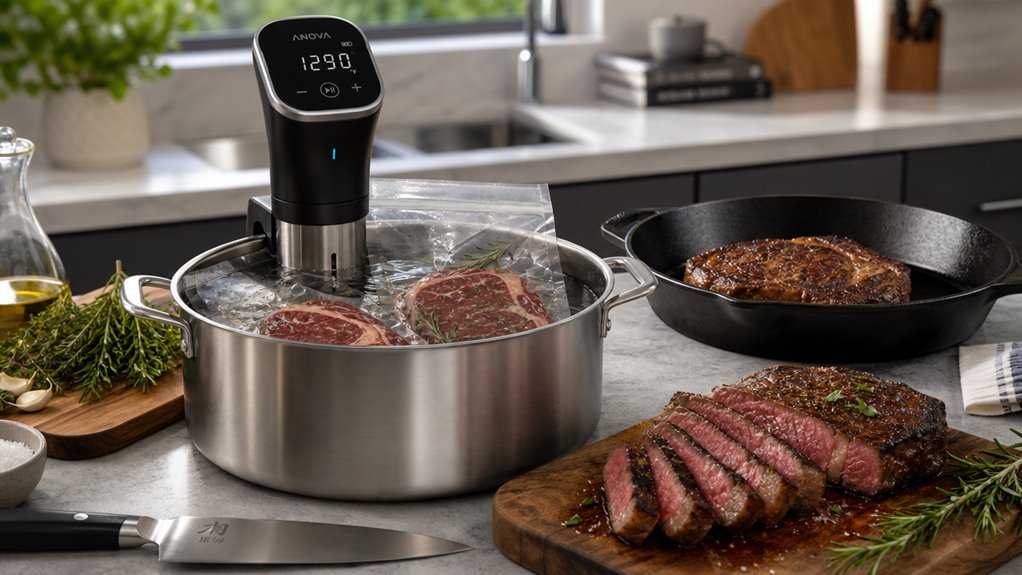
Sous vide cooking is a method that requires an immersion circulator to hold water at a precise temperature, producing edge-to-edge doneness that conventional moist-heat methods cannot replicate. The technique suits thick steaks, custards, and other foods where uniform internal texture matters.
- Immersion circulator maintains water temperature within fractions of a degree, giving cooks direct control over doneness throughout the entire cut.
- Vacuum sealer removes air from bags before cooking, locking in moisture and preventing the water from affecting flavor or texture during long cooks.
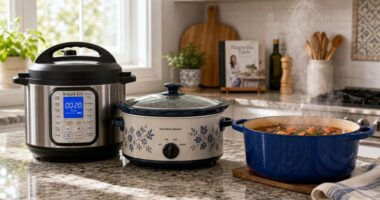
- Slow cooker handles stews, pulled pork, and similar comfort dishes at a lower cost and smaller footprint, though it cannot hit the precise temperatures a circulator delivers.
Sous vide requires a few additional steps beyond standard cooking. A cook fills a pot, seals the food in a bag, runs the circulator, and then finishes the food in a hot skillet to develop surface color. The process adds time and equipment but produces moisture retention that differs noticeably in dense proteins.
Entry-level circulator and vacuum sealer combinations typically fall in the mid-range price tier. A slow cooker costs considerably less and suits households that prioritize simplicity for everyday meals. The value of sous vide depends on how often a cook prepares thick cuts or temperature-sensitive preparations.
Uniform texture across the full thickness of a cut is the measurable outcome that drives interest in sous vide. For dishes where a precise internal temperature is not critical, a slow cooker covers most practical needs without the added gear.
Holding protein at a stable target temperature for an extended period typically reduces moisture loss compared to high-heat methods, where internal temperatures often overshoot the target before the heat source is removed.
Cheap or expensive is the wrong question. Cost per use is the honest one. Check out our new Calculator.
Cost-Per-Use Calculator →Key Points
- Sous‑vide delivers edge‑to‑edge doneness and repeatable texture, especially for thick proteins, justifying its higher upfront cost for precision‑focused meals.
- An entry-level circulator plus a vacuum sealer lands in the mid-range tier, several times what a basic slow cooker costs.
- Cooking times are longer and require extra steps (bagging, water‑level checks, finishing sear), adding friction compared with set‑and‑forget slow‑cooker dishes.
- Taste gains are most noticeable in steak, fish, and delicate custards where exact internal temperature preserves moisture and texture; modest dishes show little difference.
- For everyday comfort meals, a slow cooker offers comparable moisture retention at lower cost and hassle, making sous‑vide worthwhile only when consistency and texture are priorities.
| Sous Vide Hamburger Rings – 6 Pack Food-Grade Stainless Steel |  | Best Shape-Keeper | Primary Function: Shape-forming ring | Material (core): 304 stainless steel | Temperature Tolerance: Up to 413 °F (coating) | VIEW LATEST PRICE | Read Our Analysis |
| T-mark Sous Vide Magnets Pack – Prevent Floating Bags | 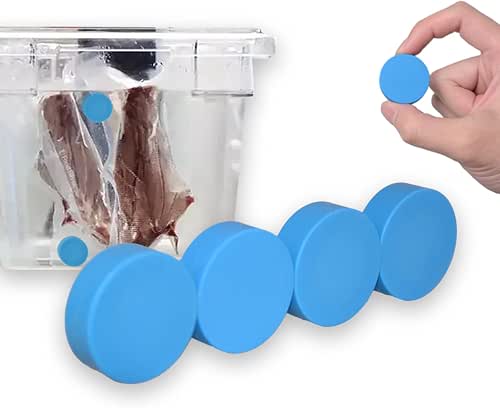 | Float-Free Pro | Primary Function: Float-prevention magnet | Material (core): Silicone-coated magnet | Temperature Tolerance: Up to 413 °F | VIEW LATEST PRICE | Read Our Analysis |
| Sous Vide Silicone Lids for 11″ Pots (Gray) |  | Seal-Strong Choice | Primary Function: Heat-seal lid | Material (core): Food-grade silicone | Temperature Tolerance: Up to 413.6 °F | VIEW LATEST PRICE | Read Our Analysis |
Links to Amazon are affiliate links. Buying through one costs you nothing extra and helps fund the research.
How Sous Vide Compares to a Slow Cooker and the Oven
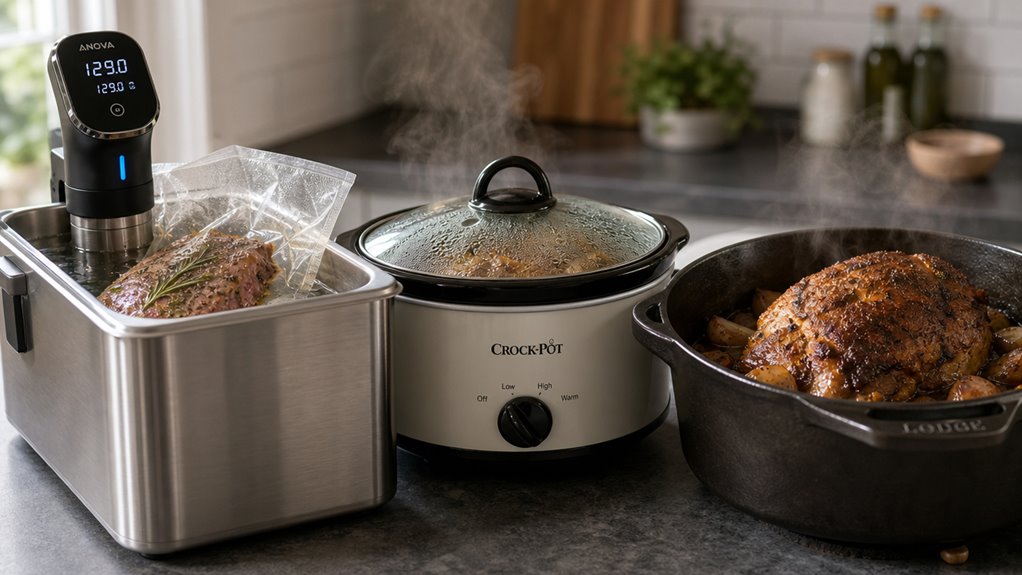
Sous vide, a slow cooker, and a conventional oven each reach the same end goal through different mechanisms, and those differences shape both the effort involved and the quality of the result.
Sous vide uses an immersion circulator to hold a water bath at a precise target temperature, producing edge-to-edge doneness that neither a slow cooker nor an oven can reliably match.
A slow cooker offers only low and high heat settings, which leaves less room for precision, while an oven draws more energy during long cooks and requires more attention to avoid uneven results.
The tradeoffs extend beyond cooking performance. The water bath setup demands counter space and carries a higher upfront cost than a basic slow cooker, and sous vide still requires sealing the food in bags and finishing with a sear.
The sections below examine these differences in greater detail. Vacuum packaging helps preserve nutrients and extend shelf life.
Precise Temperature Control Versus Familiar Methods
When you set a sous‑vide circulator to 130 °F, the water stays within a degree of that target, so the steak inside reaches exactly the same temperature from edge to center. That’s precision cooking at work: a sealed bag in a circulating water bath gives you temperature control you can’t match with a slow cooker’s low‑high dial or an oven’s cycling thermostat.
Time at temperature matters as much as the temperature itself. 130 °F sits at the very bottom of the range where pasteurisation happens at all, and a vacuum-sealed pouch is a low-oxygen environment that favours Clostridium botulinum, which can produce toxin in food held for hours in the danger zone. Three rules follow, and they are not optional. First, keep the total time food spends between 40 °F and 130 °F under four hours, counting the warm-up and the chill afterwards. Second, at 130 °F doneness is not the same thing as safety: pasteurising a thick cut at that temperature takes hours, and the required hold depends on thickness, so look the figure up in a published pasteurisation table for the cut you are cooking instead of assuming that “it looks done” means it is safe. Third, never hold food in a bath that is not actively heated and never leave a cook running longer than the time you looked up. Chill anything you are not eating straight away in ice water before it goes in the fridge. Anyone pregnant, elderly, very young or immunocompromised should cook to standard USDA safe internal temperatures rather than hold meat at 130 °F.
A slow cooker hovers around 200 °F on low, far too hot for medium‑rare steak, and its ceramic insert creates uneven spots. An oven’s hot air fluctuates as the heating element cycles, leading to hot and cool zones. Water transfers heat more efficiently than air, so you get uniform doneness without guesswork.
The trade‑off is time: sous vide needs hours, while a slow cooker or oven can be hands‑off for a similar period. If you value repeatable texture for steak, pork chops, or fish, the exact temperature control of sous vide is hard to beat. Heat transfer in a crock‑pot relies on liquid‑coated conditions for efficient cooking.
The Gear, the Wait, and the Counter Space It Asks For
Precise temperature control is great, but it comes with a set of practical demands you can’t ignore. A sous vide circulator needs a heat‑safe pot, zip‑top bags, and often a vacuum sealer, adding at least three separate items to your kitchen. Its counter footprint is modest, about the size of a coffee maker, but you still have to store the container and clips when not in use.
A slow cooker, by contrast, is a single‑piece unit that slides into a cabinet and takes up roughly the same space as a small toaster. It requires no extra bags or a separate pot. An oven needs only cookware, but you must preheat and monitor, which can be more time‑consuming. The main drawback of sous vide is the periodic water‑level checks a multi‑hour cook demands; the slow cooker’s limitation is its inability to deliver edge‑to‑edge doneness. Overall, you trade gear and space for precision or keep it simple with a cooker and a skillet. The immersion circulator maintains temperature within ±0.5 °F, ensuring consistent doneness throughout the cooking process.
Type in what a kitchen tool cost you, how often you use it, and how long you expect it to last. The math answers whether the price was worth it.
The tool you are weighing
Enter a price to run the numbers.
Lifespans above 50 years are capped at 50 for this calculation.
The cheaper version
Enter a price to run the numbers.
Lifespans above 50 years are capped at 50 for this calculation.
Your result appears here after you press Calculate.
| Sous Vide Stainless Steel Weight Net (1.2 lb, 4 Clips) |  | Heavy-Duty Net | Primary Function: Submersion weight net | Material (core): 304 stainless steel | Temperature Tolerance: Not specified (steel safe) | VIEW LATEST PRICE | Read Our Analysis |
| 2 pcs Stainless Steel Sous Vide Weight Net (8×8″) |  | Compact Net | Primary Function: Submersion weight net | Material (core): 304 stainless steel | Temperature Tolerance: Not specified (steel safe) | VIEW LATEST PRICE | Read Our Analysis |
| EVERIE RACK04 Sous Vide Rack for 12 Qt Containers |  | Rack-Ready | Primary Function: Upright bag rack | Material (core): Stainless steel + nylon | Temperature Tolerance: Not specified (steel safe) | VIEW LATEST PRICE | Read Our Analysis |
Links to Amazon are affiliate links. Buying through one costs you nothing extra and helps fund the research.
What Sous Vide Actually Does Better
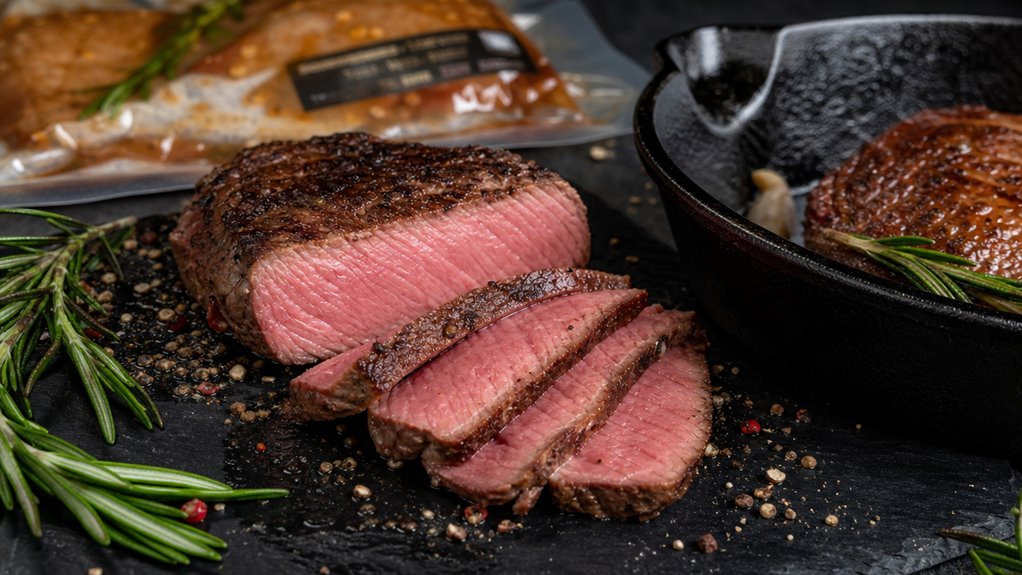
Sous vide excels at holding water bath temperature within a fraction of a degree, which produces edge-to-edge doneness that other low-heat methods can’t reliably replicate. That precision matters most when cooking batch proteins where uniform texture across the entire cut is the goal. A slow cooker delivers tender, low-and-slow results without requiring vacuum bags, a circulator, or a finishing sear in a skillet, making it a practical alternative for most everyday cooking. The choice between the two methods comes down to how much control over internal temperature actually affects the dish being prepared. Understanding where that control changes the outcome helps clarify when the extra equipment is worth the effort. Sous vide’s precise temperature control also reduces nutrient loss in vegetables compared to traditional boiling.
Edge-to-Edge Doneness and Repeatable Results
If you set a water bath to 130 °F and leave a steak in it, the whole piece will settle at that temperature: no hot outer ring, no grey band in the middle. The bath holds the exact temp, so the meat stays at that doneness from edge to edge. You can bag several portions, and each reaches the same core temperature, giving repeatability and consistency across portions. After the bath, a quick sear adds crust without raising internal heat. This two‑phase method eliminates the guesswork of stovetop timing and lets you reproduce the same texture every time. The vacuum‑sealed environment also limits moisture loss during cooking, so the meat stays juicier. Uniform doneness is a texture result, not a safety result: the four-hour limit on time spent below 130 °F still applies to every pouch in the bath, the hold time needed to pasteurise a given thickness still has to be looked up, and a bath that is not holding its setpoint is a food-safety problem rather than a doneness problem.
| Method | Result |
|---|---|
| Sous vide | Uniform doneness |
| Vacuum bag | Even heat transfer |
| Precise circulator | ±0.2 °C stability |
| Multi‑piece batch | Consistent across cuts |
| Quick sear | Crust only, no overcook |
Why a Slow Cooker Delivers Most of Sous Vide’s Comfort at a Fraction of the Fuss
You’ve probably seen the hype about sous‑vide’s “edge‑to‑edge” perfection, but a slow cooker can give you most of that comfort without the extra steps.
Both methods use low, extended heat, so you get tender, “set‑and‑forget” meals like stews, pulled pork, or chili. A slow cooker costs far less than an immersion circulator, needs no vacuum bags, and cleans up in one pan. You just load the ingredients, choose Low or High, and walk away. It handles tough cuts well, and the moisture‑rich environment prevents drying.
The downside is that delicate proteins such as steak, seafood, and custards won’t stay as juicy or precise as sous vide. For everyday comfort food, though, sous vide is not worth it; the slow cooker delivers most of the benefits with far less fuss.
The Cost and Convenience Trade-Off
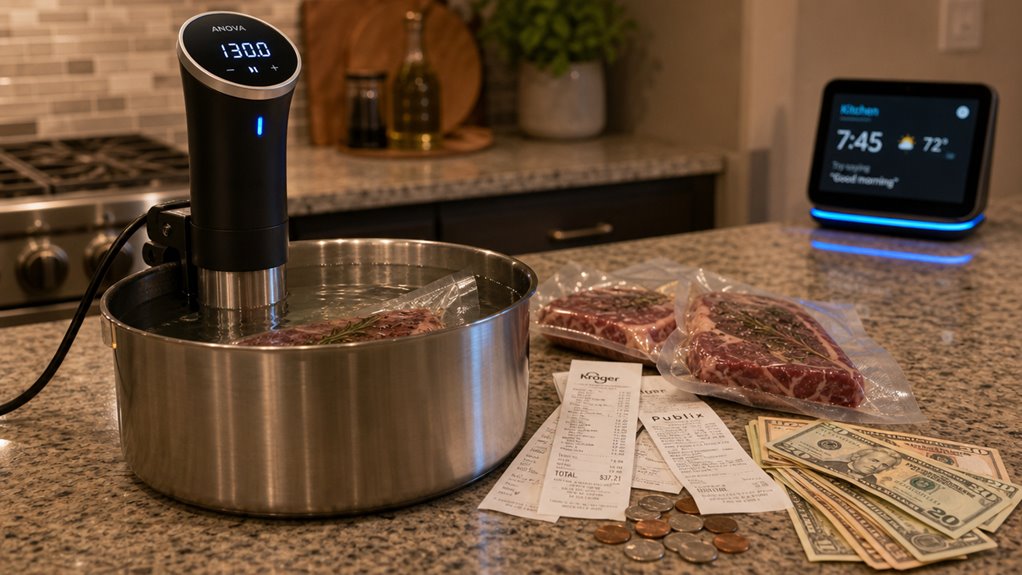
Sous vide cooking trades convenience for precision, and whether that trade-off makes sense depends on how often the equipment actually earns its place in the kitchen.
A circulator typically falls in the mid-range tier, and a vacuum sealer adds another modest expense on top of that. The setup process means filling the water bath, sealing the bag, and waiting several hours for food to reach temperature. That is manageable for batch cooking but adds friction to everyday meals.
Even after the long cook, finishing a steak still requires a hot skillet, which means additional cleanup and one more tool on the counter.
The sections that follow examine the specific factors that determine when the investment pays off and when simpler methods hold the advantage.
Equipment, Time, and the Finishing Sear It Still Needs
When you factor in the price of an entry‑level immersion circulator—about $80‑$120 for a 500‑800 W stick—and the extra $40‑$200 for a vacuum sealer and bags, the initial outlay already tops the cost of a decent slow cooker and an instant‑read thermometer. You’ll still need a pan or torch for the finishing sear, which adds a few minutes of active time and a heavy skillet to your counter. The equipment footprint grows, and the passive cook time can stretch to many hours, but the temperature precision stays unmatched. Below is a quick comparison of the key pieces.
| Item | Typical Cost |
|---|---|
| Entry‑level circulator | $80‑$120 |
| Mid‑range circulator | $150‑$250 |
| Vacuum sealer set | $40‑$200 |
| Cast‑iron skillet (for sear) | $30‑$80 |
| Integrated water bath | $90‑$200 |
Whether that balance works out hinges on how much you value edge‑to‑edge doneness against the extra gear and the inevitable finishing sear step.
Where the Wait and Setup Outweigh the Payoff
The extra time and gear you need to get a sous‑vide bath up and running often eclipse the benefits for everyday meals. You’ll fill a pot, attach a circulator, wait for the water to climb to the set temperature, then seal each portion in a pouch. That setup friction adds minutes before any cooking even begins, and the packaging overhead of vacuum bags, sealing, and labeling creates extra steps you don’t face with a skillet or slow cooker.
For a quick dinner, the lag outweighs the edge‑to‑edge doneness you’d eventually get. You can still enjoy the precision, but the long ramp‑up and bag‑handling make it a poor fit when speed matters more than uniform texture.
Why a Slow Cooker Already Covers Much of What Sous Vide Promises
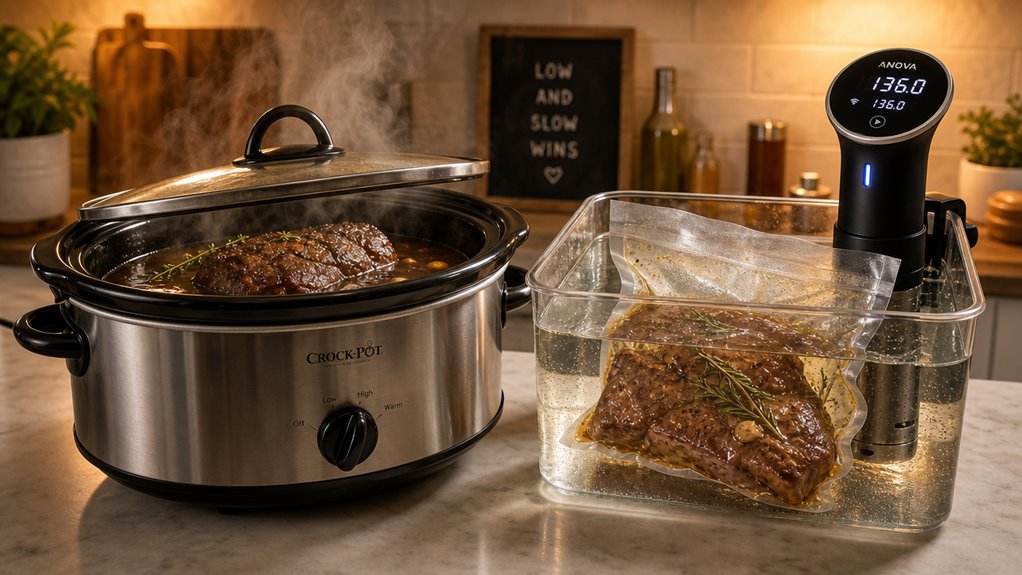
A slow cooker already replicates much of what sous vide promises for everyday cooking, particularly for tough cuts like chuck roast or pork shoulder that benefit from low, sustained heat over several hours.
The collagen in these cuts breaks down gradually during a long braise, producing tender, fall-apart texture without vacuum bags or a circulation device.
For steaks, a budget instant-read thermometer paired with a hot skillet handles doneness well enough that a dedicated sous vide setup offers limited practical advantage.
Where slow cookers fall short is in holding a precise temperature, around 130 °F for edge-to-edge doneness, but that level of control matters less for braises and comfort meals than it does for delicate proteins.
The details behind these trade-offs are worth understanding before deciding which method suits a given dish.
Tough Cuts, Stews, and Hands-Off Comfort Food
Cooking tough cuts in a slow cooker lets collagen melt into gelatin without you having to watch a thermometer. The low setting sits around 200 °F, which is just above the 160‑180 °F range where connective tissue breaks down over several hours. You get a fall‑apart texture for chuck, brisket, or pork shoulder with a single “low” or “high” choice.
Stews and braising benefit from the sealed pot: aromatics, liquid, and vegetables mingle, and the lid traps moisture so sauces reduce naturally. You can sear the meat first for a crust, then let the slow cooker finish the braise unattended.
Cleanup is just one insert, and you avoid bags, clips, and precise temperature charts. The trade‑off is slower flavor development compared to a quick sear‑then‑simmer, but the hands‑off convenience outweighs that for most comfort dishes.
Why a Thermometer and a Skillet Reach the Same Steak That Sous Vide Promises
Without a water bath, you can still hit the exact internal temperature a steak needs by watching a cheap instant‑read thermometer while you finish it in a hot skillet. A cast iron skillet gives a quick, high‑heat sear, and the thermometer tells you when the core reaches 56 °C for medium‑rare or 60 °C for medium.
You’re basically replicating sous‑vide’s temperature goal without the circulator, bag, or extra counter space. The only downside is you must monitor continuously; a slip means you overshoot.
Still, the method is fast, cheap, and uses tools you already own. For a single steak, this combo matches the promised doneness and juiciness without the gadget hype.
Who Sous Vide Is Genuinely Worth It For
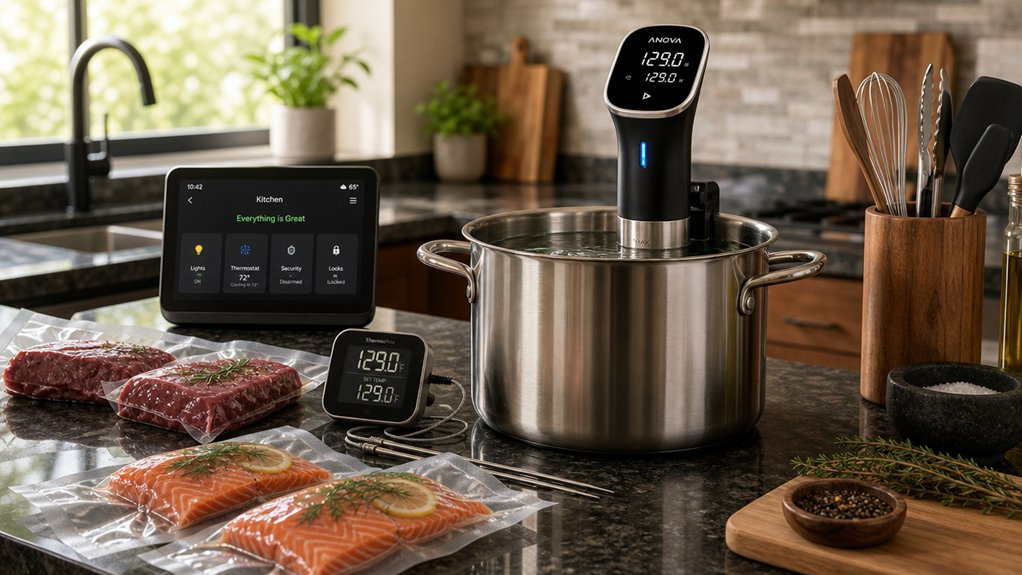
Sous vide is worth it for cooks who regularly prepare thick cuts of meat that require edge-to-edge doneness and for those who batch-cook large quantities where consistent temperature control across every portion matters. The method relies on a water bath and immersion circulator to hold food at a precise target temperature for an extended period, which eliminates the guesswork that comes with stovetop or oven cooking.
A finishing sear remains necessary after the water bath, adding a step that a skillet alone could otherwise handle for thinner cuts. For anyone satisfied with a slow cooker’s hands-off convenience or quick stovetop results, the additional equipment and long cook times rarely justify the shift.
The sections ahead examine the specific conditions that determine whether sous vide fits a given kitchen and cooking routine.
The Cooks and Situations Where It Earns Its Place
When you’re feeding a crowd or prepping meals for the week, the extra gear of a sous‑vide setup actually starts to make sense. It shines in three clear scenarios, each letting you lean into hands‑off cooking without sacrificing flavor.
- High‑volume entertaining – Cook dozens of steaks, roasts, or turkey breasts at the same precise temperature, then finish with a quick sear. No gray bands, no overcooking, and you free up oven space for sides.
- Batch‑prep enthusiasts – Vacuum‑seal proteins, set the timer, and let the bath work while you tackle other tasks. The result stays moist for reheating, cutting waste and daily effort.
- Texture‑obsessed experimenters – Achieve custard‑soft eggs, tender carrots, or consistent yogurt cultures that a stovetop can’t replicate. The temperature control is tight enough for repeatable results.
These uses justify the investment, but for everyday single‑servings, a skillet and thermometer remain cheaper, quicker alternatives.
Matching the Simpler Tools to the Under-$30 Ceiling
The high‑volume and batch‑prep scenarios we just covered only make sense if you can actually afford a sous‑vide rig that sits on the counter. Under $30, true circulators are rare and usually low‑wattage, so they heat slower and drift ±0.5–1 °C. That drift matters most with poultry: a bath running below its setpoint means the pathogen reduction you are relying on is not actually happening, and chicken is the protein where that matters most. With eggs the same drift shows up as a texture difference rather than a safety one.
A pot on the stovetop with an instant-read thermometer stays under budget and works for short cooks you stay in the room for. An unheated cooler-plus-water bath is a different proposition and should not be treated as a budget version of the same thing. It has no way to correct itself, so it loses heat continuously across a multi-hour cook and carries the food down through the 40–140 °F danger zone with nothing to stop it. That is a pathogen-growth hazard, not a precision trade-off, and it is not a safe substitute for a heated bath on anything but reheating food that is already cooked. Those setups need zip‑lock bags for water displacement, not a vacuum sealer. The trade-off is that you have to stay with it: constant attendance, manual temperature checks, and a burner you adjust rather than a bath that holds itself.
If you already own a slow cooker, the split is clean: the cooker handles tough cuts hands‑off, while an attended stovetop bath gives edge-to-edge doneness for delicate proteins without adding gear. This keeps your counter clear and your wallet intact.
Frequently Asked Questions
Do I Need a Vacuum Sealer for Good Results?
You don’t need a vacuum sealer for good results; the water‑displacement trick with a zip‑top bag works fine for most meals, as long as you squeeze out as much air as possible before sealing.
Can I Reuse Silicone Bags Without Affecting Flavor?
You can reuse silicone bags safely. Wash them hot, air‑dry them fully, and keep heavily spiced cooks to a dedicated bag, since silicone holds onto aromatic compounds over time.
How Does Sous Vide Affect Nutrient Retention?
You’ll retain more vitamins, minerals, and protein quality because the low, precise temperature and sealed bag prevent leaching and oxidation, outpacing boiling or roasting for nutrient preservation.
Is Sous Vide Safe for Long‑Term Storage?
Only within limits, and only if the cook actually pasteurised the food rather than simply bringing it to temperature. Chill it quickly in an ice-water bath, seal it tightly, and keep it at or below 41 °F. Sous vide does not make a pouch shelf-stable: a vacuum-sealed bag left at room temperature is a low-oxygen environment and a botulism risk, so treat cooked pouches as ordinary refrigerated leftovers and freeze anything you are keeping beyond a few days. For the storage limit that applies to your situation, check the current FDA Food Code directly rather than a figure quoted on a blog.
Will Sous Vide Work With My Induction Cooktop?
Yes, it’ll work if you use an induction‑compatible pot and either a PID controller or a dedicated induction‑sous‑vide unit; otherwise temperature may fluctuate, compromising the precise results you expect.
Conclusion
You’ll end up treating sous‑vide like a specialty tool, not a daily workhorse. It gives you uniform doneness and can hold a batch at precise temperature, but the circulator’s price, the need for vacuum bags, and the extra sear step add cost and time. A slow cooker already tenderizes tough cuts with a single button, and a skillet plus instant‑read thermometer can finish a steak in minutes. If you crave batch cooking or exact texture, sous‑vide pays off; otherwise, stick with the simpler, cheaper combo.
| TopHat Sous Vide Weights (1.2 lb) Stainless Steel with Clips |  | Premium Weight | Primary Function: Submersion weight net | Material (core): 304 stainless steel | Temperature Tolerance: Not specified (steel safe) | VIEW LATEST PRICE | Read Our Analysis |
| Sous Vide Weights 4-Pack Stain-Proof BPA-Free Silicone |  | Silicone-Heavy | Primary Function: Submersion weight bar | Material (core): Silicone + 304 stainless steel core | Temperature Tolerance: Up to 413.6 °F | VIEW LATEST PRICE | Read Our Analysis |
| TonGass 8-Pack Sous Vide Magnet Weights (Silicone-Coated) |  | Magnet-Fit | Primary Function: Magnetic weight pair | Material (core): Silicone-coated magnet | Temperature Tolerance: Up to 413.6 °F | VIEW LATEST PRICE | Read Our Analysis |
Links to Amazon are affiliate links. Buying through one costs you nothing extra and helps fund the research.

Michael Haralson worked in professional kitchens from 1979 to 1992: San Diego restaurants, six years with a catering company beside an Austrian chef, and two summers as a cook on the Finland to Sweden cruise route. He then built a fifteen-year career at Nokia. It began in product marketing and product management, where technical specifications and supplier evaluation were part of the work, and grew from a few countries to a region to global roles, then into sales and corporate strategy. That took him to Beijing for three years, where he spent many weekends in a different province trying the local food and took cooking classes. He has eaten in more than 40 countries and has been shown the kitchens of restaurants in Southern Europe. At home in Finland he cooks Cantonese, Sichuan and Mediterranean food, and still uses the cast iron skillet he bought in 1992. He is the author of Buy It Once, Book One of The Researched Kitchen, and writes here about the balance between kitchen tools that cost too much and those that fail too soon.