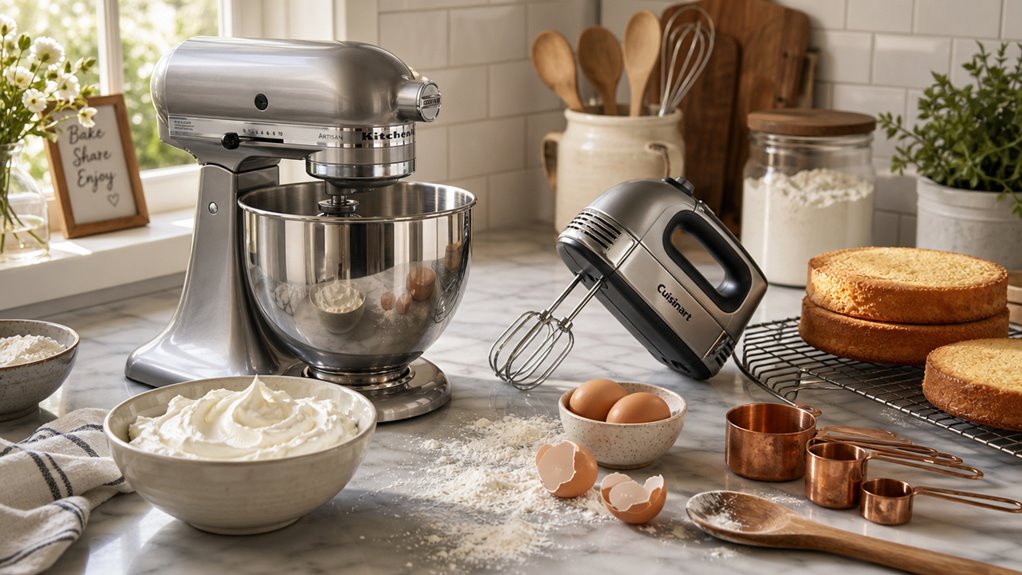
Choosing between a hand mixer and a stand mixer depends on motor power, bowl capacity, and the type of dough or batter being prepared. A hand mixer handles light tasks efficiently, while a stand mixer sustains heavier workloads without stalling.
- Hand mixer delivers roughly 150 to 250 watts of power, making it suitable for whipping cream, beating egg whites, and mixing light batters.
- Stand mixer uses planetary action and a 5 to 7-quart bowl to keep dense dough moving consistently through longer mixing cycles.
- Motor overheating becomes a practical concern when a hand mixer runs continuously against dense dough, limiting its usefulness for bread baking.
A hand mixer fits easily in a drawer and sits in a budget price tier, which makes it a practical tool for occasional, low-resistance tasks. Its motor, however, is not built to sustain the friction that stiff doughs create over several minutes of continuous use.
A stand mixer carries a motor rated typically between 250 and 1000 watts, giving it the torque to handle dense bread dough across repeated cycles. Its planetary action moves the attachment in a pattern that contacts more of the bowl, reducing dead zones where ingredients sit unmixed.
Bakers who produce multiple loaves or large batches regularly tend to find the countertop footprint of a stand mixer justified by the consistent results it delivers. The combination of bowl capacity, motor strength, and mixing geometry addresses the limitations that a hand mixer reaches quickly under load.
Planetary mixing action, in which the attachment rotates on its own axis while also orbiting the bowl center, was used in commercial bakery equipment for decades before scaled-down versions became common in home stand mixers.
Cheap or expensive is the wrong question. Cost per use is the honest one. Check out our new Calculator.
Cost-Per-Use Calculator →Key Points
- Hand mixers excel at light tasks such as whipping cream, egg whites, and small‑batch batters. They fit in a drawer, and their motors heat quickly under sustained load, which is what keeps them in the light-duty range.
- Stand mixers handle heavy, high‑hydration doughs without overheating, thanks to high‑torque motors, planetary action, and larger bowls.
- Frequency and batch size dictate value: occasional bakers benefit from cheap hand mixers, while weekly loaves or large batches justify a stand mixer’s higher cost.
- Motor durability differs; hand mixers (150‑250 W) risk overheating on sustained dough work, whereas stand mixers (250‑1000 W) stay cool under continuous load.
- Kitchen space matters: hand mixers free counter space and are portable, while stand mixers occupy permanent countertop real estate but provide consistent performance for heavy baking.
What a Hand Mixer Handles in an Everyday Kitchen
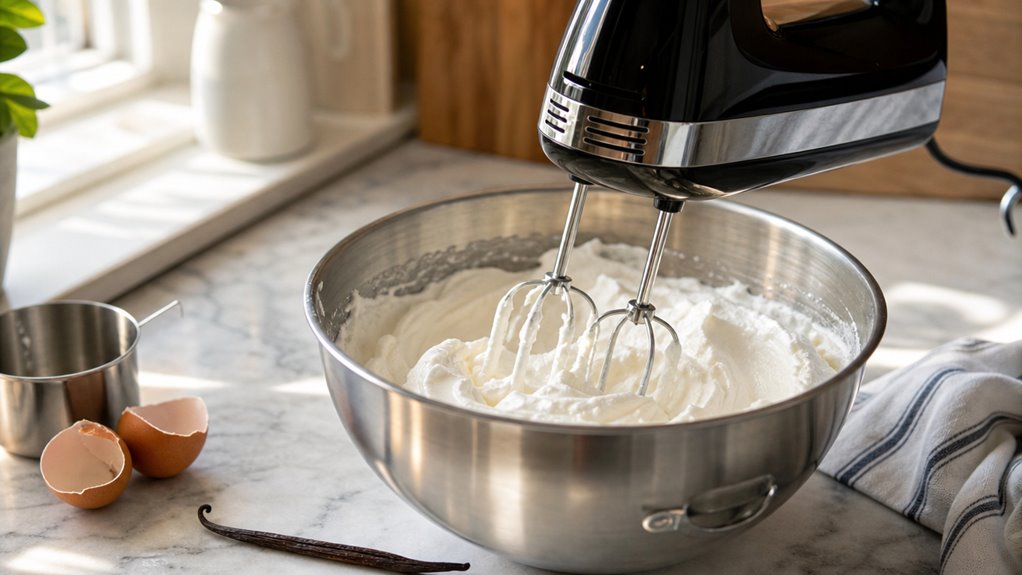
A hand mixer handles tasks like whipping cream, beating egg whites, and creaming butter and sugar. That is the everyday mixing work that fills most home baking recipes.
Its compact beater design gives cooks direct control over speed, which keeps light batters smooth and prevents frosting from overworking.
Because the motor sits in a handheld unit rather than a large stand, it stores easily and moves with the bowl, making it practical for small kitchens and quick prep.
Stiff doughs push the motor beyond its range, so heavier bread work typically calls for a more powerful machine.
Understanding where a hand mixer performs well and where it falls short shapes how confidently you can rely on it day to day.
Whipping, Creaming, and Light Batters With Ease
Whipping, creaming, and mixing light batters become straightforward when you grab a hand mixer. You’ll hit stiff peaks in whipped cream in about three to five minutes on medium‑high speed, and the same effort works for a half‑cup of meringue or two cups of whipped topping.
For butter and sugar, a hand mixer tackles one to two sticks in three to seven minutes without overheating, giving you a fluffy base for a single cake or half‑batch cookies. Light batters such as cake, brownie, and quick‑bread stay tender because you control speed and stop before gluten over‑develops. The beaters reach bowl corners, so you scrape down sides and avoid pockets.
A stand mixer can do the job too, but its larger bowl and hands‑free action are unnecessary for these small‑scale tasks. The hand mixer’s compact size, low price, and easy drawer storage outweigh its limitation: it can strain on very stiff doughs. Hand mixers are generally more affordable than stand mixers.
Why It Stores in a Drawer Instead of Owning the Counter
When you pull the hand mixer out of a drawer, you’re instantly freeing up counter space for the next pot or pan. The hand mixer’s compact body, usually 2–4 lb, slides into a standard kitchen drawer, so you never need a permanent parking spot. That drawer storage means you can keep the kitchen uncluttered and still have the tool within arm’s reach for quick tasks.
You seat the beaters first, then plug it in, and whisk sauces, gravies, or a small batch of batter without moving a bowl to a separate station. The lightweight design also lets you lift and store it easily, even if you have limited strength. The only drawback is that the motor can overheat if you try to knead stiff dough, so it stays a light‑duty appliance. It also features an eject button for quick attachment removal, reducing cleanup time.
Where a Stand Mixer Pulls Ahead
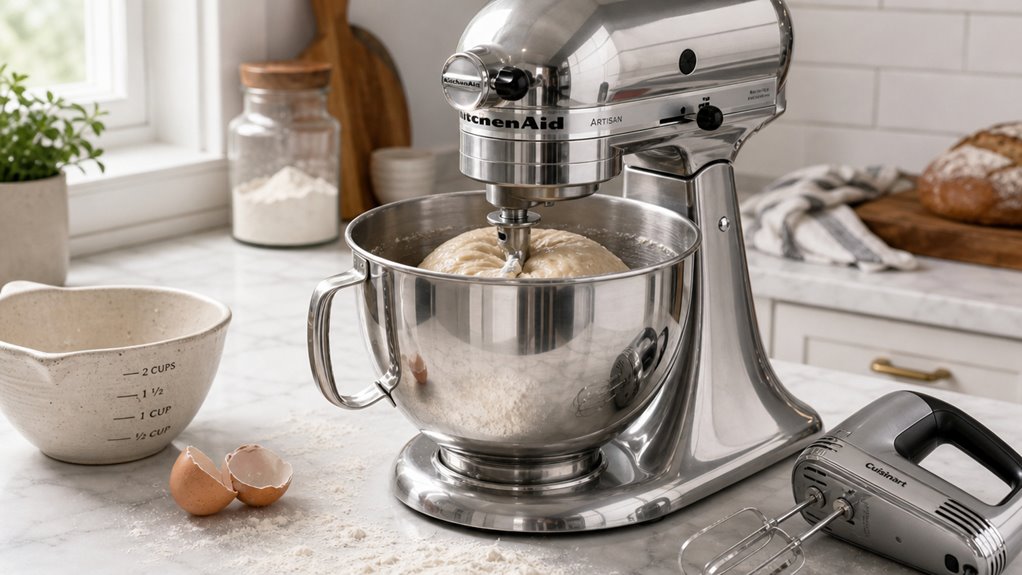
A stand mixer pulls ahead in tasks where the machine needs to run unattended, handle stiff doughs, or process large batches consistently.
The higher-wattage motor and planetary action, where the attachment moves in an orbit around the bowl rather than spinning in a fixed path, distribute force evenly through dense bread dough without the motor overheating under sustained load.
Larger bowl capacity reduces the need to stop and scrape sides mid-mix, which keeps texture and aeration more uniform across the full batch.
Multiple attachments extend the same motor platform to tasks beyond mixing, making the stand mixer a practical choice for heavy-duty recipes where a hand mixer would struggle to maintain consistent speed.
The differences between models go deeper than wattage and bowl size alone.
Hand mixers can be nearly as effective as stand mixers for small‑batch cake mixing, but they lack the hands‑free operation needed for larger doughs.
Hands-Free Mixing, Big Batches, and Stiff Doughs
If you need to keep your hands free while the dough rises, a stand mixer does the job without you hovering over the bowl. The built‑in bowl support lets you chop vegetables or preheat the oven while the motor keeps mixing.
Larger 5‑quart bowls hold enough cookie dough for a party, and the high‑torque motor tackles stiff bread dough without stalling. Planetary action spreads ingredients evenly, so you avoid unmixed pockets that a hand mixer would leave. The stable base reduces vibration, making it safer on a crowded counter.
- Hands‑free multitasking while mixing
- Bowl capacity for big batches, up to 7 quarts
- Motor power that handles thick batters and stiff doughs
- Consistent texture from planetary mixing action
A stand mixer is worth the counter space when you bake frequently, need big batches, or work with dense doughs. Long‑lasting machines often serve for decades, which is what spreads the higher upfront cost across years of use.
Why a Stand Mixer Kneads the Bread That a Hand Mixer Strains to Finish
Start the dough in a stand mixer and you’ll see the difference instantly. Its high‑torque motor keeps speed under load, so the spiral hook stretches and folds stiff bread dough without stalling. You get consistent gluten development in five to eight minutes, and the bowl stays hands‑free while you tend to other tasks.
A hand mixer, even with the best beaters, drops torque as the dough thickens; you’ll feel the motor strain, risk overheating, and often end up tearing the dough rather than kneading it. For bread dough, a hand mixer manages short bursts on soft dough only, so kneading with one is a no‑go for anything beyond a light, low‑hydration batch.
The trade‑off is size and cost, but for frequent heavy loaves the stand mixer pulls ahead.
When a Hand Mixer Is All You Actually Need
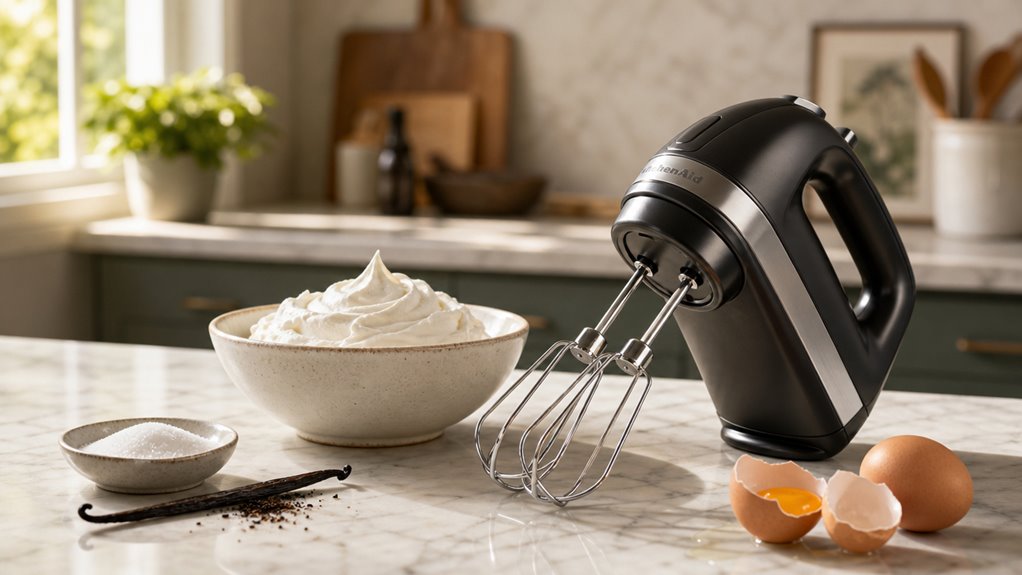
A hand mixer suits most home bakers who work with light batters, occasional whipped toppings, or a single loaf at a time. None of that requires the motor strength or bowl capacity of a stand mixer.
Because it stores in a drawer and typically costs under $30, a hand mixer removes the overhead of dedicated counter space without sacrificing control over the bowl. That direct control matters when recipes call for gradual incorporation or when batch size shifts from one attempt to the next.
A stand mixer earns its place only when stiff dough and high-volume baking become routine rather than occasional. The details below clarify where each type of mixer fits and what drives that distinction.
The Baking Most Home Cooks Actually Do
Most home bakers stick to small‑batch recipes, so a hand mixer handles the bulk of what you’ll actually do.
You’ll whisk eggs, beat butter, blend a single cake batter, or whip a modest amount of cream without breaking a sweat.
The tool fits in a drawer, costs under $30, and lets you keep the counter clear for the occasional stand‑mixer moment.
For everyday tasks, the answer to whether you need a stand mixer is usually no.
A hand mixer covers the light‑duty jobs most cooks face.
- Single‑layer cake batter
- Small‑batch cookie dough
- Whipping two sticks of butter
- Emulsifying salad dressing
Why a Stand Mixer Earns Its Counter Only for Frequent Heavy Doughs
Kneading stiff dough for several loaves a week puts a constant load on any motor, and only a stand mixer’s high‑wattage (250‑1000 W) design can handle that without overheating. You’ll feel the difference when you run a dough hook for eight minutes straight; the motor stays cool while the gear train endures continuous torque.
The hands‑free setup lets you add flour gradually and multitask, which cuts fatigue during frequent batches. A stand mixer’s 5‑7‑quart bowl holds enough heavy dough for multiple loaves, so you avoid swapping bowls or overloading a hand mixer’s tiny gears.
The downside? Its footprint stays on the counter, taking space that a compact hand mixer would leave free. If you bake heavy dough only once a month, the extra motor strength and capacity aren’t worth the permanent kitchen real estate.
The Cost, Storage, and Durability Trade-Off
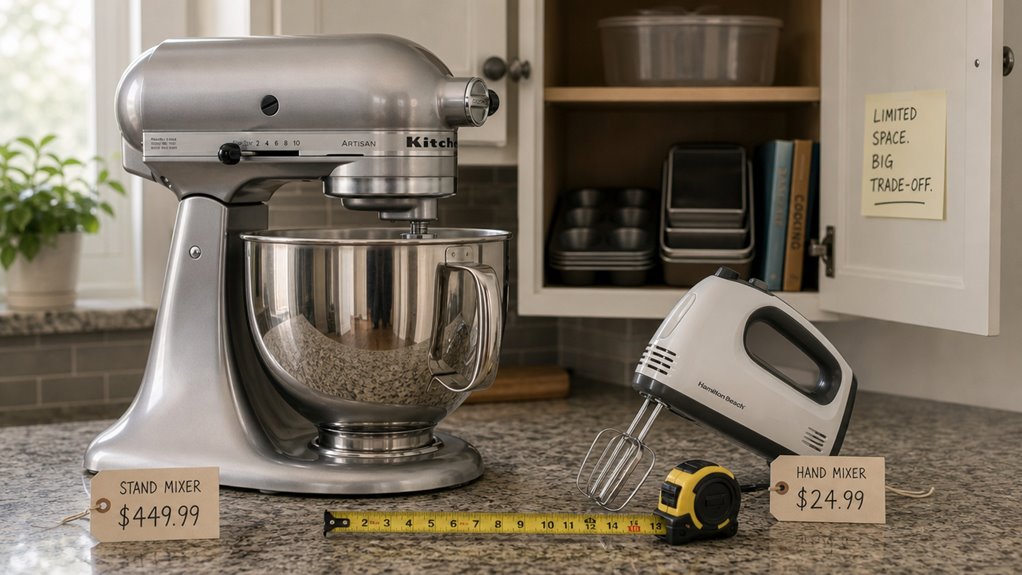
Choosing between a hand mixer and a stand mixer involves balancing upfront cost, available storage space, and how well each tool holds up under repeated use. A hand mixer fits easily in a drawer and carries a lower price, but its smaller motor and plastic gears can overheat or wear down when working through stiff dough on a regular basis.
A stand mixer occupies a permanent countertop spot and costs more initially, yet its more durable construction handles larger batches without the same strain. For occasional mixing tasks, the compact footprint and lower price of a hand mixer often make more practical sense, while frequent large-batch baking tends to justify the stand mixer’s higher investment over time. The sections ahead examine each trade-off in closer detail.
Counter Footprint, Motor Strain, and Long-Term Wear
If you’re juggling a tiny kitchen and a limited budget, the footprint of your mixer matters more than its brag‑sheet. A hand mixer slides into a drawer, freeing counter space, while a stand mixer claims a permanent spot and often weighs 20–50 lb. The larger counter footprint means you’re less likely to move it, which reduces accidental drops but ties up valuable real estate.
Motor wattage also differs: hand mixers run at lower wattage, so prolonged heavy mixing can overheat the motor, whereas stand mixers use higher wattage to sustain torque for stiff dough without strain.
- Hand mixer: compact, low‑wattage, easy storage
- Stand mixer: bulky, high‑wattage, fixed bowl
- Motor strain: short bursts vs. continuous duty
- Long‑term wear: light use vs. frequent heavy mixing
Where a Cheap Hand Mixer’s Gears Wear and a Sturdy One Lasts
When you compare a cheap hand mixer to a sturdier model, the first thing you’ll notice is how the gear material dictates the wear pattern.
Plastic teeth in budget units are shallow and narrow, so stress concentrates at the roots and the motor pinion’s first reduction gear strips quickly. The housing flexes, misaligning the mesh and letting batter debris grind the teeth.
In contrast, a metal‑gear mixer uses helical spurs with tighter tolerances; the load spreads evenly, heat stays low, and the housing stays rigid.
That design keeps gear wear minimal, extending the appliance lifespan to many years. You may still need to re-grease occasionally. Unplug the mixer at the wall before you open the housing: the enclosure carries mains wiring, and opening it also voids the warranty on most models, so a service centre is the safer route if the unit is still covered. The sturdier unit rarely fails, whereas the cheap one often gives out after a few heavy mixes.
Which Mixer Fits Your Baking (And Your Counter)
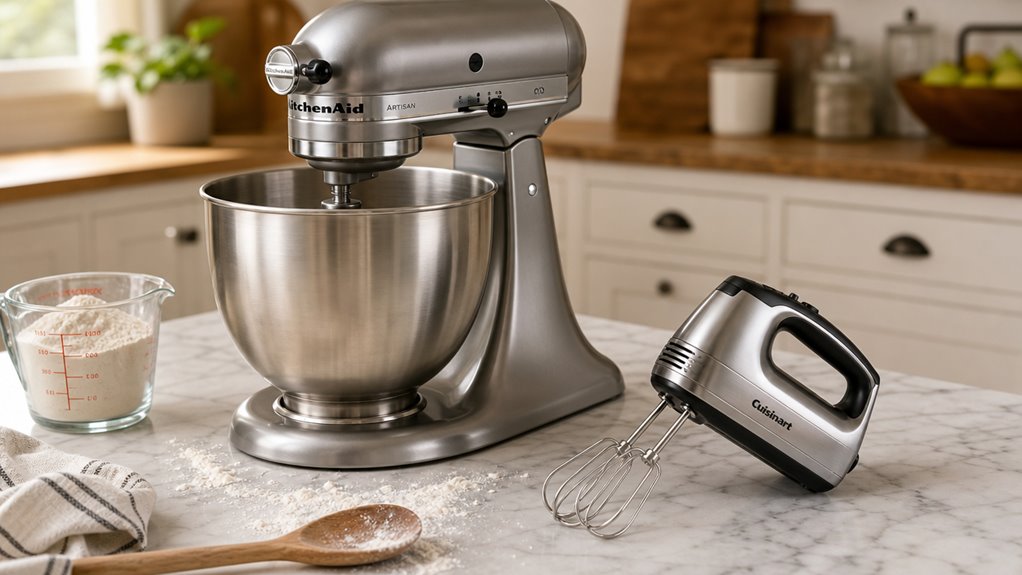
The mixer that fits your baking comes down to two practical factors: how often you bake and how much dough or batter you typically handle at once.
A hand mixer handles light batters and occasional treats at a budget-friendly price point, and its compact size means it stores in a drawer rather than occupying counter space.
A stand mixer, with its larger bowl and planetary action, suits bakers who work through big batches of bread or cake several times a week, where the extra capacity and consistent mixing motion justify the footprint and higher cost.
Matching the mixer type to your actual usage pattern, not your aspirational one, is what determines long-term value.
The sections ahead cover the specific features and trade-offs that shape that decision.
Matching the Appliance to Frequency and Batch Size
Occasionally you’ll bake a single cake or a batch of cookies, and a hand mixer handles that with ease.
If you bake once a month or less, your recipes stay inside the light-duty range, so a compact 150‑250 W hand mixer covers most recipes. When you need to churn out multiple trays of cookies or a loaf of bread in one go, the batch size grows beyond a hand mixer’s beater reach and bowl capacity. In those moments a stand mixer’s 5‑7‑quart bowl and planetary action keep the dough moving without overheating.
Your kitchen space and how often you bake should decide which of the two you buy.
- Single‑recipe batches: hand mixer shines.
- Multiple or large batches: stand mixer saves time.
- Occasional baking: hand mixer fits storage and budget.
- Frequent heavy doughs: stand mixer justifies footprint.
Matching a Capable Hand Mixer to the Under-$30 Ceiling
Start by checking the motor’s wattage; most budget mixers under $30 sit between 150 W and 250 W, which is enough power for light cakes, brownies, and whipped cream but can strain the motor if you try to knead a stiff bread dough for more than a few minutes.
You’ll find 5‑7 speed settings, a burst button for short torque spikes, and a snap‑on storage case that keeps beaters, whisk, and occasional dough hook tidy.
The hand mixer uses twin counter-rotating beaters rather than the planetary motion a stand mixer relies on, so you move the unit around the bowl yourself to get even coverage without a bowl‑sitting stand.
Expect a plastic housing that feels light, a louder motor at top speed, and a lifespan that matches occasional baking rather than daily dough‑heavy workloads.
Frequently Asked Questions
Can a Hand Mixer Knead Bread Dough Without Overheating?
You can knead small, soft bread batches with a hand mixer, but keep it under three minutes, low speed, and let it cool between bursts; otherwise the motor will overheat.
Do Stand Mixers Require Special Bowls for Different Recipes?
You’ll find that most stand mixers come with a single, versatile bowl that handles everyday recipes; only when you need larger capacity, specialty materials, or multi‑step workflows do you swap in model‑specific bowls.
How Often Should I Lubricate a Hand Mixer’s Gears?
Unplug the mixer before you go anywhere near the housing, and check the warranty first, because opening it usually voids cover and a service centre is the safer option. Beyond that, lubricate only when you hear grinding, feel jerky speeds, or notice excess heat. Typically that means every 3‑5 years for occasional home use, but annually if you mix thick doughs or run it long.
Is There a Quiet Hand Mixer Model Under $30?
You won’t find a truly quiet hand mixer under $30; budget models are noisy at high speed as a class, because a small high-revving motor in a light plastic housing has nothing to damp it. They will still handle light batters. If noise matters to you, check the published dB figure for the specific model rather than trusting a brand’s reputation.
Can I Use a Stand Mixer for Non‑Baking Tasks Like Pasta Dough?
A stand mixer handles pasta dough well. Keep the speed low, watch for motor strain, and let it do the hands‑free kneading for stiff, low‑hydration doughs.
Conclusion
You’ll probably use a hand mixer for most of your recipes: whipping cream, folding a pancake batter, creaming butter for a single cake. In a small kitchen a hand mixer does that work and then goes back in the drawer, while a stand mixer holds its counter space whether you used it that week or not. If you bake a loaf or two a month, the extra horsepower and storage cost of a stand mixer rarely pay off. Stick with the hand mixer unless you’re consistently tackling stiff, high‑volume doughs.

Michael Haralson worked in professional kitchens from 1979 to 1992: San Diego restaurants, six years with a catering company beside an Austrian chef, and two summers as a cook on the Finland to Sweden cruise route. He then built a fifteen-year career at Nokia. It began in product marketing and product management, where technical specifications and supplier evaluation were part of the work, and grew from a few countries to a region to global roles, then into sales and corporate strategy. That took him to Beijing for three years, where he spent many weekends in a different province trying the local food and took cooking classes. He has eaten in more than 40 countries and has been shown the kitchens of restaurants in Southern Europe. At home in Finland he cooks Cantonese, Sichuan and Mediterranean food, and still uses the cast iron skillet he bought in 1992. He is the author of Buy It Once, Book One of The Researched Kitchen, and writes here about the balance between kitchen tools that cost too much and those that fail too soon.