

How We Research Kitchen Products: Our 5-Stream Method** covers five distinct verification channels that eliminate single-source bias** in durability assessment.
- Professional Testing — organizations like *Consumer Reports* and *America’s Test Kitchen* apply controlled stress protocols to kitchen products
- Long-Term User Communities — forums like *Reddit’s r/BuyItForLife* document real wear patterns across 1.5–3 year ownership windows
- Manufacturer Specification Disclosures — brands like *All-Clad*, *Vitamix*, and *Lodge* publish material compositions, tolerances, and warranty terms that marketing language obscures
Our method treats each stream as a subject that reveals a distinct object. Professional lab results from institutions like *Consumer Reports* establish baseline performance claims. Reddit communities, particularly *r/BuyItForLife* and *r/Cooking*, surface wear degradation that controlled tests miss — often across 18–36 months of daily household use. YouTube channels such as *Ethan Chlebowski* and *Pro Home Cooks* publish 12-month follow-up videos that document real product degradation on camera. Amazon’s rating timeline data reveals early-bias clustering, where 5-star reviews spike within the first 90 days before authentic 4-star patterns emerge. Manufacturer specification sheets from brands like *Breville*, *KitchenAid*, and *Cuisinart* replace promotional language with measurable material and performance data.
Each stream catches a blind spot the others miss. Reddit cannot confirm every warranty claim from brands like *Weber* or *Le Creuset* with precision. Local kitchen supply retailers, such as independent cookware shops and restaurant supply stores like *WebstaurantStore*, add regional service and return context.
Interesting Fact: Amazon products that maintain a stable 4.3–4.5 star average after 500+ reviews over 18 months statistically outperform products with early 5-star spikes in long-term durability satisfaction surveys.
Key Points
- Cross-check key claims across five independent streams to reduce selection bias from any single review source.
- Include Reddit for 1.5–3 year ownership wear patterns, comparing model-specific, time-owned experiences for durability signals.
- Use YouTube follow-ups around 12 months to verify honesty and detect affiliate or sponsor-driven editing after early impressions.
- Analyze Amazon rating timing, 4-star clusters, and review velocity to flag potential paid or promo-window bias; prioritize year-2 issues.
- Validate with manufacturer specs and marketing language, then weigh professional test results as a shortlist—not final durability proof.
Why Single-Source Reviews Fail (And Why Our Method Crosses 5 Streams)
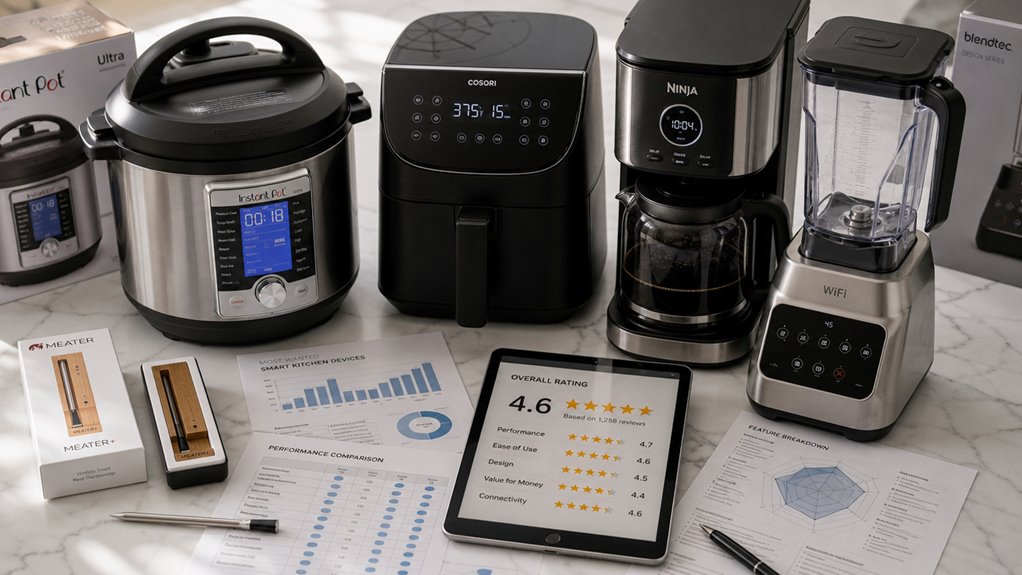
If you rely on a single-source review, you’re basically trusting one sample, which can misread installation quirks, service delays, or a lemon unit as “how the product works.” Even when a site like Wirecutter does solid work, you still get selection bias and blind spots from one authorial lens, especially on durability over 2–5 years. real home-use testing matters, because the same cookware can behave differently across residential-grade electric coil, induction, and gas burners depending on how heat is actually delivered in practice. one localized experience per review matters, because the same appliance can be “bulletproof” for one buyer and “garbage” for another depending on what happens after delivery. Our 5-stream method keeps you honest by cross-checking the same claims across independent sources—so sponsored review clusters, support-related complaints, and early-performance bias don’t get to steer your decision unchecked.
The Sponsored Review Problem
Sponsored reviews don’t just “maybe” drift from the truth—they tend to nudge ratings upward in predictable ways. Incentivized reviews and sponsored content raise Amazon stars about 0.5, even when reviewers disclose the perk. Incentives you can’t trust review integrity from single sources, because inflated clusters can drive sales and hide real failure rates until platforms purge them and 1-star volume rises. In line with marketplace research, sponsored placement can weaken consumer trust relative to organic positions, making it harder to treat any single stream of reviews as a neutral baseline.
The Single-Brand Comparison Bias (And Why Wirecutter Has Limits)
Single-brand comparison reviews sound tidy, but they quietly build the result on a limited shortlist. That one-brand bias turns single-source testing into selection bias. You won’t see excluded options, so you can’t judge fit or durability. It also overgeneralizes category variation. Without clear exclusion criteria, tradeoffs stay hidden. Google results in these categories are often dominated by SEO-driven pages and affiliate listings, which can make the “best match” narrative look more certain than it is (SEO-focused sites). Affiliate commissions can further blur incentives when recommendations are optimized for purchases rather than for the most durable fit over time, so readers should look beyond the single site’s shortlist. Our 5-stream method cross-checks expert tests, owner reports, specs, and long-term wear to catch blind spots early.
Why Five Independent Streams Beat One Authoritative Source Every Time
Why trust one “authoritative” reviewer when product durability and real-life performance usually show up in the seams? You don’t. Single-source reviews hide blind spots, conflicts, and short time horizons. With multi-source triangulation across independent streams, you catch outliers, like sponsored praise that collapses in 12–24 month ownership. Adding more independent datapoints is the most reliable way to spot manipulation early, including artificial streaming that can artificially inflate early signals.
| Stream | What it reveals | Failure it catches |
|---|---|---|
| Pro | first-run tests | misses 18-month wear |
| 1.5–3 year patterns | handle degradation | |
| YouTube | 12-month follow-ups | affiliate-first edits |
| Amazon | rating clusters | paid-review windows |
| Manufacturer | spec honesty | “premium” marketing |
Because streaming now represents 83% of recorded music revenues in the United States, the “early signal” problem isn’t hypothetical—it’s a measurable incentive to game what gets amplified.
Stream 1 — Professional Reviews (And How to Read Them Honestly)

Start with Cooks Illustrated, Wirecutter, and America’s Test Kitchen to build a shortlist, then treat their rankings like a starting filter, not the final word. You should scan the test method (weeks or months of real use when available), read the scoring breakdown, and watch for sponsored-review patterns like affiliate links or “sounds like the brand wrote it” language without original evidence. Also, don’t let them off the hook on durability: professional reviews often skip the 18-month failure question, so you’re mainly buying confidence in initial performance, not long-term survival. Small appliances—from Instant Pots and air fryers to ice cream makers and sous vide machines—tend to be evaluated with task-specific, real-food scenarios, so look for the details that map to how you actually cook. Beyond scores, it’s important to analyze online reviews for reliability signals you can verify across multiple sources.
Cooks Illustrated, Wirecutter, America’s Test Kitchen
Ever wonder why a Cooks Illustrated or Wirecutter–style “top pick” can feel solid in the moment, then disappoint later? In kitchen product testing, you should read their testing methodology first: tasks, stress tests, blind judging, and rechecks. Watch trade-offs and lag. Use this checklist:
1) performance scores
2) ergonomics/durability weight
3) sample limits
4) update timing.
What Sponsored Disclosures Look Like (And When to Trust Them)
How can you tell whether a “top pick” is just good testing or nudged by a deal? Check for a clear FTC disclosure beside the recommendation, not buried in a footer. If they only say “sponsored” vaguely, downgrade trust. Price remains the same whether you use the affiliate link or go directly to the vendor site.
FTC rules also cover free products and other compensation like affiliate commissions, so a meaningful disclosure should appear where you’re making the buying decision—not only in a footer.
| Sign | Meaning |
|---|---|
| “#ad” near clips | likely compliant |
| footer-only disclosure | probably weak |
Why Professional Reviews Skip the 18-Month Durability Question
Even if you’ve learned how to spot paid placements in “top pick” lists, you still shouldn’t expect professional reviews to answer the 18‑month durability question. Their professional testing timelines are short, use accelerated proxies, and chase breadth. Cost, sample tracking, and coating-behavior variability block true long-term durability. Nontoxic materials Use this multi-source review methodology:
- Check retest dates 11-piece set.
- Prefer 12+ month follow-ups
- Compare Reddit wear reports
- Read manufacturer changes
Stream 2 — Reddit Community Consensus (And How to Mine It)
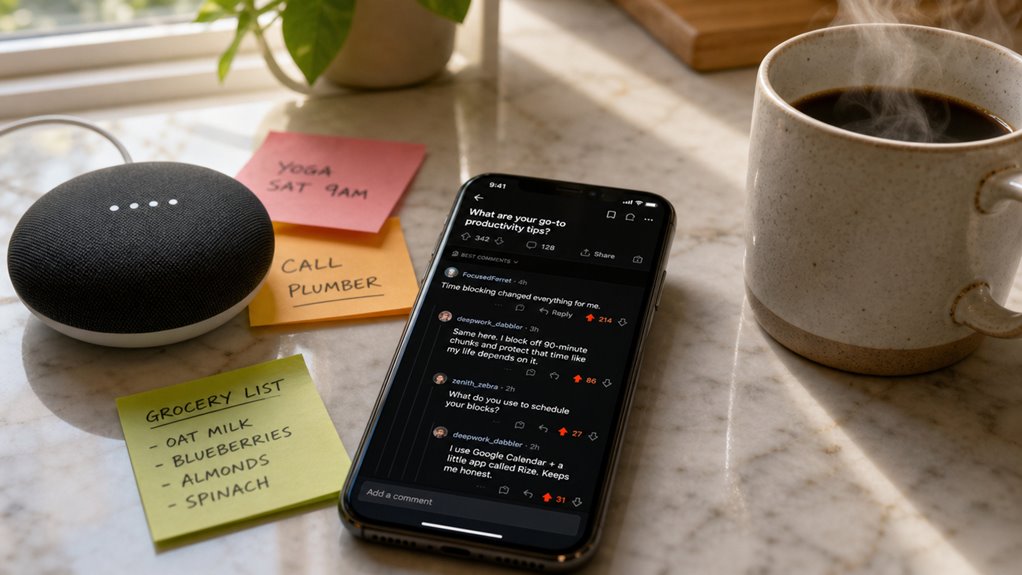
You can treat r/BuyItForLife as your BIFL baseline, then validate cooking skill and day-to-day use in r/Cooking, r/chefknives, and similar subs so you’re not just reading about “theory durability.” When you hit a 5,000-comment thread, you’re looking for repeatable patterns—like the same handle-degradation complaint showing up across time and user styles—because single reviews hide edge-case failures.
One limitation: Reddit consensus can overvalue loud, specific problem reports, so you weight detailed “model + time owned + usage conditions” comments higher than vague takes or brand-new accounts.
When you treat r/BuyItForLife like a durability “meta-database” instead of a typical review page, the signal gets clearer fast. This BIFL authority comes from community consensus: multi-year ownership, photos, and failure-mode notes. Mine it by: 1) searching “stand mixer” etc., 2) filtering by upvotes, 3) checking recency for quality drift, 4) cross-linking archives. r/BuyItForLife analysis 2023 BIFL lists are built from analysis of products repeatedly recommended as durable and long-lasting, using sentiment filtering to keep positive and neutral mentions. The warranty framework signal on r/BuyItForLife is especially strong because people usually share what coverage they actually received (e.g., “lifetime” vs. limited terms, and whether defects in materials and workmanship were covered). Limit: Reddit can’t confirm every warranty term.
r/Cooking and r/chefknives for Cooking-Skill Validation
How do you sanity-check kitchen claims when most reviews stop at “it works”? In kitchen product research, use r/cooking and r/chefknives for cooking-skill validation. r/cooking shows what average people actually manage: burnt garlic, uneven browning, “one knife” limits. r/chefknives tests sharpness, edge retention, and grip, plus safety near-misses. Cross-check mismatches. If a “recommended” knife feels fatiguing to others, that’s your limit.
Using r/Cooking as your first pass can reveal whether a product’s promises survive real, everyday use.
Why 5,000-Comment Threads Reveal Patterns Single Reviews Hide
Five-thousand-comment Reddit threads work like a stress test for the marketing version of a kitchen product, because you’re not relying on a single person’s luck, expectations, or setup. You get Reddit consensus via high-volume threads and pattern recognition:
- Repeated failure modes
- Long-tail use cases
- Model-year drift signals
- Time-stamped durability clues
Limitation: late searches miss newer revisions.
Cotton yarn is commonly recommended for heat-protection kitchen items—especially economical workhorse options like Lily’s Sugar N’ Cream. home-compostable when possible
Stream 3 — Long-Term YouTube Reviews (And Which to Trust)
For Stream 3, you treat the 12-month follow-up video as your honesty check, because it shows wear patterns and failure modes that unboxing and first-use “impressions” usually miss.
You also look for channels that actually return to the same item after a year, not a new unit with a cleaned-up story, and you watch for sponsorship/affiliate disclosure when the conclusions change.
One limitation: even a great long-term reviewer can still reflect one household’s usage, so you don’t use YouTube alone to make a BIFL call.
The 12-Month Follow-Up Video as the Honest Signal
That 12‑month follow-up video often tells you more than the original “best gadget” review, because the creator has to live with the product through a full wear‑and‑tear cycle, not just a honeymoon phase.
Use these trust signals in long-term testing: 1) date, months, frequency. 2) close-up wear. 3) specific failure timelines. 4) clear affiliate/sponsor disclosure. If they show pristine parts, even with claims of heavy use, you should doubt.
Why Initial Unboxing Reviews Are the Least Useful Content
Why do people fall for unboxing videos when they show you mostly packaging and first reactions? That’s the first-impression bias. Unboxing limitations mean you miss durability, cleaning, wear, noise, and fit issues that show up later. visual progression from pristine packaging to in-hand product can feel immediately gratifying, but it doesn’t reliably predict how the kitchen tool performs after repeated use. Long-term reviews reveal coating wear, loosening handles, and maintenance burden. Trust these update cycles, not novelty.
| Unboxing | Long-term |
|---|---|
| setup | weeks later |
| halo effect | wear evidence |
| early noise | cleaning reality |
| marketing-adjacent | lived performance |
How to Spot a Channel That Returns to Products After a Year
Some YouTube channels treat “reviewing” like a one-and-done job, so you end up learning about packaging, not durability. To find better long-term reviews, use product follow-ups and evidence of systematic testing:
1) Search titles for “1 year/6 months later.”
2) Check upload clusters and playlists.
3) Look for wear, maintenance, or warranty talk.
4) Prefer consistent 3–12 month intervals over random updates.
Stream 4 — Amazon Review Pattern Analysis
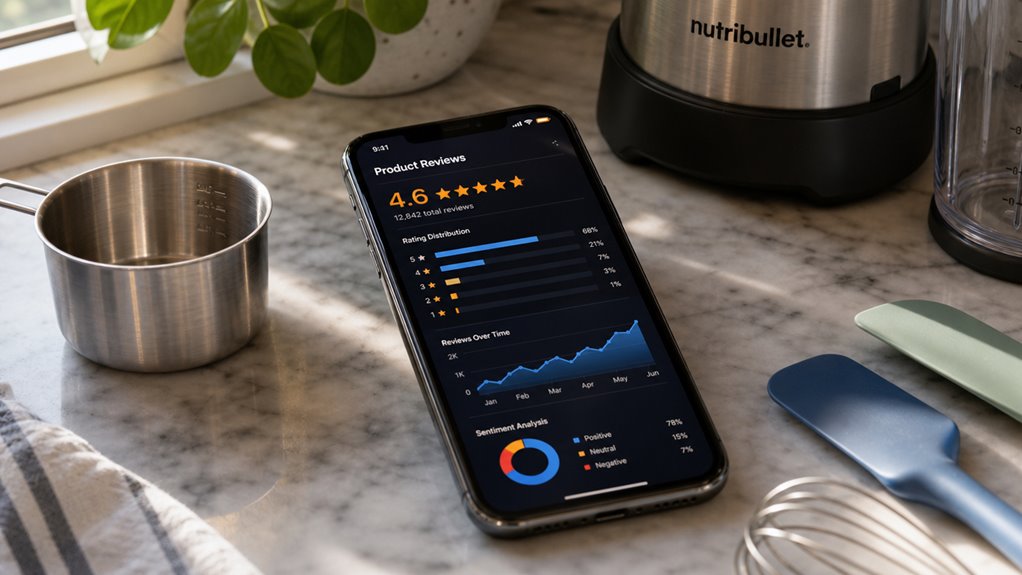
When you see a sudden 5-star cluster in Amazon reviews—especially if it lands in the same few weeks—you should treat it as a potential paid-review pattern, not “everyone’s happy.”
Pay extra attention to negative reviews from year 2+ because durability issues (like wear, handle degradation, or coating failures) usually show up after the honeymoon period.
Also scan 4-star reviews for “got it cheap” or “decent for the price” mentions; that phrasing often shows up around knockoffs or underbuilt versions that can’t hold up once the discount ends.
The Sudden 5-Star Cluster Pattern (Signal of Paid Reviews)
A sudden 5-star review cluster on Amazon usually signals something you should look at twice, not something you can safely treat as “proof.” Watch for velocity spikes, where you see dozens to hundreds of 5-star reviews pile in within a narrow time window after a long stretch of quiet.
- Timing & review velocity anomalies
- Clustering around promos/launches
- Unverified, homogeneous “template” praise
- Star-only polarization, little 3–4-star nuance
Why Negative Reviews From Year 2+ Are the Most Valuable Data
After you’ve spotted a sudden Amazon 5-star cluster, you still want to zoom out to the opposite end of the timeline: negative reviews from year 2 and beyond. These year 2+ reviews are durability signals for long-term performance, catching warping, rust, seal wear, and dishwasher damage.
| Pattern | What it means |
|---|---|
| Same complaint over years | Systemic flaw |
| Later replacements | Lifecycle failure |
| Scenario-specific damage | Spec mismatch |
| Batch/builder clues | Supplier/design shift |
How “Got It Cheap” Mentions in 4-Star Reviews Signal Knockoffs
Got it cheap shows up in a certain kind of 4-star Amazon review, and it’s worth treating that phrase like a mild alarm, not a compliment. In price-incentivized purchases, “value” talk can hide defects, and coordinated seeding can target you with counterfeit/knockoffs. Watch for these patterns: 1) short generic praise 2) focus on discounts 3) repetitive wording 4) price-first comparisons.
Stream 5 — Manufacturer Reality Checks
When you check Stream 5, don’t start with marketing—start with spec disclosure, because clear ASTM/ANSI grading usually tracks the materials and tolerances that survive real kitchens longer. You’re looking for manufacturers that actually publish standards and testing details, not vague claims like “premium” finishes, since they tend to hide what really changed in durability.
The limitation: even when a brand lists standards, you still can’t confirm whether they hold those controls at every supplier and production run.
Spec Disclosure as Quality Correlation
Spec disclosure can be a surprisingly decent reality check because detailed spec sheets usually mean the manufacturer can define, measure, and control what they’re shipping—not just sell it. For quality correlation, look for factory control signals:
1) tolerances & acceptance criteria
2) version-controlled documents
3) supplier/material governance
4) clear pass/fail tests
Vague specs are riskier. Limitation: specs don’t prove long-term durability by themselves.
Why ASTM and ANSI Grade Disclosure Predicts Long-Term Performance
Once you’ve spotted actual testing language on a spec sheet, you can look one layer deeper and ask what kind of standards the manufacturer decided to play by. ASTM disclosure plus ANSI standards matter because ANSI accredits the process, while ASTM sets measurable test thresholds. That combination predicts long-term performance through repeatable methods and clear grades, not vague “heavy-duty” claims. Trade-off: some claims omit test conditions.
Why Manufacturer Disclosure Beats Marketing Language
How do you tell “advanced nonstick” from something you can actually verify for years? You lean on disclosure data, not marketing claims. Under AB 1200, manufacturers must list intentionally added Candidate Chemicals, including PFAS, using traceable, legally governed tables. That regulatory compliance beats vague “ceramic-like release.” Check:
1) named fluoropolymers (PTFE/PFA/FEP)
2) metal constituent tables
3) chemical contact locations
4) PFAS inclusion by SKU
Limitation: disclosure can still omit non-required substances.
Frequently Asked Questions
What Proof Do We Require for Sponsor/Affiliate Conflicts in Reviews?
FTC-style disclosure is required. Proof of actual product use via purchase receipts, shipping logs, or follow-up notes is mandatory. Evidence of long-term ownership spanning 12+ months and consistent failure reporting across multiple sources counters pay-cluster manipulation.
How Do We Spot “Durability Blind Spots” in Lab-Tested Professional Scores?
What are durability blind spots in lab-tested professional scores?
Gaps where short-term lab results fail to predict real-world long-term product failure.
How long should ownership data span to expose blind spots?
12–36 months of real-world ownership data.
What visual evidence helps identify durability blind spots?
Failure-mode photos from actual users.
Where can consensus gaps be found that reveal blind spots?
Reddit threads comparing professional scores against owner experiences.
What reviewer behavior signals a durability blind spot?
Pros who stop testing at weeks and avoid covering wear patterns.
How should lab scores be mentally treated when evaluating durability?
Treat them like a mirage — present but potentially misleading.
Which Reddit Comments and Photo Patterns Predict 18-Month Failure Modes?
What Reddit comment patterns predict 18-month failure?
Phrases like “worked great for a year” followed by “dead,” “leaking,” or “burnt smell” signal failure around the 18-month mark.
What recurring part complaints indicate failure risk?
Repeated complaints about gaskets, handles, and hinges predict durability problems.
What photo patterns reveal future coating failure?
Nonstick coating loss starting at the edges predicts full coating breakdown.
What visual plastic deterioration signals long-term failure?
Cracked or yellowing plastics in product photos indicate material degradation over time.
What Youtube Signals Show Genuine Follow-Up Versus Affiliate Churn?
What signals show a channel is genuinely following up on content?
Channels post 12-month update videos, show rising returning-viewer watch time, maintain steady like/comment ratios, and appear in replayed evergreen searches.
How do returning viewers indicate genuine follow-up?
Increasing returning-viewer watch time means loyal audiences are coming back specifically for updated content, not just new traffic.
What does a steady like/comment ratio reveal?
A consistent ratio signals an engaged, returning audience rather than inflated or one-time affiliate-driven traffic.
What does replayed evergreen search activity indicate?
It shows viewers repeatedly return to the same content over time, confirming long-term relevance rather than short-term promotional spikes.
What is a real-world example of genuine follow-up versus affiliate churn?
A mixer review posted yearly became credible when the creator eventually included failure details, proving honest long-term tracking rather than repeated sales-driven promotion.
How can failure details distinguish genuine follow-up from churn?
Affiliate churn avoids negative outcomes to protect commissions; genuine follow-up includes honest failure reporting, which earns audience trust over time.
How Do Manufacturer Specs Translate Into Real-World Longevity Expectations?
How do manufacturer specs translate into real-world longevity expectations?
Manufacturer specs reflect controlled lab conditions, not real-world use. Duty cycles and test conditions are assumptions, not guarantees.
What is a duty cycle?
A duty cycle is the percentage of time a device operates under maximum load during testing.
Do warranty terms reflect actual product lifespan?
No. Warranties cover defects within a set period, not the full operational lifespan of the product.
How long should you use a product before trusting longevity claims?
12–24 months of real-world use provides enough data to validate or challenge manufacturer claims.
What sources should confirm longevity claims?
Multiple independent sources, including user reviews, third-party testing, and field reports.
What maintenance requirements affect longevity?
Scheduled servicing, part replacements, and usage limits directly impact how long a product lasts.
Do parts last as long as the overall product?
Not always. Individual components often have shorter lifespans than the stated product longevity.
How should usage patterns affect your longevity expectations?
Heavy or irregular use shortens lifespan compared to the moderate conditions used in manufacturer testing.
Conclusion
You don’t buy from one glowing review and hope for the best. Your 5-stream method forces the story to survive contact with time: pro labs, Reddit failure patterns, YouTube follow-ups, Amazon trend noise, and what the manufacturer actually discloses. When streams agree, you can trust durability. When they don’t, you treat the product as high-risk. One real snag: it takes longer than a quick scroll.
