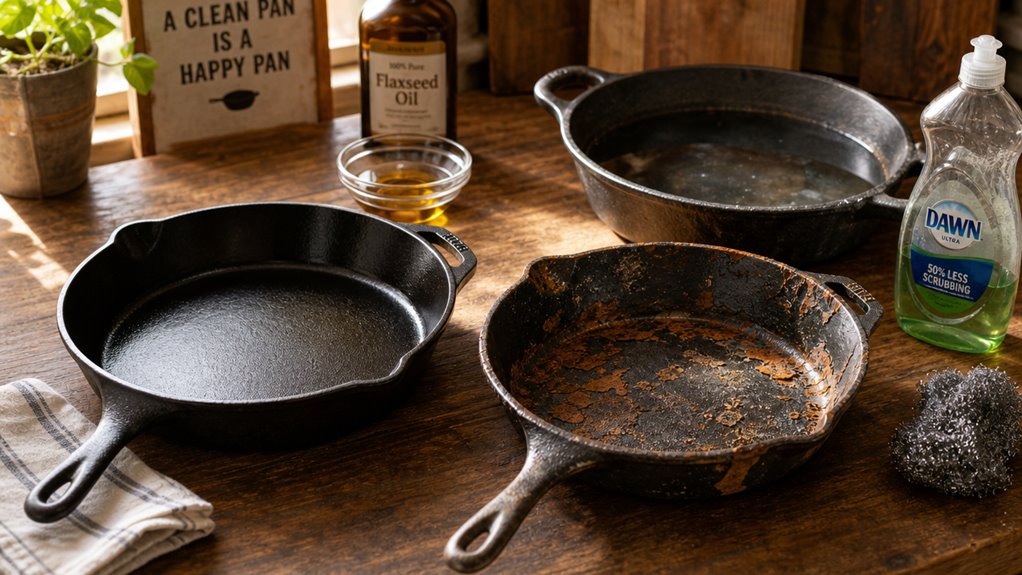
Cast iron skillets: beginners damage them by making five common mistakes.
- Rust formation strips the seasoning layer and weakens the iron surface
- Thermal shock warps the pan and creates uneven cooking surfaces
- Stripping polymerized oil destroys the non-stick barrier built through repeated seasoning
Lodge Cast Iron skillets and Finex pans suffer most when submerged in water for 30 minutes or longer. Prolonged soaking triggers rust and breaks down the seasoning bond. After washing, dry the pan completely over low heat on a GE or Viking range burner. Store it uncovered in a dry cabinet or hang it on a wall rack. A humid kitchen in cities like New Orleans or Houston accelerates rust inside lidded storage.
Dishwashers and Brillo steel wool pads strip polymerized oil from the surface fast. Use a Lodge Cast Iron Brush or a chain mail scrubber from Knapp Made instead. Local kitchen supply shops like Sur La Table carry both options.
Placing a cold Field Company skillet directly onto a high-flame Thermador burner causes thermal shock. Thermal shock warps flat cooking surfaces permanently. Always start on low heat and raise the temperature gradually.
Acidic foods like tomatoes and citrus react with bare iron and leach metallic flavor into meals. Build seasoning layers first with Crisco shortening or Caron & Doucet cast iron oil before cooking acidic dishes.
Interesting Fact: A well-seasoned cast iron skillet can outlast the person who owns it by over 100 years, with some Lodge skillets from the 1800s still in active use today.
Key Points
- Don’t soak cast iron; limit wetting to minutes and store fully dry to prevent rust and sticky seasoning loss.
- Avoid wet-stacking pans; separate them, dry thoroughly, use airflow, and add a thin oil barrier to repel humidity.
- Skip dishwashers; high-heat detergent strips seasoning and can cause flash rust, so wash gently and dry immediately.
- Heat gradually and avoid thermal shock; start low, ramp up slowly, and never rinse a hot pan with cold water.
- Don’t use steel wool routinely; reserve fine steel wool for rust patches, then dry and re-season with thin oil coats.
The Five Most Damaging Mistakes (Ranked by Recovery Difficulty)
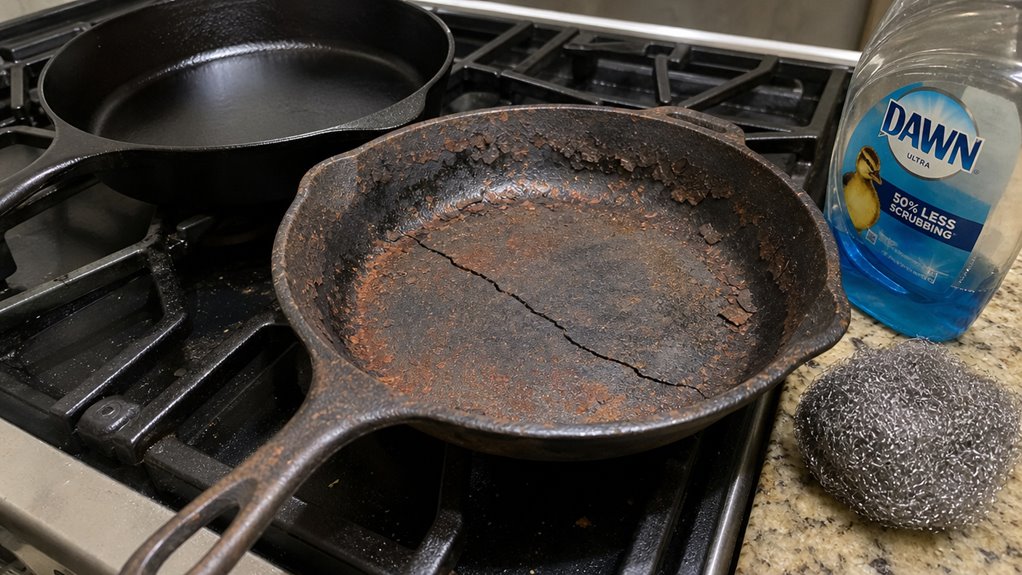
If you soak your cast iron for even 30 minutes, water can work its way into the metal and you’ll often see rust later, which turns “easy fix” into more scrubbing and re-seasoning. This happens because rust forms when moisture is left on the iron. If you use the dishwasher, detergents with higher pH and harsh jets strip off a big chunk of seasoning per cycle, so you’ll likely rebuild the surface from scratch. And if you let acidic foods like tomato sit on bare iron before you’ve built a solid seasoning layer, you can lose that protective polymer and end up dealing with rust spots. Before cooking, preheat the skillet on medium heat so you don’t end up with uneven contact and sticking.
Soaking in Water: Why 30 Minutes Can Cause Permanent Damage
You might think soaking is harmless, but a cast iron skillet isn’t like nonstick cookware, and it doesn’t behave that way. Ignore “cast iron dishwasher” myths and skip leaving it in water. Cast iron’s pores drink moisture; a 30-minute soak lets water seep to the iron, kickstarting rust, and weakening your polymerized seasoning. Don’t let it soak in the sink Soon you’re left with a sticky surface that needs stripping and re-seasoning. Soaking causes rust and that rust can undermine the surface you’ve built over time.
| Time | What happens | Fix difficulty |
|---|---|---|
| 5 min | surface wet | low |
| 30 min | moisture to iron | high |
| 24 hr | rust visible | very high |
| hours+ | possible etching | harder |
| long | pitting risk | worst |
Dishwasher: What Detergent Does to Seasoning
Why would a “clean” cast iron skillet come out looking dry and a little worse for wear?
If you run it through the Dishwasher Use Strips NO; dishwashers are not suitable for cast iron. Seasoning. Hot jets plus automatic detergent pH 11–13 break down the polymerized oil layer that makes the surface slick. Modern dish soaps do not harm cast iron, so the damage is specific to the harsh combination of dishwasher heat, detergent chemistry, and lingering moisture rather than soap alone. They dissolve fat bonds, then detergent residue clings in pores, so you can’t re-oil evenly.
Add any moisture left after the heat-dry cycle, and you get flash rust. Recovery usually means full stripping, scrubbing, and re-seasoning, not a quick wipe.
Acidic Foods on Bare Iron Without Established Seasoning
Acidic foods on bare cast iron skillet tend to cause problems fast, even when you think the cook time is short. If you don’t have an established polymer layer, Acidic Contact Strips Unseasoned Surface and exposes iron. Even under 45 minutes, tomatoes, citrus, and vinegar can leach metallic tang and trigger seasoning loss. Keep this simple rule in mind:
- Stop acidic contact at 45 minutes max.
- Avoid all-day simmering or roasts on bare iron.
- If you cross the line, plan a full strip and re-season over multiple uses.
Cooking Mistakes That Damage Pans Long-Term
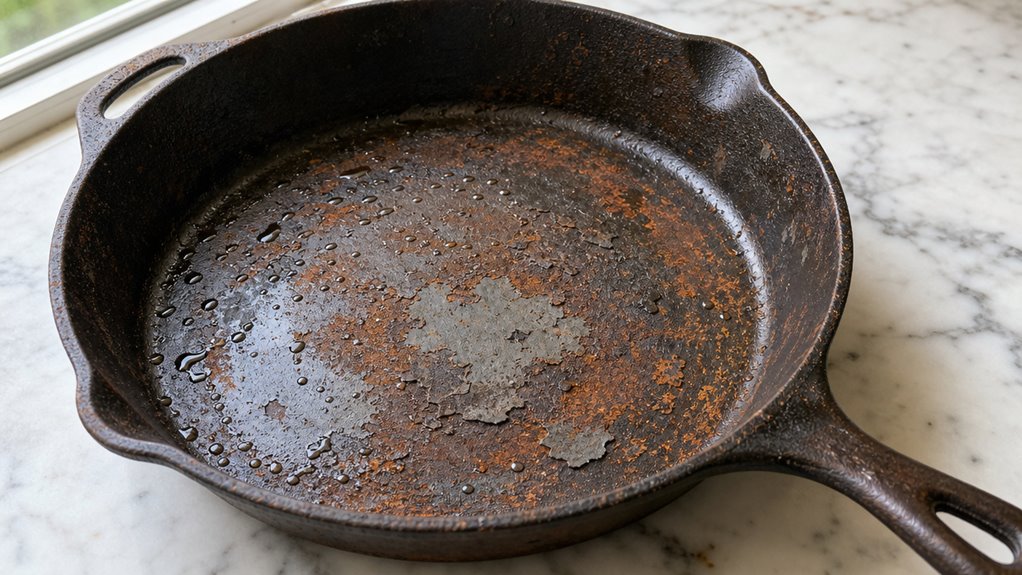
If you pour hot oil or add food to a cold cast iron pan and blast the heat right away, you create thermal shock that can lead to stress fractures over time.
You also risk warping when you leave an empty pan on a high burner, since cast iron needs time and steady heat to avoid hot spots.
And if you start scraping with metal before the seasoning has built up, you can scrape away that protective layer and set yourself up for long-term sticking.
Cold Pan to High Heat: Thermal Shock That Cracks Pans
Ever set your cast iron down straight from the counter into a blazing burner and then wondered why it sometimes develops that faint “already cracked” vibe later? That’s ThermalShockBasics: uneven expansion and contraction. When the bottom heats fast, the inner layers lag, and stress builds until you get warping or, less often, cracks. Then you notice it “later” because deeper pans hold heat longer.
When you go from a cold surface to intense heat, thermal shock can set up cracking over time as temperatures change too abruptly. Because uneven temperature changes create internal stress within the metal, the safest approach is to control both heating and cooling.
- Start low for 3–5 minutes; ramp up slowly.
- Preheat gradually, don’t jump to max.
- Cool naturally 20–30 minutes; never rinse hot with cold water.
Empty Pan on High Burner: Warping Risk
Empty pan on high is one of those habits that “works” until it doesn’t. When you crank the burner with no food or liquid, you create Thermal shock and uneven expansion. Stress points build fast, and the pan can bow or twist. Vintage iron is more vulnerable. If it wobbles or spins, warping is usually irreversible. Heat can also surge beyond safe behavior well before the metal melts, and repeated spikes weaken structure. extremely high heat is a primary cause of warp in cast iron, especially when it isn’t controlled. Avoiding sudden temperature shifts helps prevent thermal shock because uneven expansion and contraction are what warp cookware. Avoid this by using gradual preheating and matching burner size.
| Mistake | What it does |
|---|---|
| Empty pan on level 9 | Fast spikes, uneven heating |
| Max preheat | Bowing risk rises |
| Long high idle | Surface distortion accumulates |
| Bonfire-level temps | Extreme stress, cracking possible |
| Sudden heat jumps | Thermal shock stress points |
Using Metal Utensils Before Seasoning Sets
Using metal utensils before your cast iron seasoning fully sets is a slow way to turn a “fine enough” pan into a maintenance project. New seasoning is thin and scratches easily, so repetitive scraping wears off that polymerized layer. You end up with flakes, then bare iron that rusts faster if you don’t re-season promptly. This is one of the most common cast iron mistakes beginners make, and it can lead to long-term upkeep rather than long-term nonstick performance. Using metal utensils too early is especially risky because the seasoning hasn’t had time to build up into a tougher surface. 1. Use wooden, nylon, or silicone until you build 2–3 extra layers. 2. Avoid sharp edges and heavy pressure on young seasoning. 3. Swap to chainmail or gentle methods for cleaning, then re-season after metal marks.
Cleaning Mistakes That Strip Seasoning
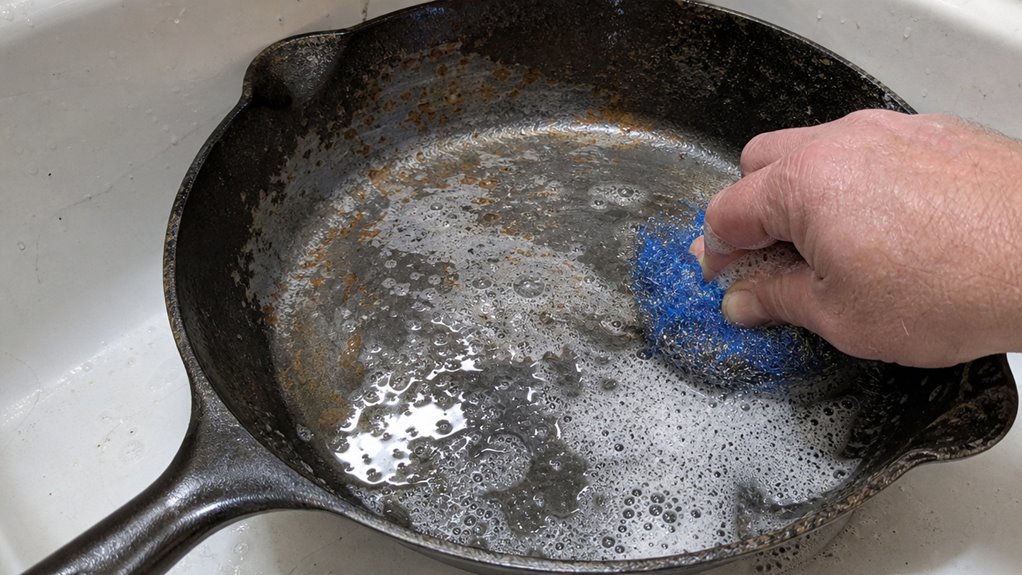
When you scrub a seasoned pan, you need to know when steel wool helps and when it strips too much. You can use it strategically for a full reset, but for everyday cleaning it’ll chew the polymerized oil layer down faster than you want. And the old “soap ruins seasoning” story doesn’t hold up with modern gentle dish soap—use a sponge with a small drop, not abrasive scrubbing or harsh degreaser. You’re safe using gentle dish soap in normal amounts because cast-iron seasoning is polymerized oil bonded to the iron, not something soap instantly dissolves. Small amounts of rust may not require full reseasoning after cleaning.
Steel Wool on Seasoned Pans (When It’s OK and When It’s Not)
You don’t automatically have to ban steel wool from your cast iron, but you do need to use it on purpose. Many beginner cast iron cleaning mistakes happen when they reach for steel wool during routine scrubbing, stripping polymerized oil and turning your pan dull gray. For fine grade steel wool, use it as a controlled cleaning tool rather than a constant scrubber, and reserve it for situations where you truly need abrasion. Use fine-grade steel wool only when you’re restoring rusty spots: after a hot-water soak, rub lightly on external or isolated rust patches, then dry fully and reseason.
- OK: targeted fine steel wool on rust, limit contact to small areas
- Not OK: coarse/medium pads on a well-seasoned interior
- Risk: a single pass can remove 20–30% top seasoning, so reseason within hours
Soap Reality: When Modern Soap Is Fine
Modern dish soap gets blamed for ruining cast iron seasoning, but most of that story comes from older lye-and-acid soaps that really did attack the polymer layer. For you, most cast iron care mistakes start when you overcorrect: modern surfactant dish soaps are gentle degreasers (often around pH 9 like Dawn) and won’t strip seasoning. Using modern dish soap is still best kept as a targeted tool for fresh starts and stubborn residue—especially before you re-season. Use soap to clean new pans, post-storage dust, and greasy or sticky residue, including after spicy sauces and seafood. Then dry the skillet thoroughly, wipe off all water, and add a thin coat of seasoning oil. Skip dishwasher pods and abrasive scrubbing.
Storage Mistakes That Cause Rust
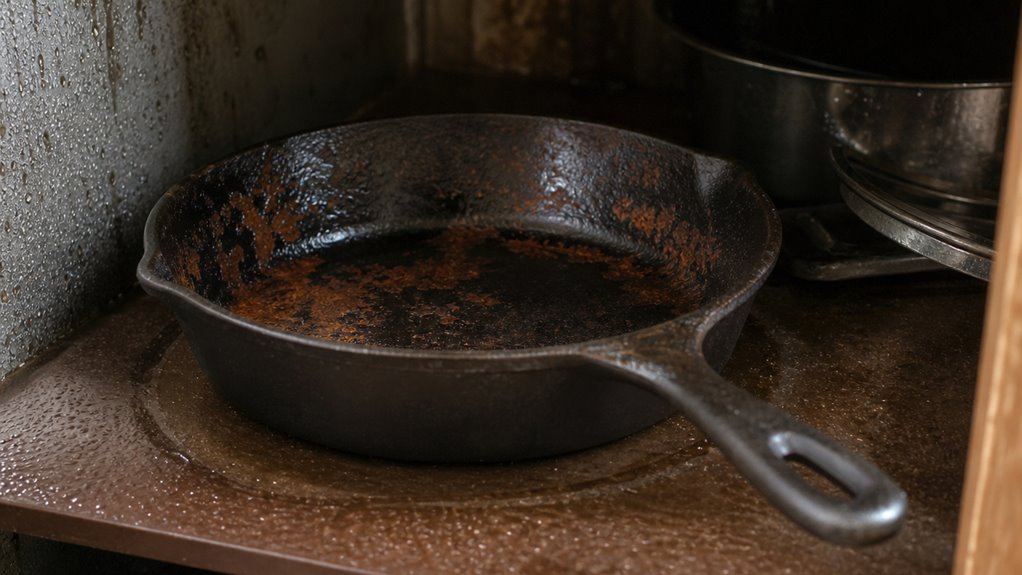
When you stack cast-iron pans while they’re still damp, you trap moisture against the metal and rust moves in fast—visible rust can start within a day if water gets into the pores. Cast iron is porous so any trapped droplets can cling inside microscopic spaces and accelerate oxidation. Lid-on storage in humid climates makes it worse because the enclosed space keeps humidity hanging around instead of letting the pan air out. Store your skillet dry with airflow (skip stacking tight, and keep the lid separate) so any tiny leftover dampness can escape. A simple paper towel barrier between the lid and pot helps manage lingering moisture.
Stacking Wet Pans
Why let moisture hang out between your cast iron pans? That’s how Wet stacking turns a harmless-looking stack into rust. When you pile up wet pans, trapped water sits in seasoning pores, and iron oxide forms in hours, especially where airflow can’t reach. Using heavy cast iron, make sure you separate pans so the surfaces don’t stay pressed together and get scraped or damaged during storage.
- Dry fully: towel dry or low heat (250°F, 15–30 min), then wait 24 hours if you can.
- Add barriers: paper towels or spacers so pans don’t press together.
- Use a thin oil film: it repels humidity.
If you already see spots, scrub gently, then re-season. Wet stacking can even cause pitting over time.
Lid-On Storage in Humid Climates
In humid weather, storing your cast iron skillet with the lid on can trap moisture right against the porous iron surface, even if the pan feels “dry enough.” That trapped dampness turns into rust through oxidation, and seasoning doesn’t stop it completely because tiny pores still soak up humidity. With lid-on storage, air can’t circulate, so condensation sticks around longer. You’ll notice rust faster after washing, cooking residue, or even a single lingering water drop.
Instead, store the lid separately, and dry fully.
If you keep pans together, use a folded paper towel or wooden spoon under the lid for airflow, not a tight seal.
Recovery: Most Mistakes Are Reversible
If your food won’t release and you’re tempted to fight it, you can sometimes re-cook with bacon to help loosen stuck residue and buy you time.
For ongoing trouble—especially sticky surfaces or visible rust—use the Full Restoration Method to strip, reset the seasoning, and move on.
Either way, you’re not stuck with the same problem forever; cast iron is usually fixable if you correct the cause, not just the symptom.
When to Just Re-Cook With Bacon vs Strip and Restart
So, you’re staring at your cast iron thinking about whether you can just “fix it with bacon” or whether you actually need to strip and restart.
If it still looks structurally fine and you just lost non-stick, re-seasoning with bacon grease is usually enough. Cook greasy foods for a couple of uses, then wipe a thin coat while the pan stays warm, and heat at 350–400°F for 30–60 minutes.
Strip and restart if you see rust, bare iron, or heavy pitting.
Re-check yourself with this list:
- Minor wear, no rust
- Food sticking during normal use
- Stubborn grime that won’t lift
Internal Link: Full Restoration Method
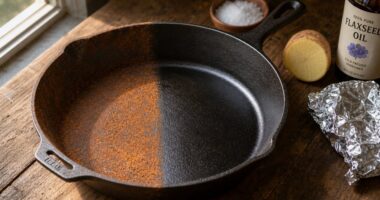
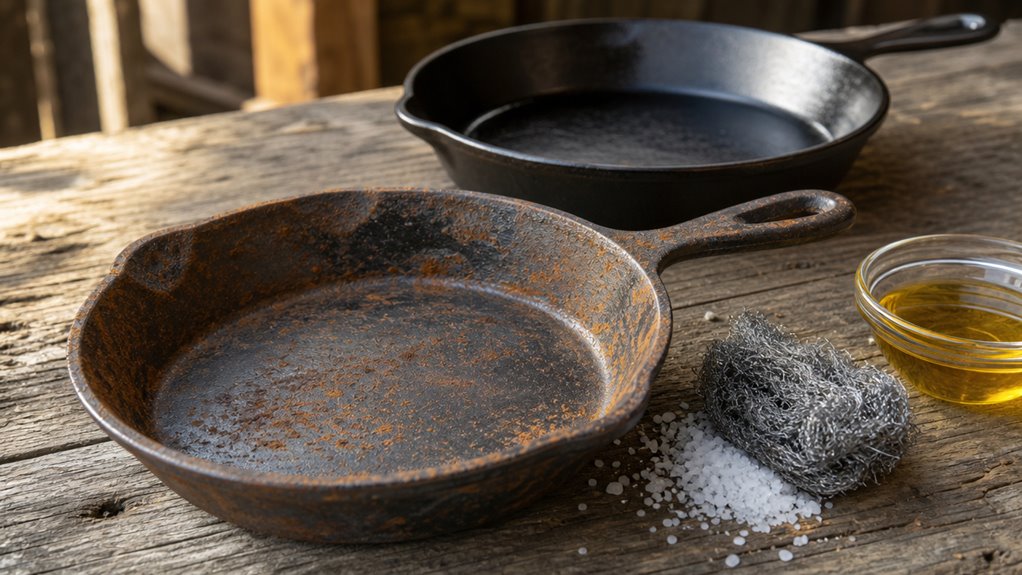
Once you’ve decided it’s more than a simple “cook bacon grease and call it fixed,” full restoration is the most reliable route because cast iron mistakes usually don’t become permanent damage. Start by scrubbing off residue, then remove rust with salt or strategic steel wool. Skip soaking and harsh detergents; they strip seasoning and invite new rust. Next, rebuild in thin layers: wipe oil on, then bake at 400–450°F for about one hour per coat. Repeat in multiple sessions, drying fast between steps.
| Issue | Do this | Goal |
|---|---|---|
| Stripped seasoning | Thin coats + 400–450°F | Re-bond polymer |
| Rust spots | Scrub salt/steel wool | Clean iron |
| Burnt-on food | Gentle scrub, no soak | Even surface |
Frequently Asked Questions
Can I Use Steel Wool on Cast Iron Without Ruining It Permanently?
Can I use steel wool on cast iron without ruining it permanently?
Yes, steel wool will not permanently ruin cast iron if used carefully.
What grade of steel wool is best for cast iron?
Fine grade steel wool is the safest option.
What should I do immediately after scrubbing with steel wool?
Rinse and dry the pan immediately after scrubbing.
Does steel wool remove the seasoning from cast iron?
Yes, it strips seasoning, especially with repeated or harsh scrubbing.
How do I restore cast iron after using steel wool?
Apply a thin layer of oil and re-season the pan in the oven.
Can repeated steel wool scrubbing cause permanent damage?
Repeated harsh scrubbing degrades the seasoning layer significantly over time.
How Long Should I Soak Cast Iron After Cooking Sticky Food?
Avoid soaking cast iron entirely. Rinse immediately with hot water, scrub, and dry thoroughly. If necessary, limit soaking to under 5 minutes to prevent rust.
Is It Safe to Cook Tomatoes on Bare Cast Iron?
Tomatoes are acidic and can react with bare cast iron. The reaction leaches small amounts of iron into food and strips the pan’s seasoning. Cooking time should stay under 30 minutes. Long simmering is not recommended. The food remains safe to eat but may develop a metallic taste. Reseasoning the pan after cooking acidic foods is advised.
What’s the Fastest Way to Remove Rust Without Damaging Seasoning?
What’s the Fastest Way to Remove Rust Without Damaging Seasoning?
Soak the pan in a 50/50 mix of hot water and vinegar for 5–30 minutes. Scrub immediately with chainmail or steel wool, rinse thoroughly, and dry at low heat right away. Apply a thin layer of oil and bake at 375°F for one hour if reseasoning is needed.
Can I Store Cast Iron With the Lid on to Prevent Odors?
Storing cast iron with the lid on traps moisture, causes odors, and degrades seasoning. Always store the lid separately or leave the pan uncovered to allow airflow.
Conclusion
If you make a mess of your cast iron, you usually aren’t ruining the pan—you’re just fighting the seasoning. Think of it like a layer cake: it can get stained, smeared, or need a redo, but it’s not stone. Avoid the “instant fix” habits—soaking, harsh detergents, skipping dry heat. When you do mess up, re-season and move on. Your skillet learns your routine, not your panic.