Pyrex Bakeware vs Metal vs Silicone: Which Lasts and Which Fails
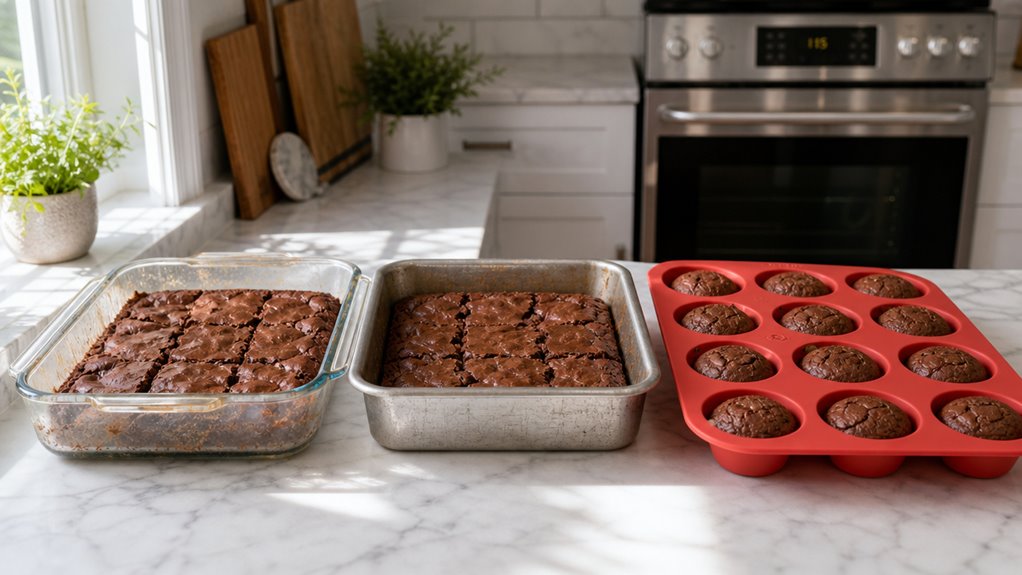
Bakeware materials: each one performs differently, ages differently, and fails differently.
- Pyrex soda-lime glass — transmits heat evenly and shows browning through the dish
- Aluminum and steel sheet pans — conduct heat fast and produce crisp edges on cookies and roasts
- Silicone baking mats — release food easily but insulate against direct heat
Pyrex soda-lime glass spreads heat evenly across the dish. Cooks at Williams-Sonoma and Sur La Table locations commonly recommend Pyrex for casseroles because browning is visible through the sides. But Pyrex shatters when a hot dish meets a cold granite countertop or a wet surface. Older European borosilicate Pyrex — made before Corning sold the U.S. brand in 1998 — tolerates thermal shock better. Still, both versions demand slow, controlled temperature changes.
Nordic Ware aluminum sheet pans and Chicago Metallic steel pans conduct heat fast. They give cookies and roasts crisp edges. They hold temperatures above 450°F without warping. They may discolor over decades, but they do not fail structurally.
Silicone mats from brands like Silpat release food cleanly. Above 450°F, silicone insulates rather than conducts, leaving baked goods pale. Prolonged high heat turns silicone tacky and causes surface cracking.
Match the material to the food. Match the food to the temperature.
Interesting Fact: Corning sold the Pyrex brand to World Kitchen in 1998, and the switch from borosilicate to soda-lime glass quietly tripled the thermal shock risk — without changing the iconic name on the box.
Key Points
- Borosilicate Pyrex (pre‑1998) tolerates ~500 °F and rapid temperature changes, but shatters under extreme shock; post‑1998 soda‑lime Pyrex drops to ~425 °F and shatters easily when moved from freezer to hot oven.
- Metal pans (aluminum or stainless with aluminum core) conduct heat quickly, enabling true browning and crisp edges at 450 °F+, and survive rapid temperature swings without warping.
- Silicone bakeware caps at ~450 °F, insulates food, producing pale, soft bottoms and limited browning; it cracks or loses stick‑resistance past its temperature ceiling.
- Glass holds heat longer than metal, providing even, gentle cooking ideal for custards, casseroles, and visual monitoring, but its lower shock tolerance makes it prone to breakage under abrupt temperature shifts.
- For durability: metal pans last longest under high‑heat, high‑frequency use; borosilicate glass lasts longer than soda‑lime glass; silicone is best for low‑heat, non‑browning tasks and will fail faster under high‑heat conditions.
The Three Bakeware Materials Reddit Has Been Debating for Years
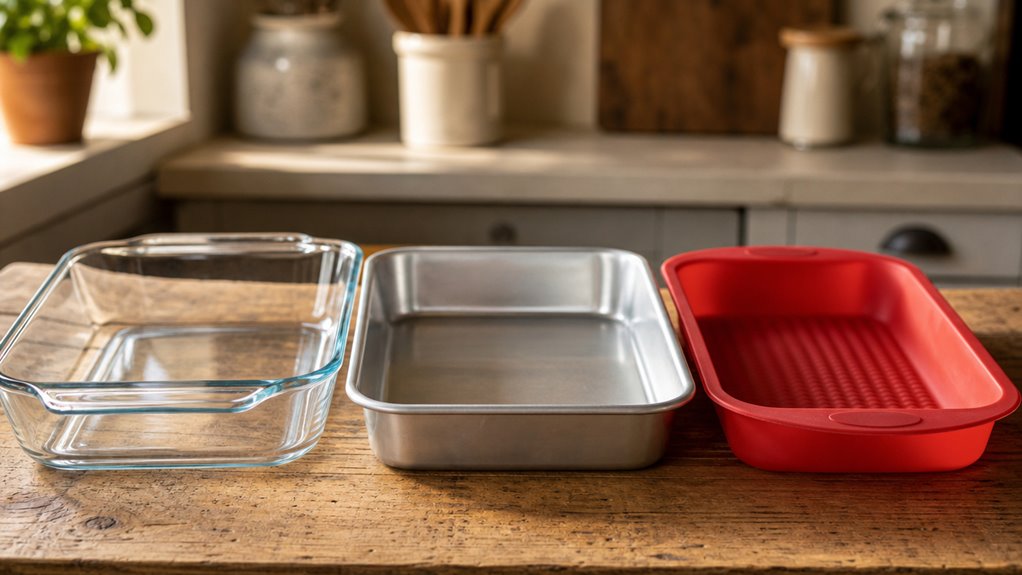
You’ll notice that glass, metal and silicone each keep a foothold because they excel at different tasks: Pyrex gives you clear visibility and gentle, even heat for casseroles, metal delivers the high‑heat conduction needed for crisp cookies and roasts, and silicone only shines in niche releases like muffin liners.
The 1998 US Pyrex switch from borosilicate to soda‑lime glass cut the thermal‑shock tolerance from about 350 °F to 100 °F, which is why older European‑style Pyrex still outlasts the newer stock.
In practice, most cooks end up using a glass 9×13 for custardy dishes and a metal sheet pan for everything else, while silicone stays out of the picture unless you specifically need a flexible liner. Glass moulds retain heat longer and release it gently, reducing the risk of over‑cooking edges.
Why Each Material Survives Despite Overlapping Use Cases
A glass dish stays in the oven longer because its borosilicate or soda‑lime body holds heat evenly, so you can see the bubbling sauce and trust the custard won’t scorch. You’ll notice that pyrex vs metal pan debates hinge on heat transfer: glass spreads warmth slowly, metal conducts it fast, and silicone bakeware worth it only when you need a non‑stick release, not crisp edges. The overlapping use cases survive because each material’s failure mode is different.
Glass cookware can be safely used with non‑metal utensils without risking surface damage.
| Material | Typical Weakness |
|---|---|
| Glass (pre‑1998 borosilicate) | Sensitive to rapid temperature shifts |
| Glass (post‑1998 soda‑lime) | Lower shock tolerance, higher shatter risk |
| Metal (aluminum/aluminized) | Can warp or discolor over decades |
| Metal (stainless steel) | Hot spots without an aluminum core |
| Silicone | Insulates, so browning stays pale |
You keep a glass pan for casseroles, a metal sheet for cookies, and maybe a silicone liner for muffins. The trade‑offs stay clear, so you can choose without chasing hype.
The Specific Baking Tasks Each Material Wins
Because each bakeware material handles heat differently, the tasks they excel at fall into clear categories.
You’ll find that a sheet pan vs glass showdown is simple: metal, especially Nordic Ware aluminum, browns cookies, biscuits and crisp edges fast, while Pyrex glass gives you even heat for casseroles, custards and delicate water‑bath desserts.
When you compare pyrex vs silicone, the glass wins visibility and steady temperature, but silicone only shines for molded cakes or candy where release matters; it won’t brown brownies or bars.
Nordic Ware vs Pyrex is a matter of purpose—metal tolerates 450°F+ and gives crisp crusts, while Pyrex’s slower conduction protects custard tops and lets you watch the rise.
Choose one glass 9×13 for custards, a metal sheet pan for everything else, and keep silicone just for specialty liners. Food‑grade silicone can withstand up to 450°F (232°C) without melting.
The 1998 Pyrex Switch That Changed the Glass Bakeware Debate
When Corning sold the U.S. consumer line to World Kitchen in 1998, the glass that had been borosilicate for decades was replaced with tempered soda‑lime. The 1998 pyrex switch cut thermal shock tolerance from about 350 °F to roughly 100 °F, so a hot dish dropped on a cool counter can shatter. European production still uses borosilicate glass, giving you the original durability that many call the best baking pan material for casseroles. In the U.S. you now get a glass that tolerates impact drops better but demands gentler temperature changes.
- Pre‑1998 borosilicate: 350 °F differential, 30‑year lifespan.
- Post‑1998 soda‑lime: 100 °F differential, 5‑15‑year lifespan.
- European borosilicate remains available for true BIFL glass.
Where Glass Bakeware Genuinely Wins
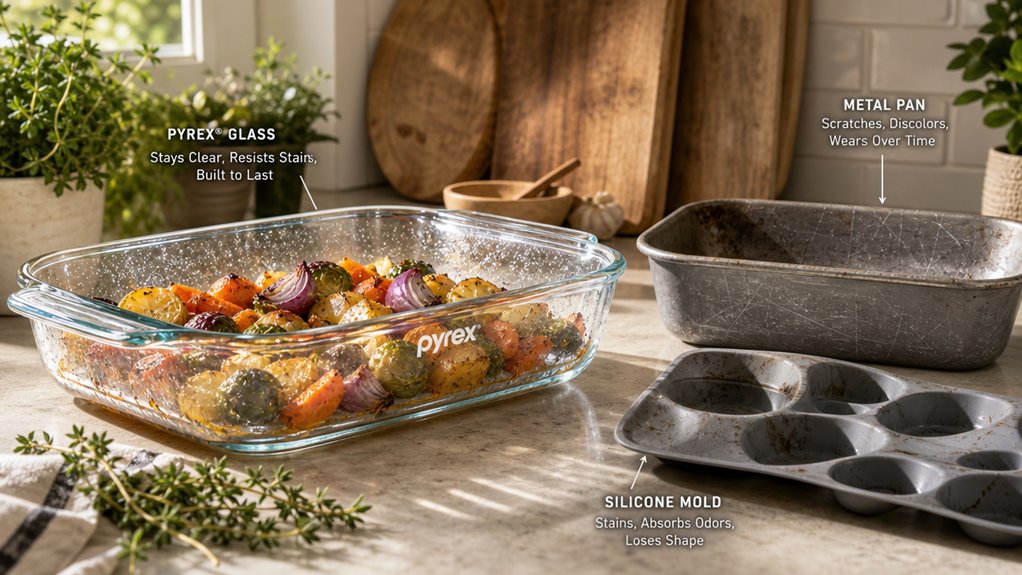
You’ll notice the browning through the clear sides of a Pyrex 9×13, which lets you assess doneness without opening the oven.
The glass spreads heat slowly and evenly, keeping custards and casseroles from scorching the bottom while staying warm on the table.
Just remember that pre‑1998 borosilicate endures a 350 °F thermal shift, whereas the post‑1998 US soda‑lime version drops to about 100 °F, so the older material is far less likely to shatter under sudden temperature changes. Glass conducts heat more slowly than aluminum, which can help prevent undercooked centers.
Visibility (See Browning Through the Pan)
Through a clear Pyrex 9×13 you can watch the crust turn golden on the bottom without lifting the dish, which metal or silicone pans don’t let you do. That visibility lets you tweak bake time on the fly, extending it if the underside stays pale while the top is done.
You can see edge set on lasagna or custard, avoiding soggy bottoms and scorched edges. In a pyrex bakeware comparison you’ll notice glass beats metal for monitoring, but metal still wins on browning intensity.
Reddit threads on bakeware comparison reddit often cite this visual advantage as a reason to keep a glass pan for casseroles.
- Spot uneven browning without opening the oven long.
- Verify bottom color on layered dishes instantly.
- Reduce guesswork and avoid extra door openings.
Even Heat Retention for Casseroles and Custards
Because glass heats more slowly than metal, its temperature rises evenly across the whole pan, which is exactly what a custard or a thick casserole needs. The soda lime Pyrex you buy today retains heat longer than a comparable metal sheet, so after you pull the dish out the interior stays warm and continues cooking gently.
That carry‑over effect smooths protein coagulation and prevents grainy custard. In a baking pan material guide you’ll see a USA pan vs Pyrex comparison: metal browns fast but cools quickly, glass holds temperature, and silicone loses both.
The glass’s higher specific heat means a lasagna or strata finishes its starch gelatinization without extra oven time. Just remember soda‑lime Pyrex can shatter at sudden temperature changes, unlike pre‑1998 borosilicate.
Why the Pre-1998 Borosilicate vs Post-1998 Soda-Lime Distinction Matters
Even‑heat retention makes a custard or thick casserole feel forgiving, but the real secret lies in the glass itself.
Pre‑1998 Pyrex is borosilicate, a glass with about 12 % boron trioxide that expands only 3.3 × 10⁻⁶ /°C. That low expansion lets you swing from freezer to oven without a crack, and it tolerates a 350 °F thermal shock before it shatters.
Post‑1998 U.S. Pyrex switched to soda‑lime, which expands roughly three times faster (≈9 × 10⁻⁶ /°C) and should stay within a 100 °F swing.
The difference isn’t marketing fluff; it’s why your grandma’s 1995 9×13 survives a sudden temperature change while the 2020 set may explode on the same move.
Knowing which material you own lets you match recipes to safety limits and avoid costly breakage.
- Borosilicate: 350 °F shock tolerance, 30‑plus‑year lifespan
- Soda‑lime: 100 °F shock tolerance, higher shatter risk
- Identification tips: capital “PYREX” logo, clear edges, European imports retain borosilicate
Where Metal Bakeware Genuinely Wins
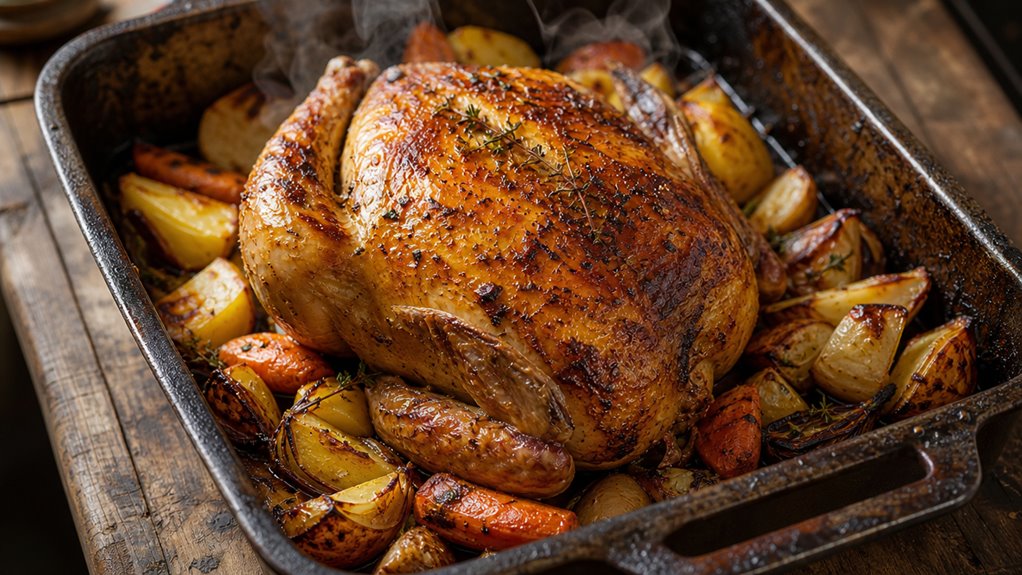
You’ll notice metal pans give cookies that crisp edge and deep brown because aluminum conducts heat straight into the dough.
They also survive 450 °F roasting without warping, so you can sear vegetables or finish a sheet‑pan pizza without worrying about the pan cracking.
Reddit’s go‑to picks, Nordic Ware and USA Pan, earn that reputation by staying flat, lasting decades, and handling the high‑heat cycles that silicone can’t survive.
Browning and Crispness (Sheet Pans, Cookie Sheets)
Metal sheet pans win when you need true browning and crisp edges. Aluminum conducts heat fast, so the fat in cookie dough sizzles and creates a caramelized bottom before the center dries out.
Dark‑coated sheets push that heat even harder, giving deeper color and firmer edges that a glass pan can’t match. Because metal heats quickly, you avoid the soggy‑bottom problem that often shows up with slower‑conducting glass or insulated silicone.
- Aluminum’s rapid heat transfer drives Maillard reactions on cookie bottoms.
- Dark‑coated aluminum intensifies browning, producing richer crusts.
- Metal reaches target temperature instantly, reducing under‑baked centers while keeping edges crisp.
Higher Heat Tolerance (450°F+ Roasting)
When you crank the oven up past 450 °F, the material you choose starts to matter more than the recipe.
Metal sheet pans, especially heavy‑gauge aluminum from Nordic Ware or carbon steel, stay flat and transfer heat directly into the food, so roasts develop a crisp exterior without warping.
They tolerate rapid temperature swings and broiler exposure, and the only real downside is a possible darkened patina on the surface after many cycles.
Soda‑lime Pyrex tops out at about 425–450 °F and can shatter if you move it from freezer to hot oven or place it under a broiler.
Even borosilicate glass tolerates 500 °F but still risks thermal shock.
Silicone molds cap out around 450 °F; they soften, sag, and lose shape when you try high‑heat roasting, making them unsuitable for that job.
Why Nordic Ware and USA Pan Are Reddit’s BIFL Picks
You’ve probably seen the endless “last pan you’ll ever need” threads on r/BuyItForLife, and the consensus points straight at Nordic Ware and USA Pan.
Both brands survive years of 450 °F roasting without warping, thanks to heavy‑gauge aluminized steel or thick aluminum that resists flex.
Their constructions mimic commercial bakery pans, so you get even heat and reliable browning on cookies, sheet pans, and loaves.
The non‑stick coatings are PTFE‑free and hold up for dozens of cycles if you avoid metal utensils.
The downside? The aluminum can discolor over time, and the coatings eventually need gentle care to stay slick.
- Heavy‑gauge metal prevents warping under high heat.
- Reinforced rims keep the pan flat through thermal cycles.
- PTFE‑free non‑stick lasts longer but requires careful utensil choice.
Where Silicone Bakeware Doesn’t Earn Its Place
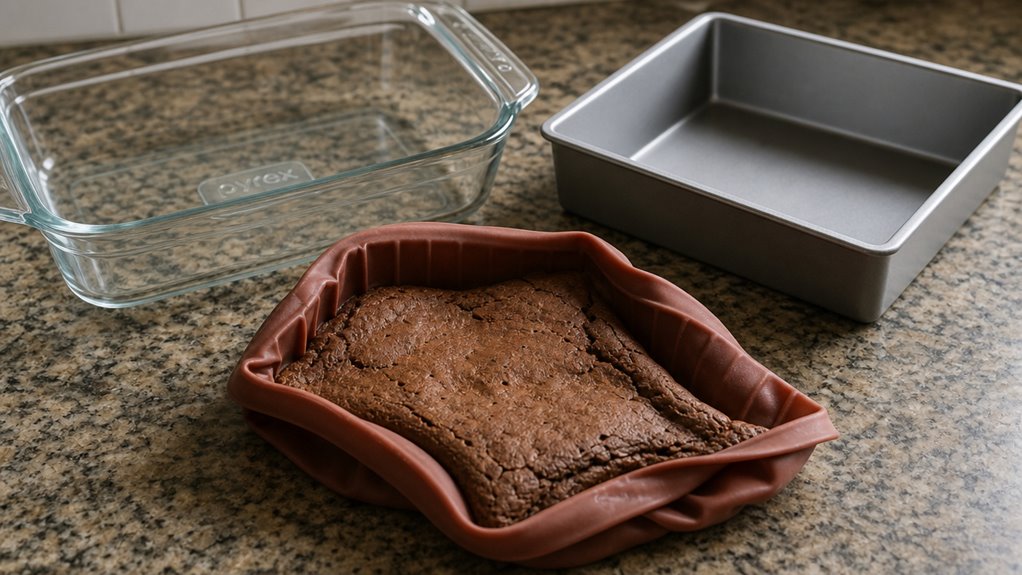
You’ll notice silicone pans can’t take the high temps you need for crisp cookies, and they stay floppy when you try to lift a heavy batter.
The material’s insulating nature stops the bottom from browning, so most baked goods end up pale and uneven.
After a few seasons of this and a few cuts or odors, most long‑term owners simply stop using silicone altogether.
Lower Heat Tolerance and Floppy Handling
Most silicone bakeware tops out around 450 °F (232 °C), and that limit isn’t just a suggestion—it’s a hard ceiling for durability. Below that, the polymer stays elastic, but push it higher and you’ll see surface chalkiness, loss of stick‑resistance, and eventual cracking.
Because silicone is an insulator, it needs longer bake times to reach the same internal temperature as metal, and you can’t pop it under a broiler. Its floppy walls also make it a wobbly partner for thin batters or custards; you’ll often need a metal sheet underneath just to keep it from spilling.
- Heat rating: 428‑450 °F (220‑232 °C) vs. metal 500‑600 °F+
- Degradation: polymer chains break >250 °C, causing brittleness
- Flexibility: unreinforced silicone flexes, requiring a supporting tray for safe handling
Browning Failure on Most Baked Goods
The heat‑shielding nature that makes silicone flexible also blocks the quick, intense heat needed for a good crust. Silicone’s thermal conductivity sits around 0.2 W/m·K, ten to fifteen times lower than aluminum’s 205 W/m·K, so the surface temperature lags 3‑7 minutes behind a metal pan. When you bake cookies, brownies, or a loaf at 350 °F, the silicone pan may stay 15‑30 °F cooler, giving a pale, soft underside instead of a crisp, golden base.
This delayed heat transfer thins crusts by 10‑25 % and weakens the moisture barrier, so breads sag and brownies feel rubbery. High‑moisture batters like banana bread or gluten‑free mixes suffer most; they finish interior‑done but lack that caramelized edge you expect from a metal sheet pan.
The result is a baked good that looks done but tastes under‑browned, which is why most cooks replace silicone for anything beyond muffin liners.
Why Most Long-Term Owners Eventually Remove Silicone
Because silicone’s flexibility turns into a liability when it ages, you’ll notice the pan getting tacky, cloudy, and less non‑stick after a few dozen oven cycles. The surface degrades, odors linger, and the material loses rigidity, so you end up propping it on a sheet pan just to keep it from sagging.
Those issues add up, and most owners eventually replace silicone with a rigid metal sheet or a borosilicate glass dish that stays stable and easy to clean.
- Surface becomes tacky and cloudy, reducing non‑stick performance.
- Odors and greasy residues cling, making cleanup harder than glass or metal.
- Flexibility leads to sagging and distortion, forcing extra support during baking.
The Cooking-Pattern Diagnostic That Decides
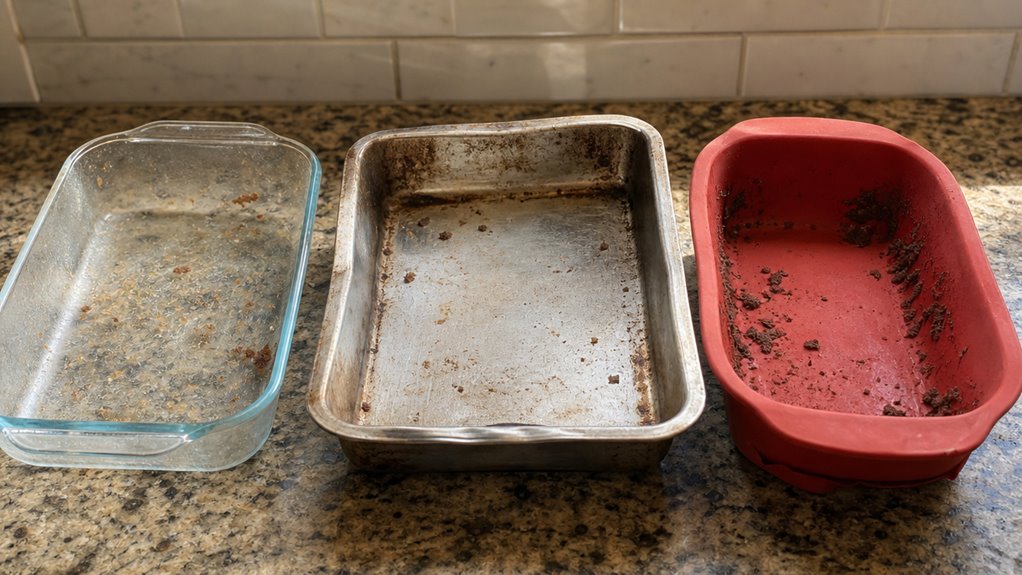
You’ll find that a 9×13 Pyrex works best for casseroles and custards because the glass spreads heat evenly and lets you see the browning.
For cookies, sheet‑pan meals and anything that needs a crisp bottom, a metal pan gives the quick heat transfer and high‑heat tolerance you can’t get from glass or silicone.
Most kitchens end up with just those two pieces—one glass for “wet” bakes and one metal for “dry” ones—so adding silicone usually just adds clutter without solving a real problem.
Casserole and Custard Households: Glass Wins
With a 9 × 13 Pyrex in hand, you’ll notice the glass heats slowly and spreads warmth evenly, which keeps a custard’s edges from over‑cooking while the center stays silky. The material’s thermal inertia holds heat after you pull it from the oven, so the dish stays warm at the table and finishes setting without a sudden chill. You can watch the side‑brownings develop, which is handy for lasagnas and fruit puddings where visual cues matter.
Borosilicate’s 350 °F shock tolerance lets you move from oven to microwave without fearing cracks, and the non‑reactive surface won’t leach from acidic sauces. The downside? Glass adds a few minutes to bake time compared with metal, so plan accordingly.
- Even heat prevents over‑cooked edges on custards.
- Visual monitoring of browning is possible through the clear walls.
- Durable borosilicate survives oven‑to‑microwave transitions, but slower heat uptake lengthens bake cycles.
Glass gives you a clear view of a casserole, but when you’re pulling a batch of cookies out of the oven the real workhorse is a metal sheet pan. Aluminum conducts heat at about 205 W/m·K, far outpacing steel or glass, so the bottoms crisp evenly at 425‑475 °F. Heavy‑gauge pans resist warping, survive drops, and handle broiler heat up to 550 °F. Silicone mats stay cool, and glass can shatter under rapid temperature shifts, so they’re not reliable for high‑heat sheet‑pan meals.
| Material | Key Strength |
|---|---|
| Aluminum sheet pan | Fast, uniform browning |
| Heavy‑gauge steel | Durable, cheap |
| Light‑colored non‑stick | Prevents over‑browning |
| Reinforced rim | Reduces warp |
| Stainless steel (no core) | Prone to hot spots |
You’ll find that a single metal pan covers most cookie and roasting tasks, keeping your kitchen simple and your results consistent.
Why Most Households Need Two Pieces, Not Three Materials
When you map your weekly cooking habits, the pattern usually points to just two core pieces: a glass baking dish for casseroles, custards, and any recipe where you need to see the browning, and a sturdy metal sheet pan for everything else—cookies, roasts, and quick breads.
The glass gives you even heat and visual control, while the metal delivers crisp edges and tolerates high oven temperatures. Adding silicone rarely improves those tasks; it mainly insulates, so cookies stay pale and you still need a metal tray for support. Most families cover 90 % of recipes with this duo, keeping costs low and drawers uncluttered.
- Glass (pre‑1998 borosilicate) handles low‑and‑slow dishes up to ~425 °F.
- Metal sheet pans (Nordic Ware, USA Pan) brown and crisp at 450 °F+.
- Silicone adds little beyond occasional muffin liners and requires a metal base.
Frequently Asked Questions
Will Pre‑1998 Pyrex Still Be Sold in the U.S.?
Pre-1998 Pyrex is still available in the U.S. through thrift stores, estate sales, eBay, and vintage dealers.
Can I Safely Use Post‑1998 Pyrex on a Broiler?
Post-1998 Pyrex is made of soda-lime glass, which shatters at around 450°F. Broilers regularly exceed that temperature, making it unsafe. Use a metal pan instead.
Do Silicone Pans Ever Reach 450 °F Without Degrading?
Silicone pans can briefly reach 450°F without immediate damage, but repeated exposure at that temperature causes degradation. Most silicone bakeware is rated for continuous use between 428°F and 446°F. Pushing to 450°F accelerates brittleness, discoloration, and eventual structural failure.
What Metal Thickness Is Needed for Even Browning?
For even browning, use steel at 0.8–1 mm or aluminum at 1–1.5 mm thickness.
Is a Glass‑Only Kitchen Ever Truly BIFL?
Is a glass-only kitchen ever truly BIFL?
No. Glass breaks from drops and thermal shock, making it inherently fragile and not lifetime-proof.
What causes glass kitchenware to fail most often?
Physical impacts and sudden temperature changes are the two leading causes of breakage.
What materials outlast glass in the kitchen?
Metal and silicone outperform glass in durability, handling both impacts and high-heat tasks.
Can glass handle high-heat cooking tasks?
No. Metal handles extreme heat far better than glass, which can crack or shatter under thermal stress.
What is thermal shock in glass kitchenware?
A rapid temperature change, such as moving glass from freezer to stovetop, that causes it to crack or shatter.
Is silicone a good BIFL alternative to glass?
Yes. Silicone is flexible, impact-resistant, and heat-tolerant, making it a more durable long-term option.
Conclusion
Think of your kitchen like a toolbox. Glass pans are the sturdy wrench—reliable for casseroles and can‑temperature custards, but they shatter if you slam them into a cold oven. Metal sheets are the versatile screwdriver—conduct heat fast, crisping roasts and cookies, yet they warp if you abuse them with extreme temperature swings. Silicone liners are the soft rubber band—convenient for muffins, but they can melt at high bake and lose shape over time. Choose the tool that matches the job, and you’ll avoid the broken pieces.
