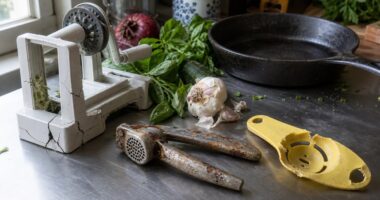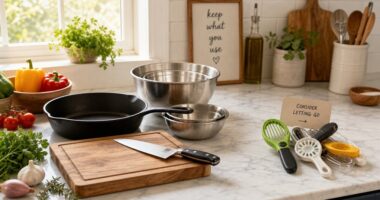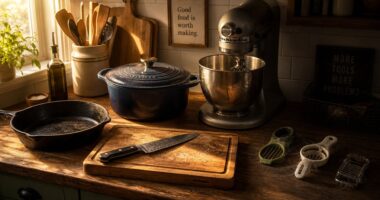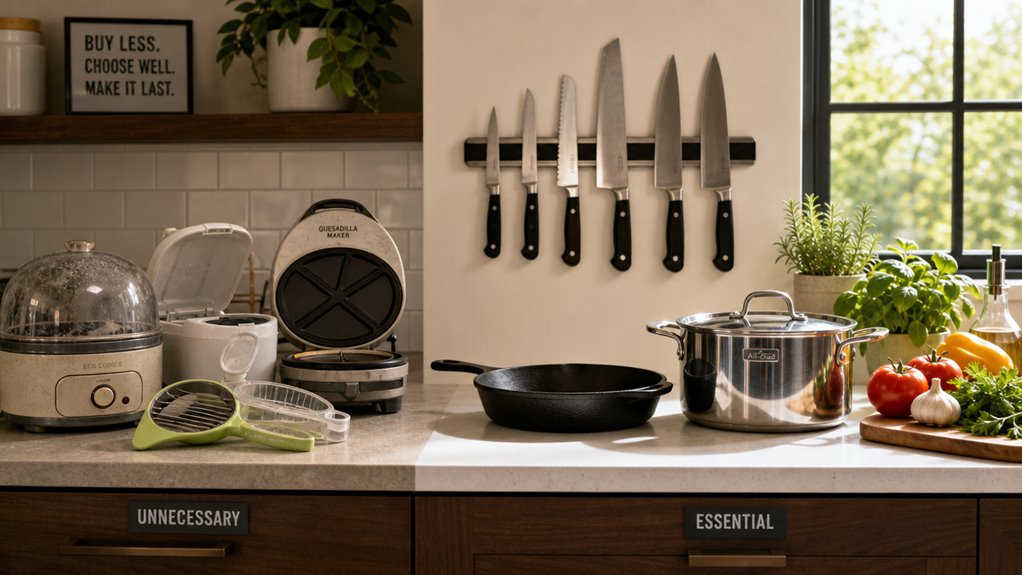
Kitchen decluttering requires choosing tools that handle multiple tasks well over single-purpose gadgets that crowd drawer space. A sharp chef’s knife, a sturdy metal colander, and a basic peeler replace dozens of specialized items without adding parts or mess.
- Single-purpose gadgets occupy drawer space while performing one task that a multitasking tool can handle just as efficiently.
- Chef’s knife replaces items like a banana slicer, strawberry huller, and mini dicer by handling slicing, hulling, and chopping across ingredients.
- Sturdy metal colander outlasts collapsible versions by resisting warping, trapping less food, and cleaning more easily after repeated use.
Single-purpose gadgets tend to break faster than multipurpose tools. Items like egg separators, avocado presses, and garlic presses each perform one function, then sit unused between narrow moments of need. The parts accumulate, the crevices trap food, and cleaning takes longer than the task itself warranted.
Multipurpose tools earn drawer space through range. A box grater handles slicing and shredding. An immersion blender replaces tools dedicated to blending, pureeing, and emulsifying. A Dutch oven and a silicone spatula together cover techniques that several single-purpose gadgets claim to address individually.
Durability follows material and design. Metal and silicone tools resist cracking, warping, and staining over time. Single-purpose plastic gadgets often fail at joints or handles after moderate use.
Most home cooks reach for the same small core set of tools week after week, while the rest of the drawer holds gadgets that come out a few times a year at most.
Cheap or expensive is the wrong question. Cost per use is the honest one. Check out our new Calculator.
Cost-Per-Use Calculator →The ten single-purpose gadgets worth tossing, and the multitasker that does each job instead:
- Banana slicer: a chef’s knife slices a banana in seconds and handles any fruit size.
- Egg separator: your own hands, or a slotted spoon and a bowl, split yolks more gently.
- Avocado slicer: a chef’s knife pits and slices, and a spoon scoops and mashes.
- Garlic press: the flat of a chef’s knife crushes and minces with nothing to unclog.
- Strawberry huller: the tip of a paring or chef’s knife hulls faster in bulk.
- Pineapple corer: a chef’s knife cores and cuts pineapple without a single-use tool.
- Egg slicer: a chef’s knife slices eggs cleanly and never cracks a hinge.
- Collapsible colander: a sturdy metal colander drains without warping or trapping food.
- Mini dicer box: a chef’s knife on a sturdy cutting board dices with no crevices to scrub.
- Dedicated cheese slicer: a box grater shreds, zests, and slices in one tool.
Key Points
- Replace single‑purpose slicers (banana, avocado, strawberry) with a sharp chef’s knife that handles all fruits and vegetables.
- Use a box grater and a basic peeler instead of dedicated egg, garlic, or vegetable slicers to cut redundancy.
- Ditch fragile plastic gadgets (egg separator, collapsible colander) and keep a sturdy metal colander and a simple bowl‑and‑hand method.
- Eliminate multi‑part tools with hard‑to‑clean crevices (garlic press, mini dicer) in favor of a silicone spatula and a sturdy cutting board.
- Keep only versatile, durable items (chef’s knife, metal colander, immersion blender) and donate any gadget you reach for fewer than a couple of times a month.
| 5-Piece Kitchen Chef Knife Set with Scissors and Peeler |  | Complete Set | Blade Length: 7 in (cleaver), 7 in (Santoku), 4.5 in (utility) | Blade Material: Stainless steel | Edge Type: Plain | VIEW LATEST PRICE | Read Our Analysis |
| 3-Pc Ultra Sharp Kitchen Knife Set (8″ 5″ 3.5″) |  | Versatile Trio | Blade Length: 8 in | Blade Material: High-carbon German steel (3CR13MOV) | Edge Type: Plain | VIEW LATEST PRICE | Read Our Analysis |
| 3-Piece Ultra Sharp Carbon Steel Chef Knife Set |  | Carbon Steel | Blade Length: 8 in | Blade Material: High-carbon German steel (3Cr13MoV) | Edge Type: Plain | VIEW LATEST PRICE | Read Our Analysis |
Links to Amazon are affiliate links. Buying through one costs you nothing extra and helps fund the research.
The Useless Kitchen Gadgets Cluttering Most Drawers
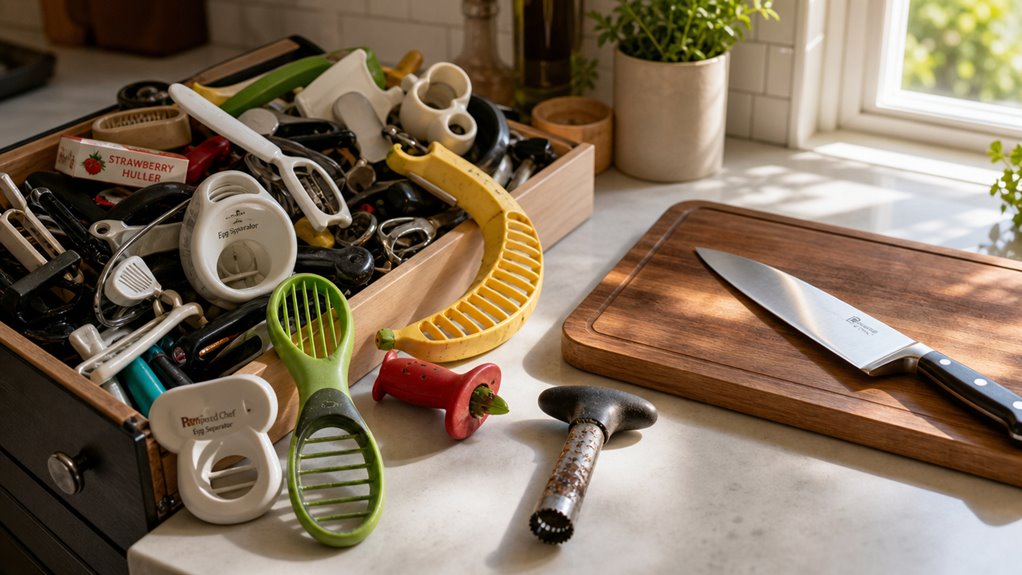
Useless kitchen gadgets are single-purpose tools that duplicate tasks a chef’s knife or other multitasker already handles, leaving them unused in drawers for months at a time.
A banana slicer, an avocado press, or a garlic roller each occupy drawer space despite performing jobs that require no specialized design. The core problem is overlap: when a gadget’s function maps directly onto a tool already in regular use, its own use frequency drops to a few times a year at most.
Low use frequency combined with redundant function is the clearest signal that a gadget belongs in the donate box rather than the kitchen.
The specifics of which gadgets qualify, and why, depend on patterns worth examining in detail. A ten-slot utensil holder keeps the tools you actually reach for on the counter instead of buried under the ones you don’t.
How Single-Task Gadgets Pile Up Without You Noticing
Most of the time those novelty slicers and one‑off peelers just sit in the back of the drawer, unnoticed until you’re rummaging for a spatula. A single‑task gadget like an avocado slicer slides under the kitchen tools, then disappears behind a chef’s knife. Because you only pull out the top layer, the hidden items never get a second glance, and the drawer clutter quietly builds.
Impulse buys from gift boxes or subscription services add pineapple corers, strawberry hullers, and banana slicers that you never reach for. Over time the drawer fills with duplicate peelers and specialty cutters, forcing you to hunt longer for the tools you actually need. The result is slower prep and a false sense that everything you own is essential. Grouping like tools together makes the duplicates obvious enough to remove.
The Tell That Marks a Gadget for the Donate Box
Clutter shows up as a physical tell: a gadget jammed in the back of the drawer, awkward to stack, and often warped or cracked. You spot the sign when a single‑use kitchen gadget sits crooked, its plastic warped, and you’ve never touched it in months. That’s the cue to move it to the donate box and make room for true multitaskers.
- Placement – It lives at the back or side, causing friction every time you open the drawer.
- Frequency – You haven’t used it in the last month, and you rely on a knife or grater instead.
- Redundancy – It duplicates a basic tool you already own, like an avocado slicer when a chef’s knife does the job.
- Condition – Cracked, warped, or difficult to clean, it poses safety concerns.
These four tells make the call obvious without a second guess.
Specialty cutting tools are often unnecessary because the same results can be achieved with a good knife and practice.
| Cuisinart 8″ Stainless Steel Chef's Knife Guard | 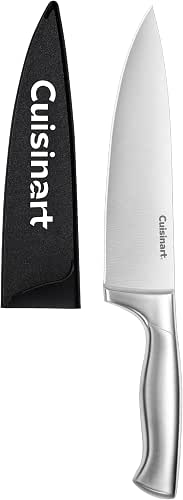 | Best Value | Blade Length: 8 in | Blade Material: Stainless steel | Edge Type: Plain | VIEW LATEST PRICE | Read Our Analysis |
| Amazon Basics 8″ High Carbon Stainless Steel Chef's Knife |  | Everyday Essential | Blade Length: 8 in | Blade Material: High-carbon stainless steel | Edge Type: Plain | VIEW LATEST PRICE | Read Our Analysis |
| Kiwi Brand Stainless Steel 8 inch Thai Chef's Knife No. 21 |  | Classic Thai | Blade Length: 8 in | Blade Material: Stainless steel (forged) | Edge Type: Plain | VIEW LATEST PRICE | Read Our Analysis |
Links to Amazon are affiliate links. Buying through one costs you nothing extra and helps fund the research.
The 10 Gadgets Quietly Wasting Your Space
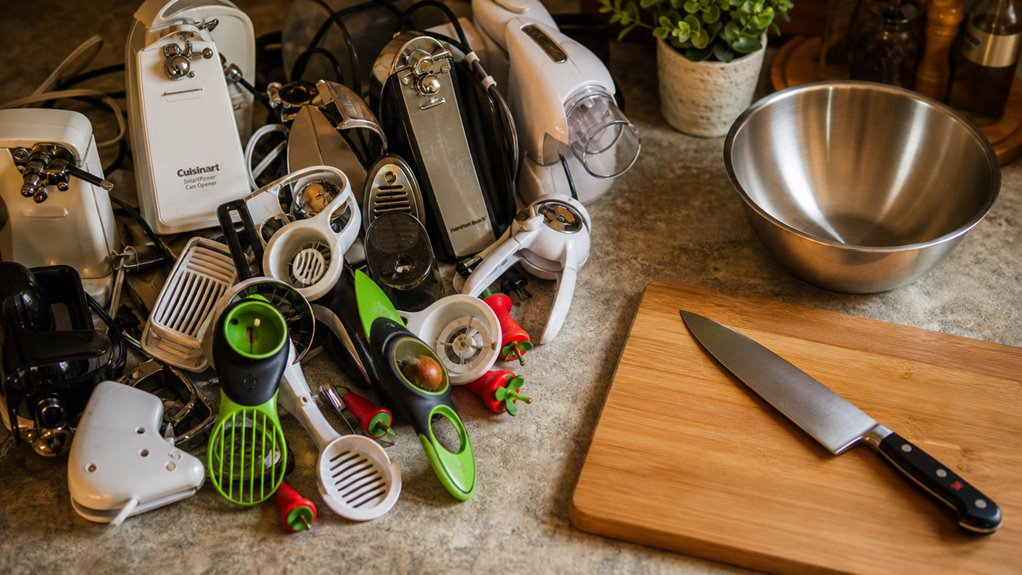
Single-task gadgets are tools designed to perform only one narrow function. They are among the most common sources of wasted drawer and cabinet space in a kitchen.
An egg separator or a banana slicer, for example, duplicates work that a chef’s knife or bare hands already accomplish without any additional equipment.
Because these gadgets are used rarely, they accumulate without contributing meaningful utility, and each one introduces extra parts that require cleaning and storage.
The gap between how often a single-task tool gets purchased and how often it actually gets used drives the clutter that builds up over time.
Knife blocks take up valuable counter space and are hard to clean, so storing knives in a drawer or on a magnetic strip can free up vertical space and reduce countertop clutter.
Egg Separators, Banana Slicers, and Other Single-Task Offenders
When you pull out a dedicated egg separator, you’re really just swapping a bowl‑and‑hand trick for a plastic contraption that sits in a drawer you never open. The gadget promises perfect yolk‑white splits, yet you can do the same with a slotted spoon and a bowl, no extra parts to clean. A banana slicer looks clever, but a chef’s knife slices bananas instantly and handles any fruit size. Both items occupy space while offering a single, narrow function you already cover with existing tools.
- Egg separator – adds crevices that trap residue.
- Banana slicer – fixed blade width limits versatility.
- Avocado tool – can’t mash as well as a spoon.
- Strawberry huller – slower than a knife for bulk work.
Replace them with a sharp chef’s knife and a sturdy spoon; your drawer stays lean and your cleanup stays quick.
Why Your Own Hands Separate Eggs Better Than a Gadget
Egg separators, banana slicers, and the like sit in the drawer while you reach for a chef’s knife or a spoon that already does the job. When you crack an egg into a bowl and pull the yolk out with your fingers, you’re using hand separation: no extra parts, no assembly.
A dedicated egg separator forces you to repeat the motion for each egg, slowing batch work and adding a piece that must be washed and stored. Your fingertips feel the yolk, so you can lift it gently, avoiding the pressure points that often rupture fragile yolks in a narrow plastic cup. Hands also adapt instantly to different egg sizes, while an egg‑separating gadget usually comes in one fixed opening. Less clutter, faster prep, and fewer broken yolks make the hand method the practical choice.
What to Use Instead of These Useless Kitchen Gadgets
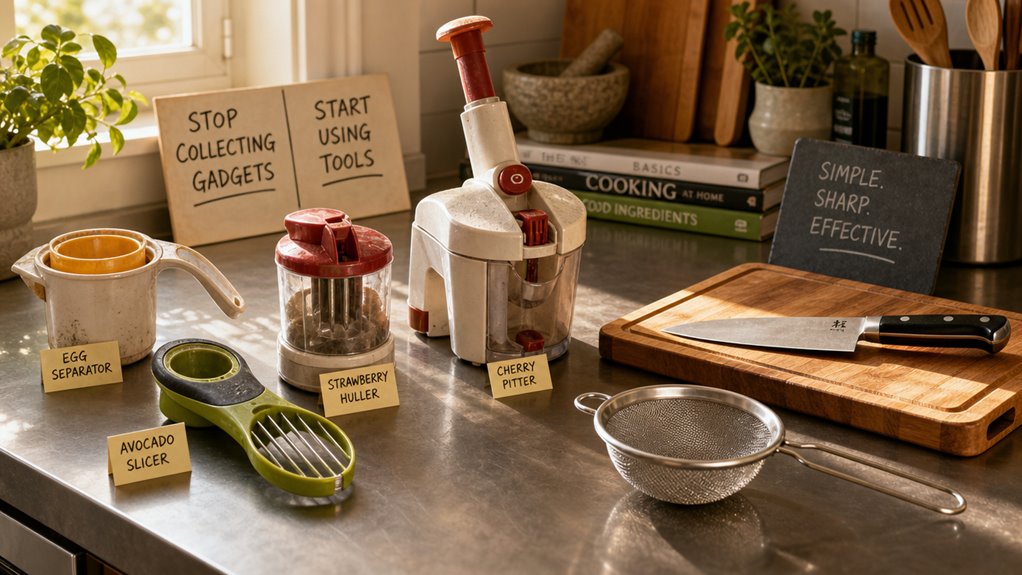
A chef’s knife, a box grater, and a basic peeler replace the function of most single-purpose kitchen gadgets without consuming drawer space for tools that see rare use. Single-purpose gadgets, like a banana slicer or a dedicated avocado tool, solve a narrow task that a sharp knife already handles cleanly.
The real cost isn’t the purchase price but the accumulating clutter of items that sit idle between their one specific use. Maintenance matters here: a chef’s knife requires regular honing to stay effective, while most plastic gadgets are disposable by design and simply replaced rather than cared for.
The sections that follow examine which gadgets are worth skipping and what to reach for instead.
The Few Multitaskers That Replace a Drawer of Gadgets
Trim your drawer down to a handful of multitaskers and you’ll finally see space for the tools you actually reach for. You’ll notice that a chef’s knife slices, dices, and minces, making separate slicers redundant. An immersion blender blends, purees, and emulsifies right in the pot, so you can ditch a countertop blender and a handheld whisk. The other two workhorses cover the rest.
- Chef’s knife – cuts everything, but its blade needs regular honing.
- Immersion blender – versatile, yet the motor can overheat with thick mixtures.
- Dutch oven – braises, roasts, bakes, but it’s heavy and takes up shelf space.
- Silicone spatula – scrapes, folds, mixes, yet it can melt above 400 °F.
These four replace a drawer full of single‑purpose gadgets, keeping cleanup simple and storage lean.
Why a Knife Slices a Banana While the Gadget Just Adds Clutter
Grab a knife and you’ll slice a banana in a few smooth strokes, while a banana slicer sits in the drawer gathering dust.
A chef’s knife does the same cut in seconds, no setup, no plastic hinges. The slicer’s fixed width only works on perfectly straight bananas; any curve leaves uneven pieces and forces you to wrestle the tool back into place.
Cleaning the slicer takes longer because crumbs hide under the blade and the frame can warp after a few washes.
A sharp chef’s knife, on the other hand, handles bananas, strawberries, kiwis and even soft cheeses without swapping gadgets. It occupies one slot, wipes clean with a quick rinse, and lasts years if you keep the edge honed.
In short, the knife replaces a whole class of single‑task gadgets, saving space, time and money.
The Gadgets That Look Useful but Fail Fast
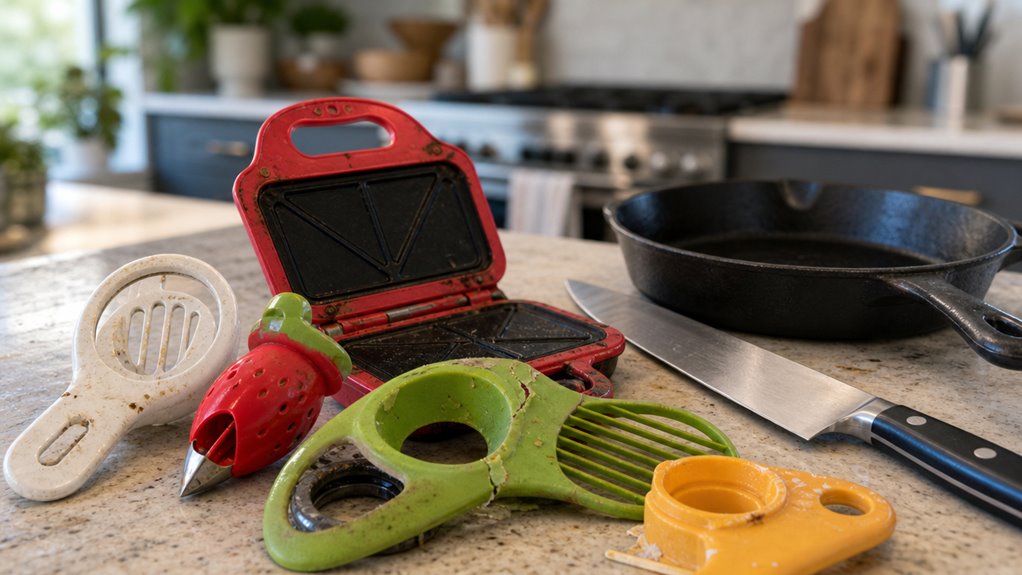
Gadgets that look useful in the store often fail within a few uses because their core mechanisms rely on flimsy plastic components that crack, warp, or degrade when exposed to heat and repeated washing. These design weaknesses aren’t cosmetic. They affect whether a tool can perform its intended job reliably over time.
Hard-to-clean crevices compound the problem by trapping food residue and odor, making even light maintenance a chore. All-metal construction, by contrast, resists the mechanical stress and thermal exposure that plastic handles and cutting edges typically cannot.
Understanding what separates durable kitchen tools from disposable ones shapes every practical decision that follows.
Flimsy Mechanisms, Hard-to-Clean Parts, and Plastic That Cracks
When a gadget relies on a thin spring, a plastic hinge, or a cheap slider, the mechanism usually gives up after a handful of uses. You’ll find yourself swapping out gadgets you don’t need because the cleanup effort spikes when parts jam or crack.
- Egg slicer – plastic hinges stretch, leaving uneven cuts and a broken frame.
- Garlic press – multi‑piece hinges trap oil and fibers; even a dishwasher can’t reach the crevices.
- Collapsible colander – thin joints loosen, causing the bowl to collapse and spill hot water.
- Banana slicer – injection‑molded plastic cracks at the blade channel under light pressure.
These items add clutter, demand extra scrubbing, and break far sooner than a sturdy multitasker like a chef’s knife or a solid metal grater.
Where a Sturdy Tool Quietly Outlasts the Gadget
Durability wins when a gadget’s moving parts start to wear out.
A plastic fruit slicer might look handy, but its blade dulls after a few uses and the pieces cling to residue, making cleanup a chore.
In contrast, a sturdy chef’s knife stays sharp for years, and you can slice apples, bananas, or pineapples with a single motion on a cutting board.
The same logic applies to avocado slicers, egg slicers, and mini dicer boxes; each adds a fragile mechanism that often breaks or traps food.
A reliable knife handles those jobs without extra parts, and you can sharpen it whenever needed.
Swap the single-task gadgets for a solid knife and you’ll cut down on clutter, cleaning time, and replacement costs.
How to Decide What Actually Earns a Spot
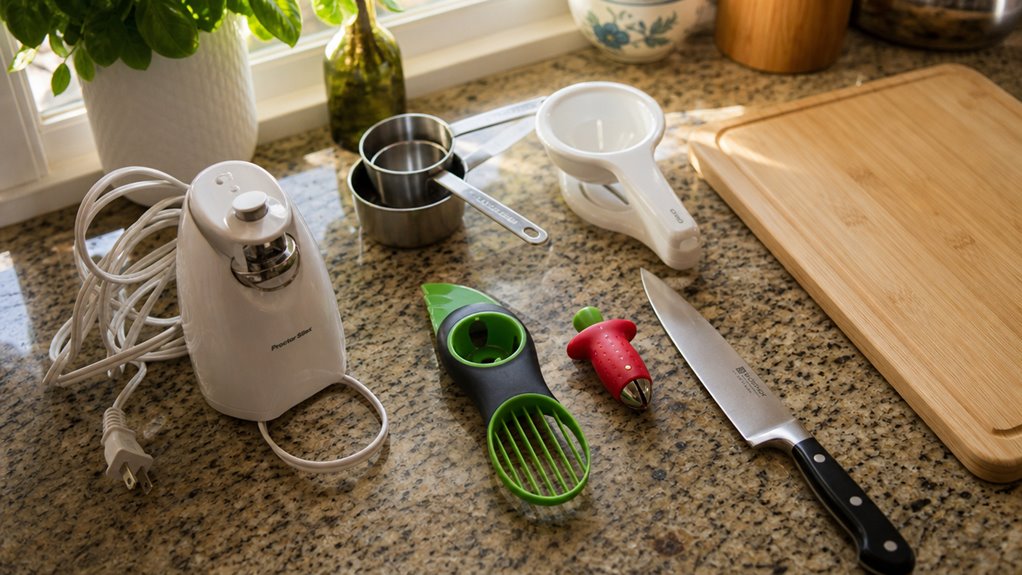
Deciding what earns a spot in your kitchen drawer comes down to three practical filters: how often you actually reach for a tool, whether it duplicates a job another tool already handles, and how easy it is to clean after use.
A gadget that scores poorly on all three, like a banana slicer that a knife replaces entirely and adds an extra piece to wash, belongs in the discard pile.
Frequency of use matters because low-use tools quietly consume space that high-use tools need.
Redundancy matters because owning two tools that do the same job means one is always in the way.
Multitaskers, like a chef’s knife that handles slicing, chopping, and mincing across dozens of tasks, demonstrate how a single well-chosen tool can justify its place where a specialized one cannot.
The criteria for making these calls are more nuanced than they first appear.
Sorting by Frequency, Overlap, and Cleanup
Usually you’ll find that the gadgets you actually reach for fall into three clear groups: daily, weekly, and almost never.
Start by tracking the frequency of use for a month; a sticky dot on each handle tells you if it’s truly daily or just gathering dust.
Next, line up your tools and note overlap. Does a garlic press add anything beyond a chef’s knife and a simple crush?
Finally, weigh cleanup cost: many niche gadgets leave food in crevices, making them more trouble than they’re worth.
- Mark items unused for 30 days → discard.
- Identify duplicates of core tools → keep the best.
- Rate cleaning effort; ditch high‑mess items.
- Store truly occasional items elsewhere or donate.
Building a Drawer of Tools That Pull Their Weight
Most of the time you’ll find that a tool earns a spot when it handles three or more distinct jobs without adding a cleaning nightmare. Start by listing every gadget in the drawer, then cross‑check each against the core tasks: cutting, stirring, flipping, draining, measuring, and heat protection.
Anything that only slices a banana or separates eggs should go. Keep a multitasker like a chef’s knife that chops, minces, and even opens packages.
A box grater doubles as a zesting tool and a fine shredder, so it replaces a dedicated cheese slicer and a micro‑grater. If a tool needs a separate brush to clean hard‑to‑reach crevices, it fails the cleanup test.
Aim for a slim, stackable set that fits a standard drawer, and use a divider to make redundancy obvious. The result is a lean, durable lineup that serves daily cooking and occasional projects without crowding the space.
Frequently Asked Questions
Can I Keep a Silicone Spatula as a Multitasker?
Yes, you can keep a silicone spatula as a multitasker if it’s high‑quality, platinum‑cured, and free of fillers. Use it for stirring, folding, scraping, and low‑to‑moderate heat tasks, but avoid broiling or direct pan contact.
Do Plastic Garlic Presses Last Longer Than Stainless Steel Ones?
No, plastic garlic presses won’t outlast stainless steel. You’ll find steel resists cracking, warping, and corrosion, while plastic hinges and mesh often fail sooner under repeated pressure and dishwasher heat.
Should I Donate Broken Gadgets or Recycle Them?
You should recycle broken gadgets. If they’re non‑functional, incomplete, or contain hazardous parts, donation isn’t allowed, so send them to a recycling program or local bulk‑waste collection instead.
How Many Multitaskers Fit Comfortably in a Standard Drawer?
You might think drawers can hold endless tools, but a standard shallow drawer comfortably fits a dozen or so multitaskers, enough space to stay organized without crowding, ensuring each item’s visible and easy to grab.
Is a $30 Budget Enough for Durable Replacements?
Yes, $30 can snag a durable replacement if you pick a simple, multi‑purpose tool like a solid chef’s knife or a sturdy box grater. Focus on basics, avoid gimmicks, and you’ll stay under budget.
Conclusion
You’ve trimmed the trash, kept the tools that truly tackle multiple tasks, and swapped single‑purpose gizmos for sturdy workhorses. A sharp chef’s knife slices, dices, and fillets; a box grater shreds cheese, veg, and zest; a spoon‑peeler combo handles fruit skins and butter. By focusing on frequency, versatility, and clean‑up ease, you’ve turned a chaotic drawer into a lean, efficient cooking space. The result is a functional, uncluttered kitchen that actually works for you.
| 8″ Chef Knife Safety Notch 5CR15MOV Steel | 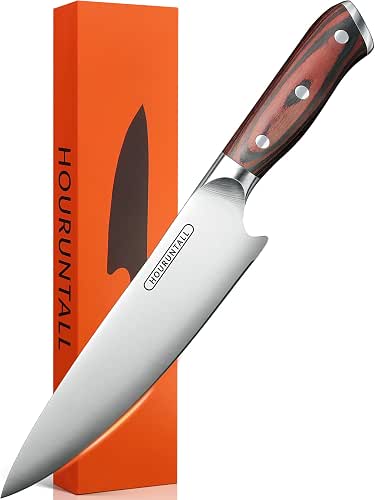 | Safety First | Blade Length: 8 in | Blade Material: 5CR15MOV high-carbon stainless steel | Edge Type: Plain | VIEW LATEST PRICE | Read Our Analysis |
| Farberware Edgekeeper 8″ Chef Knife with Self-Sharpening Cover |  | Self-Sharpening | Blade Length: 8 in | Blade Material: High-carbon stainless steel | Edge Type: Plain | VIEW LATEST PRICE | Read Our Analysis |
| MOSFiATA 8″ Super Sharp Chef's Knife with Guard and Sharpener |  | Premium Set | Blade Length: 8 in | Blade Material: High-carbon German stainless steel (EN1.4116) | Edge Type: Plain | VIEW LATEST PRICE | Read Our Analysis |
Links to Amazon are affiliate links. Buying through one costs you nothing extra and helps fund the research.

Michael Haralson worked in professional kitchens from 1979 to 1992: San Diego restaurants, six years with a catering company beside an Austrian chef, and two summers as a cook on the Finland to Sweden cruise route. He then built a fifteen-year career at Nokia. It began in product marketing and product management, where technical specifications and supplier evaluation were part of the work, and grew from a few countries to a region to global roles, then into sales and corporate strategy. That took him to Beijing for three years, where he spent many weekends in a different province trying the local food and took cooking classes. He has eaten in more than 40 countries and has been shown the kitchens of restaurants in Southern Europe. At home in Finland he cooks Cantonese, Sichuan and Mediterranean food, and still uses the cast iron skillet he bought in 1992. He is the author of Buy It Once, Book One of The Researched Kitchen, and writes here about the balance between kitchen tools that cost too much and those that fail too soon.