
Knife steel type determines how a blade holds an edge, resists corrosion, and responds to sharpening. Budget and mid-range knives under $30 typically use stainless steel alloys that balance ease of maintenance with acceptable performance for everyday kitchen tasks.
- AUS-8 delivers moderate hardness and resists rust, making it a practical choice for knives that see regular use without careful drying.
- 8Cr13MoV offers similar corrosion resistance at a low production cost, so it appears frequently in budget santoku and general-purpose blades.
- 7Cr17MoV sits at the softer end of the hardness range, which makes edge touch-ups straightforward with a basic sharpening stone.
Mid-range stainless steels typically rate around 52 to 56 on the Rockwell hardness scale. That range positions the edge to roll under hard impact rather than chip, which reduces the risk of sudden failure but means keenness fades after a moderate number of cuts.
Carbon steels such as 1085 appear rarely in sub-$30 knives. Carbon steel requires more maintenance because it corrodes without careful drying and oiling after each use.
Stainless alloys in this price tier prioritize low-maintenance ownership. A cook who uses a basic sharpening stone and skips careful blade drying gains the most practical value from these materials.
Rockwell hardness testing, the scale commonly used to rate knife steel, was developed in the early twentieth century and is now the standard measurement method cited by steel manufacturers across the cutlery industry.
Cheap or expensive is the wrong question. Cost per use is the honest one. Check out our new Calculator.
Cost-Per-Use Calculator →Key Points
- Budget santoku knives typically use stainless alloys like 8Cr13MoV, 7Cr17MoV, AUS‑8, or 420HC, offering 52‑56 HRC hardness and good corrosion resistance.
- Softer steels (≈52‑55 HRC) favor edge “rolling” over chipping, providing durability on chopping tasks and forgiving impact resistance.
- Higher chromium content (≈13‑15 %) in these alloys improves rust resistance, allowing wet use without immediate drying.
- Edge retention is modest; expect sharpening every few weeks to a month, but the softer steel sharpens quickly with basic whetstones.
- Carbon steels like 1085 can appear in the price range, delivering keener edges but requiring diligent drying to avoid rust.
| MOSFiATA 8″ Super Sharp Chef's Knife with Guard and Sharpener |  | Premium Set | Blade Length: 8 in | Blade Material: High-carbon German stainless steel (EN1.4116) | Edge Type: Plain | VIEW LATEST PRICE | Read Our Analysis |
| 8″ Chef Knife Safety Notch 5CR15MOV Steel | 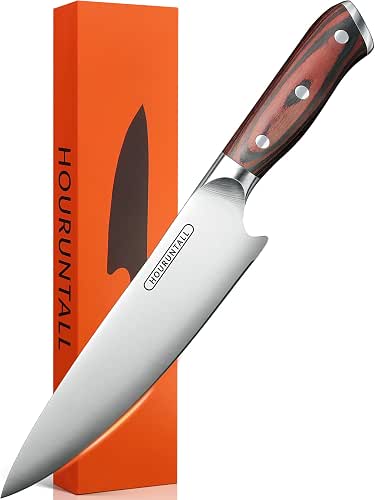 | Safety First | Blade Length: 8 in | Blade Material: 5CR15MOV high-carbon stainless steel | Edge Type: Plain | VIEW LATEST PRICE | Read Our Analysis |
| Mercer Culinary M22608 Millennia Black Handle 8-Inch Chef's Knife | 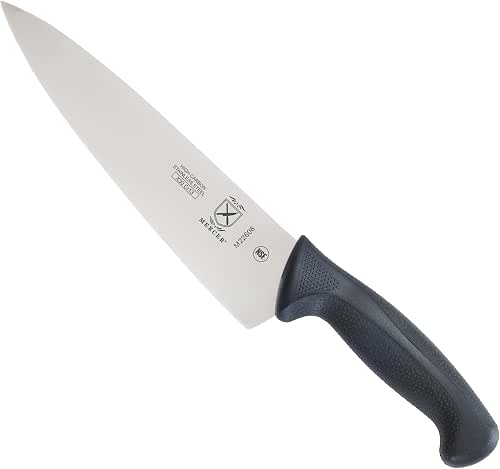 | Reliable Classic | Blade Length: 8 in | Blade Material: High-carbon Japanese steel | Edge Type: Plain | VIEW LATEST PRICE | Read Our Analysis |
Links to Amazon are affiliate links. Buying through one costs you nothing extra and helps fund the research.
What Knife Steel Means for a Santoku Knife Under $30
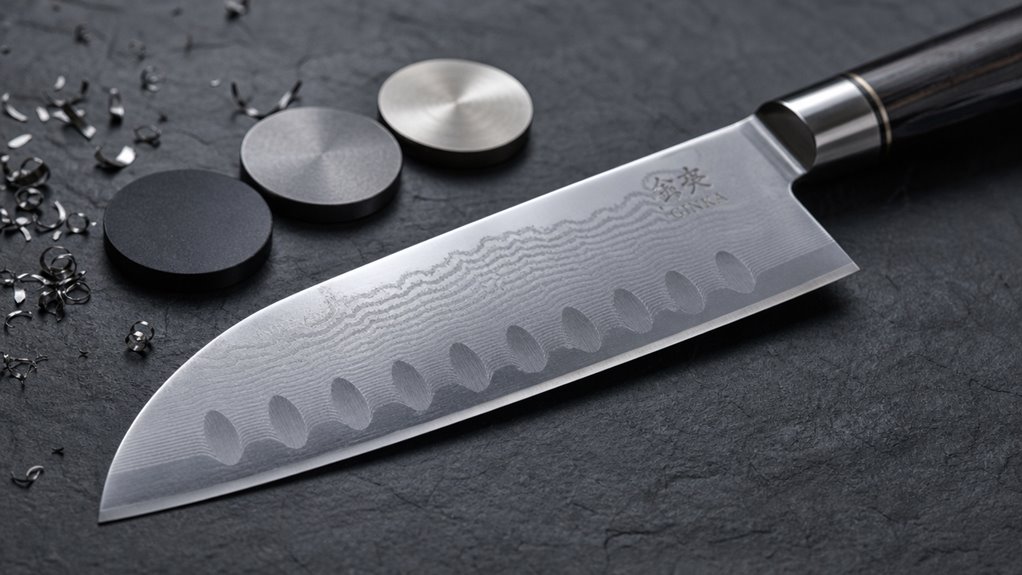
Knife steel in a budget santoku determines how the blade holds an edge, resists corrosion, and responds to everyday chopping motions. At the under-$30 price tier, manufacturers typically use stainless alloys with around 54 to 56 HRC hardness, which produces a softer edge that tends to roll under stress rather than chip. That is a practical match for the forward-and-down cutting style a santoku favors.
The steel’s carbon content drives edge retention, while chromium content governs rust resistance, so the alloy designation on the blade is a reliable shorthand for both. Higher hardness generally means longer intervals between sharpening sessions, but it also means less tolerance for lateral force during use. Understanding these tradeoffs shapes every practical decision that follows. Adding‑carbon steel improves edge retention but increases rust risk.
Hardness, Toughness, and Edge Retention in Plain Terms
Start by looking at the three numbers that actually matter: hardness, toughness, and edge retention. Hardness, measured on the Rockwell C (HRC) scale, tells you how well the edge resists deformation. In the $30 range you’ll see 52‑56 HRC, which is soft enough to sharpen quickly but firm enough to stay sharp for a few dozen cuts. Toughness is the blade’s ability to absorb shocks without chipping; a moderate level means you can chop on wood boards or hit a chicken joint without a micro‑crack. Edge retention is how long the blade feels sharp before you notice dullness. Budget stainless steels sacrifice a bit of retention for easier maintenance, so you’ll sharpen often, but the process is quick and forgiving. This balance gives a santoku that cuts well, resists rust, and stays user‑friendly. Corrosion resistance is enhanced by higher chromium content, which helps prevent rust in humid kitchens.
Why the Steel Name Matters More Than the Brand
Because the alloy defines how a blade behaves, the steel name tells you more than the logo on the box. When you pick a santoku knife under $30, you’re really buying a piece of metal, not a brand promise. The name 8Cr13MoV, for example, means roughly 0.8 % carbon, 13 % chromium and a modest amount of molybdenum, giving a hardness around 54–56 HRC, decent edge retention, and solid rust resistance. Most budget brands use the same steel, so two knives with different logos will cut and hold similarly to one another. Knowing the alloy lets you compare real‑world performance. You learn how often you’ll need to sharpen, how it handles acidic foods, and whether it chips on bone. The trade‑off is a softer edge than premium steels, but it stays forgiving and easy to maintain. Stainless‑grade steels like 8Cr13MoV also provide very high corrosion resistance, making them ideal for kitchen use.
| 3-Pc Ultra Sharp Kitchen Knife Set (8″ 5″ 3.5″) |  | Versatile Trio | Blade Length: 8 in | Blade Material: High-carbon German steel (3CR13MOV) | Edge Type: Plain | VIEW LATEST PRICE | Read Our Analysis |
| 3-Piece Ultra Sharp Carbon Steel Chef Knife Set |  | Carbon Steel | Blade Length: 8 in | Blade Material: High-carbon German steel (3Cr13MoV) | Edge Type: Plain | VIEW LATEST PRICE | Read Our Analysis |
| 5-Piece Kitchen Chef Knife Set with Scissors and Peeler |  | Complete Set | Blade Length: 7 in (cleaver), 7 in (Santoku), 4.5 in (utility) | Blade Material: Stainless steel | Edge Type: Plain | VIEW LATEST PRICE | Read Our Analysis |
Links to Amazon are affiliate links. Buying through one costs you nothing extra and helps fund the research.
The Steel Families You Actually Encounter Below $30
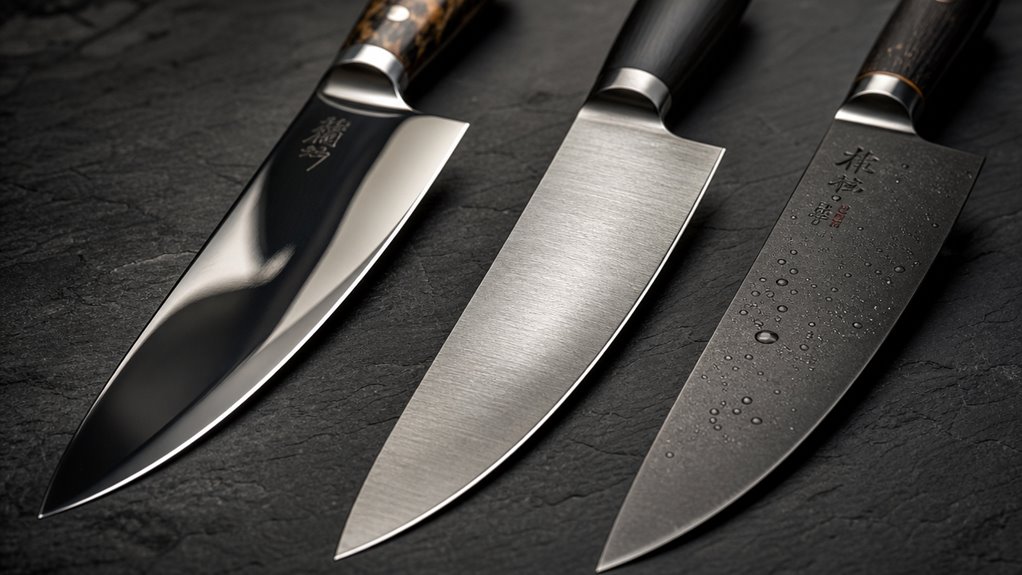
Budget santokus under $30 almost always use German-style stainless steels such as X50CrMoV15 or 5Cr15MoV, alloys engineered to balance rust resistance with enough softness to sharpen quickly on basic equipment.
Carbon steels like 1085 appear less often at this price tier but reward careful cooks with a keener, more refined cutting edge.
The trade-off between these two steel families comes down to maintenance: stainless handles neglect without penalty, while carbon requires prompt drying after every use to prevent rust.
How each steel behaves over time depends on factors beyond the alloy itself, including heat treatment, blade geometry, and how the knife is used day to day.
The details of how these variables interact shape every choice worth making in this category. Edge retention is often superior in stainless alloys due to their fine carbides.
German Stainless Like X50CrMoV15 and 5Cr15MoV
German stainless steels such as X50CrMoV15 and 5Cr15MoV are the workhorses you’ll actually find on a santoku priced under $30. Both are martensitic stainless, roughly 14–15 % chromium, so they resist rust in a wet sink. X50CrMoV15 carries a touch more molybdenum and vanadium, giving it marginally better wear resistance, while 5Cr15MoV is a slightly cleaner blend that some factories tune a bit softer for easier sharpening. Expect a hardness around 54–56 HRC, which means the edge holds for everyday chopping but will dull faster than premium carbon steels. They’re tough enough to survive occasional bone contact, but the trade‑off is a less keen edge than premium carbon steels. The biggest limitation is that you’ll need to sharpen every few weeks if you cook often. High hardness is achievable, up to 56 Rockwell C.
Why Carbon Steel Holds a Keener Edge but Rusts the Moment You Forget It
Sharpness comes from chemistry, not hype. High‑carbon steel lets you push HRC into the high‑50s or low‑60s, so the apex stays razor‑thin longer. The trade‑off is that without enough chromium content, the blade can’t form a protective oxide layer, so moisture instantly starts rusting the edge you just honed.
- Hardness – More carbon means harder carbides, which resist abrasion and keep the edge acute.
- Corrosion – Low chromium (below 10.5 %) leaves the metal exposed; water, salt, and acids create red rust in minutes.
- Maintenance – You must dry the blade after each use or accept patina that eventually dulls the edge.
You’ll notice a keener cut on tomatoes, but a forgotten rinse will leave a flaky rust spot that reshapes the edge.
The result is a blade that performs brilliantly until you neglect basic care.
Which Steel a Budget Santoku Knife Actually Uses
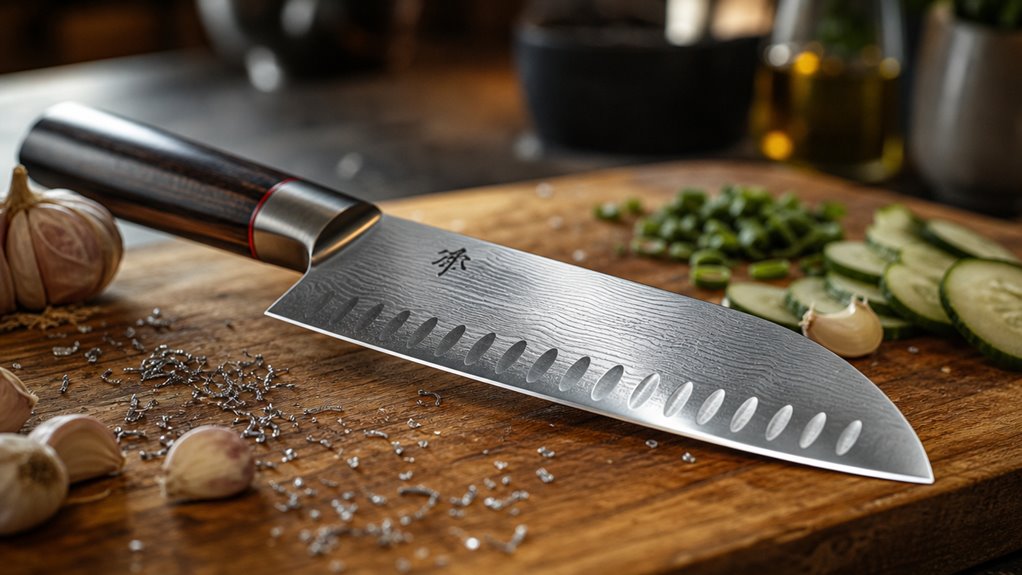
Budget santoku knives in the under-$30 price tier typically use a soft stainless alloy such as AUS-8, a steel that sits at around 55–56 HRC on the hardness scale and balances edge retention with resistance to chipping.
That hardness range keeps the blade forgiving during everyday home cooking, where contact with hard vegetables or bone fragments could micro-fracture a more brittle steel.
Corrosion resistance is a practical benefit of this alloy family, making routine maintenance straightforward for most home cooks.
The trade-off is that softer steel dulls more quickly than harder premium alternatives, which means sharpening frequency becomes a real factor in ownership. A basic whetstone handles the task without special equipment.
Understanding how steel specification shapes long-term performance helps clarify what to expect from a budget-tier blade.
The Soft Stainless Behind Most Under-$30 Blades
Most under‑$30 santoku knives are built with a soft stainless alloy, typically AUS‑6 or AUS‑8. You’ll notice the blade feels forgiving on a cutting board and rust doesn’t cling after a quick rinse.
That softness means you can touch‑up the edge with a basic whetstone in minutes, but the edge will lose its keenness faster than a harder steel. The trade‑off is intentional: manufacturers keep cost low while giving you a rust‑resistant, easy‑to‑maintain tool for everyday meals.
- Hardness – around 55‑56 HRC, easy to sharpen, dulled sooner.
- Toughness – soft stainless rolls under pressure, resists chipping on bones.
- Corrosion resistance – chromium‑rich, survives a wet sink without patina.
You get a reliable, low‑maintenance blade that won’t chip on a casual kitchen task. The only downside is the need to sharpen more often than a premium steel.
Why That Trade-Off Suits a Home Kitchen
The soft‑stainless alloy that powers most under‑$30 santoku knives, usually an AUS‑6 or AUS‑8 formulation, hits the sweet spot for a home kitchen because it balances edge retention with forgiving toughness and rust resistance.
You’ll notice the steel’s HRC sits around 55, which is modest enough to let a basic honing rod or pull‑through sharpener restore sharpness in a handful of strokes.
This soft stainless isn’t the hardest steel for a budget knife, but it’s tough enough to survive occasional board impacts without chipping.
Rust resistance lets you leave the blade wet without worrying about staining, and the softer carbon level means you can sharpen it without a professional stone.
The trade‑off is a edge that dulls a bit faster than premium steels, but the ease of maintenance and durability outweigh the need for ultra‑long edge life in everyday cooking.
How Hardness Changes Sharpening and Chipping
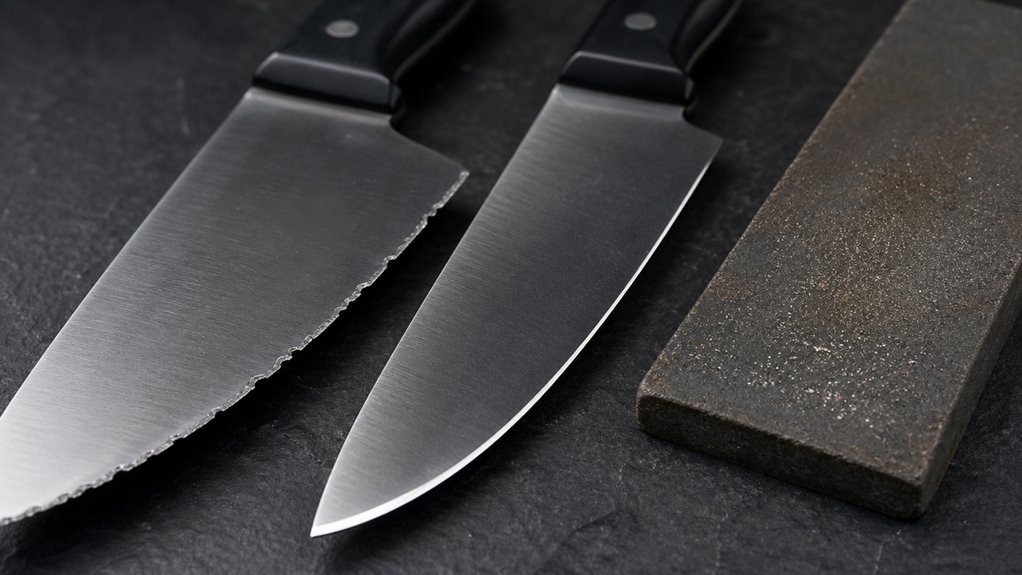
Steel hardness directly controls how a knife edge responds to both use and sharpening — harder steel holds a finer edge longer but becomes brittle enough to chip when it strikes a hard surface or faces aggressive sharpening pressure.
Softer steel behaves differently: instead of chipping, the edge rolls or bends slightly, which makes it more forgiving during everyday chopping on wood or plastic cutting boards.
That combination of chip resistance and easier maintenance is why mid-range hardness is a common choice for budget santoku knives, where toughness matters more than maximum edge retention.
Understanding how hardness shifts the balance between sharpness and durability shapes every decision around sharpening angle, technique, and tool selection.
The details behind those trade-offs go deeper than a single setting or steel grade can capture.
Why a Harder Edge Chips and a Softer One Rolls
When you push a knife against a hard surface, the edge’s hardness decides whether it will break or bend. A harder steel holds a razor‑thin apex, but that tip is brittle; a tiny impact can fracture it, leaving a chip. A softer steel yields more, so the apex bends into a roll instead of snapping off. The difference is not magic. It is how the material handles localized stress.
- Hardness creates a thin, acute edge that resists dulling but cracks under sudden force.
- Chip formation occurs when the brittle tip meets a harder contact point, like glass or bone.
- Rolling happens when the softer apex deforms, moving the cutting point out of alignment but keeping the material intact.
Understanding this trade‑off helps you choose a forgiving, easy‑to‑sharpen stainless for daily kitchen work.
Why Budget Santoku Steel Trades Razor Retention for Everyday Toughness
Because a budget santoku aims to survive everyday kitchen abuse, manufacturers deliberately keep the steel in the 54‑56 HRC range, which means the edge stays softer and more forgiving. You’ll notice the blade is made from soft stainless steels, so it resists rust yet rolls rather than chips when you hit a bone or a hard board.
The trade‑off is that razor sharpness fades faster, so you’ll need higher sharpening frequency. The lower hardness lets a whetstone bite quickly, letting you restore a usable edge in minutes without heavy grinding. This toughness lets you cut on plastic boards or pry a tomato without worrying about a missing tooth, but expect to hone the edge after a few cooking sessions.
The only limitation is the reduced long‑term edge retention compared with premium, harder steels.
What Steel Type to Prioritize Under $30
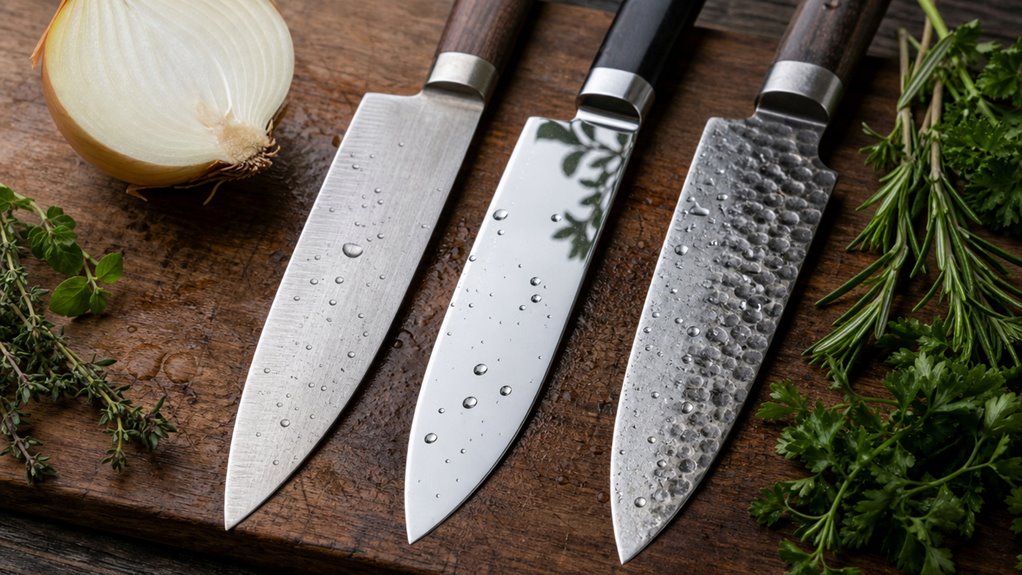
Stainless steels in the 8Cr13MoV and AUS-8 family are the practical choice for a budget santoku because their chromium content resists rust and their hardness, typically in the 54 to 56 HRC range, keeps sharpening sessions short and low-effort. At the under-$30 price point, corrosion resistance and ease of maintenance carry more everyday weight than peak edge retention.
A softer stainless alloy lets a sharpening stone or rod restore the edge quickly without grinding away significant material, which suits cooks who sharpen regularly rather than occasionally. How much steel a blade can spare before that stops working is the question behind how long a kitchen knife lasts. The trade-off is edge retention: high-carbon steels hold a finer edge longer, but they demand more attention to dryness and storage to avoid oxidation.
The sections below walk through the factors that determine how each steel type performs in real kitchen conditions. The same alloys turn up across this roundup of chef’s knives at the same price ceiling.
Matching Steel to How Often You Sharpen
Usually you’ll sharpen a budget santoku every few weeks, so you need a steel that holds a useful edge but still lets you touch it up without a trip to the stone shop. If you sharpen rarely, pick a steel that leans toward edge retention. AUS‑8 gives decent wear resistance for a $30 blade, while 420HC, when heat‑treated, stays sharp a bit longer than plain 420.
For a middle ground of weekly touch‑ups—look for 8Cr13MoV or 7Cr17MoV; they’re forgiving and form a predictable burr. When you sharpen often, a softer stainless like 420HC at ~56 HRC lets you roll a stone or ceramic rod quickly.
- AUS‑8 – moderate retention, easy to touch up.
- 420HC – better retention than 420, still simple to sharpen.
- 8Cr13MoV/7Cr17MoV – balanced wear and quick touch‑up.
Why Rust Resistance Beats Bragging-Rights Hardness Here
When you’re hunting for a santoku under $30, rust resistance matters more than the headline‑grabbing hardness number. A steel like 420HC gives you about 55–56 HRC, so the edge will dull sooner than a 60‑HRC carbon core, but its chromium content keeps it from turning pink in a wet sink or after slicing citrus.
In real kitchens you’ll wash, air‑dry, and store the blade without obsessing over patina, and that low‑maintenance habit saves time and money. Harder steels brag about staying sharp longer, yet they often chip when you hit a bone and demand a whetstone or professional service. The trade‑off is clear: choose rust resistance, accept a softer edge, and enjoy quick, reliable sharpening at home.
Frequently Asked Questions
Can I Use a Soft Stainless Santoku on Hard Vegetables Without Chipping?
Yes, you can slice hard vegetables with a soft‑stainless santoku if you use controlled push cuts and avoid twisting; the forgiving steel resists chipping, though edge dulls faster than harder alloys.
Do Budget Santoku Knives Need a Special Sharpening Stone?
You’ll find that 80 % of budget santokus use 54‑56 HRC stainless, so a standard 800‑1200 grit water stone works fine. No special stone’s needed; just keep the angle steady and sharpen regularly.
Will a 5cr15mov Blade Rust if I Wash It in the Dishwasher?
You’ll see rust spots if you regularly run a 5Cr15MoV blade through the dishwasher; heat, moisture, and detergents accelerate corrosion, so hand‑wash and dry promptly to keep it clean.
Is a Granton‑Dimpled Edge Actually Useful on a Cheap Santoku?
Sharp, sleek, and slightly sticky‑free, grantons barely matter on a cheap santoku. They’re a tiny tweak; your blade’s steel, sharpness, and grind dominate performance, so skip the gimmick and focus on proper sharpening.
How Often Should I Oil a Carbon‑Steel Core in a $30 Knife?
You should oil the carbon‑steel core after every use if you store it longer than a day, especially in humid places; otherwise, a thin coat weekly suffices once a stable patina forms.
Conclusion
You’ll find that the modest German stainless in most $30 santokus, whether X50CrMoV15, 5Cr15MoV, or AUS‑8, delivers a usable edge without constant chipping, and it stays rust‑free enough for everyday washing. The trade‑off is a slightly softer HRC, so you’ll need to touch up the stone every few weeks. If you accept that routine, the steel’s balance of hardness, toughness, and corrosion resistance makes it a sensible, no‑frills choice for home cooking.
| Cuisinart 8″ Stainless Steel Chef's Knife Guard | 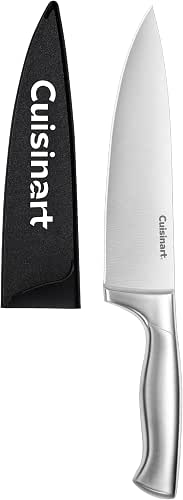 | Best Value | Blade Length: 8 in | Blade Material: Stainless steel | Edge Type: Plain | VIEW LATEST PRICE | Read Our Analysis |
| Amazon Basics 8″ High Carbon Stainless Steel Chef's Knife |  | Everyday Essential | Blade Length: 8 in | Blade Material: High-carbon stainless steel | Edge Type: Plain | VIEW LATEST PRICE | Read Our Analysis |
| Astercook 8″ Professional Kitchen Chef Knife (Gift Box) | 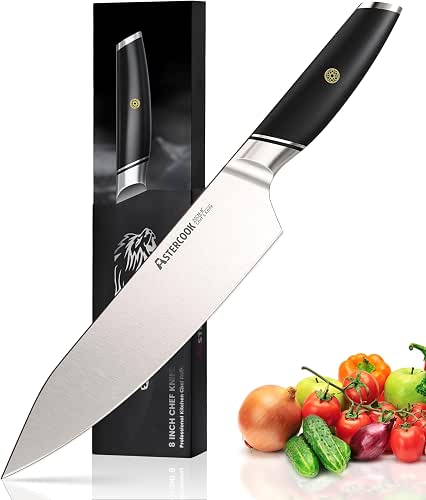 | Gift-Ready | Blade Length: 8 in | Blade Material: German high-carbon stainless steel | Edge Type: Plain | VIEW LATEST PRICE | Read Our Analysis |
Links to Amazon are affiliate links. Buying through one costs you nothing extra and helps fund the research.

Michael Haralson worked in professional kitchens from 1979 to 1992: San Diego restaurants, six years with a catering company beside an Austrian chef, and two summers as a cook on the Finland to Sweden cruise route. He then built a fifteen-year career at Nokia. It began in product marketing and product management, where technical specifications and supplier evaluation were part of the work, and grew from a few countries to a region to global roles, then into sales and corporate strategy. That took him to Beijing for three years, where he spent many weekends in a different province trying the local food and took cooking classes. He has eaten in more than 40 countries and has been shown the kitchens of restaurants in Southern Europe. At home in Finland he cooks Cantonese, Sichuan and Mediterranean food, and still uses the cast iron skillet he bought in 1992. He is the author of Buy It Once, Book One of The Researched Kitchen, and writes here about the balance between kitchen tools that cost too much and those that fail too soon.