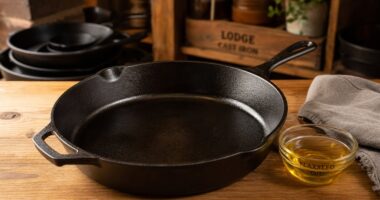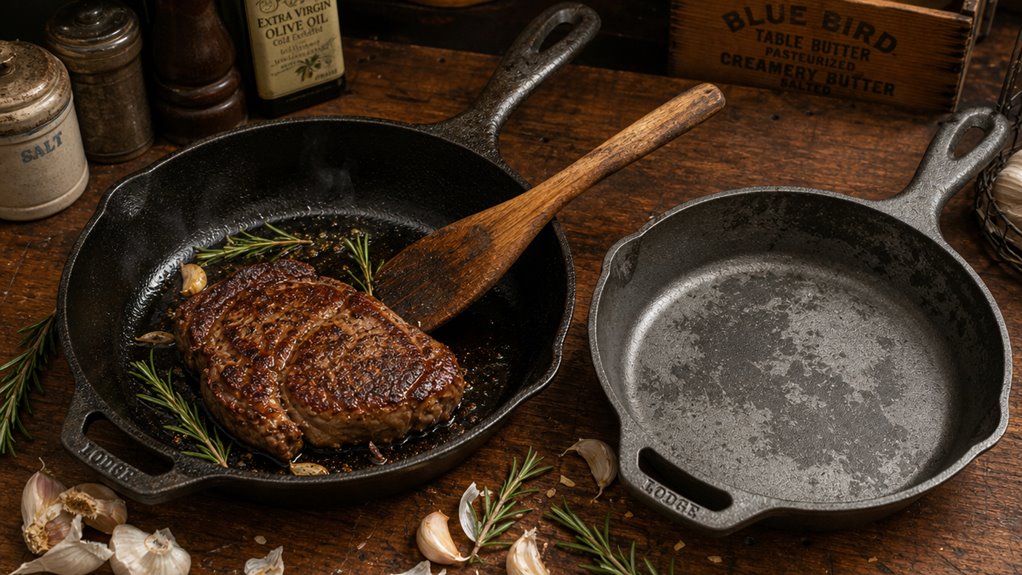

Lodge cast iron skillets depend on a combination of sand-cast construction, uniform wall thickness, and factory-applied seasoning to deliver decades of reliable cooking performance. These design choices work together to resist warping, build non-stick properties over time, and prevent rust under normal care.
- Sand casting produces a single-piece pan with no seams or weak joints, which gives the skillet structural integrity across years of high-heat use.
- Factory seasoning polymerizes a layer of oil into a hard, protective coating that bonds to the iron surface and strengthens with each use.
- Wall thickness uniformity allows heat to distribute evenly across the base, which keeps the pan flat and reduces the risk of hot spots or warping.
A Lodge skillet builds its seasoning gradually through repeated cooking and light oiling. That cumulative layer becomes increasingly non-stick over time and acts as a barrier against moisture-driven rust.
Spotting a defective pan requires a physical check of the base and surface. Wobble indicates an uneven base. Burrs and pitting on the cooking surface signal a weak or flawed cast. Any of these flaws compromise long-term performance.
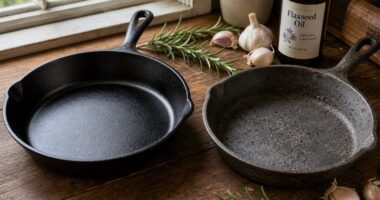
Vintage cast iron pieces often show thinner, smoother walls than modern production models. Comparing old and new Lodge skillets reveals how manufacturing tolerances have shifted, though both rely on the same core principles of seasoning maintenance and dry storage.
Lodge itself has been casting in South Pittsburg since 1896, which is the concrete date behind the durability claims in this article. Broader statements about how long cast iron as a material has been in production vary widely depending on what is being counted, so treat the specific foundry record as the reliable part.
Cheap or expensive is the wrong question. Cost per use is the honest one. Check out our new Calculator.
Cost-Per-Use Calculator →Key Points
- Single‑piece sand‑cast construction eliminates seams and rivets, giving uniform wall thickness that resists warping and fatigue.
- High‑thermal‑mass, thick casting provides even heat retention and stability for pre‑heating, broiling, and stovetop use.
- Factory‑seasoned soybean oil polymerizes into a durable, cross‑linked layer that strengthens with each use and improves non‑stick performance.
- Spot defects by checking for wobble, uneven base contact, burrs, pits, or flaking seasoning; these indicate casting flaws or a “lemon.”
- Proper maintenance, drying, light oiling, and regular re‑seasoning, preserves the protective layer and prevents rust, extending lifespan beyond a century.
| Lodge 6.5″ Cast Iron Skillet – PFAS‑Free Non‑Toxic |  | Professional Grade | Material: Cast iron | Pre‑Seasoned Surface: Pre‑seasoned with natural vegetable oil | Oven‑Safe: Oven‑safe | VIEW LATEST PRICE | Read Our Analysis |
| Victoria 6.5″ Pre-Seasoned Cast Iron Skillet |  | Best Overall | Material: Cast iron | Pre‑Seasoned Surface: Pre‑seasoned with kosher flaxseed oil | Oven‑Safe: Oven‑safe up to 750 °F | VIEW LATEST PRICE | Read Our Analysis |
| 8 Inch Round Medium Pre-Seasoned Cast Iron Skillet |  | Best Durability | Material: Cast iron | Pre‑Seasoned Surface: Pre‑seasoned (proprietary oil blend) | Oven‑Safe: Oven‑safe | VIEW LATEST PRICE | Read Our Analysis |
Links to Amazon are affiliate links. Buying through one costs you nothing extra and helps fund the research.
What Makes a Lodge Cast Iron Skillet Last 100+ Years
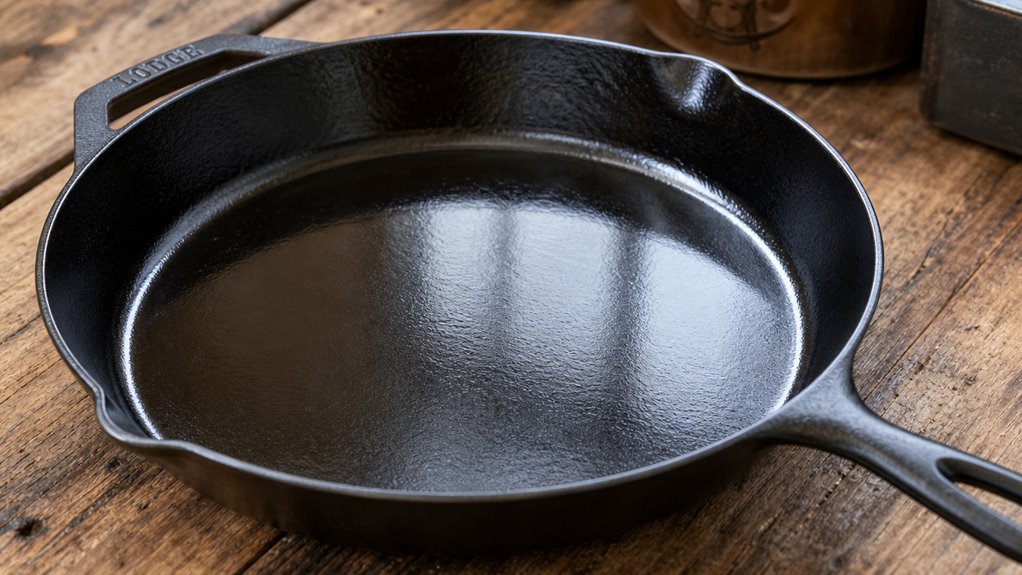
A Lodge cast iron skillet lasts well beyond a century because its one-piece sand-cast construction eliminates the rivets and seams that typically weaken cookware over time. The factory-applied seasoning polymerizes into a hard, protective layer that reinforces itself with each use, keeping the cooking surface both non-stick and resistant to corrosion. Uniform wall thickness, a direct result of the casting method Lodge has used since 1896, allows the pan to resist warping even under sustained high heat. These qualities compound across decades, meaning a skillet passed down through generations tends to perform as reliably as a new one. The details behind each of these factors reward a closer look. The foundry seasoning process, introduced in 2002, uses soybean oil sprayed on the cast iron and baked at high temperature to create a durable, non‑stick surface.
Sand-Cast Iron, Single-Piece Construction, and No Parts to Fail
Because Lodge pours its pans straight into sand molds, the whole skillet comes out as one solid piece, with no rivets, no welds, no separate handles to loosen over time. The sand‑cast surface stays rough enough to keep extra material, so walls stay thick and the base stays flat. You get a single‑piece casting that distributes stress evenly, meaning a drop won’t crack a joint that isn’t there. No welded seams or plastic parts means nothing can melt or corrode, so the pan can survive generations of use.
Because the casting process preserves thickness, the skillet resists warping even after repeated heating cycles.
| Feature | Benefit | Why it matters |
|---|---|---|
| Sand‑cast surface | Retains thickness | Reduces warping risk |
| Single‑piece casting | No joints | Eliminates failure points |
| No rivets or welds | Uniform strength | Increases durability |
| Integral handle | One solid piece | Handles heat without loosening |
You’ll notice the skillet sits flat, feels heavy, and stays even after years of heating. The only downside is the weight; it’s harder to lift than a thin aluminum pan.
The Polymerized Seasoning Layer That Renews Itself With Use
When you heat a Lodge skillet, the oil you add doesn’t just sit on the surface; it undergoes polymerization, turning into a thin, hard film that bonds to the cast‑iron. This polymerized oil layer is a microscopic, cross‑linked network that clings to the iron and to previous coats, so each cooking session adds a new micro‑layer.
Seasoning strength increases over time with continued cooking.
Over time the patches interlock like puzzle pieces, thickening the black patina and improving non‑stick performance. To keep it healthy, clean with warm water, dry thoroughly, then rub a thin coat of high‑smoke‑point oil while the pan is still warm.
When you’re unsure how to inspect a cast iron skillet, look for a smooth, even black surface without flaking; any rough spots or pitting signal a need for a quick reseason. This self‑reinforcing cycle is why a Lodge can survive generations.
| Lodge Seasoned Cast Iron Griddle 10.5″ Round | 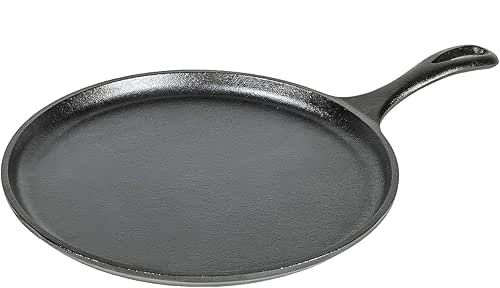 | Heavy-Duty Performer | Material: Cast iron | Pre‑Seasoned Surface: Pre‑seasoned (iron and oil only) | Oven‑Safe: Oven‑safe | VIEW LATEST PRICE | Read Our Analysis |
| Cast Iron 10″ Skillet with Pour Spouts and Silicone Grip |  | Premium Quality | Material: Cast iron | Pre‑Seasoned Surface: Pre‑seasoned (PFAS‑free) | Oven‑Safe: Oven‑safe | VIEW LATEST PRICE | Read Our Analysis |
| Mercer Culinary Pre-Seasoned Cast Iron Skillet 8-Inch | 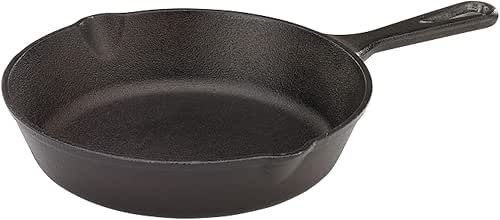 | Chef’s Choice | Material: Cast iron | Pre‑Seasoned Surface: Pre‑seasoned with natural vegetable oil | Oven‑Safe: Oven‑safe | VIEW LATEST PRICE | Read Our Analysis |
Links to Amazon are affiliate links. Buying through one costs you nothing extra and helps fund the research.
The Heritage Behind Lodge’s Century-Long Service Life
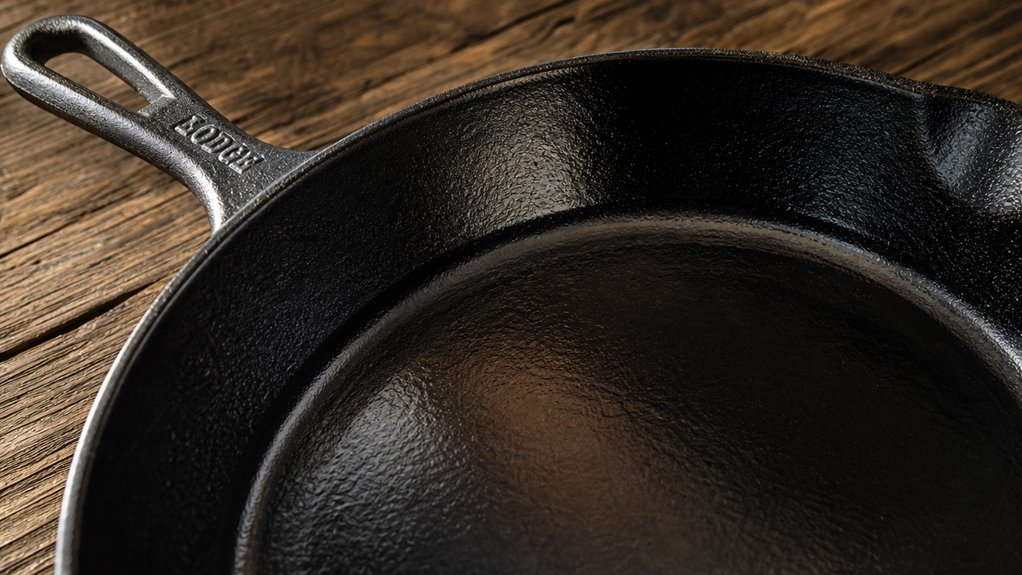
Lodge cast iron skillets have been produced in South Pittsburg, Tennessee, since 1896, and the foundry’s single-pour, thick-wall casting method has remained largely consistent across that span because the structural outcome it delivers, uniform metal density and resistance to warping, has never required a fundamental redesign. Family ownership has kept the manufacturing process stable across generations, which means each pan carries the same material properties as those made decades earlier. That consistency in wall thickness and metal structure is what allows a Lodge skillet to outlast its original owner and pass into continued use rather than retirement. Cheap, thin-walled alternatives lack that structural integrity, which is why warping under sustained heat is a common failure point at lower price tiers. The factors that explain this century-long service life go deeper than ownership history alone. The company’s automated molding process, adopted in 1965, further ensures uniform wall thickness across every batch.
South Pittsburg, 1896, and Why the Casting Process Barely Changed
If you trace Lodge’s roots back to 1896, you’ll find the company set up shop in South Pittsburg, Tennessee, because the town sat on rail lines, coal seams and iron ore, everything a foundry needs to keep costs low. The Blacklock Foundry used sand‑casting, pressing a pattern into sand to form a cavity for molten iron.
After a 1910 fire, they rebuilt, keeping that same sand‑casting workflow. You still get a single‑piece pan with no seams, because the mold breaks away and the piece solidifies as one block. The mix of pig iron, steel and a few additives stays consistent, so the material behaves the same today as it did a century ago.
That continuity means the wall thickness stays even, the base stays flat, and the pan resists warping, just as you’d expect from a product that’s been made the same way for generations. Lodge describes the automated Disamatic moulding machines it now uses on its own how-it’s-made page. Those machines are what let the traditional sand-casting method run at modern volumes without changing what comes out of the mould.
How Generations Pass Down Skillets That Outlive Their Owners
Because Lodge’s single‑piece casting stays flat and even, you can keep passing the same skillet down the family line without worrying about warping or seams that would make it useless after a few generations. You’ll notice this heirloom tradition in kitchen stories: a grandmother’s cornbread, a dad’s fried chicken, all cooked in the same pan.
The iron’s even wall thickness lets you strip and re‑season it whenever rust appears, so the surface actually improves with each owner. Because there are no synthetic coatings, the pan never peels, and the weight stays balanced, making it a true heirloom‑quality piece.
Provenance often shows initials carved into the handle, linking each generation to the same reliable skillet. This continuity is why an under-$30 Lodge can outlive a cheap alternative for a century.
How to Inspect a Cast Iron Skillet and Spot a Lemon
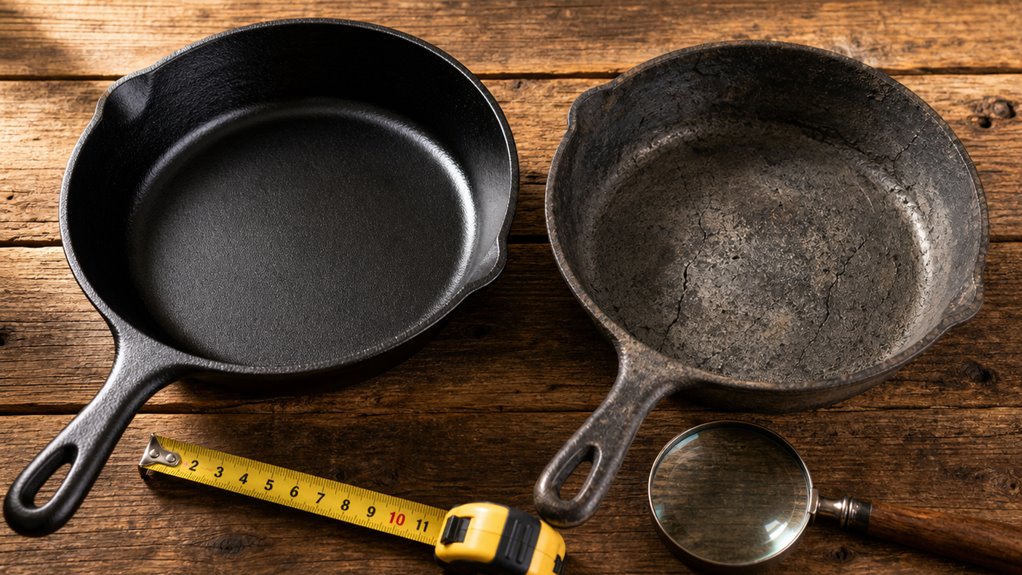
Inspecting a cast iron skillet for defects means checking the base for warping, the cooking surface for casting flaws, and the walls for consistent thickness: three physical traits that determine whether a pan will perform reliably or deteriorate quickly under heat.
A warped base prevents the skillet from sitting flat, creating uneven contact with a burner and reducing cooking control.
Rough spots, burrs, or pitting on the cooking surface signal casting defects introduced during manufacturing, and these irregularities tend to worsen with repeated seasoning and use.
Wall thickness matters because thinner sections flex under thermal stress, which accelerates warping over time and shortens the pan’s working life.
The details ahead walk through how to evaluate each of these factors with confidence.
Wobble Checks, Warped Bases, and Skillets That Won’t Sit Flat
When you set a skillet on a flat surface and give the handle a gentle push, the way it behaves tells you instantly whether the base is truly flat or already a lemon. A wobble check is simple: if the pan spins freely, you have a warped cast iron skillet, a clear “lemon.”
Press the rim alternately; any rocking or clicking means the base isn’t even. Use a credit card or ruler under the underside; light slipping through indicates a dish.
Mild wobble is common on older pieces and usually cooks fine on gas or coil burners, but on glass‑top or induction ranges even a slight warp can cause hot spots and poor heat transfer. Knowing how to spot a bad cast iron pan saves you from buying a reject.
Casting Burrs, Pitting, and Rough Spots That Signal a Reject
After checking for wobble, the next thing to feel is the metal itself. Run your fingertip along the rim and handle of the cast iron skillet; any thin, sharp fin that catches your nail is a casting burr, a sign the foundry rushed its finish. Look for jagged lines around the circumference. Those heavy burrs often mean worn sand molds.
Flip the pan and scan the cooking surface for tiny pits or clusters of round holes; deep or irregular pitting traps food and resists seasoning, marking a cast iron skillet defect. Finally, drag a paper towel across the bottom. If it snags on gritty bumps or sand inclusions, you’ve found rough spots that signal a reject. A quality skillet feels uniformly smooth, with only faint, seamless parting lines that you can’t easily feel.
Why a Heavy Even Casting Beats a Lightweight One That Warps
Start by feeling the pan’s heft; a truly heavy, even‑cast skillet will sit solidly in your hand, while a lightweight one feels flimsy and wobbly. The mass gives it a high thermal mass, so when you add cold food the temperature drops little, keeping sears crisp.
A thick, even wall spreads thermal stress, preventing the warped base that thin, cheap pans develop after a few high‑heat cycles. You’ll notice a uniform balance when you tilt it, with no wobble, no doming. The heavier casting also tolerates pre‑heat and broiler temperatures without bending, while a lightweight counterpart can buckle under the same stress.
- Check base thickness at the sidewall junction.
- Perform the wobble test on a flat burner.
- Compare weight to size; a 10‑inch pan should feel around 4‑5 lb.
- Look for even sidewall and rim profiles indicating a solid, single‑piece pour.
New Lodge Versus Vintage: Which Skillet Is Worth Hunting
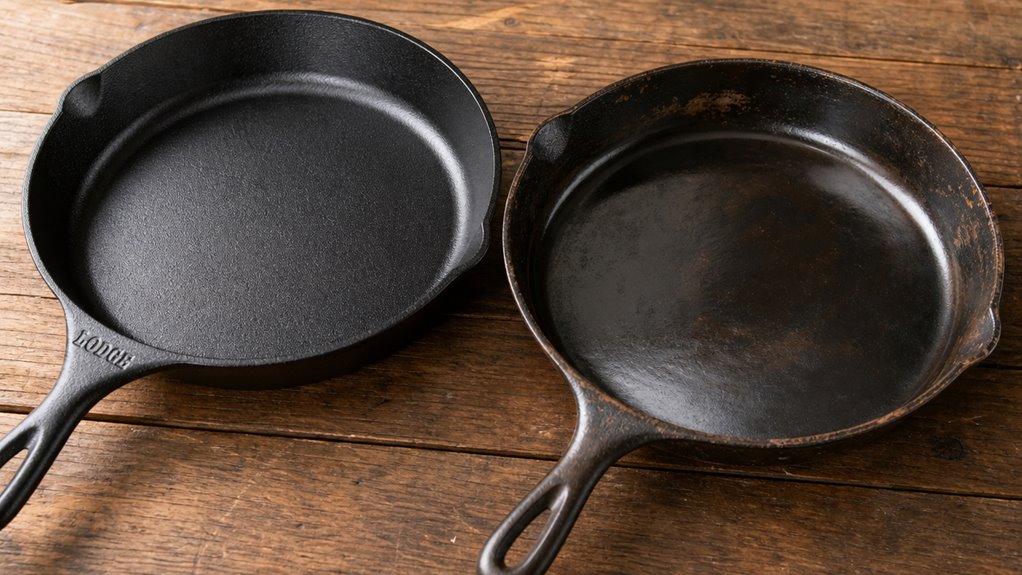
Choosing between a new Lodge and a vintage skillet comes down to surface texture, heat response, seasoning behavior, and intended use, with each factor shifting the practical outcome in a different direction.
Lodge’s pebbled casting requires a longer break-in period before food releases cleanly, but that rougher surface typically builds a durable seasoning over time and holds heat steadily through high-temperature searing.
Vintage Griswold pans carry a machined interior that feels noticeably smoother, which means fewer seasoning layers are needed for easy release, though older iron can develop pitting if it hasn’t been stored or maintained carefully.
Thinner vintage walls respond more quickly to burner adjustments, which matters when cooking delicate sauces that need precise temperature control, while Lodge’s heavier construction buffers against heat fluctuations.
The details behind each trade-off reward a closer look.
Smoother Vintage Surfaces and the Modern Pebbled Finish
If you compare a new Lodge skillet to a vintage one, the first thing you’ll notice is the surface texture. Modern Lodge keeps a rough, pebbled finish because it never machines the casting smooth, while old Lodge pieces feel smoother after years of seasoning. That texture isn’t a flaw; it actually gives seasoning more area to bond.
Over time the jagged surface fills in, so a well‑seasoned new pan can match the non‑stick feel of a vintage. The heat ring on older models helps date them, but it doesn’t affect cooking performance.
- Rough pebbled surface → more seasoning adhesion.
- Vintage smoothness → built‑up seasoning layers.
- Proper seasoning → narrows performance gap.
- Heat ring → identification marker, not functional advantage.
When a Vintage Griswold Beats a New Lodge and When It Doesn’t
Because a Griswold’s thinner walls let it heat up faster, you’ll notice a quicker response when you crank the burner for a sauté or a delicate fry. You’ll love the light feel and rapid temperature change, especially for quick‑turn dishes.
A new Lodge, however, brings even wall thickness that holds heat longer, so it steadies a sear or keeps a stew hot while you add ingredients. If the vintage skillet passes the wobble test, shows no cracks, and rings clean, its efficient alloy can rival a Lodge’s thermal mass despite being lighter.
The downside: many older Griswolds have warped bases that won’t sit flat on glass or induction tops. In those cases, a new Lodge is more reliable. Lodge cast iron is consistently good quality, but whether a new or vintage pan suits you better comes down to flatness, weight, and how you’ll use it.
How to Make Any Cast Iron Skillet Outlast You
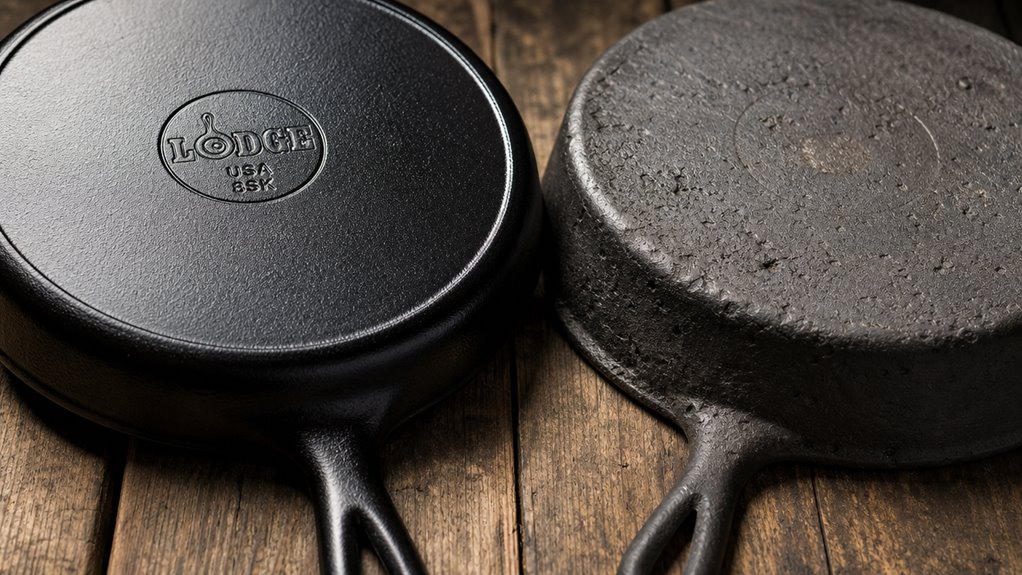
Cast iron skillets can last several generations when basic maintenance habits: keeping the pan dry, applying thin coats of high-smoke-point oil, and addressing rust or cracks early, are followed consistently.
Moisture is the primary threat to cast iron, so wiping the skillet with a towel and applying a brief burst of heat after washing drives out residual water before it can cause surface rust.
When a small rust spot or hairline crack does appear, light sanding followed by re-seasoning at around 450 °F for an hour restores the protective layer without requiring a full restoration.
The seasoning itself, built from repeated oil polymerization, is what gives cast iron its non-stick quality and its resistance to damage over time.
Brands like Lodge demonstrate that consistent care matters more than the pan’s age or price point, and the sections ahead cover each maintenance step in practical detail.
The Maintenance Habits That Prevent Rust and Cracks
Regularly cleaning, drying, and oiling your cast‑iron skillet is the backbone of rust‑proofing and crack‑prevention.
Follow the wash‑dry‑oil sequence every night, and you’ll keep moisture out and the seasoning alive.
A quick hand wash with warm, soapy water, a towel dry, then a thin coat of high‑smoke‑point oil does the trick.
Heat the skillet briefly after drying to drive off hidden moisture, then store it only when completely cool.
These habits protect the even wall thickness Lodge is known for, and they stop the micro‑pitting that leads to rust and stress cracks.
- Wash, dry, then oil immediately after each use.
- Heat the pan for a minute to evaporate residual water.
- Apply a thin, even film of flax or canola oil; bake at 450 °F for 1 hour.
- Preheat gradually on low‑to‑medium heat; avoid sudden high‑heat spikes.
Repairing Neglect: Restoring Before You Replace
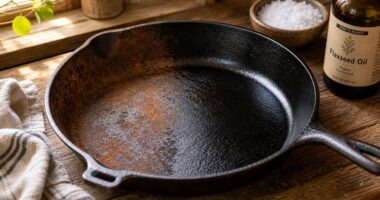
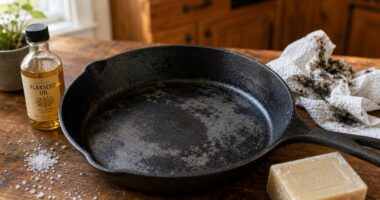
If you let a Lodge skillet sit rust‑covered for months, you don’t have to toss it, since restoration usually brings it back to life.
First, match rust‑removal intensity to the damage. Use steel wool or a Lodge Rust Eraser for spot rust; for deeper corrosion, work from coarse sea salt to 200‑grit sandpaper, and only if needed, a grinder with a wire brush.
After scouring, wash with warm, soapy water, dry thoroughly with a lint‑free cloth, and heat briefly on low to chase any moisture. Then apply a very thin oil layer and bake the pan upside‑down at 450‑500 °F for an hour, letting it cool in the oven. Repeat seasoning a few times if the surface was stripped.
Restoration is often enough, and with proper care a Lodge can last well over a century, as long as you keep it seasoned and dry.
Frequently Asked Questions
Can I Use a Lodge Skillet on Induction Without a Disc?
Yes, you can place a Lodge skillet directly on induction, with no disc needed. Its ferrous base couples with the magnetic field, heats efficiently, and works on glass tops as long as you lift it, avoid scratching.
Does Pre‑Seasoning Affect Long‑Term Seasoning Buildup?
You’ll see it subtly: good pre‑seasoning gives a solid, polymerized base that bonds with every oil layer you add, so the seasoning builds faster and stays smoother for decades.
What Temperature Spikes Cause Warping in Thin‑Wall Cast Iron?
You’ll see warping when thin‑wall cast iron hits 700‑800°F on a burner or 850‑900°F in an oven; rapid spikes and thermal shock at those temperatures quickly distort the base.
Are Lodge’s Warranty Terms Different for Cookware Versus Other Products?
Lodge publishes two limited lifetime warranties, split by product family rather than a single blanket policy: one for enameled cast iron, replacing pieces that chip, crack or are otherwise damaged during cooking, and one for seasoned cast iron and carbon steel, replacing pieces that crack or warp or show named casting defects. Both run to the original purchaser or a gift recipient, and both exclude commercial use, drops, neglect and overheating. FINEX publishes its own separate Good Forever Guarantee, under which it repairs or replaces cookware that fails, excluding abuse, theft and loss. Regional policies may differ, so check the page that applies to where you bought.
How Does the Sand‑Cast Pebble Texture Influence Cleaning Methods?
The pebble‑rugged surface calls for gentle, nylon‑brush scrubbing. Harsh steel wool strips the seasoning, so it’s best avoided on a well‑maintained pan.
Conclusion
You’ll find that Lodge’s single‑piece casting, even walls, and wobble test give it a durability that outlasts most cheap pans. Spotting a lemon is as simple as checking for uneven wobble or pitting. A vintage piece may have a thicker seasoning, but a new skillet offers consistent heat distribution right out of the box. Expect a modest weight increase compared to thinner alternatives, and you’ll have a skillet that can survive generations.
| Utopia Kitchen Pre-Seasoned Cast Iron Skillet with Lid (10″) |  | Most Versatile | Material: Cast iron | Pre‑Seasoned Surface: Pre‑seasoned (additional seasoning recommended) | Oven‑Safe: Oven‑safe | VIEW LATEST PRICE | Read Our Analysis |
| MIRRO 6in Cast Iron Preseasoned Skillet | 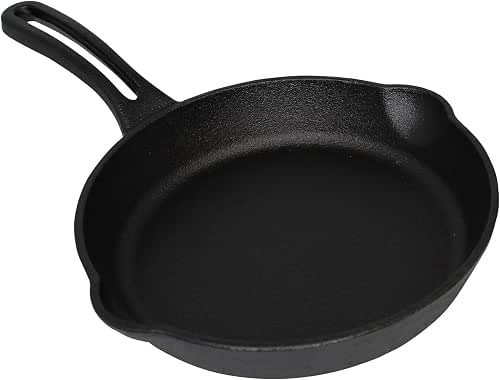 | Best Ergonomics | Material: Cast iron | Pre‑Seasoned Surface: Pre‑seasoned interior | Oven‑Safe: Oven‑safe up to 500 °F | VIEW LATEST PRICE | Read Our Analysis |
| 6‑Inch Cast Iron Skillet – Pre‑Seasoned Oven‑Safe Grill‑Ready |  | Budget-Friendly Pick | Material: Cast iron | Pre‑Seasoned Surface: Pre‑seasoned with vegetable oil | Oven‑Safe: Oven‑safe (primary spec) | VIEW LATEST PRICE | Read Our Analysis |
Links to Amazon are affiliate links. Buying through one costs you nothing extra and helps fund the research.

Michael Haralson worked in professional kitchens from 1979 to 1992: San Diego restaurants, six years with a catering company beside an Austrian chef, and two summers as a cook on the Finland to Sweden cruise route. He then built a fifteen-year career at Nokia. It began in product marketing and product management, where technical specifications and supplier evaluation were part of the work, and grew from a few countries to a region to global roles, then into sales and corporate strategy. That took him to Beijing for three years, where he spent many weekends in a different province trying the local food and took cooking classes. He has eaten in more than 40 countries and has been shown the kitchens of restaurants in Southern Europe. At home in Finland he cooks Cantonese, Sichuan and Mediterranean food, and still uses the cast iron skillet he bought in 1992. He is the author of Buy It Once, Book One of The Researched Kitchen, and writes here about the balance between kitchen tools that cost too much and those that fail too soon.