This roundup is researched, not guessed at. It’s built for households that put a knife set through regular use — weeknight dinners, holiday tables, the occasional dishwasher shortcut — and want proof a set won’t fall apart within a year. We looked at a wide field of steak knife sets for sale under $30, screened every one against a hard price ceiling, then checked how each held up over years of real use rather than a single unboxing. What follows breaks down each survivor’s durability evidence — from sets that simply clear the floor to the ones with a proven multi-year track record — so you can see exactly how far the proof goes for each one.
The market is flooded with steak-knife sets that promise “restaurant-grade” performance, yet many of those claims crumble when the blade meets a tough ribeye. Most budget options sit at 4.5–5 inches, use stainless or high-carbon steel, and feature serrated or micro-serrated edges that stay sharp longer but can be harsh on delicate meat.
Handles range from triple-riveted polymer, which feels cheap but durable, to wood that looks nice but may warp in the dishwasher. Look for one-piece, forged construction rather than stamped blanks, and check warranties: some brands offer a year, others none.
Choosing the right set size, 4, 6, 8, or 12 pieces, depends on household size and how often you replace knives. The next section breaks down the seven contenders, weighing blade material, handle design, and real-world durability so you can avoid another disappointment.
Key Points
- Prioritize full-tang or one-piece forged stainless blades (e.g., Berglander, Faderic) for durability and resistance to loosening.
- Choose serrated or micro-serrated edges to extend usable life on a budget, as they stay sharper longer than straight edges.
- Opt for ergonomic, non-slip handles—polymer with triple rivets or contoured wood—to reduce wrist fatigue and improve grip.
- Verify dishwasher-safe claims but be prepared to hand-wash wooden-handle sets to preserve finish and prevent swelling.
- Look for sets offering at least a limited lifetime warranty, indicating manufacturer confidence in blade material and construction.
| Farberware Triple Rivet Steak Knife Set (4) |  |
Classic Choice | Blade Length: 4.5″ | Blade Material: High-carbon stainless steel | Edge Type: Serrated | VIEW LATEST PRICE | Read Our Analysis |
| Berglander 6-Piece Stainless Steel Steak Knife Set |  |
Heavy-Duty Performer | Blade Length: Not specified (standard steak knife length) | Blade Material: Food-grade stainless steel | Edge Type: Serrated | VIEW LATEST PRICE | Read Our Analysis |
| Steak Knife Set of 6 4.5″ Dishwasher Safe Steel Knives | 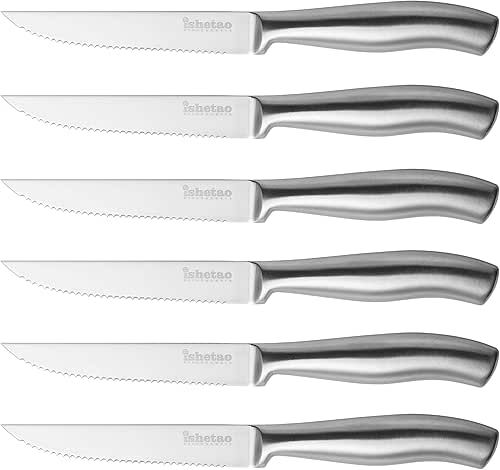 |
Sharp & Versatile | Blade Length: 4.5″ | Blade Material: High-carbon 420J2 stainless steel | Edge Type: Serrated | VIEW LATEST PRICE | Read Our Analysis |
| Kyraton 12-Piece Stainless Steel Steak Knife Set |  |
Large Family Set | Blade Length: Not specified (standard steak knife length) | Blade Material: Premium stainless steel | Edge Type: Serrated | VIEW LATEST PRICE | Read Our Analysis |
| IMUSA Stainless Steel Steak Knife Set with Wood Handle |  |
Wood-Handle Elegance | Blade Length: 5″ | Blade Material: Stainless steel with natural finish | Edge Type: Micro-serrated | VIEW LATEST PRICE | Read Our Analysis |
| Faderic 12-Piece Serrated Steak Knife Set |  |
Premium Build | Blade Length: 4.5″ | Blade Material: High carbon stainless steel | Edge Type: Serrated | VIEW LATEST PRICE | Read Our Analysis |
| Amazon Basics 8-Piece Stainless Steel Serrated Steak Knives 4.5″ Black |  |
Compact Essential | Blade Length: 4.5″ | Blade Material: Stainless steel (full tang) | Edge Type: Micro-serrated | VIEW LATEST PRICE | Read Our Analysis |
More Details on Our Top Picks
Cheap or expensive is the wrong question. Cost per use is the honest one. Check out our new Calculator.
Cost-Per-Use Calculator →-
Farberware Triple Rivet Steak Knife Set (4) — Best for Classic Everyday Use
The Farberware Triple Rivet Steak Knife Set (4) is the classic choice for budget-conscious home cooks who still want a reliable slice of steak. Its 4.5-inch high-carbon stainless steel blades stay razor-sharp longer than typical budget steel, and the serrated edge tackles thick chops without crushing meat fibers.
The ergonomic triple-rivet handles feel balanced, and the black finish matches most dinnerware.
Key specs
- Blade: 4.5 in, high-carbon stainless, serrated
- Handles: ergonomic, triple-rivet, black polymer
- Set size: four knives
Care tips
- Hand wash with warm water, mild detergent
- Rinse, dry immediately to prevent rust
Warranty, limited lifetime, a modest safety net. The brand’s 1900 legacy suggests durability, but cheap sets often disappoint; this one is a solid, if unremarkable, option for everyday dining.
Pros
- High-carbon stainless blades hold an edge longer than typical budget steel
- Serrated edge handles thick cuts without crushing the meat
- Triple-rivet handles feel balanced, backed by a limited lifetime warranty
Cons
- Hand wash only, no dishwasher convenience
- A straightforward, unremarkable design without standout upgrades
- Blade Length:4.5″
- Blade Material:High-carbon stainless steel
- Edge Type:Serrated
- Handle Material:Black ergonomic (plastic/metal)
- Set Size (Number of Knives):4
- Dishwasher Safe:Hand wash only
- Additional Feature:Lifetime limited warranty
- Additional Feature:Triple-rivet classic aesthetic
- Additional Feature:Hand-wash recommended
-
Berglander 6-Piece Stainless Steel Steak Knife Set — Best for Heavy-Duty Use
Berglander’s six-piece stainless steel set targets anyone who wants a sturdy, heavy-duty performer. The knives are forged from food-grade stainless steel in a one-piece construction that promises rust resistance and a shatter-proof blade.
Sharp serrated edges glide through steak, meat, and poultry with minimal effort, making them suitable for frequent dining.
- Ergonomic, non-slip handles for comfortable grip
- Mirror-polished finish that lifts table aesthetics
- Dishwasher-safe for easy cleanup
The set includes six versatile knives that double as dinner table cutlery, kitchen utilities, and serving tools, fitting home kitchens, restaurants, and banquet settings alike.
While the heavy-duty build suggests durability, occasional cheap-grade steel can dull faster than advertised, so monitor edge performance over time.
Pros
- One-piece stainless construction resists rust and won’t shatter
- Dishwasher-safe with a mirror-polished finish
- Doubles as everyday cutlery and serving knives
Cons
- Blade length isn’t specified by the manufacturer
- Edge may dull faster than advertised on lower-grade batches
- Blade Length:Not specified (standard steak knife length)
- Blade Material:Food-grade stainless steel
- Edge Type:Serrated
- Handle Material:Ergonomic (material not specified)
- Set Size (Number of Knives):6
- Dishwasher Safe:Dishwasher safe
- Additional Feature:Mirror-polished finish
- Additional Feature:Heavy-duty shatter-resistant build
- Additional Feature:Suitable for restaurant use
-
Steak Knife Set of 6 4.5″ Dishwasher Safe Steel Knives — Best for Versatile Cutting
Ideal for budget-conscious home cooks who demand a sharp & versatile steak-cutting experience, this six-piece set delivers 4.5-inch carbon-steel blades that glide through beef without fuss.
The knives are forged from high-carbon 420J2 stainless steel, a material that resists tarnish and rust while keeping a non-stick surface for easy cleaning. Serrated edges stay sharp forever, so the sharpening ritual is a myth.
- 6 knives, each 4.5 in blade
- Dishwasher safe, lifetime warranty
- Multi-purpose: steak, turkey, pizza, ham, fish, vegetables, fruits
And because they survive BBQs, camping trips, and hotel room trays, they earn a quiet nod of approval from anyone who’s tired of flimsy cutlery.
Pros
- 420J2 high-carbon stainless resists tarnish and rust
- Dishwasher safe with a lifetime warranty
- Multi-purpose enough for turkey, pizza, and produce, not just steak
Cons
- Handle material isn’t specified by the listing
- Serrated edge isn’t meant to be honed back to a straight edge
- Blade Length:4.5″
- Blade Material:High-carbon 420J2 stainless steel
- Edge Type:Serrated
- Handle Material:Not specified (likely plastic/metal)
- Set Size (Number of Knives):6
- Dishwasher Safe:Dishwasher safe
- Additional Feature:Non-stick blade surface
- Additional Feature:Multi-purpose cutting (pizza, vegetables)
- Additional Feature:Lifetime warranty
-
Kyraton 12-Piece Stainless Steel Steak Knife Set — Best for Large Families
Kyraton’s 12-piece stainless steel steak knife set serves large families who need reliable, affordable cutlery without sacrificing durability. The set includes twelve knives, each with a premium stainless-steel blade that holds a serrated edge for effortless cutting of steak, chicken, or roast.
Wooden handles provide a comfortable grip and a classic look, though the wood can show wear after repeated dishwasher cycles. It promises dishwasher safety, which is convenient but may dull the serration over time. Intended for home dining, BBQs, banquets, weddings, and even camping, the set aims to elevate any meal experience.
- Blade: premium stainless steel, serrated edge
- Handle: wooden, ergonomic grip
- Quantity: 12 knives
- Care: dishwasher safe, may affect edge longevity
Pros
- Twelve knives cover large families and entertaining without buying a second set
- Wooden handles give a classic, comfortable grip
Cons
- Wood handles show wear after repeated dishwasher cycles
- Dishwasher use may dull the serration faster over time
- Blade Length:Not specified (standard steak knife length)
- Blade Material:Premium stainless steel
- Edge Type:Serrated
- Handle Material:Wood
- Set Size (Number of Knives):12
- Dishwasher Safe:Dishwasher safe
- Additional Feature:Wooden handle elegance
- Additional Feature:Ideal for banquets & weddings
- Additional Feature:Enhanced dining experience
-
IMUSA Stainless Steel Steak Knife Set with Wood Handle — Best for Wood-Handle Style
The IMUSA 4-piece set offers wood-handle elegance for anyone who wants a respectable steak knife. Its 5-inch stainless-steel blades carry a natural finish and a micro-serrated edge that promises precision on meat, cheese, tomatoes, or sandwiches, while the chestnut wood handles feel ergonomic and control-oriented.
The composition includes chromium, nickel, iron and trace metals, which together give rust-resistance and a sturdy feel.
- Blade: 5 in, micro-serrated, rust-resistant stainless steel
- Handles: chestnut wood, ergonomic, easy to clean
- Uses: slicing steak, cubing cheese, halving sandwiches, general kitchen tasks
And if you expect a knife that will survive years of daily chopping, keep an eye on edge retention; budget sets often need sharpening sooner than advertised.
Pros
- Micro-serrated edge gives precision on meat, cheese, and produce
- Chestnut wood handles feel ergonomic and control-oriented
Cons
- Hand wash recommended, wood handles don’t tolerate the dishwasher
- Edge retention may need more frequent sharpening than advertised
- Blade Length:5″
- Blade Material:Stainless steel with natural finish
- Edge Type:Micro-serrated
- Handle Material:Chestnut wood
- Set Size (Number of Knives):4
- Dishwasher Safe:Hand wash recommended
- Additional Feature:Micro-serrated precision edge
- Additional Feature:Chestnut wood handles
- Additional Feature:Versatile everyday kitchen tasks
-
Faderic 12-Piece Serrated Steak Knife Set — Best for Premium Build Quality
Faderic’s 12-piece set delivers a premium build for anyone who refuses to sacrifice durability on a budget. The knives feature high-carbon stainless steel blades, 0.05 in thick, which is noticeably sturdier than the typical 0.03 in fare.
Full-tang black handles are triple-riveted, giving a solid, balanced feel and a weight that suggests they won’t wobble when slicing.
- 12 serrated blades, 4.5 in each, cut through beef, steak, turkey, brisket, ham, pizza, fish, veggies, and fruits.
- Corrosion-resistant, dishwasher safe, and advertised as long-lasting without sharpening.
And the ergonomic shape aims for comfort, though the heft may feel excessive for delicate tasks. Still, the design promises versatility for kitchen, camping, or restaurant use, and customer support is listed for any issues.
Pros
- Thicker 0.05-inch blade stock feels sturdier than typical budget knives
- Full-tang, triple-riveted handles are corrosion-resistant and dishwasher safe
Cons
- Heft may feel excessive for delicate cutting tasks
- Twelve pieces is more than most households need day to day
- Blade Length:4.5″
- Blade Material:High carbon stainless steel
- Edge Type:Serrated
- Handle Material:Full-tang black (plastic/metal)
- Set Size (Number of Knives):12
- Dishwasher Safe:Dishwasher safe
- Additional Feature:Full-tang construction
- Additional Feature:Thicker 0.05″ blade
- Additional Feature:Triple-rivet handle attachment
-
Amazon Basics 8-Piece Stainless Steel Serrated Steak Knives 4.5″ Black — Best for Compact Kitchens
For diners who value a tidy, reliable table setup, this compact essential steak-knife set offers a full-tang, forged stainless-steel blade that feels surprisingly sturdy. The 4.5-inch micro-serrated edge cuts through steak without shredding, while the triple-riveted black handle adds weight and balance, preventing wobble.
Hand-wash only, which hints at a softer finish that may rust if neglected. The set includes eight knives, each with a full bolster for safety.
Key specs
- Blade: 4.5 in, full-tang stainless steel
- Edge: micro-serrated, ideal for meat fibers
- Handle: triple-riveted, black-finished, balanced
Pros
- Affordable, solid construction
- Consistent grip across all pieces
Cons
- No dishwasher safety, may corrode with harsh detergents
- Limited blade length for larger cuts
- Blade Length:4.5″
- Blade Material:Stainless steel (full tang)
- Edge Type:Micro-serrated
- Handle Material:Black (plastic/metal)
- Set Size (Number of Knives):8
- Dishwasher Safe:Hand wash only
- Additional Feature:Full bolster strength
- Additional Feature:Single-piece forged steel
- Additional Feature:Hand-wash only
Factors to Consider When Choosing Steak Knives Sets Under $30

Blade material quality, edge sharpness retention, and handle comfort design are the pillars that separate a usable set from a kitchen disappointment, while the choice between serrated and straight edges adds a layer of functional nuance that often goes unnoticed until the steak arrives.
And set size and value matter too, because a four-piece set may look cheap but can become a costly replacement cycle if the blades dull after a few meals; a larger set often spreads the cost and offers spare knives for guests. But remember, cheap alloys can feel solid at first glance yet bend or chip under pressure, so weigh the specifications, such as 0.8 mm stainless steel thickness, ergonomic polymer grips, and a balanced 45 g weight per knife, against your long-term dining habits.
Blade Material Quality
A quick look at the metal tells the story before any glossy packaging can. The best budget blades use high-carbon stainless or 420-grade stainless, because they keep a decent edge while resisting rust better than plain stainless. Serrated or micro-serrated edges dominate the range, they stay usable longer, though they lack the whisper-thin slice of a polished straight edge.
- One-piece or full-tang construction resists loosening and corrosion, unlike stamped multi-piece blades with glued tangs.
- Thickness, usually 0.03–0.05 in, balances sturdiness and nimbleness, thicker feels stronger on tough cuts but can be heavy.
- Finishes: mirror-polish or non-stick coatings aid cleaning, yet they wear, a plain high-carbon blade with proper care often outlasts cheap coatings.
And remember, a blade that looks tough on paper may still bend if the alloy is subpar. The same warning applies to the main blade, assessed in this roundup of chef’s knives that resist bending.
Edge Sharpness Retention
The metal’s composition sets the stage for how long a budget steak knife will stay sharp, and the same high-carbon stainless that keeps a blade from rusting also determines whether the edge will cling to its bite after a dozen meals. High-carbon stainless (420-series or similar) offers a useful balance: it resists corrosion while holding a finer edge longer than plain stainless.
Serrated or micro-serrated teeth can mask dullness, giving the illusion of lasting sharpness, yet they resist honing and are harder to sharpen precisely. Edge retention also hinges on blade thickness and heat treatment, a properly heat-treated, thicker blade will outlast a thin, soft-stainless one.
Maintenance matters: hand-wash, dry immediately, and avoid cutting on hard surfaces to slow wear. Expect that under budget constraints, short-term sharpness is common, but long-term edge retention will usually trail premium steels, requiring periodic sharpening or replacement after heavy use.
- Choose high-carbon stainless for better hold
- Prefer thicker, well-treated blades
- Hand-wash, dry quickly, avoid hard cutting boards
- Anticipate periodic sharpening after extended use
Handle Comfort Design
In the domain of budget steak knives, handle comfort often decides whether a set becomes a kitchen workhorse or a source of daily frustration. Ergonomic shapes that follow the natural curve of a hand reduce wrist fatigue, especially during long dinner parties. Triple-riveted or full-tang construction adds balance, a heavier handle can counter the blade, giving a steadier grip, while a feather-light one may feel flimsy. Non-slip textures, rubberized pads or matte finishes, prevent the hand from slipping when greasy or wet.
Key considerations
- Contoured grip profile, fits palm, avoids pressure points.
- Construction, triple rivets or full tang for stability.
- Surface texture, rubber or matte for secure hold.
- Weight vs. blade size, balanced feel, no “hot spots.”
Smooth seams where handle meets blade stop moisture from nesting, keeping the set hygienic and comfortable.
Serration vs. Straight Edge
Comfortable handles can only take a knife so far; the real test begins at the blade. Serrated edges, with their tiny teeth, bite into crusty steaks and sinewy cuts, requiring less downward pressure, which is a blessing when the steel is cheap and the edge is already imperfect. Straight-edge knives, however, glide cleanly through tender fillets, but they demand regular honing and occasional sharpening, a chore many budget shoppers dread. Serration earns its place on a loaf, as this roundup of bread knives that spare the crumb shows.
- Serrated: low maintenance, good for crust, masks low-grade steel, retains sharpness longer.
- Straight edge: precise slices, better for delicate meat, needs sharpening, reveals steel quality.
Choose serrated if you want “set-and-forget” performance; pick straight if you value finesse and are willing to spend a few minutes maintaining the edge.
Set Size and Value
A handful of knives can be enough for a modest kitchen, but when the price tag stays under thirty dollars the temptation to equate “more pieces” with “better value” often leads to disappointment.
- Per-knife cost: Divide the total price by the number of blades; a larger 12-piece set often works out to just a couple of dollars per knife, while a compact 4-piece set can run several times that per blade.
- Household size: Four to six knives suit single occupants or occasional dinner parties; eight to twelve pieces suit families, frequent entertaining, or those who lose knives often.
- Included extras: Some sets add table knives or utility blades that are not steak-specific, inflating the count without improving steak performance.
- Storage considerations: Larger sets may need a block or extra drawer space, an implicit cost that can outweigh the low sticker price.
Balancing true per-blade value against storage and usage frequency helps avoid the cheap-set trap.
Dishwasher Compatibility
Usually the “dishwasher-safe” badge on a steak-knife set is more marketing gloss than a guarantee of lasting performance. Stainless-steel blades may survive a few cycles, but wooden or natural-handle knives can crack, swell, or lose finish when repeatedly exposed to heat and detergent. High-carbon or serrated edges resist rust, yet the harsh chemicals and high temperature accelerate corrosion and dulling faster than hand washing.
Full-tang, one-piece steel knives tolerate the environment better than riveted or glued handles, which can loosen or delaminate.
Key points to keep in mind
- Verify handle material, wood, composite, or plastic?
- Expect cosmetic wear (tarnish, spotting) after many washes.
- Hand wash with warm, mild detergent and dry immediately for longevity.
Budget sets often lack robust finishes, so the safest route remains manual cleaning.
Weight and Balance
Glide the knife into your hand and feel where the weight settles; if the mass huddles near the bolster, the blade will glide through a ribeye without wobbling, but if it hugs the tip, the wrist will tire after a few slices. A balanced steak knife should keep most of its mass near the junction of blade and handle, giving a stable, centered feel.
- Aim for 3–5 oz (85–140 g) on a 4.5-inch blade; heavier models add cutting momentum for dense meat.
- Choose full-tang or one-piece construction; it shifts balance inward and prevents wobble.
- Thicker, contoured handles move weight toward the palm for comfort, while thin handles concentrate it near the tip for precision.
And remember, a knife that feels tip at the bolster will reduce wrist fatigue during a long dinner.
Warranty and Longevity
Weight and balance might keep the knife steady, but without a solid warranty the comfort can disappear the next time a steak knife dulls or a handle cracks. A clear warranty length, ideally a lifetime limited or at least two years, signals confidence in the steel and handle construction, while vague “as-is” promises betray cheap shortcuts.
Key warranty checks
- Coverage details: does it exclude normal wear, dulling, or dishwasher corrosion?
- Construction clues: full-tang, high-carbon stainless steel, triple-riveted handles suggest durability even in budget sets.
- Care requirements: hand-wash only may be a condition for honoring the warranty, so follow the manufacturer’s instructions.
- Aftermarket support: availability of replacement handles or single knives and easy customer-service channels extend practical longevity beyond the printed period.
Skipping these steps often leads to a cracked handle and a wallet that feels the pinch.
Frequently Asked Questions
Can I Use These Knives on a Glass Cutting Board?
The user can employ those knives on a glass cutting board, though the glass may become scratched over time; selecting blades with softer stainless steel or using a protective mat can mitigate potential damage.
Do the Handles Get Slippery When Wet?
Like dew on polished stone, the handles remain firm; water-resistant materials and textured grips prevent slippage, ensuring steady control even when moisture accumulates during use.
Are the Knives Safe for Cutting Raw Fish?
The knives are generally safe for cutting raw fish, provided the blades are sharp, stainless steel, and the user follows standard hygiene practices, such as cleaning and sanitizing after each use.
Will the Serration Damage Delicate Bread Crusts?
The serrated edge can scrape and tear delicate bread crusts, especially when applied with excessive pressure, leading to uneven texture and potential loss of structural integrity during slicing.
Do the Knives Rust if Left in the Sink Overnight?
Like iron left in rain, the knives will rust if submerged overnight; moisture accelerates oxidation, especially on lower-grade steel, so proper drying or storage is essential to preserve their finish.
Conclusion
- Choose a set that matches your kitchen’s size and usage frequency; a 4-piece kit may suffice for a couple of cooks, while a 12-piece collection offers flexibility for guests.
- Prioritize forged or one-piece blades, stainless or high-carbon steel, and a solid full-tang construction for lasting edge retention.
- Bear in mind that “cheap” often means a shorter lifespan, don’t be fooled by glossy packaging; a modest investment now can save you from a future kitchen nightmare.

Michael Haralson worked in professional kitchens from 1979 to 1992: San Diego restaurants, six years with a catering company beside an Austrian chef, and two summers as a cook on the Finland to Sweden cruise route. He then built a fifteen-year career at Nokia. It began in product marketing and product management, where technical specifications and supplier evaluation were part of the work, and grew from a few countries to a region to global roles, then into sales and corporate strategy. That took him to Beijing for three years, where he spent many weekends in a different province trying the local food and took cooking classes. He has eaten in more than 40 countries and has been shown the kitchens of restaurants in Southern Europe. At home in Finland he cooks Cantonese, Sichuan and Mediterranean food, and still uses the cast iron skillet he bought in 1992. He is the author of Buy It Once, Book One of The Researched Kitchen, and writes here about the balance between kitchen tools that cost too much and those that fail too soon.