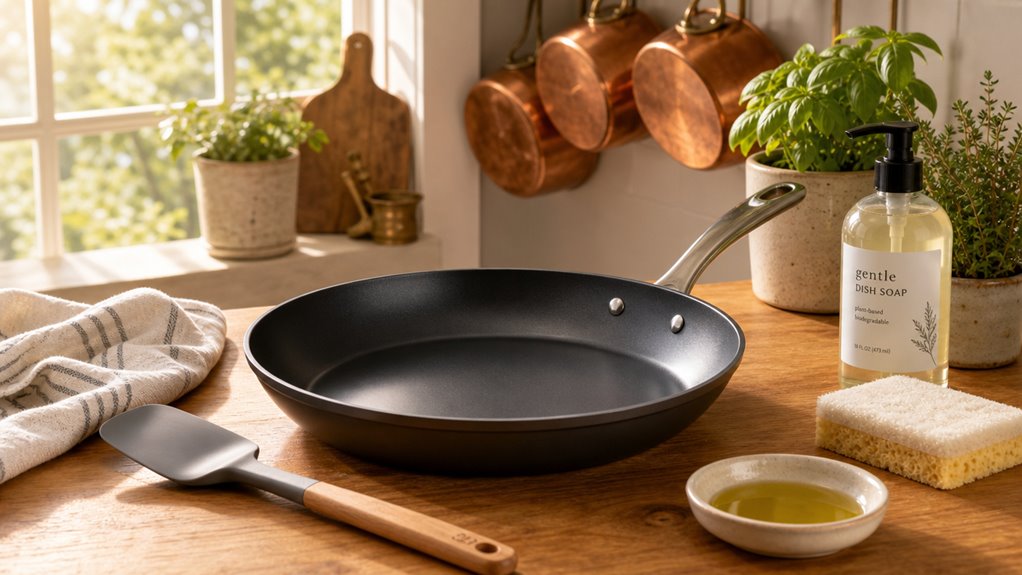
Non-stick pan care requires consistent habits around heat, tools, and cleaning to preserve the coating over time. A PTFE surface typically lasts around two years with casual use, but proper maintenance can extend that lifespan to roughly five years.
- PTFE begins to break down above roughly 500 °F (260 °C). Keeping the pan below about 400 °F (205 °C) in normal cooking is the working margin that keeps it well clear of that point.
- Wood and silicone utensils protect the non-stick layer by eliminating the metal contact that causes scratches and micro-tears.
- Thermal shock occurs when a hot pan meets cold water suddenly, and it weakens the coating’s bond to the metal beneath.
Hand-washing a cooled pan with a soft sponge removes food residue without abrading the surface. Dishwasher cycles and abrasive scrubbers strip the coating faster than ordinary cooking does.
Proper storage also affects coating longevity. A felt or rubber pan protector placed between stacked pans prevents metal-on-metal contact that leaves scratches across the surface.
Allowing the pan to dry completely before storage reduces the moisture exposure that can degrade the coating edge over time. Each of these habits addresses a specific failure point, whether heat, abrasion, impact, or moisture, that shortens a non-stick pan’s working life.
Two temperatures matter here, and they are not the same number. PTFE begins to break down chemically above roughly 500 °F, which is about 260 °C. That is the damage threshold, and in practice a pan only reaches it when it is heated empty, left unattended, put under a broiler, or sat on a burner at maximum. The second figure, 400 °F or 205 °C, is not a damage threshold at all: it is the working ceiling that care guides recommend, chosen to leave a comfortable margin below the point where the coating starts to go. Everywhere this article says “low to medium heat”, that is the 400 °F figure. Everywhere it talks about the coating breaking down, that is the 500 °F one. A pan run at 450 °F is being pushed, not destroyed; a pan left empty on a high burner is a different situation entirely.
Cheap or expensive is the wrong question. Cost per use is the honest one. Check out our new Calculator.
Cost-Per-Use Calculator →Key Points
- Use low‑to‑medium heat, keeping the pan under about 400 °F (205 °C). That is the recommended working ceiling, set below the roughly 500 °F (260 °C) point where PTFE actually starts to break down.
- Cook with wood, silicone, or plastic utensils; avoid metal tools that scratch the coating.
- Hand‑wash promptly with a soft sponge, mild soap, and warm water; never use steel wool or harsh detergents.
- Allow the pan to cool completely before washing and store it with felt or rubber protectors to avoid metal‑on‑metal abrasion.
- Replace the pan only when deep scratches, peeling, or exposed metal appear; proper care can extend lifespan to five years.
Why Most Non-Stick Pans Die Young
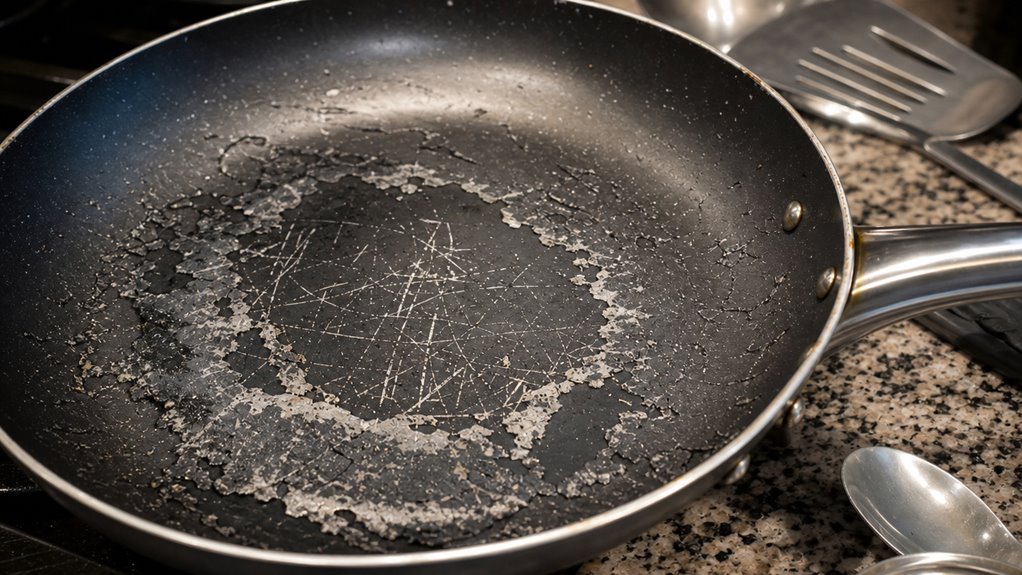
Non-stick pans fail early because their PTFE coating is fragile by nature and degrades quickly under three common conditions: excessive heat, abrasive contact, and harsh detergents. When a pan is heated beyond around 260 °C, which is the same roughly 500 °F figure given above, the coating cracks and begins to peel in ways that cannot be reversed.
Metal utensils score the surface on contact, while dishwasher detergents break down the coating through chemical erosion rather than mechanical force. Each type of damage compounds the others, so a pan that has been overheated is also more vulnerable to scratching and chemical wear.
Understanding how these failure points interact shapes every practical decision about cookware care and lifespan.
Overheating, Metal Utensils, and the Dishwasher
Overheating, metal utensils, and the dishwasher are the three culprits that chew through a non‑stick pan’s life in record time.
When you heat an empty pan, it can pass 500 °F in minutes, which is the point where PTFE chains start breaking down and releasing fumes. Push it far higher, as an empty pan on a maximum burner will, and those fumes are what cause polymer fume fever in people. They are lethal to pet birds at levels a person would not notice, so keep birds well away from the kitchen and ventilate if a pan is ever accidentally overheated. That molecular breakdown makes the surface rough, so food sticks and you scrape harder.
Metal utensils cut and gouge the coating, leaving scratches that expose the metal underneath. Those scratches become hot spots that accelerate further wear and can release micro‑plastics into food.
The dishwasher adds high‑alkaline detergent and scorching water, which chemically dull the surface and stress the bond between coating and substrate.
Together, these habits shave years off a pan’s lifespan; stick to low‑medium heat, use wood or silicone tools, and hand‑wash to keep the coating intact. PFAS gases can cause polymer fume fever in humans and are fatal to pet birds.
The Coating Damage That Cannot Be Undone
Scratches that cut through the non‑stick layer to the metal base permanently ruin the pan’s release properties. When you get deep scratches or gouges, the exposed base metal oxidizes, creating hot spots where the coating lifts and flakes.
Those tiny cracks act as stress concentrators, so every heating cycle spreads the damage. Peeling, flaking and chipped coating aren’t just cosmetic; they mean the adhesion has failed and fragments can end up in food.
Once you see any of those signs, the pan is beyond repair. No home re‑seasoning can restore the original factory bond. The safest move is to retire that pan and switch to a durable alternative like cast iron or stainless, which never suffer this irreversible coating loss. Deep scratches indicate irreversible damage.
Type in what a kitchen tool cost you, how often you use it, and how long you expect it to last. The math answers whether the price was worth it.
The tool you are weighing
Enter a price to run the numbers.
Lifespans above 50 years are capped at 50 for this calculation.
The cheaper version
Enter a price to run the numbers.
Lifespans above 50 years are capped at 50 for this calculation.
Your result appears here after you press Calculate.
The Care Habits That Double a Coating’s Life
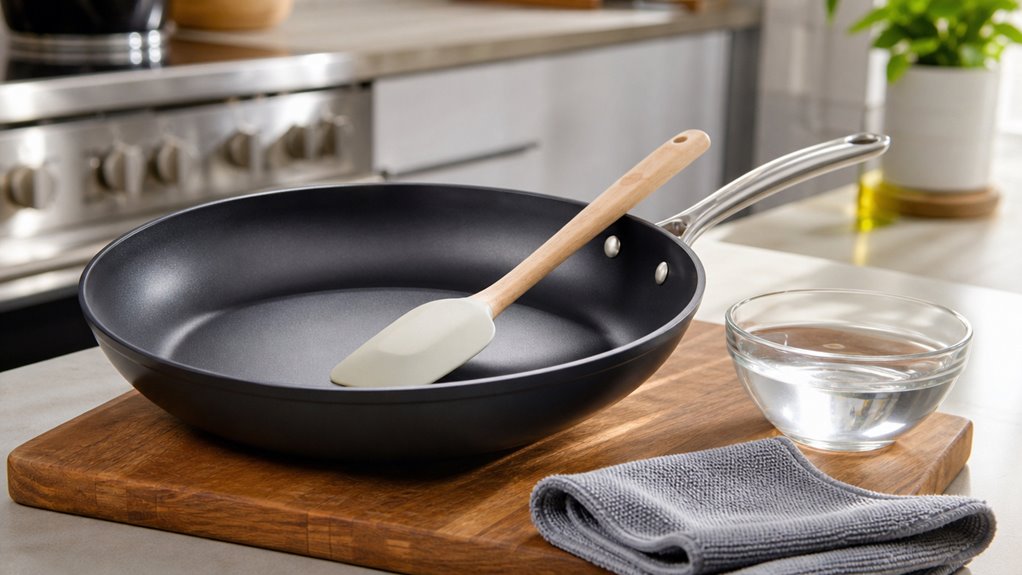
Two consistent care habits, controlling heat and choosing the right utensils, can realistically double the useful life of a non-stick coating. High temperatures accelerate the breakdown of the coating’s surface layer, causing it to degrade and peel far sooner than low-to-medium heat ever would. Metal spatulas compound the damage by physically abrading the coating with each use, while wood and silicone tools leave the surface intact. Together, thermal stress and mechanical wear are the two forces most responsible for shortening a pan’s functional lifespan.
Wash the pan before its first use to remove manufacturing residues and ensure the initial seasoning adheres properly.
Low to Medium Heat and Soft Utensils Only
When you keep the burner on low‑to‑medium, the PTFE or ceramic coating stays under about 400 °F (205 °C), comfortably below the roughly 500 °F (260 °C) point where it begins to break down, so the surface stays smooth and food releases easily.
Low heat cooking spreads warmth evenly, avoids hot spots, and lets you preheat gradually with a thin oil layer, which reduces thermal stress and micro‑cracks.
Pair that with wooden utensils; they won’t scratch or chip the coating the way metal tools will.
A silicone spatula works too, but wood is cheap and durable.
After cooking, let the pan cool before washing to prevent thermal shock.
Hand‑wash with a soft sponge, dry fully, and you’ll double the coating’s life.
Induction hobs should never use the booster function.
Why Low Heat and Wood Save the Coating That High Heat and Metal Destroy
If you keep the burner at low‑to‑medium, the PTFE or ceramic layer stays under about 400 °F (205 °C), which keeps it clear of the roughly 500 °F (260 °C) point where it starts to break down, so the surface stays smooth and food slides off easily.
Low heat means the coating never reaches the temperature that softens the polymer chain, keeping the bond to the metal base intact.
When you add wood or silicone tools, you avoid the microscopic scratches that metal utensils create. Those scratches act like tiny entry points for heat and oil, accelerating breakdown.
High heat alone stresses the surface, but combined with metal utensils it gouges the layer, exposing fresh material to rapid degradation.
Stick to gentle heat and soft tools, and you’ll double the coating’s life.
When a Non Stick Alternative Beats Babying a Coating
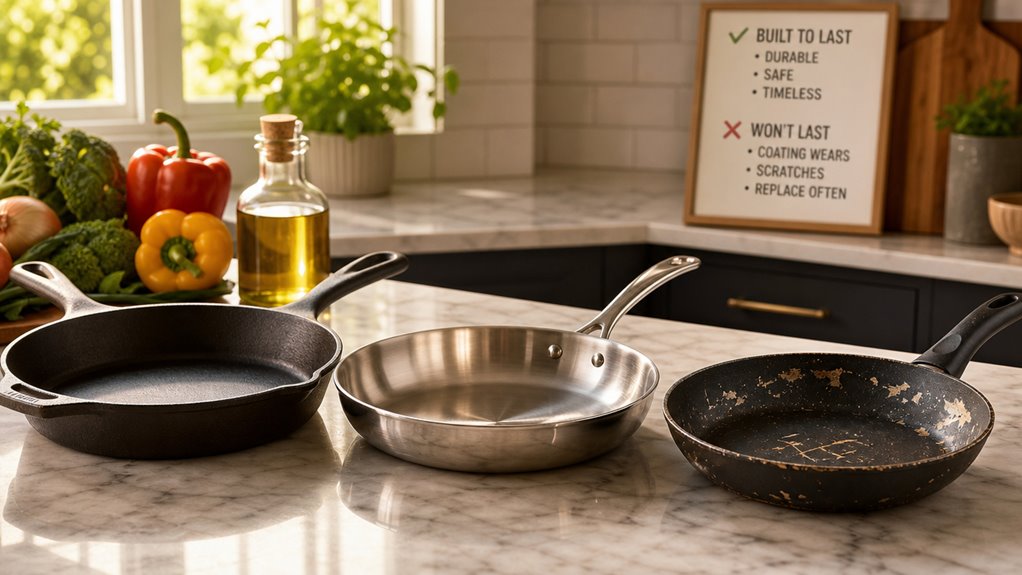
A non-stick alternative becomes the practical choice when regular cooking habits consistently push a coated pan past its design limits, specifically heating beyond medium, using metal utensils, or stacking pans without protective layers in between. At that threshold, careful handling no longer extends a coating’s lifespan in any meaningful way.
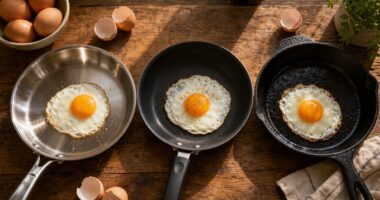
Cast iron and stainless steel eliminate the coated surface entirely, which removes the fragile layer that typically caps usable life at around five years under normal conditions. Whether either one releases an egg cleanly depends on technique rather than material, a point worked through in the comparison of pan materials for eggs. Both materials tolerate high heat, abrasive tools, and dishwasher cycles without degrading, making them suited to kitchens where babying cookware isn’t a realistic habit. The considerations that determine which alternative fits a given cooking style go deeper than durability alone.
Recognizing the Point Where Care No Longer Pays
Even if you’ve been hand‑washing, using only wood or silicone tools, and keeping the heat low, a non‑stick pan will eventually start to stick despite all that care.
When you notice visible damage, such as scratches, chips, or flaking, the nonstick lifespan is already past its prime.
You’ll also see uneven performance: the center sticks while the edges stay slick, and you need more fat to keep food from clinging.
At that point, extra babying costs more time than it saves.
- Scratches or flaking coating
- Dark, burnt‑looking patches
- Exposed metal or rust
- Warped base causing hot spots
If any of these appear, consider switching to a cast‑iron or stainless alternative.
Why a Non Stick Alternative Outlasts Even the Best-Cared-For Coating
Because a seasoned surface can be rebuilt, a cast‑iron or carbon‑steel pan keeps working long after a PTFE coating finally flakes. The seasoning layer you develop is a polymerized oil film you can refresh whenever it wears, so the pan never becomes consumable cookware.
In contrast, a factory coating is a finite slab that scratches, cracks, and peels; once the damage starts, you can’t restore its original non‑stick performance. Stainless steel follows the same principle: its durability comes from the metal body, not a thin layer that degrades with heat and dishwasher cycles.
Those alternatives shift maintenance from constant babying to occasional reseasoning or polishing, and they outlast even the best‑cared‑for coating by decades rather than a few years.
The Storage and Cleaning Mistakes That Shorten Life
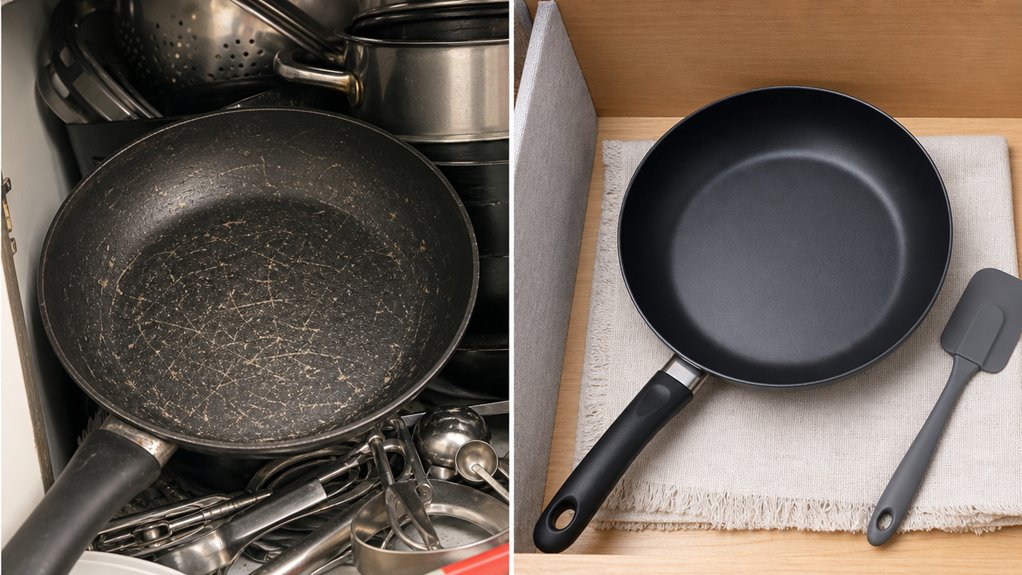
Storage and cleaning habits are among the most common reasons non-stick coatings and pan surfaces deteriorate faster than they should, with stacking unprotected cookware and using abrasive scrubbing tools like steel wool causing physical damage to the coating layer over time. Metal-on-metal contact from stacked pans scrapes the non-stick surface each time a pan is moved or retrieved, creating gradual wear that compounds with repeated use.
Thermal shock, placing a hot pan directly into cold water, can warp the base and introduce small cracks that weaken the surface structure. Allowing pans to cool before washing and using a soft sponge rather than abrasive pads are straightforward adjustments that slow this kind of damage considerably.
The sections that follow cover how each of these factors plays out and what changes make a measurable difference.
Stacking, Scrubbing, and Thermal Shock
Stacking pans without protection scratches the rim and chips the coating, and the damage adds up fast.
You’ll notice stacking damage the first time you pull a pan out of a crowded cabinet, and thermal shock from sudden temperature changes can crack the bond between metal and non‑stick layer.
To keep your cookware alive, follow these habits:
- Place a felt or rubber protector between each pan; it cushions weight and prevents micro‑abrasions.
- Store pans vertically on a rack or hang them by the handle to avoid surface‑on‑surface contact.
- Hand‑wash with a soft sponge, warm water, and mild soap; skip steel wool and harsh detergents.
- Let the pan cool completely before washing or putting it in the dishwasher to avoid thermal shock.
These steps slow wear and can stretch a coating toward five years.
Where Small Habits Quietly Wear the Surface Away
Beyond the felt protectors described above, the next biggest culprits are how you store and clean the pan.
When you stack pans without a separator, the edges scrape each other, creating micro‑scratches that accelerate coating wear. Even a thin paper towel between them can help, but the best move is a dedicated pan protector or a loose arrangement on a shelf.
Hand washing beats the dishwasher every time; the high heat and harsh detergent in a cycle strip the non‑stick surface, and abrasive sponges or steel wool grind it down.
Use a soft sponge, mild soap, and soak stubborn bits instead of scrubbing hard. Dry the pan fully before putting it away to avoid moisture‑induced warping that also hurts the coating.
How to Decide Between Careful Use and a Non Stick Alternative
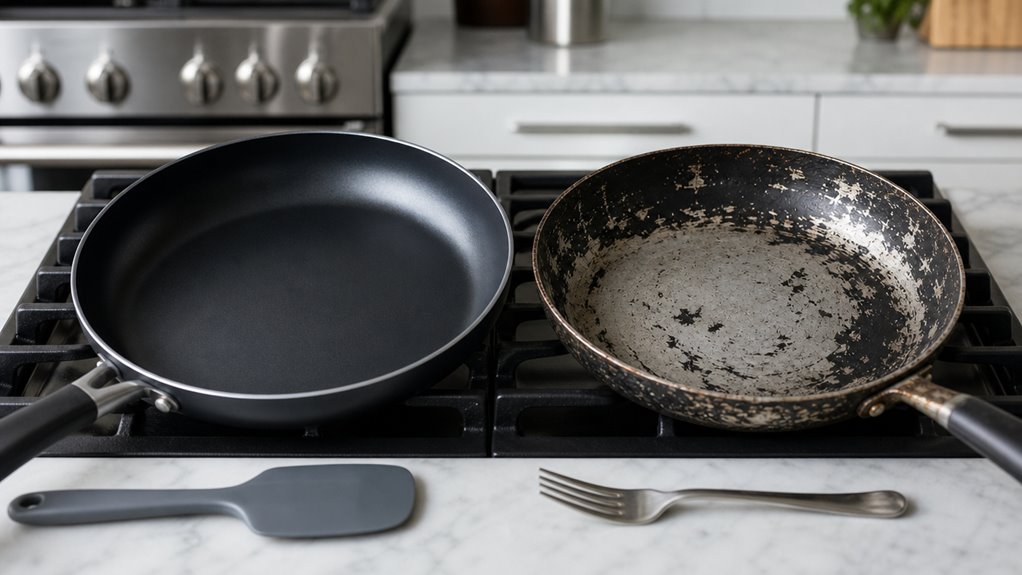
Choosing between careful non-stick use and a durable alternative comes down to matching your cooking habits, budget range, and maintenance willingness to the right surface.
Non-stick coatings typically last around two years under standard conditions, but limiting heat to low-to-medium levels, using soft utensils, and hand-washing can extend that lifespan noticeably.
Cast iron and stainless steel require more upfront effort, whether re-seasoning or occasional polishing, but they resist peeling and generally outlast coated pans across years of regular use.
The trade-off isn’t simply about material; it’s about how consistently a cook applies careful handling before the surface degrades.
The sections below address the factors that shape this decision in practical terms.
Matching the Pan to How Long You Want It to Last
Choose a pan based on how long you expect it to stay usable, not on the hype of a “forever‑sticky” coating. If you’re willing to baby a pan, you’ll stretch the coating to five years by keeping heat low, using wood or silicone tools, and hand‑washing. If your routine leans toward high‑heat searing, daily multiple‑day cooking, or dishwasher stacking, the coating will quit sooner and you should consider a switch.
- Low‑heat, occasional use – non‑stick works, focus on how to make nonstick pans last.
- Frequent medium‑heat – still non‑stick, but expect a three‑year ceiling.
- High‑heat, daily cooking – when to switch materials; choose cast iron or stainless.
- No time for gentle care – durable alternative beats a coating that peels after two years.
Matching a Long-Term Choice to the Under-$30 Ceiling
You’ve already seen how matching a pan to your expected lifespan can help you decide whether to baby a non‑stick coating or switch to something sturdier. At a $30 ceiling, a typical PTFE pan costs $20 and needs replacement every two years, which is roughly $10 a year. If you practice nonstick pan care, low‑medium heat, wood or silicone tools, and hand‑wash and dry, you can stretch that coating to five years, cutting the yearly cost to $4. That’s a solid saving, but the coating still degrades after a few seasons.
An alternative like a thin stainless skillet costs the same upfront and, with proper heat control, lasts decades without a coating to wear out. At this price the pieces that hold up tend to be single pieces that clear the price ceiling rather than boxed sets. Cast iron or carbon steel needs seasoning and more weight, yet it can outlive a non‑stick forever. How long nonstick pans last under careful use depends on your habits, and you’ll find the answer hinges on whether you value convenience now or durability later.
Frequently Asked Questions
Can I Use a Metal Spatula on a Non‑Stick Pan Without Damage?
You shouldn’t use metal spatulas on a non‑stick pan; they’ll scratch the coating, cause food to stick, and shorten its life. Stick to wood, silicone, or nylon tools instead.
Does Pre‑Heating a Non‑Stick Pan Affect Its Coating Lifespan?
Yes, pre‑heating shortens the coating’s life, especially if you crank the heat. Warm it gently with oil on low‑medium, and you’ll stretch the pan toward five years instead of two.
Are All Dishwasher Detergents Equally Harmful to Non‑Stick Surfaces?
No, you’ll find alkaline, enzyme‑rich, or powder detergents damage coatings faster than milder liquid formulas, but all dishwasher detergents still accelerate wear compared with gentle hand‑washing.
Will Cooking Acidic Foods Accelerate Coating Breakdown?
Yes, acidic foods will speed up coating breakdown. Tomato sauce and other acids attack the bond over time; heat it, let it sit, and the surface loses its release faster.
Is It Safe to Re‑Season a Non‑Stick Pan With Oil?
Yes, you can safely re‑season a non‑stick pan with a thin oil film. Clean, dry, and lightly coat the surface, then wipe off excess; it won’t repair major damage but helps preserve the coating.
Conclusion
You’ve probably seen the common estimate that most non‑stick pans need replacing within about two years. By keeping heat moderate, swapping metal tools for wood or silicone, and hand‑washing, careful use can push many pans to a five‑year lifespan instead. When the coating finally gives, a cast‑iron or stainless‑steel pan will outlast any non‑stick you’ve tried. Weigh the trade‑off: a little extra effort now versus a longer‑lasting, hassle‑free alternative later.

Michael Haralson worked in professional kitchens from 1979 to 1992: San Diego restaurants, six years with a catering company beside an Austrian chef, and two summers as a cook on the Finland to Sweden cruise route. He then built a fifteen-year career at Nokia. It began in product marketing and product management, where technical specifications and supplier evaluation were part of the work, and grew from a few countries to a region to global roles, then into sales and corporate strategy. That took him to Beijing for three years, where he spent many weekends in a different province trying the local food and took cooking classes. He has eaten in more than 40 countries and has been shown the kitchens of restaurants in Southern Europe. At home in Finland he cooks Cantonese, Sichuan and Mediterranean food, and still uses the cast iron skillet he bought in 1992. He is the author of Buy It Once, Book One of The Researched Kitchen, and writes here about the balance between kitchen tools that cost too much and those that fail too soon.