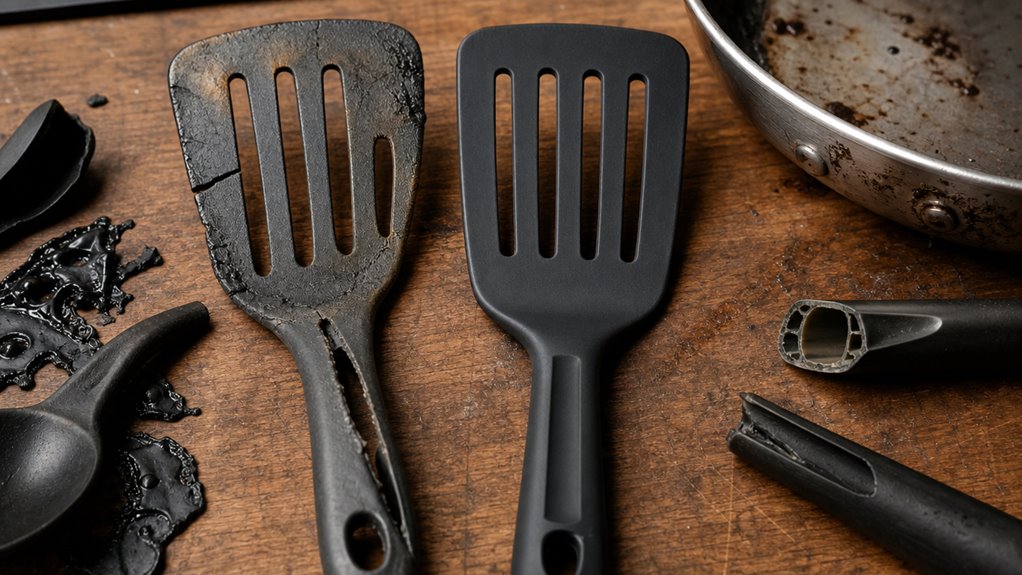

Cheap kitchen tool failure depends on the interaction between low-grade alloy composition and the mechanical stress that normal cooking tasks apply. Thin-gauge pot-metal alloys lack the grain structure and fatigue strength needed to survive repeated use.
- Pot-metal alloys contain coarse grains, shrinkage voids, and weak intermetallic phases that reduce overall structural integrity.
- Fatigue strength determines how many stress cycles a material endures before cracks form at joints and pivot points.
- Marketing language obscures material quality by substituting terms like “premium” or “heavy-duty” for alloy grades and gauge specifications.
Budget kitchen tools typically use thin-gauge castings that introduce shrinkage voids during manufacturing. Those voids act as stress concentrators, meaning cracks initiate faster than they would in a void-free material.
Glued pivots and spot-welded joints represent the failure points most vulnerable to cyclic loading. Weak intermetallic phases at these joints accelerate crack propagation under stresses that higher-grade alloys would absorb without damage.
Manufacturers rarely publish alloy composition or gauge thickness in product listings. Without those specifications, a consumer cannot distinguish a durable tool from a brittle one based on a product description alone.
Coarse-grain cast alloys carry shrinkage voids and brittle phases that act as stress concentrators, while fine-grain wrought metal of similar composition does not. That is the mechanism behind budget castings failing before their wrought equivalents. How large the gap is depends on the specific alloy, the casting quality and the load, so treat it as a direction rather than a figure.
Cheap or expensive is the wrong question. Cost per use is the honest one. Check out our new Calculator.
Cost-Per-Use Calculator →Key Points
- Pot‑metal’s brittle zinc alloy and thin gauge create low fatigue strength, causing cracks at stress risers like hinges and glued joints.
- Thin‑gauge construction reduces stiffness; lightweight feels signal dense steel, leading to flexing and premature failure under normal kitchen loads.
- Spot‑welds, tiny rivets, and glued pivots act as stress concentrators, allowing holes to ovalize and joints to separate after repeated use.
- Coarse grain structures, shrinkage voids, and brittle intermetallic phases in cast pot‑metal lower fracture toughness compared with uniform, forged steel.
- Marketing terms (“heavy‑duty”, “premium”) and uniformly high star ratings often hide omitted material specs and cheap alloys, misleading buyers about durability.
| 5-in-1 Stainless Steel Cooking Spoon Tool |  | Stainless-Steel Versatile | Function Count: 5-in-1 | Primary Material: 304 stainless steel | Ergonomic Handle: Yes (non-slip ergonomic handle) | VIEW LATEST PRICE | Read Our Analysis |
| Stainless Steel 2-in-1 Vegetable Julienne Peeler | 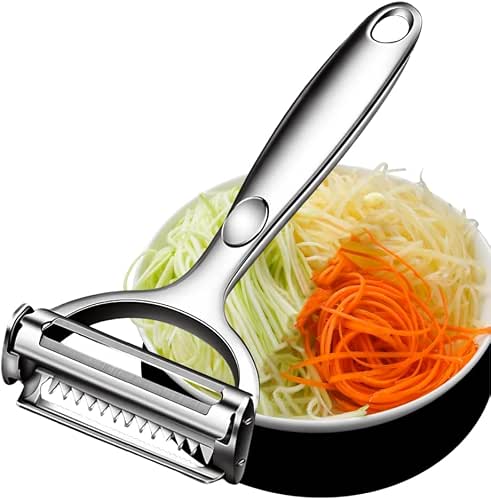 | Ambidextrous Julienne | Function Count: 2-in-1 | Primary Material: Stainless steel | Ergonomic Handle: Yes (non-slip comfortable handle) | VIEW LATEST PRICE | Read Our Analysis |
| 4-in-1 Can and Bottle Opener Set (2 Pack) |  | Dual-Pack Convenience | Function Count: 4-in-1 (2-pack) | Primary Material: Stainless steel and plastic handle | Ergonomic Handle: Yes (special ergonomic handle) | VIEW LATEST PRICE | Read Our Analysis |
Links to Amazon are affiliate links. Buying through one costs you nothing extra and helps fund the research.
Why an Amazon Knockoff Kitchen Tool Breaks So Fast
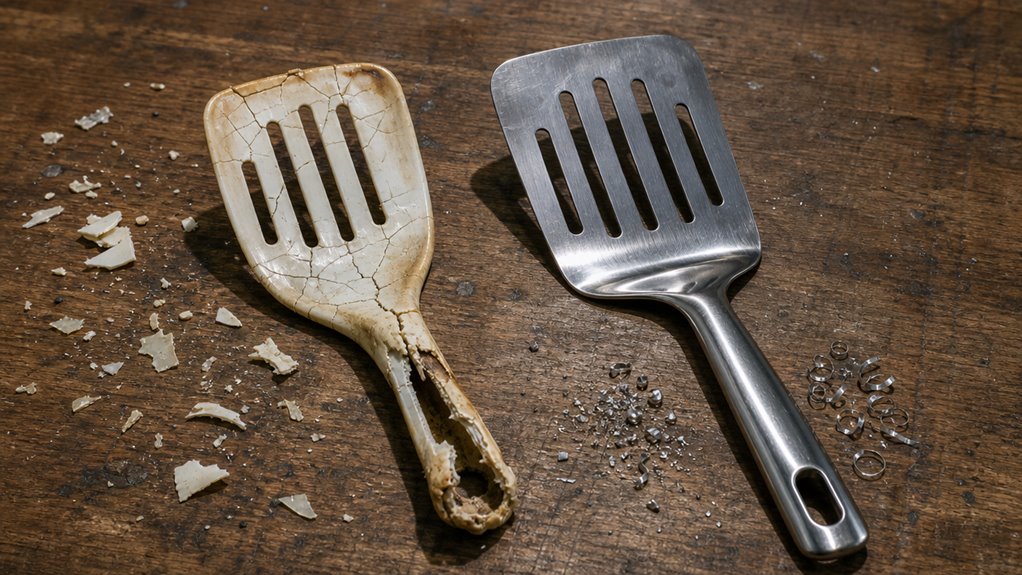
Amazon knockoff kitchen tools fail quickly because they’re built from pot-metal, a brittle zinc alloy that can’t absorb the stress of routine kitchen tasks without cracking or bending. The lightweight feel of the handle is an early sign of this compromised construction, since pot-metal lacks the structural density of solid steel. Thin shaft gauges and glued pivot joints concentrate force at predictable weak points, so failure tends to occur at those exact locations during the first heavy use. Pinned steel construction distributes that same force more evenly, which is why budget tools made without it rarely hold up across repeated use. The specific design choices behind these failures reveal more than they first appear. Review patterns are worth reading rather than trusting: a listing whose feedback is almost entirely five-star, with little detail about actual use and few critical reviews, tells you less about the tool than a smaller set of reviews that describe how it held up. Treat it as a prompt to look harder at the material specs and the joint photos, not as proof of anything about the seller.
Pot Metal, Thin Gauges, and Glued Joints
Because pot‑metal alloys are cheap to cast, they’re made from zinc‑based mixes that crack under normal kitchen stress.
You’ll feel the brittleness as the handle flexes and the thin walls give way, especially when you twist a spatula or press a whisk.
The thin gauge saves weight but sacrifices stiffness, so repeated pressure concentrates fatigue at the seam.
When the manufacturer uses a glued joint instead of a rivet or weld, the adhesive softens with heat and moisture, letting the handle separate after a few washes.
You can test this by tugging lightly; a solid pin will resist, while a glued joint will give slightly.
Those material shortcuts explain why the tool breaks within months. pitting can occur when acidic or salty foods damage the protective oxide layer, leading to holes that compromise durability.
The Stress Points Where Cheap Tools Fail First
Pot‑metal and glued joints already set the stage for early failure, but the real weak spots show up where the tool bends, pivots, or flexes.
You’ll notice the first crack at the hinge pins. Small‑diameter pins in a garlic press or tongs carry shear and bending loads, and cheap plastic bosses or thin metal tabs let the holes ovalize, wobble, and finally break. Misaligned pivots add fatigue, while sharp internal corners in stamped zinc arms act as crack starters.
Thin handles are another hotspot. The neck where the handle meets the head concentrates stress; low‑modulus plastic flexes, shifting load to the narrow ferrule, and repeated prying or twisting splits the tang.
Look for reinforced pins and solid, thick handles to avoid these early failures. Regular preventative maintenance can catch wear before it leads to breakage.
Type in what a kitchen tool cost you, how often you use it, and how long you expect it to last. The math answers whether the price was worth it.
The tool you are weighing
Enter a price to run the numbers.
Lifespans above 50 years are capped at 50 for this calculation.
The cheaper version
Enter a price to run the numbers.
Lifespans above 50 years are capped at 50 for this calculation.
Your result appears here after you press Calculate.
The Material Science Behind Durable Tools
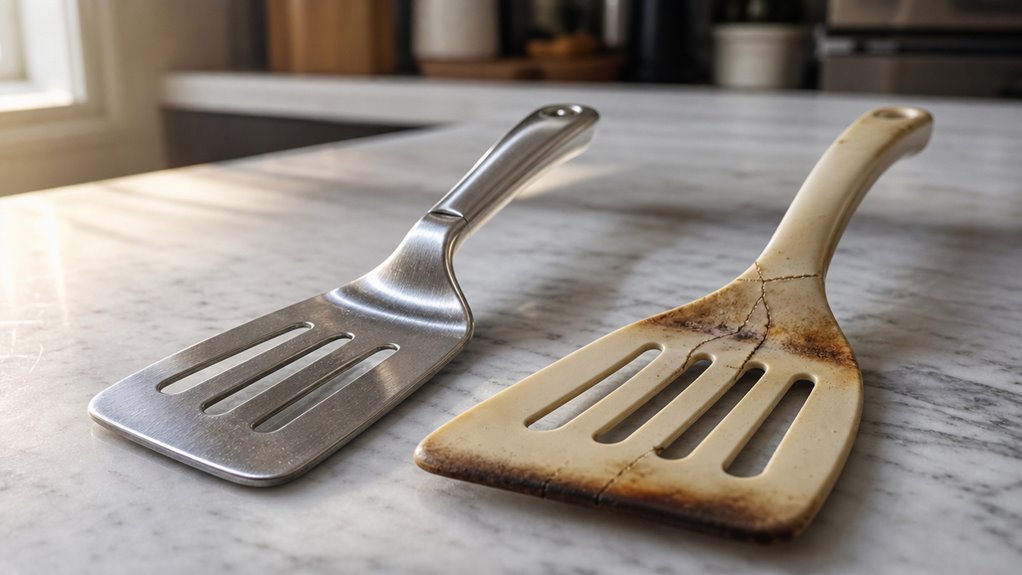
Durable tools rely on material selection and construction method: forged steel resists deformation under repeated stress, solid wood handles resist warping along the grain, and single-piece construction eliminates the glued joints that tend to split with heavy use. These choices matter because the forces applied during regular work expose every weak point in a tool’s design, from the blade edge to the handle connection.
Budget-tier tools often use pot metal for cast components, a material that flexes or fractures where forged steel would hold its shape. Weight and joint design serve as reliable indicators of how a tool was manufactured and how long it’s likely to perform. The material relationships that determine longevity run deeper than they first appear.
Forged Steel, Solid Wood, and Single-Piece Construction
When you pick a kitchen tool, the material tells you more than any marketing claim. Forged steel gives you a dense, grain‑aligned blade that resists cracks and keeps a sharp edge longer, while solid wood handles stay stiff and won’t split under torque. A single‑piece construction eliminates glued seams, so the tool behaves as one solid unit, reducing stress points.
Chromium provides corrosion resistance, extending the life of the blade in wet environments.
| Feature | Benefit | Typical Spec |
|---|---|---|
| Forged steel | High impact and wear resistance | 304/316 stainless, heat‑treated |
| Solid wood | Stable, high modulus of elasticity | Maple or walnut, kiln‑dried |
| Single‑piece | No weak joints, uniform load path | One‑piece forging + integral handle |
You’ll notice the weight feels honest. Denser means more metal, not hollow filler. The only downside is the higher cost compared to cheap, glued‑on alternatives.
Why Solid Metal Survives the Stress That Pot Metal Fails Under
Because solid steel keeps a uniform grain structure, it spreads the load you apply across the whole blade instead of concentrating it at a few weak spots. The fine, continuous grains block dislocation motion, giving you high yield strength and fatigue resistance. When you twist a whisk or pry a lid, the material yields plastically, showing ductility rather than snapping.
Pot metal kitchen tools, by contrast, are cast with coarse grains, shrinkage voids, and brittle intermetallic phases. Those hidden pores become stress risers; a thin neck or glued joint will crack the moment the local stress exceeds the low fracture toughness. You’ll notice the difference when a solid steel spatula bends and stays usable, while a pot‑metal fork shatters under the same load.
How Marketing Hides What the Materials Reveal
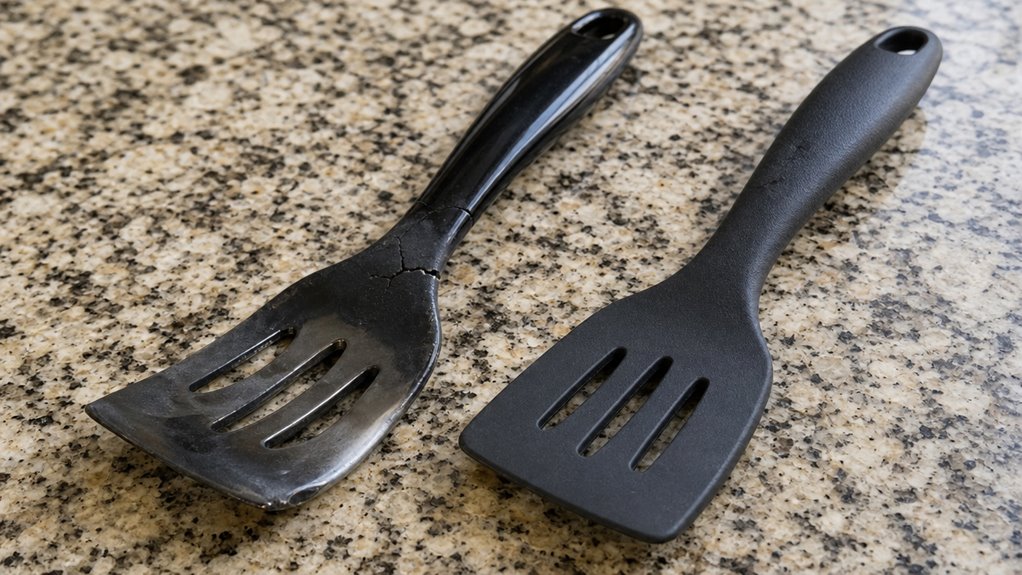
Marketing language on cookware and kitchen tools routinely obscures what the underlying materials actually reveal about long-term durability. A label like “heavy-duty” can appear on thin-gauge pot metal, an alloy category prone to cracking under routine mechanical stress, while the spec sheet, when one exists, discloses the actual gauge and alloy composition that determine whether a tool lasts months or years.
Those material details are the honest indicator of lifespan, because the physical properties of an alloy predict failure in ways that promotional copy never addresses. Gauge thickness and alloy grade shape real-world performance more directly than any claim printed on packaging. The gap between what marketing states and what materials reveal runs deeper than most buyers expect.
Heavy-Duty Claims Over Thin, Brittle Builds
Even though the box screams “heavy‑duty,” the metal inside is often a thin‑gauge sheet that flexes under a modest load.
You’ll feel the flex as you lift a roast, and the blade will bend rather than stay rigid.
The marketing gloss hides a brittle alloy that cracks at stress points, especially where the thin neck meets a wider head.
- Thin‑gauge construction – under‑1 mm sheet steel, low yield strength, warps when you apply pressure.
- Brittle alloy filler – cheap stainless or mild steel with mineral fillers, loses toughness after a few heating cycles.
- Weak joint design – spot welds or tiny rivets create stress risers, so the handle loosens before the metal fails.
You can spot these signs by checking weight, listening for flex, and inspecting the joint quality before you buy.
Why the Material Spec Predicts the Lifespan That Marketing Hides
The thin‑gauge, pot‑metal construction we just dissected isn’t the whole story; the spec sheet tells a quieter, more reliable tale.
You’ll see the material spec lists a zinc‑based alloy, a 0.8 mm gauge, and glued joints. Those numbers predict low fatigue strength and a high chance of fracture at the pivot after a few dozen uses.
In contrast, a forged‑steel spatula shows a 2 mm solid steel gauge, pinned handles, and a heat‑treated finish. Those details signal higher yield strength, better heat capacity, and a longer lifespan.
When marketing hides the alloy and gauge, you miss the true indicator of build quality. Check the spec, compare weight, and you’ll avoid tools that break before you finish a recipe.
How to Spot an Amazon Knockoff Kitchen Tool Before You Buy
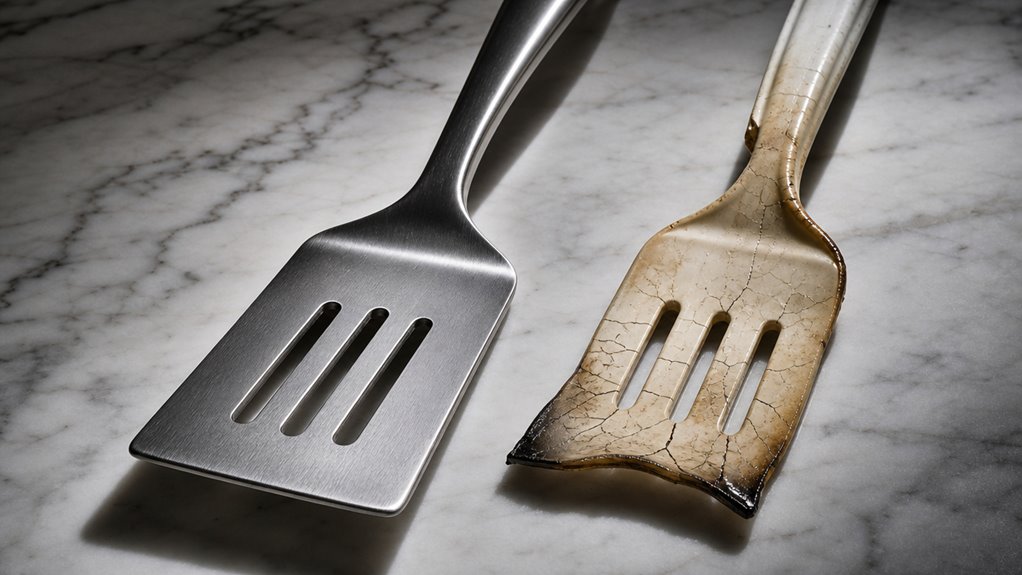
Spotting an Amazon knockoff kitchen tool before purchase comes down to three physical and descriptive signals: weight distribution, joint construction, and material transparency in the product listing.
A genuinely forged tool carries noticeable heft, while a cheap copy often feels light and hollow in a way that signals thin-gauge metal or low-density alloy.
Handle attachment is another reliable indicator. Glued or crimped joins suggest budget assembly, whereas solid construction typically involves riveted or seamless bonding.
When a product description omits gauge numbers or relies on generic imagery rather than detail shots, the listing itself becomes a warning.
The factors shaping these differences run deeper than surface appearance and reward closer inspection.
Reading Weight, Joints, and Material Before the Listing
Check the product’s weight before you click “Add to Cart.” A heavier spoon or spatula usually means thicker steel or denser plastic, while an ultra‑light version often hides a thin‑gauge alloy that will flex or crack under torque.
Weight as a proxy helps you spot cheap alloys fast, but you still need to verify joints and seams. Look for clear photos of the hinge or handle connection; a solid weld or pin shows durability, while a blurry seam hints at glue or weak rivets.
- Compare listed weight to a known good tool of the same size.
- Zoom in on the joint; it should be tight, with no visible gaps.
- Read the material description; vague “premium” claims are red flags.
If any step raises doubt, skip the purchase.
The Red Flags That Separate a Knockoff From the Real Thing
Weight and joint checks get you halfway, but the listing itself can betray a knockoff before you even lift the box. Look for garbled copy, misspellings, or vague material claims; they usually hide a cheap alloy.
Photos that are low‑resolution, show only the tool from one angle, or lack close-ups of the joint are red flags for a knockoff kitchen tool.
Scan the review section: identical phrasing, single‑reviewer accounts, or praise without any usage detail signals fake feedback.
Check the seller profile. Repeated complaints, sparse brand info, or a history of poor images point to unreliability.
Finally, if the price is dramatically lower than comparable forged steel tools, treat it as a warning sign.
How to Buy Tools That Actually Last
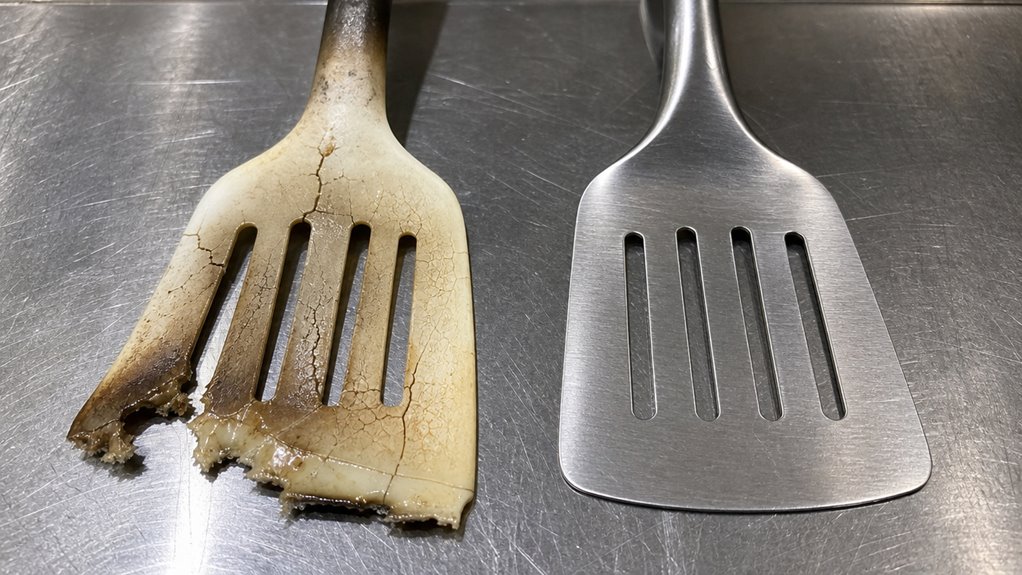
Buying tools that last means choosing construction over marketing claims: forged steel blades, solid-metal handles, and pinned or welded joints signal honest materials, while pot-metal castings and glued assemblies often crack or bend within months of regular use.
Weight is a reliable proxy for material quality, since denser alloys hold up under stress in ways that lighter composites typically cannot.
Clear alloy specifications on packaging or product listings indicate a manufacturer confident in what the tool is made from, whereas vague material language often masks cost-cutting at the component level.
Budget and mid-range tools can meet a reasonable durability threshold when construction details are prioritized over brand presentation or finish appearance.
The sections ahead examine these factors in depth.
Choosing Construction Over Claims
Inspect the joint and gauge before you trust any “heavy‑duty” label. You’ll spot a solid piece when the handle meets the head with a single‑piece construction and the metal feels dense.
Thin gauge or a glued seam screams cheapness.
- Check the gauge thickness – Heavier‑gauge steel resists bending and warping; a light‑weight feel usually means a thin wall that will flex under stress.
- Look for riveted or through‑bolted joints – Spot‑welded seams can loosen, while solid rivets keep the blade and handle together for years.
- Confirm material specs – 304/18‑8 or 316 stainless, forged steel, or cast iron give real durability; avoid vague “pot metal” claims.
Matching Durable, Honest Tools to the Under-$30 Ceiling
After you stop judging a tool by its “heavy‑duty” badge and start looking at the actual construction, the next step is figuring out which honest, durable options sit under $30. Focus on tools with honest material specs: high-carbon stainless steel knives, single‑piece forged spatulas, 18‑gauge metal pans, borosilicate measuring cups, and platinum‑cured silicone bake mats. Check weight, full‑tang blades, and riveted joints. A light handle usually means glued metal, a red flag. Cheap kitchen tools are worth it only if the specs are clear and the build is solid; otherwise you’ll pay twice.
| Tool type | Key durable feature |
|---|---|
| Knife | Full‑tang high‑carbon stainless |
| Spatula | Single‑piece forged steel, thick gauge |
| Measuring cup | Borosilicate tempered glass |
These cues let you spot honest products without relying on marketing hype.
Frequently Asked Questions
Does the Tool’s Weight Reliably Indicate Its Material Quality?
You can’t count on weight alone; it hints at material volume, but cheap alloys or glued joints can feel heavy yet break quickly, so check gauge, joints, and alloy specs for true quality.
How Can I Verify the Gauge of a Metal Kitchen Utensil?
You’ll verify gauge by measuring wall thickness with calipers or a gauge wheel, then matching that measurement to the correct metal-specific gauge chart. Remember, lower numbers mean thicker steel.
What Visual Cues Reveal a Glued Joint Versus a Pinned One?
You’ll see a continuous hairline seam, uniform glue squeeze-out ridge, and no pins or dowels. Pinned joints show spaced round marks, tiny halos, and occasional rivet heads interrupting the line.
Are Certain Handle Shapes More Prone to Breakage in Cheap Tools?
You’ll find thin, flat, or highly contoured handles crack fastest, especially those with deep grooves, sharp corners, or hollow sections, because stress concentrates at those thin spots, making cheap materials fail sooner.
Can I Test a Tool’s Durability Without Damaging It?
You can weigh it, bend it gently, twist the handle, tap the joint, and feel the resistance. Each action shows strength, flexibility, and joint integrity without leaving any marks.
Conclusion
You’ll see why a 2‑oz aluminum whisk snaps after a dozen mixes: its thin gauge and low‑grade alloy can’t handle repeated flex. Stick to solid‑piece forged steel or high‑grade stainless, and check for welded joints instead of rivets. Those choices cost a bit more up front, but they keep your tools from becoming another broken promise in the drawer.
| 2-in-1 Multifunctional Vegetable Peeler with Wooden Handle |  | Julienne-Peel Combo | Function Count: 3-in-1 | Primary Material: Stainless steel and wood | Ergonomic Handle: Yes (wooden ergonomic handle) | VIEW LATEST PRICE | Read Our Analysis |
| Joseph Joseph Uni-tool 5-in-1 Silicone Kitchen Utensil – Grey |  | Space-Saving Multi-Tool | Function Count: 5-in-1 | Primary Material: Nylon and silicone | Ergonomic Handle: Yes (silicone grip) | VIEW LATEST PRICE | Read Our Analysis |
| Jar Opener for Arthritis Hands – 5-in-1 Multi-Function | 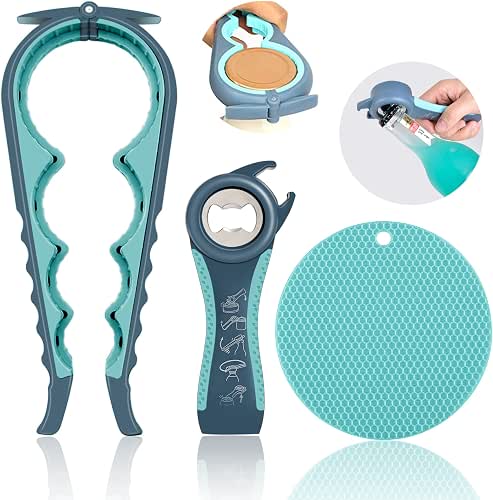 | Arthritis-Friendly Opener | Function Count: 5-in-1 (plus 4-in-1 jar opener) | Primary Material: Plastic (ergonomic handles) and silicone pad | Ergonomic Handle: Yes (long, non-slip handles) | VIEW LATEST PRICE | Read Our Analysis |
Links to Amazon are affiliate links. Buying through one costs you nothing extra and helps fund the research.

Michael Haralson worked in professional kitchens from 1979 to 1992: San Diego restaurants, six years with a catering company beside an Austrian chef, and two summers as a cook on the Finland to Sweden cruise route. He then built a fifteen-year career at Nokia. It began in product marketing and product management, where technical specifications and supplier evaluation were part of the work, and grew from a few countries to a region to global roles, then into sales and corporate strategy. That took him to Beijing for three years, where he spent many weekends in a different province trying the local food and took cooking classes. He has eaten in more than 40 countries and has been shown the kitchens of restaurants in Southern Europe. At home in Finland he cooks Cantonese, Sichuan and Mediterranean food, and still uses the cast iron skillet he bought in 1992. He is the author of Buy It Once, Book One of The Researched Kitchen, and writes here about the balance between kitchen tools that cost too much and those that fail too soon.