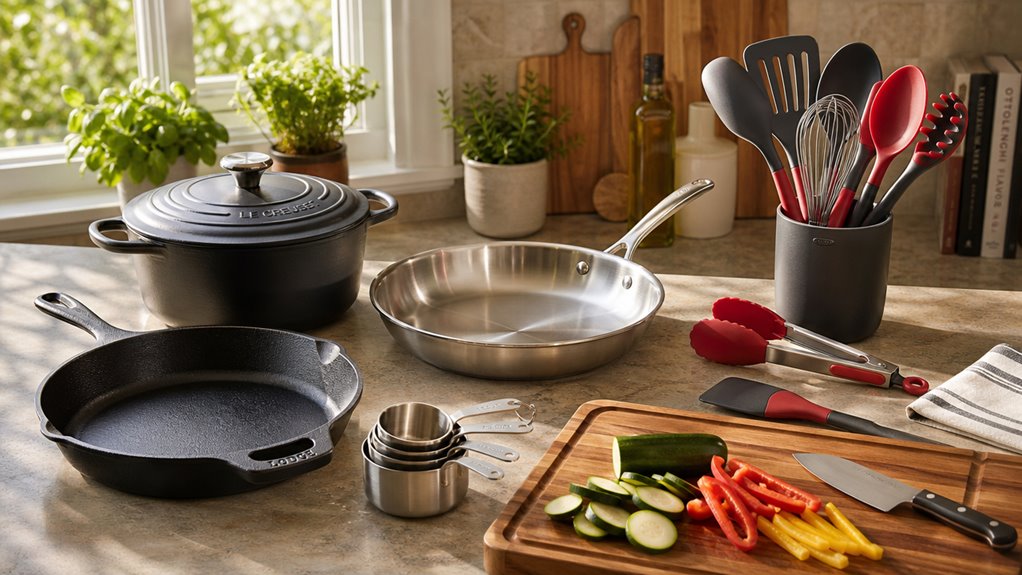

A kitchen brand warranty is a manufacturer’s written commitment to repair or replace a product that fails due to defects in materials or workmanship. Warranty terms vary widely across cookware brands, and understanding those differences helps buyers protect their purchases.
- OXO’s Better Guarantee covers Good Grips tools against defects in material or workmanship under normal household use, but it explicitly excludes cookware, bakeware, knives, Brew appliances and some Tot items.
- OXO cookware sits under a separate limited lifetime cookware warranty, which is a different document with different terms, including a binding arbitration clause.
- Lodge publishes two limited lifetime warranties, one for enameled cast iron and one for seasoned cast iron and carbon steel, both running to the original purchaser or the person who received the piece as a gift.
- Tramontina states it will repair or replace a product found defective under normal, noncommercial household use, with claims handled through its own customer support.
One caution before any of the detail below. Warranty terms are a moving target. Brands change coverage, claim routing and exclusions without announcing it, and any summary written on a given day is only accurate on that day. Every brand-specific statement in this article is linked to the manufacturer’s own page. Read the linked page before you act on anything here, and treat the linked page rather than this one as the authority.
Care-guide compliance sits at the centre of most cookware warranty disputes. Published warranties commonly exclude damage the owner caused rather than the factory: overheating, heating a pan empty, thermal shock, dishwasher use where the care guide forbids it, and abrasive or harsh cleaning. Whether metal utensils specifically void a given warranty varies by brand and by product line, so check the care guide that came with your pan rather than assuming.
Proof of purchase and clear photographs of the fault strengthen any claim. Buyers who keep receipts and note the purchase date reduce the risk of a denial on procedural grounds, whichever brand they are dealing with.
Coated cookware carries the narrowest warranty protection of any category, and it is often carved out into a separate document rather than simply given a shorter term. Care-guide compliance is what decides a surface claim: abrasive cleaners and high-heat dry cooking are near-universally excluded, and the utensil rules depend on the brand.
Cheap or expensive is the wrong question. Cost per use is the honest one. Check out our new Calculator.
Cost-Per-Use Calculator →Cast-iron cookware warranties often extend further than non-stick warranties because cast iron lacks a surface coating that degrades with use, making manufacturing defects easier to identify and typically easier to claim.
Key Points
- Check which document applies before you claim. OXO’s Better Guarantee and OXO’s cookware warranty are two separate policies, and cookware is excluded from the first one.
- Lodge’s published warranties replace seasoned cast iron that cracks or warps, and enameled cast iron that chips or cracks during cooking, for the original purchaser or gift recipient.
- Tramontina’s published position is repair or replacement at no charge for a product found defective under normal, noncommercial household use.
- None of the three publishes a turnaround time, so treat any specific figure you are quoted as an estimate rather than a commitment.
- Following the care guide is a stated condition at all three. A receipt is not demanded in any of the published wordings, but a claim without one rests on the brand’s discretion, so keep yours.
| OXO Good Grips Dish Scrub Brush with Non-Slip Handle Nylon Bristles | 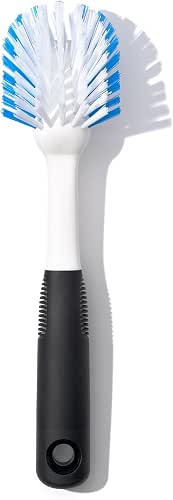 | Scrub Master | Primary Function: Scrubbing and scraping | Material (Key Component): Nylon bristles | Grip Type: Soft non-slip handle | VIEW LATEST PRICE | Read Our Analysis |
| OXO Good Grips Deep Clean Brush Set |  | Deep-Clean Duo | Primary Function: Deep cleaning | Material (Key Component): Nylon bristles | Grip Type: Soft non-slip grips | VIEW LATEST PRICE | Read Our Analysis |
| OXO Good Grips Meat Tenderizer |  | Dual-Action Tenderizer | Primary Function: Meat tenderizing and flattening | Material (Key Component): Steel core, ABS plastic | Grip Type: Soft non-slip grips | VIEW LATEST PRICE | Read Our Analysis |
Links to Amazon are affiliate links. Buying through one costs you nothing extra and helps fund the research.
What OXO’s Better Guarantee Covers, and What It Excludes
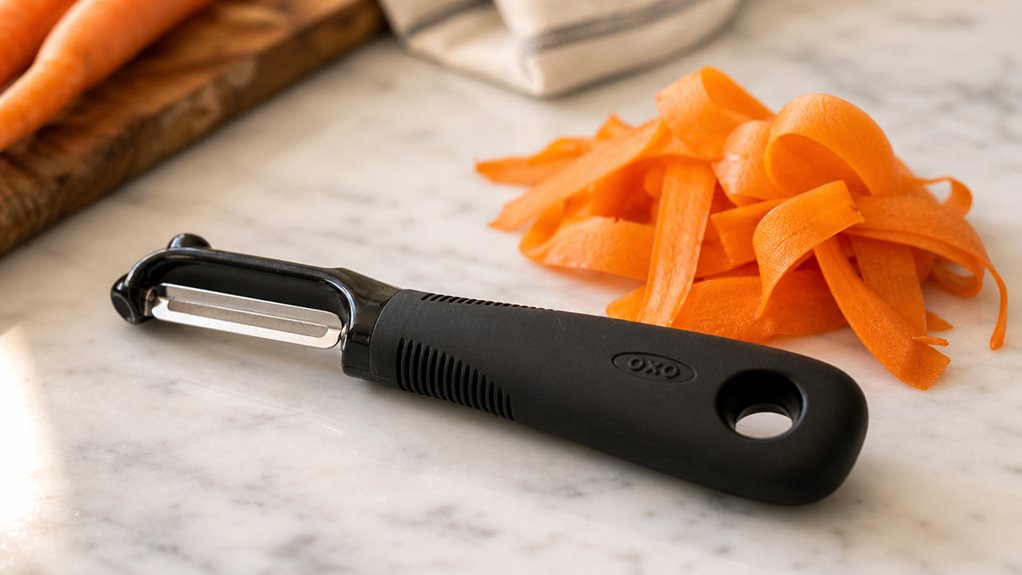
OXO’s Better Guarantee is short: if you are not satisfied with your purchase, OXO says it will replace it or refund you. It applies to defects in material or workmanship under normal household use, provided you have followed the Use & Care guidelines supplied with the product.
The exclusion most buyers miss is the important one. The Better Guarantee, as published, does not apply to OXO cookware, bakeware, knives, OXO Brew appliances or selected OXO Tot items. If the thing that failed is a pan, the Better Guarantee is not the document that covers it. OXO cookware falls under a separate limited lifetime cookware warranty, which covers defects in materials and workmanship and carries a binding arbitration clause. Read whichever of the two applies to the product in your hand.
The guarantee asks customers to retain all items until a resolution is met. Beyond that, it does not publish a claim deadline, a turnaround time, or a requirement to have bought from an authorised retailer.
The Satisfaction Guarantee in Plain Terms
OXO built its reputation on the “Better Guarantee”, and the promise itself is genuinely simple: replace or refund, provided the fault is a defect in material or workmanship under normal use and you followed the care guide.
What it does not do is cover everything OXO sells. Wear, misuse and the excluded categories above all sit outside it, and for cookware you need the separate cookware warranty instead.
OXO does not publish a fixed claim procedure, so treat the following as what makes any claim go smoothly rather than as OXO’s stated requirements:
- Contact OXO through the channel listed on the guarantee page that applies to your product.
- Describe the fault, identify the product, and include photographs and whatever proof of purchase you have.
- Keep the item. The guarantee asks you to retain all items until a resolution is met.
- Ask what the outcome options are, since replacement and refund are both mentioned in the guarantee wording.
The language is plain and the promise is broad, which is what earned the guarantee its reputation. What OXO does not publish is a turnaround time, so do not plan around one.
A note on regions: oxouk.com is a different entity with its own returns and warranty terms. If you bought outside the US, use the terms published for your own market rather than the US ones described here.
What Counts as a Valid Claim and What Does Not
If you follow the care guide and use the product the way a typical home cook would, a defect in materials or workmanship is what both documents are written to cover. A loosening handle on a Good Grips tool is the clearest example. A failing coating on a pan is a cookware-warranty question, not a Better Guarantee one. Keep your proof of purchase, photograph the fault clearly, and send it through the channel listed on the page that applies. Misuse, overheating and cosmetic wear are the usual exclusions. Below is a quick reference, and the caveat above applies to all of it: confirm against the linked page before relying on any row.
| Claim Type | Valid When | Invalid When |
|---|---|---|
| Defect in workmanship | Normal use, proper care | Misuse or abuse |
| Coating failure on cookware | Defect claimed under the cookware warranty | Overheating, harsh cleaners |
| Dissatisfaction linked to defect | Evidence of flaw | Pure preference |
| Manufacturing flaw | Normal household use, care guide followed | Commercial use, alteration, accident |
| Missing proof of purchase | Receipt or order email | No documentation |
Stick to the guidelines and you’ll avoid the usual denial traps.
Type in what a kitchen tool cost you, how often you use it, and how long you expect it to last. The math answers whether the price was worth it.
The tool you are weighing
Enter a price to run the numbers.
Lifespans above 50 years are capped at 50 for this calculation.
The cheaper version
Enter a price to run the numbers.
Lifespans above 50 years are capped at 50 for this calculation.
Your result appears here after you press Calculate.
| OXO Good Grips Expandable Long Tool Organizer |  | Drawer Organizer | Primary Function: Drawer organization | Material (Key Component): Plastic with non-slip feet | Grip Type: Soft, non-slip handle | VIEW LATEST PRICE | Read Our Analysis |
| OXO Good Grips Corn Prep Peeler |  | Corn-Kernel Expert | Primary Function: Corn kernel removal | Material (Key Component): Japanese stainless steel blade | Grip Type: Non-slip ergonomic handle | VIEW LATEST PRICE | Read Our Analysis |
| OXO Good Grips 6.2qt Salad Spinner with One-Touch Pump |  | Salad Savior | Primary Function: Spinning and draining | Material (Key Component): Plastic body, stainless steel basket | Grip Type: Non-skid base, easy-press pump | VIEW LATEST PRICE | Read Our Analysis |
Links to Amazon are affiliate links. Buying through one costs you nothing extra and helps fund the research.
What a Kitchen Warranty Actually Promises
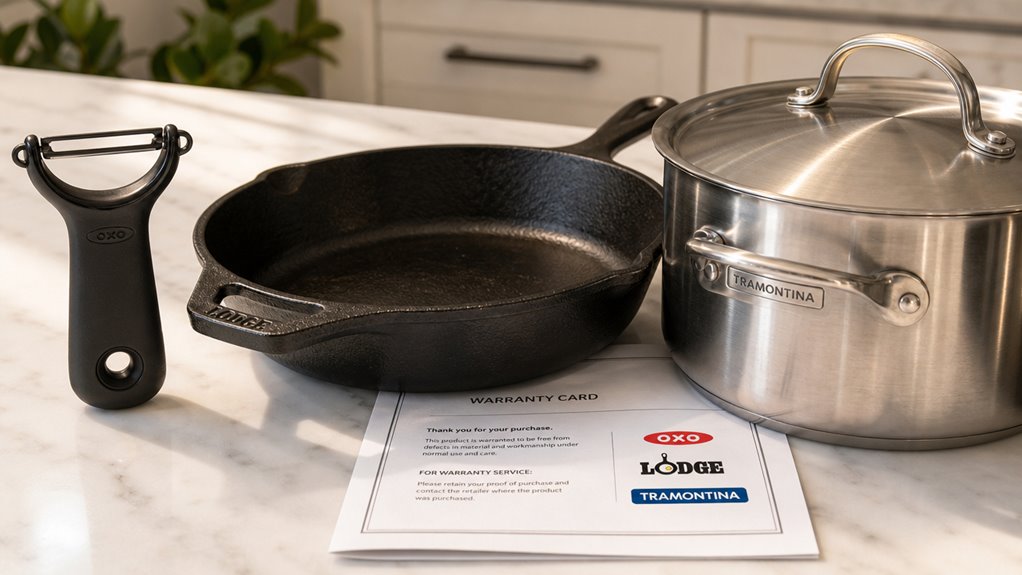
A kitchen warranty typically covers defects in materials or workmanship — meaning flaws present from the point of manufacture — but doesn’t extend to damage caused by ordinary use or mishandling over time.
Everyday wear, such as surface scratches or discoloration from repeated heat exposure, falls outside most warranty protections. Overheating is a common exclusion, and a pan warped by a concentrated hot spot is unlikely to qualify for repair or replacement under standard terms.
Manufacturers generally require buyers to follow specific use-and-care guidelines, and failing to do so can void an otherwise valid claim. Understanding how these conditions interact shapes whether a defect results in a successful refund, replacement, or repair.
One clause is worth reading before you buy, not after. OXO’s cookware warranty contains a binding arbitration provision: it states that by purchasing an OXO cookware product you agree to give up the right to litigate claims in court or before a jury, or to join a class action. That is specific to OXO’s cookware warranty. It is not a general feature of kitchen warranties, and nothing here says Lodge or Tramontina imposes the same term. Whether a given arbitration clause is enforceable where you live is a question for a lawyer, not for this article.
Defects, Wear, and the Exclusions Buried in the Fine Print
When you read a kitchen warranty, the fine print usually splits coverage into two buckets: manufacturing defects and normal wear. You’ll see a manufacturer defect clause that promises a replacement if a rivet cracks or a coating peels, but the misuse clause quickly carves out anything that isn’t “normal household use.”
Here’s what you can expect:
- Defect-only coverage – the promise is about material and workmanship flaws, not about how long the product performs.
- Excludes wear – Discoloration, minor scratches, and patina aren’t covered.
- Misuse exclusions – abrasive or harsh cleaning, overheating and exceeding stated temperature limits are commonly excluded. Whether metal utensils on nonstick void a particular warranty depends on that brand’s care guide, so check yours.
- Impact denial – Dropping or hitting the pan is treated as accidental damage, not a defect.
Read the list carefully; it tells you whether a claim will survive the fine print.
Why Warping From Overheating Voids Most Cookware Warranties
Overheating deserves its own section, because it is the exclusion that catches the most people. When you heat a pan empty or blast a burner, the metal expands, cools, and can warp. Brands label that as a warping exclusion because the damage comes from overheating, not a factory flaw. You’re left with a warped base that looks fine but is out of spec, and the warranty refuses to pay. The policy language is clear: “misuse” includes thermal shock, rapid temperature changes, and using a burner that’s too small for the pan. That is why most manufacturers will not replace a warped pan unless you can show a defect rather than user error. Utensil rules vary: some manufacturers list metal utensils on nonstick as a voiding misuse and some do not, so the only reliable answer is the care guide for your own pan.
| Issue | Typical Warranty Stance |
|---|---|
| Overheating | Excluded as misuse |
| Warping | Listed under warping exclusion |
| Thin‑gauge pans | More prone, not covered |
| Thermal shock | Void of coverage |
| Lifetime claim | Defect‑only, not performance |
How OXO Good Grips Warranty Compares to Lodge and Tramontina
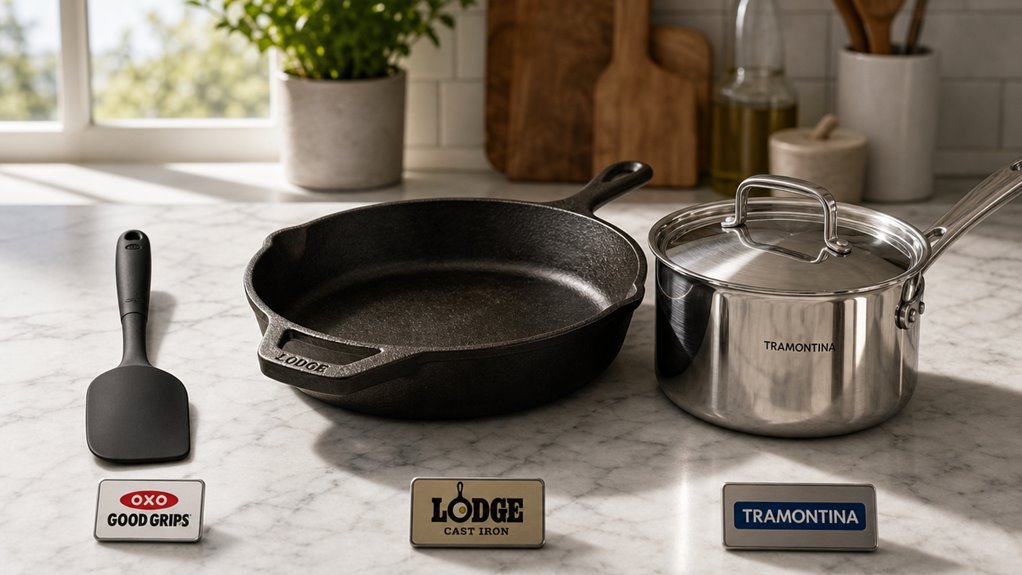
OXO Good Grips, Lodge, and Tramontina each handle warranty claims differently, and those differences shape how much effort a buyer spends getting a defective product replaced or repaired.
OXO publishes a satisfaction-based promise for Good Grips tools and a separate limited lifetime warranty for cookware. Neither states a claim deadline or a turnaround.
Lodge publishes two limited lifetime warranties, split by product family. Seasoned cast iron and carbon steel are replaced if they crack or warp, or if they show casting defects such as excessive grind or chatter marks, holes or metallic projections. Enameled cast iron is replaced if it chips, cracks or is otherwise damaged during cooking. Both run to the original purchaser or a gift recipient, and both exclude commercial use, drops, mishandling, neglect and overheating, with enameled adding heating empty, metal utensils, citrus cleaners, stacking and campfires, and seasoned adding dishwasher use, soaking and microwaving.
Tramontina states that a product found defective under normal, noncommercial household use will be repaired or replaced at no charge with the same item or one of equal or better value, provided the care instructions were followed. Its published exclusions are slight colour variation, normal wear and tear, lost or stolen items, and damage from accident, fire, abuse, misuse, overheating, harsh cleaning, neglect, alteration or commercial use.
Read the three linked pages side by side before deciding which brand’s promise suits how you cook: OXO Better Guarantee, OXO cookware warranty, Lodge Made Right warranty and Tramontina warranty coverage.
What Each Warranty Actually Says About Coverage and Claims
If you are comparing the three, start by separating what each brand publishes from what people assume. None of the three publishes a claim turnaround, so treat any specific figure you have seen quoted as someone’s estimate rather than a term you can hold the brand to. What they do publish is who is covered, what triggers a replacement, and what voids it.
- Which document applies – OXO: the Better Guarantee for Good Grips tools, the cookware warranty for pans. Lodge: the enameled warranty or the seasoned cast iron and carbon steel warranty. Tramontina: a single stated coverage position for defects under normal household use.
- Who is covered – Lodge names the original purchaser or gift recipient explicitly. Check the current wording for the others before assuming a second-hand or gifted piece is covered.
- What triggers a replacement – Lodge: cracks or warping on seasoned iron, chips or cracks during cooking on enameled, plus named casting defects. OXO and Tramontina: defects in materials or workmanship under normal household use.
- Common exclusions – all three exclude misuse, overheating, commercial use and normal wear. Lodge additionally names dishwasher use and soaking for seasoned iron, and heating empty and metal utensils for enameled.
Read against that list, “which warranty is best” turns into a narrower and more useful question: which of these documents covers the way the piece in your kitchen is most likely to fail?
Where Lodge’s Wording Is More Specific Than Tramontina’s
The useful difference between these two is not speed, which neither publishes, but specificity.
Lodge’s Made Right warranty names the failure modes it will replace: cracking or warping in seasoned cast iron and carbon steel, chipping or cracking during cooking in enameled cast iron, and casting defects including excessive grind or chatter marks, holes and metallic projections. It also names who is covered, the original purchaser or a gift recipient, and lists its exclusions plainly. That specificity is worth something when you claim, because you can point at the clause your pan falls under.
Tramontina’s published position is broader and less itemised: any product found defective under normal, noncommercial household use is repaired or replaced at no charge, with the same item or one of equal or better value. It lists exclusions but does not enumerate covered failure modes or state a duration on that page.
Neither approach is inherently better for the owner. A specific warranty tells you in advance whether your problem qualifies. A broad one leaves more to the brand’s judgement, which can cut either way. Both are handled by the brand’s own customer support, and for either one your claim is stronger with the purchase date, clear photographs and a short description of ordinary use.
Where Warranty Wording Promises Less Than It Sounds Like
Cookware warranties often promise more than they deliver, and the gap between stated coverage and actual protection tends to hide in fine print tied to manufacturing defects, nonstick coating limitations, and proof-of-care requirements.
A limited lifetime warranty is, in almost every case, a defect warranty rather than a performance promise. It is not a commitment that the pan will still cook well in twenty years. It is a commitment to replace a piece that left the factory faulty.
OXO’s guarantee asks owners to have followed the Use & Care guidelines, and cookware sits under a separate warranty document from the tools.
Lodge’s warranties name their exclusions plainly, and misuse still voids coverage, so care-guide compliance is a practical condition of whatever protection the warranty offers.
The details behind these limitations reveal how warranty language shapes real outcomes for cookware owners.
Limited Lifetime Wording That Covers Almost Nothing
Because many “limited lifetime” warranties are written in legal‑speak, they end up covering almost nothing.
You’ll find the fine print limits you to “defects in materials and workmanship,” while normal wear, overheating, or dishwasher use are excluded. That means a limited lifetime warranty claim often stalls before a replacement policy even kicks in.
- Manufacturing defects only – everything else is “normal use.”
- Cosmetic wear excluded – stains, discoloration, surface scratches don’t count.
- Category carve-outs – the headline guarantee often does not cover every category the brand sells. Coatings and cookware are the usual carve-outs, sometimes into a separate document entirely.
- Proof hurdles – purchaser status is commonly a condition, and while none of the three warranties reviewed here demands a receipt in its published wording, a claim without one depends on the brand’s discretion.
The result is a warranty that sounds endless but protects the brand, not you.
Why a Satisfaction Guarantee and a Limited Lifetime Warranty Are Different Promises
The two documents you will meet are shaped differently, and the difference matters more than the brand name on the front.
A satisfaction guarantee is written broadly and leans on the brand’s discretion. It usually promises a replacement or refund for a defect under normal use, without enumerating failure modes or setting a deadline. That breadth is genuinely useful, and it is also why the brand can decline a claim it considers wear or misuse.
A limited lifetime warranty is written narrowly and leans on definitions. It typically names the failure modes it covers, names who is covered, lists its exclusions, and sometimes adds legal terms such as an arbitration provision. It asks more of you at claim time, and it also tells you in advance whether your problem qualifies.
Neither shape is the generous one. The mistake is assuming the word “lifetime” means the pan is guaranteed to last a lifetime, when what it covers is a manufacturing defect for as long as you own it.
| Document type | What it promises, and what it asks of you |
|---|---|
| Satisfaction guarantee | Broad promise, brand discretion, few stated conditions |
| Limited lifetime warranty | Named failure modes and exclusions, defined purchaser, sometimes extra legal terms |
How to Make a Warranty Claim That Actually Succeeds
A warranty claim succeeds when the claimant aligns documented proof of defect with the exact coverage language written into the warranty terms.
Receipts and clear photographs of the defective material establish the factual foundation before any contact with the brand.
Warranty wording often distinguishes between defective materials and damage caused by misuse, so identifying the correct clause shapes whether a replacement is approved or denied.
Realistic durability expectations also matter, since a tool’s typical lifespan affects how a brand interprets wear versus a genuine manufacturing defect.
Understanding how these factors interact reveals why some claims move quickly while others stall.
Keeping Proof of Purchase and Documenting the Failure
When you’re ready to file a warranty claim, the first thing you need is a solid proof of purchase, and the sooner you gather it, the smoother the process will be.
Keep the original itemized receipt, scan it, and store a digital copy labeled with the product name and purchase date. Pair it with the warranty registration document so the brand sees both your ownership and the coverage terms.
Document the failure with clear photos, model numbers, and a brief timeline of when the issue started. Finally, organize everything in a dedicated folder—paper or cloud—so you can pull it together quickly.
- Original receipt with retailer, date, price
- Scanned copy or photo saved digitally
- Warranty registration record attached
- Failure photos, serial number, and usage notes
Matching the Brand to How Long You Expect a Tool to Last
You’ve got the receipt and photos ready, now think about how long you actually expect the tool to survive before you even consider a claim.
Matching the brand to how long you expect a tool to last means aligning use intensity with warranty scope.
OXO’s Better Guarantee is broad for Good Grips tools, which suits years of ordinary household use, but remember that cookware, bakeware and knives are excluded from it and covered separately.
Lodge’s limited lifetime warranties replace cast iron that cracks or warps, or enamel that chips or cracks during cooking, for the original purchaser or gift recipient. That is a good fit for daily cooking, provided you follow the care rules it names.
Tramontina’s published coverage is repair or replacement for a defect under normal, noncommercial household use. Terms can differ by product line, so check the terms supplied with the specific piece.
Read the fine print, avoid misuse, and pick a brand whose warranty matches your realistic lifespan expectations.
Frequently Asked Questions
Do Warranties Cover Damage From Stovetop Induction Heating?
You’ll find that most warranties, including OXO’s and Lodge’s, exclude induction‑induced warping or overheating damage; they cover only defects, so misuse or heat‑related distortion isn’t reimbursed.
Can I Claim a Replacement Without the Original Receipt?
Yes, you can request a replacement without the original receipt, but you’ll need clear photos, purchase-proof alternatives, and the brand’s discretion.
What’s the Typical Processing Time for a Full Refund?
None of the three brands covered here publishes a processing time, so there is no honest figure to give you. Ask when you open the claim, get the answer in writing, and follow up against that rather than against a number from an article.
Are There Differences in Coverage for Non‑Stick vs. Cast‑Iron Pans?
Yes, and the difference is structural rather than a matter of one simply running for less time. Coated cookware is frequently carved out of a brand’s headline guarantee into a separate warranty document, as it is at OXO. Cast iron warranties tend to be limited lifetime and to name specific failure modes: Lodge covers cracking and warping on seasoned iron and chipping or cracking during cooking on enamel, and excludes rust from soaking or dishwasher use, which is seasoning failure rather than a casting defect. Read the document that applies to the pan rather than the brand’s general reputation.
Do Any Brands Offer a “No‑Question” Replacement Policy?
Not as published. OXO’s Better Guarantee is the broadest of the three in its wording, and it is the closest thing here to a no-questions promise, but it still requires a defect under normal use, still requires the care guide to have been followed, and still excludes cookware, bakeware and knives. Lodge and Tramontina both write in terms of defects rather than satisfaction. Treat “no questions asked” as marketing shorthand rather than a term any of them commits to.
Conclusion
The honest summary is shorter than the marketing. OXO makes the broadest promise on its Good Grips tools and puts cookware under a separate, narrower document that includes an arbitration clause. Lodge writes the most specific warranty of the three: it tells you which failures it replaces, who counts as the owner, and exactly what voids it. Tramontina makes a wide defect promise but itemises the least, so more is left to the brand’s judgement.
What none of them publishes is how long a claim takes, so plan without a number. What all three do publish is that the care guide is a condition of coverage. Follow it, keep the purchase date, photograph faults when they appear, and read the linked warranty for your specific product before you buy rather than after something fails.
| OXO Good Grips Multi-Purpose Scraper and Chopper |  | Multi-Purpose Pro | Primary Function: Scraping and chopping | Material (Key Component): Stainless steel blade | Grip Type: Large ergonomic non-slip handle | VIEW LATEST PRICE | Read Our Analysis |
| OXO Good Grips 11″ Stainless Steel Kitchen Whisk |  | Whipping Pro | Primary Function: Whisking | Material (Key Component): Stainless steel wires | Grip Type: Soft non-slip grip | VIEW LATEST PRICE | Read Our Analysis |
| OXO Good Grips Manual Can and Bottle Opener |  | Senior-Friendly | Primary Function: Can and bottle opening | Material (Key Component): Stainless steel cutting wheel | Grip Type: Oversized cushioned handle | VIEW LATEST PRICE | Read Our Analysis |
Links to Amazon are affiliate links. Buying through one costs you nothing extra and helps fund the research.

Michael Haralson worked in professional kitchens from 1979 to 1992: San Diego restaurants, six years with a catering company beside an Austrian chef, and two summers as a cook on the Finland to Sweden cruise route. He then built a fifteen-year career at Nokia. It began in product marketing and product management, where technical specifications and supplier evaluation were part of the work, and grew from a few countries to a region to global roles, then into sales and corporate strategy. That took him to Beijing for three years, where he spent many weekends in a different province trying the local food and took cooking classes. He has eaten in more than 40 countries and has been shown the kitchens of restaurants in Southern Europe. At home in Finland he cooks Cantonese, Sichuan and Mediterranean food, and still uses the cast iron skillet he bought in 1992. He is the author of Buy It Once, Book One of The Researched Kitchen, and writes here about the balance between kitchen tools that cost too much and those that fail too soon.