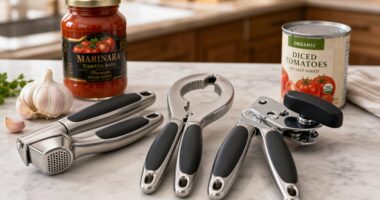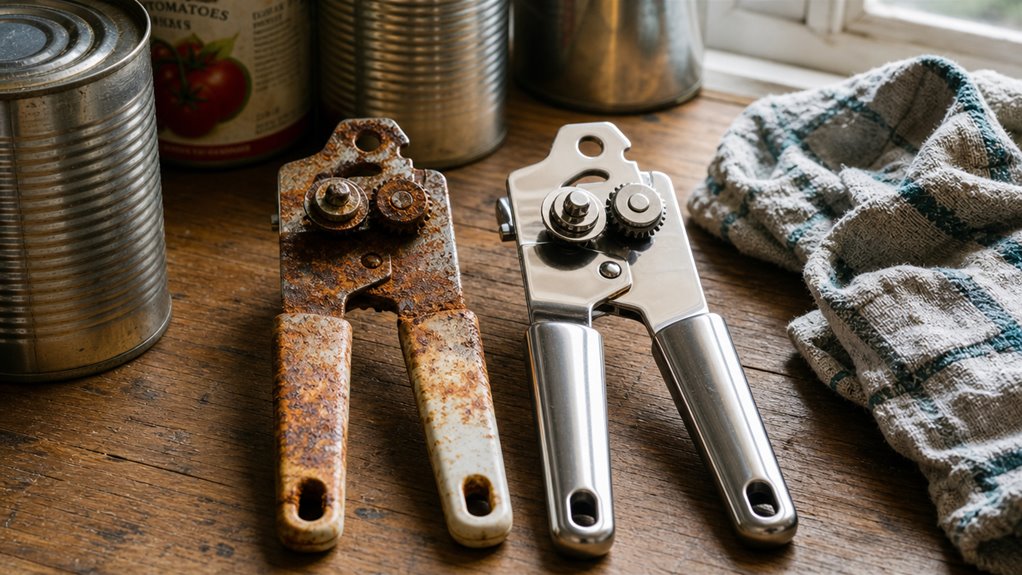

Can openers rust when moisture reaches bare carbon steel beneath a damaged chrome-plated cutting wheel. Chrome plating protects the steel underneath, but chips and cracks in that coating expose the metal to acids, salt, and humidity almost immediately.
- Chrome-plated carbon steel corrodes rapidly once the plating chips, because the bare metal beneath reacts with moisture, food acids, and salt.
- 18/8 stainless steel resists rust at the material level, eliminating the need for a protective coating that can fail over time.
- Side-cutting design keeps the cutting wheel above the can rim, reducing contact between food residue and the mechanism.
Tight crevices in a can opener’s frame trap water and food particles against metal surfaces. Sealed and welded frames limit those gaps, keeping moisture away from vulnerable joints. The cutting wheel takes the most abuse, so wheel material determines how quickly rust appears.
OXO Good Grips and Kuhn Rikon side-cut models use stainless cutting wheels that avoid the plating problem entirely. KitchenAid stainless models share that wheel advantage, though the zinc-plated body on some versions can still corrode with repeated dishwasher exposure. Choosing a model with a fully stainless or sealed frame removes that second failure point.
Food residue accelerates corrosion by holding moisture against the metal long after washing. Drying a can opener immediately after use slows that process regardless of the materials involved.
Stainless steel typically contains around 10 to 11 percent chromium by mass, which allows the surface to form a passive oxide layer that resists rust without any additional plating.
Cheap or expensive is the wrong question. Cost per use is the honest one. Check out our new Calculator.
Cost-Per-Use Calculator →Key Points
- Rust forms when moisture penetrates thin chrome plating or low‑grade carbon steel, exposing the underlying metal to oxidation.
- Top‑cutting openers submerge the wheel and gears in food residue, trapping water and salts that accelerate crevice corrosion.
- Side‑cutting designs keep food away from moving parts, reducing residue buildup and prolonging corrosion resistance.
- Full‑body stainless steel (18/8, 304, 316) with a self‑healing chromium‑oxide layer resists rust far better than plated carbon steel.
- Brands such as OXO Good Grips, Kuhn Rikon, and KitchenAid, which use solid stainless wheels and sealed or open‑gear constructions, are the most rust‑free.
| OXO Good Grips Manual Can and Bottle Opener |  | Senior-Friendly | Primary Function: Can and bottle opening | Material (Key Component): Stainless steel cutting wheel | Grip Type: Oversized cushioned handle | VIEW LATEST PRICE | Read Our Analysis |
| OXO Good Grips 11″ Stainless Steel Kitchen Whisk |  | Whipping Pro | Primary Function: Whisking | Material (Key Component): Stainless steel wires | Grip Type: Soft non-slip grip | VIEW LATEST PRICE | Read Our Analysis |
| OXO Good Grips Stainless Steel Spider Scoop and Strain Skimmer,Black |  | Gentle Strainer | Primary Function: Scooping and straining | Material (Key Component): Stainless steel basket | Grip Type: Soft non-slip grip | VIEW LATEST PRICE | Read Our Analysis |
Links to Amazon are affiliate links. Buying through one costs you nothing extra and helps fund the research.
Why a Can Opener Rusts So Quickly
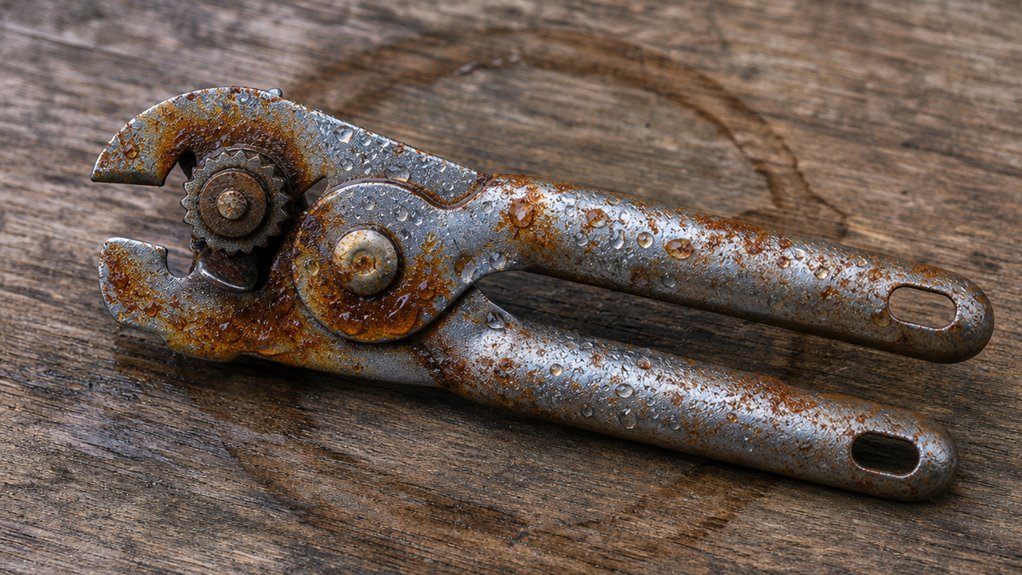
Can openers rust quickly because the cutting wheel combines thin chrome plating over carbon steel, a pairing that allows moisture to breach the surface whenever the plating chips or wears.
Once bare steel is exposed at the blade edge, food residue trapped in the small gaps along the wheel holds water against the metal and accelerates oxidation far beyond the rate seen on the rest of the tool.
The geometry of the cutting wheel makes this worse, since its tight tolerances and serrated contact points are difficult to dry thoroughly after washing.
Budget models often use thinner plating and lower-grade steel, so the protective layer fails sooner and rust appears within weeks of regular use.
Understanding the full range of factors behind this corrosion points toward more reliable maintenance and material choices.
Regularly drying the handles after washing helps prevent moisture buildup.
Cheap Steel, Chrome Plating, and Trapped Moisture
Corrosion starts with the material you pick, and cheap can openers usually use low‑grade carbon steel or 18/0 stainless that lacks enough chromium and nickel to form a protective oxide layer. Those steels rust fast, especially when a thin chrome plating cracks and lets trapped moisture sit in gears and hinges. The plating looks shiny, but pinholes let water and salts reach the iron beneath, so rust pushes up through the chrome. Tight joints trap liquid by capillary action, and dish‑washer cycles keep it damp for hours. Even a small splash of sauce can linger in a crevice, feeding the corrosion that spreads under the coating. Many users find that vinegar soaking effectively loosens rust before scrubbing.
| Issue | Effect |
|---|---|
| Low‑grade carbon steel | Rapid oxidation, thin passive film |
| 18/0 stainless | Weak chromium‑oxide layer, easy to breach |
| Thin chrome plating | Pits and chips expose steel |
| Trapped moisture | Sustains corrosion in crevices |
| Food residue | Provides salts and acids that accelerate rust |
The Cutting Wheel Where Rust Starts First
The cutting wheel is the first place rust shows up, because it’s the part that constantly meets the wet can lid. Each turn splashes juice onto the wheel’s edge, leaving a thin film that dries slowly and lets moisture linger.
Capillary action pulls liquid into the narrow gap between the wheel bore and mounting pin, creating a crevice corrosion zone where oxygen is low and rust accelerates. The high force at the cutting edge scratches the protective finish, exposing fresh steel that oxidizes quickly.
Food particles grind into microscopic pits, holding water and salts right where the metal is bare. Even after rinsing, the underside of the wheel stays damp, so the first rust spots appear around the hub before the frame ever shows a speck. Food‑particle buildup can trap moisture, accelerating corrosion.
| OXO Good Grips Dish Scrub Brush with Non-Slip Handle Nylon Bristles |  | Scrub Master | Primary Function: Scrubbing and scraping | Material (Key Component): Nylon bristles | Grip Type: Soft non-slip handle | VIEW LATEST PRICE | Read Our Analysis |
| OXO Good Grips Deep Clean Brush Set |  | Deep-Clean Duo | Primary Function: Deep cleaning | Material (Key Component): Nylon bristles | Grip Type: Soft non-slip grips | VIEW LATEST PRICE | Read Our Analysis |
| OXO Good Grips Swivel Vegetable Peeler – Black |  | Effortless Peeler | Primary Function: Peeling | Material (Key Component): Stainless steel blades | Grip Type: Soft oversized handle | VIEW LATEST PRICE | Read Our Analysis |
Links to Amazon are affiliate links. Buying through one costs you nothing extra and helps fund the research.
What Separates a Rust-Resistant Can Opener From the Rest
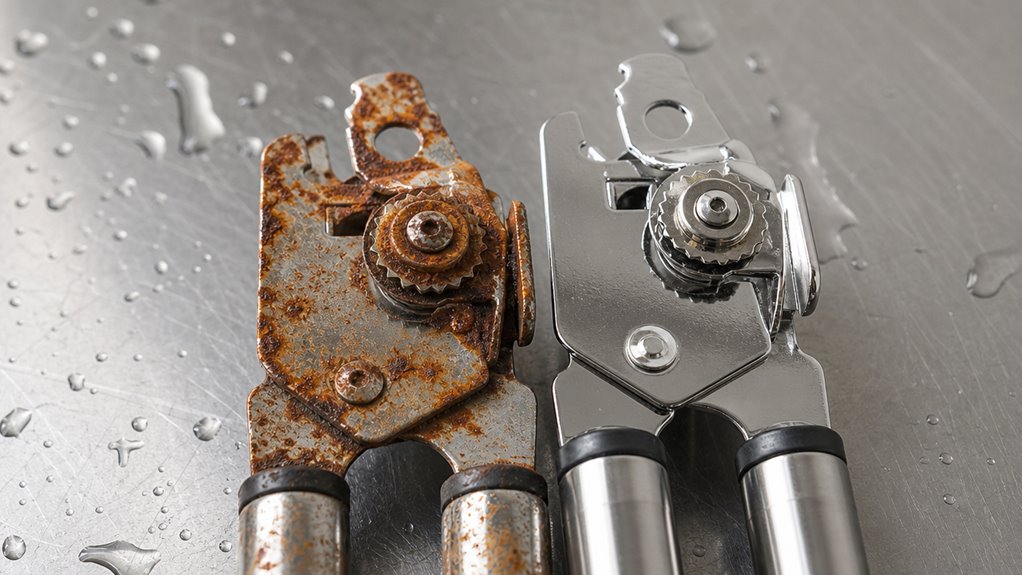
Rust resistance in a can opener comes down to whether the base material passivates on its own or depends on a surface coating to stay protected.
Solid stainless steel forms a chromium oxide layer that repairs itself when scratched, so the cutting wheel and gears resist corrosion without any additional treatment. Chrome-plated steel looks comparable at first, but the plating is thin and prone to chipping, which exposes the carbon steel underneath to moisture and oxidation.
Crevice design also plays a role, since tight gaps around moving parts trap food residue and hold water against the metal long after rinsing. The difference between these construction approaches affects how a can opener performs over years of regular use, and the details behind each factor are worth understanding fully. Regular cleaning helps prevent rust buildup on any metal surface.
Solid Stainless Versus Plated Steel Construction
When the cutting wheel and the gears are made from solid 18/8 stainless steel, the whole load‑bearing path stays sealed against moisture and salt, so rust never gets a foothold.
You’ll notice the difference when you compare solid stainless construction to plated steel. In a solid stainless opener every contact point, the wheel, gear, arms, and even the rivets, is made of the same corrosion‑resistant alloy, so there’s no weak spot for moisture to linger.
A plated steel model relies on a thin chrome or zinc coat over carbon‑steel; once that coat chips, the underlying steel rusts quickly.
The design also matters: side‑cutting wheels keep food away from the gears, reducing residue buildup.
- Full‑body stainless eliminates hidden rust sites.
- Plated steel can chip, exposing carbon steel.
- Side‑cutting designs trap less food residue.
- Proper drying after use extends any opener’s life.
Ring‑pull cans are still common in many markets, forcing users to rely on openers despite the availability of newer lid designs.
Why a Stainless Opener Resists Rust Where a Chrome-Plated One Cannot
Because stainless steel contains at least 10.5 % chromium, it forms a thin, self‑healing oxide film that blocks water and oxygen from reaching the underlying metal. That passive layer stays intact even when you scratch the blade, so rust never gets a foothold.
A chrome‑plated opener, by contrast, relies on a brittle coating over cheap carbon steel. When the chrome chips or cracks, most often at the cutting wheel or gears, moisture seeps through and the exposed steel rusts beneath the plating. The rust then lifts the chrome, exposing more metal in a vicious cycle. You’ll notice the difference in how the stainless wheel stays dry after a rinse, while the chrome‑plated one often shows rust rings around the hub after a few washes.
Which Can Opener Designs Stay Cleaner and Last Longer
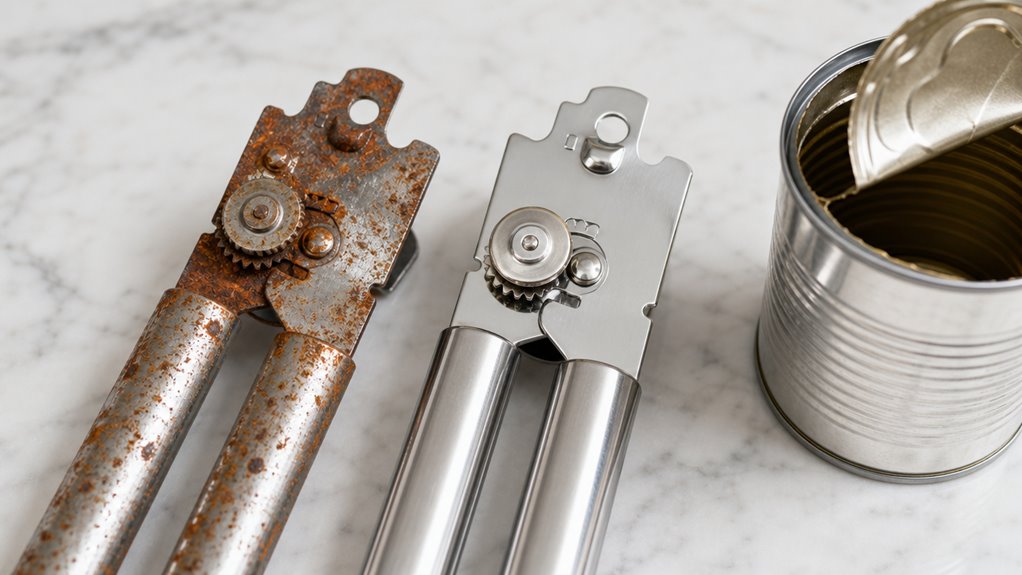
Side-cutting can openers stay cleaner and last longer than top-cutting models because the cutting wheel never contacts the food inside the can, keeping moisture and residue away from the mechanism.
Top-cutting designs press the wheel directly onto the lid, allowing juice and food particles to collect in the gears and accelerate rust over time.
The presence of crevices in a given design determines how easily food residue accumulates and how thoroughly the opener can be rinsed and dried after use. Fewer crevices mean less trapped moisture, which reduces corrosion risk and extends the functional life of the tool.
The differences in cutting mechanism, drainage, and material exposure shape long-term performance in ways worth understanding in detail.
Top-Cutting Versus Side-Cutting Mechanisms
Start with the cutting wheel and you’ll see why the design matters. A top‑cutting can opener places the wheel on the lid surface, shearing down just inside the rim. A side‑cutting can opener sits the wheel against the outer wall, rolling along the seam. The geometry decides where residue gathers and how quickly the wheel dulls.
You’ll notice that the top‑cutting wheel contacts food, so it rusts faster if you don’t dry it. The side‑cutting wheel stays mostly on the seam, keeping the gear train drier. Both benefit from stainless construction, but the side‑cutting design generally stays cleaner longer.
- Contact point: lid edge vs. seam
- Force distribution: narrow track vs. broader traction
- Residue exposure: internal food vs. external wall
- Wear pattern: quicker dulling vs. slower degradation
Why a Side-Cutting Opener Stays Cleaner Than a Top-Cutting One
When a side‑cutting opener meets the can’s seam, the blade rides along the outer wall instead of plunging into the contents, so you get far less food residue clinging to the wheel and gears.
The side‑cutting can opener keeps most moving parts above the rim, limiting exposure to acidic sauces and salty brines that drive corrosion.
Its cutting wheel never submerges, so sugars, fats, and proteins stay out of the gears and pivot points.
You’ll notice fewer dried‑on deposits, which means less moisture trapped in crevices where rust loves to start.
Cleaning is easier too, since most contact points are exposed, so a quick wipe removes what little residue remains, extending the tool’s life.
How to Make Any Can Opener Last
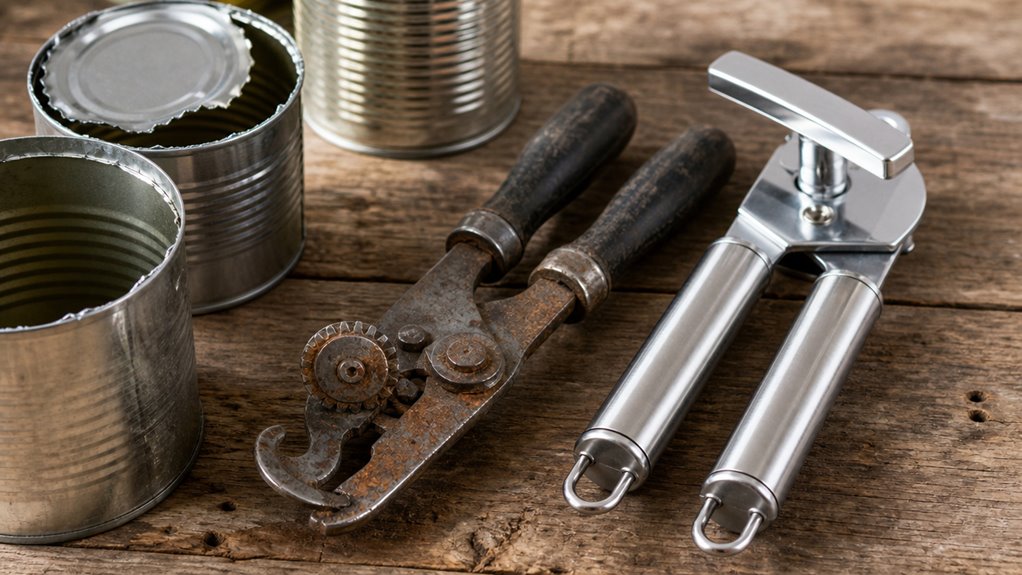
A can opener lasts longer when moisture, food residue, and mechanical wear are managed consistently after each use.
The cutting wheel and hinge joints are the two points where corrosion takes hold fastest, because food particles trap moisture against the metal and accelerate rust.
Drying the tool immediately after washing removes that moisture before it can settle into the gears or the blade mechanism.
Storage matters as well, since keeping a can opener in a dry location away from the sink reduces the ambient humidity that causes metal to corrode over time.
Understanding how each part of the tool responds to regular use shapes every maintenance decision that follows.
Drying, Storing, and Keeping the Gears Clean
Usually you’ll rinse the opener under warm water, so scrub the cutting wheel and gears, then dry every metal part before you put it away. Moisture is the enemy; it settles in the gear mechanism and speeds oxidation.
A quick hot‑water rinse, gentle soap scrub, and thorough drying keep rust at bay. Store it in a dry, open drawer, not a crowded, damp cabinet. Keep the cutting wheel and moving parts free of food residue; a soft brush reaches into the gear teeth.
- Rinse, scrub, then dry all metal components.
- Store in a dry, accessible spot away from other tools.
- Brush out food particles from the gear mechanism after each use.
- Periodically deep‑clean the wheel and gears to prevent buildup.
Where Neglect Lets Corrosion Take Hold
Rinsing, scrubbing, and drying are great habits, but the moment a drop falls on the hinge, gears, or cutting wheel, rust can start a silent attack.
When you skip cleanup, food residue stays stuck in the cutting wheel and gear crevices, trapping moisture exposure at the hinge. That hidden dampness lets iron, oxygen, and water react, forming rust that quickly spreads from a tiny spot to pitted metal.
Dishwasher steam makes the problem worse, slipping into joints and leaving the mechanism wet even after the cycle ends.
If you leave the opener wet in a sink or drawer, the rust‑prone areas stay damp longer, and the roughened surface holds even more water and grime. Dry it thoroughly after each use, and wipe the gears and hinge clean to stop corrosion before it takes hold.
Which Brands Actually Resist Rust for the Long Run
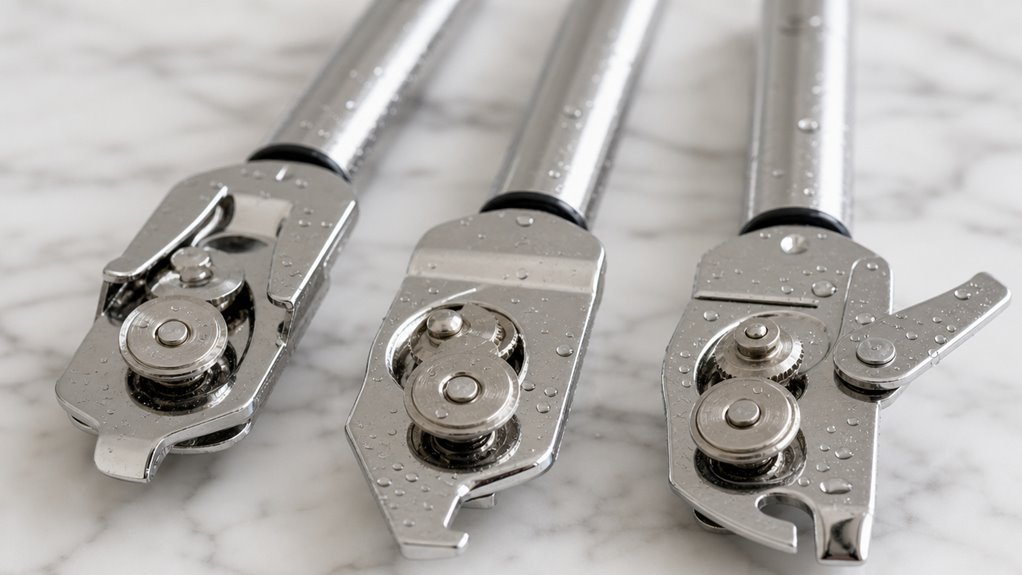
Brands that resist rust over time rely on material choices and construction details rather than appearance or marketing. Stainless steel grades such as 304 and 316 offer corrosion resistance at the component level, particularly when used for the cutting wheel and internal gears where moisture exposure is highest. A fully sealed frame, combined with epoxy or powder-coated housing on any steel parts, keeps water from reaching vulnerable surfaces. Budget-range models can meet these standards when manufacturers avoid chrome-plated plastic parts and maintain food-grade stainless throughout the mechanism, though some designs sacrifice a detachable wheel in the process, which affects how thoroughly the unit can be cleaned.
The sections ahead examine how these factors play out across specific construction approaches and price tiers.
Reading Materials and Construction Before the Logo
A quick look at the material stamp before the logo tells you a lot about a can opener’s rust‑proofing. You’ll see material callouts like “18/8 stainless” or “all stainless steel” on the handle or cutting head. Those stamps usually mean the body and wheel are made from high‑chromium stainless, which forms a protective oxide layer. If the stamp only says “steel” or shows a chrome finish, the underlying carbon steel can corrode once the plating chips.
Openers with a single‑piece welded stainless frame have fewer seams where moisture hides, and open‑gear designs let you rinse and dry the parts easily. Check the stamping before you buy; it’s the first clue that the opener will stay rust‑free.
- Look for “18/8 stainless” or similar material callouts.
- Verify the cutting wheel is solid stainless, not chrome‑plated carbon.
- Prefer welded, single‑piece frames to reduce crevice corrosion.
- Choose open‑gear designs that let you clean and dry the mechanism.
Matching a Durable Can Opener to the Under-$30 Ceiling
Pick the right can opener for a $30 budget and you’ll avoid the rust nightmare most cheap models bring.
For a can opener that doesn’t rust under‑$30, start with OXO Good Grips. Its chromium‑plated or stainless wheel sits offset from the can’s interior, so food residue stays away and the wheel stays dry after a quick rinse. The drawback: the plastic handle can feel flimsy if you apply a lot of torque.
Kuhn Rikon side‑cut models also fit the under‑$30 ceiling; the lateral cut limits liquid exposure, and hardened steel resists corrosion for years. Their limitation is a smaller grip that may slip for larger cans.
KitchenAid blends stainless wheels with a zinc‑plated body, giving solid rust resistance at a low price. Just keep it out of the dishwasher, or the plating can dull over time.
Frequently Asked Questions
Can I Use a Dishwasher on a Stainless Steel Can Opener?
No, you shouldn’t put it in the dishwasher; even stainless steel can rust from steam, heat, and trapped moisture. Hand‑wash, rinse, then towel‑dry thoroughly to keep it corrosion‑free.
Do Magnetic Handles Affect Rust Resistance?
You’ll find magnetic handles don’t inherently worsen rust resistance; it’s the base metal and coating quality that matter. Keep the opener dry, inspect for chips, and choose solid stainless or well‑sealed designs.
What Temperature Tolerances Do Stainless Can Openers Have?
You’ll barely melt a stainless opener. Its steel stays solid up to 500 °C, while handles survive 80‑120 °C. Dishwasher cycles (60‑75 °C) and boiling water (100 °C) won’t warp or corrode it.
Is a Rubber‑Coated Grip a Rust‑Prevention Feature?
You’ll find that a rubber‑coated grip isn’t a rust‑prevention feature; it only covers the handle. Rust still forms on exposed metal parts, so you must dry and oil the cutter and gears after each use.
How Often Should I Oil the Gears of a Stainless Opener?
You should oil the gears after each thorough cleaning, then every few weeks to a month if you use it often. Make sure the opener’s completely dry first, and use only a tiny drop of food‑grade mineral oil.
Conclusion
Think of a stainless opener as a simple, rust‑proof tool that keeps the kitchen’s corrosion at bay. You’ll notice the clean cut, the dry gears, and the lack of orange stains after weeks of use. If you dry it and store it away from moisture, it’ll stay reliable for years. Even the budget‑friendly models hold up, as long as you avoid the cheap chrome‑plated ones that chip and trap water.
| OXO Good Grips Multi-Purpose Scraper and Chopper |  | Multi-Purpose Pro | Primary Function: Scraping and chopping | Material (Key Component): Stainless steel blade | Grip Type: Large ergonomic non-slip handle | VIEW LATEST PRICE | Read Our Analysis |
| OXO Good Grips Corn Prep Peeler |  | Corn-Kernel Expert | Primary Function: Corn kernel removal | Material (Key Component): Japanese stainless steel blade | Grip Type: Non-slip ergonomic handle | VIEW LATEST PRICE | Read Our Analysis |
| OXO Good Grips Expandable Long Tool Organizer |  | Drawer Organizer | Primary Function: Drawer organization | Material (Key Component): Plastic with non-slip feet | Grip Type: Soft, non-slip handle | VIEW LATEST PRICE | Read Our Analysis |
Links to Amazon are affiliate links. Buying through one costs you nothing extra and helps fund the research.

Michael Haralson worked in professional kitchens from 1979 to 1992: San Diego restaurants, six years with a catering company beside an Austrian chef, and two summers as a cook on the Finland to Sweden cruise route. He then built a fifteen-year career at Nokia. It began in product marketing and product management, where technical specifications and supplier evaluation were part of the work, and grew from a few countries to a region to global roles, then into sales and corporate strategy. That took him to Beijing for three years, where he spent many weekends in a different province trying the local food and took cooking classes. He has eaten in more than 40 countries and has been shown the kitchens of restaurants in Southern Europe. At home in Finland he cooks Cantonese, Sichuan and Mediterranean food, and still uses the cast iron skillet he bought in 1992. He is the author of Buy It Once, Book One of The Researched Kitchen, and writes here about the balance between kitchen tools that cost too much and those that fail too soon.