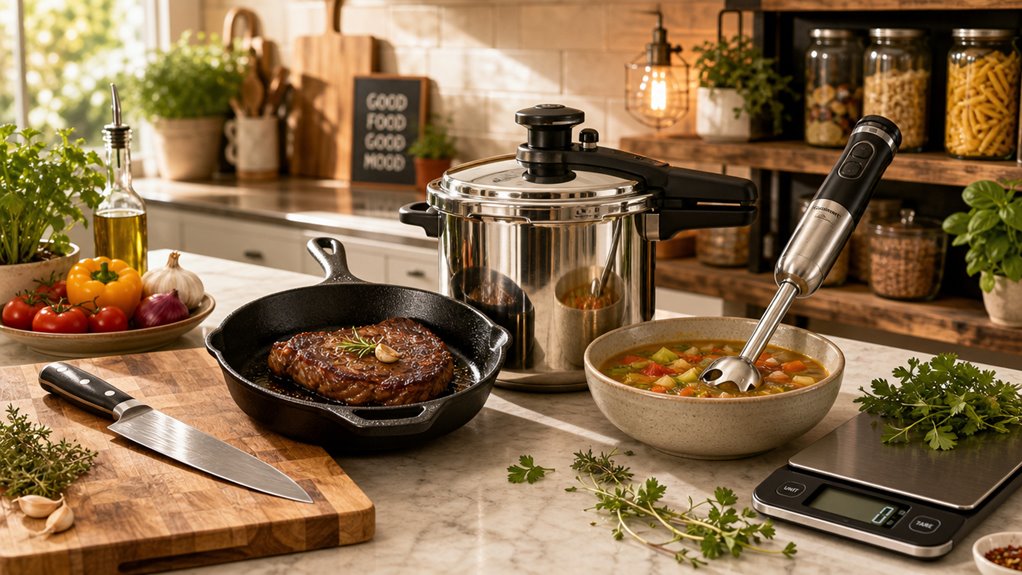
Kitchen essentials that pay for themselves are durable, low-cost tools that reduce recurring spending on food and beverages by replacing frequent outside purchases. A small set of brewing tools can offset café costs within weeks, depending on how often a household brews at home.
- Espresso machine: pairs with a dedicated grinder to produce café-style drinks at home, typically breaking even after around 100 cups.
- AeroPress: uses pressure and immersion brewing to produce concentrated coffee, often recouping its cost in roughly two dozen brews.
- Moka pot: forces hot water through ground coffee using stovetop steam pressure, enabling lattes and similar drinks for well under a dollar per cup.
Budget brewing tools generally fall into two tiers. Entry-level options such as a moka pot or reusable filter carry a low upfront cost and reach payback quickly. Mid-range options such as a manual grinder or drip brewer require a modest investment but consistently replace drinks that would otherwise cost several dollars each at a café.
Reusable filters eliminate single-use paper pods and reduce per-brew costs by a small but consistent margin. Across hundreds of brews, that margin compounds into meaningful savings.
Regular cleaning extends the functional life of any brewing tool, particularly espresso machines, which rely on consistent pressure and clean internal components to perform reliably over time.
Specialty coffee association research suggests that brewing coffee at home typically costs around 10 to 20 times less per cup than buying the equivalent drink at a café, depending on the brew method and bean quality.
Five tools do the heavy lifting here, each one erasing a specific recurring cost:
Cheap or expensive is the wrong question. Cost per use is the honest one. Check out our new Calculator.
Cost-Per-Use Calculator →- Home coffee setup: an espresso machine, moka pot, or drip brewer with a grinder replaces the daily café run and pays back within weeks.
- Quality chef’s knife: cuts out pre-portioned produce and pricey pre-cut packs, trimming the grocery bill on every prep session.
- Electric pressure cooker: turns cheap cuts and dried beans into bulk meals, shrinking takeout and canned-goods spending.
- Reusable storage containers: keep leftovers fresh and end the steady drip of disposable bags and wasted food.
- Water filtration pitcher: swaps bottled water for filtered tap, erasing a bottled-water habit that adds up across the year.
Key Points
- A mid‑range espresso machine with grinder and reusable cup cuts per‑cup cost to under $1, paying for itself after ~100 drinks (≈14 weeks).
- A basic drip brewer plus a manual grinder costs under $60 and replaces $3–$5 café cups, breaking even in a few weeks.
- A $20–$40 moka pot with a handheld frother creates café‑style lattes, saving $4–$5 per cup and recouping the investment in weeks.
- An Instant Pot or pressure cooker enables bulk cooking, reducing grocery spend by 10–15% and offsetting its cost within months.
- Reusable storage containers and a water‑filter pitcher cut disposable waste and bottled‑water purchases, saving hundreds annually and paying for themselves quickly.
| Cuisinart 8″ Stainless Steel Chef's Knife Guard | 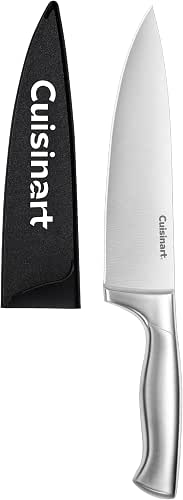 | Best Value | Blade Length: 8 in | Blade Material: Stainless steel | Edge Type: Plain | VIEW LATEST PRICE | Read Our Analysis |
| Mercer Culinary M22608 Millennia Black Handle 8-Inch Chef's Knife | 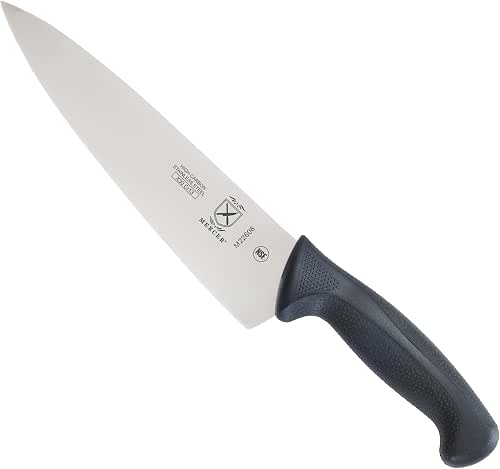 | Reliable Classic | Blade Length: 8 in | Blade Material: High-carbon Japanese steel | Edge Type: Plain | VIEW LATEST PRICE | Read Our Analysis |
| Astercook 8″ Professional Kitchen Chef Knife (Gift Box) | 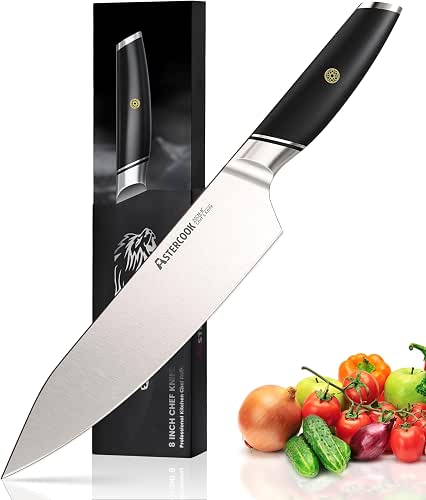 | Gift-Ready | Blade Length: 8 in | Blade Material: German high-carbon stainless steel | Edge Type: Plain | VIEW LATEST PRICE | Read Our Analysis |
Links to Amazon are affiliate links. Buying through one costs you nothing extra and helps fund the research.
Why a Copycat Starbucks Habit Tops the Pay-for-Themselves List
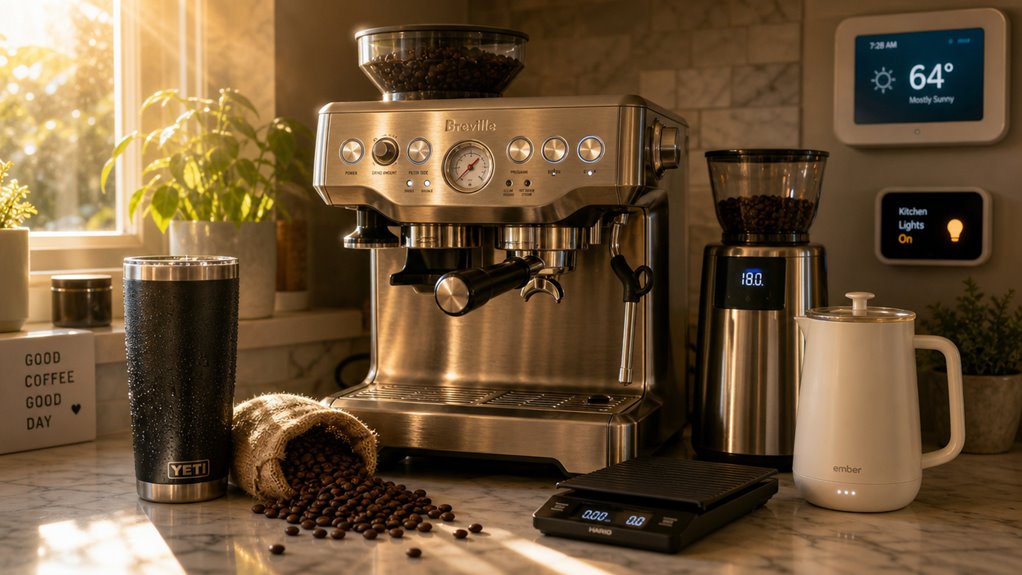
Brewing espresso drinks at home with a mid-range machine, a grinder, and a reusable cup typically cuts the per-cup cost to under a dollar, compared to the five-to-six-dollar range common at coffee chains like Starbucks.
That daily saving can add up to around twelve hundred dollars a year, which often covers the cost of the equipment within a few months.
The setup works by replacing a recurring daily spend rather than adding a new one, and it requires no elaborate accessories to function.
Regular cleaning of the espresso machine is necessary to keep it reliable over time.
The factors that determine how quickly this habit pays off, and how consistently it performs, go deeper than the initial equipment cost.
Annual estimates show that one Starbucks habit can cost $2,600–$5,200 per year.
Recreating Café Drinks at Home With a Few Cheap Tools
Start by swapping your daily café latte for a home‑made version with a $20‑$40 moka pot and a $10‑$20 handheld frother.
The moka pot gives you a strong coffee base that mimics espresso, letting you mix it with milk for lattes, cappuccinos, or Americanos.
Pair it with the frother to create micro‑foam, so your drink feels like a copycat Starbucks order.
You can also use a French press to froth milk if you prefer a non‑electric option, though it requires extra effort to achieve consistent foam.
For a quick latte, heat milk in a microwave‑safe jar, shake it, and pour over the coffee concentrate.
This setup costs a fraction of a daily café bill, and each cup saves you about $4‑$5, meaning the tools pay for themselves in a few weeks.
Using a small diffuser on low heat helps control extraction and boosts intensity.
The Recurring Spend a Home Setup Quietly Replaces
Swapping your daily latte for a home‑made version isn’t just a cheap hack; it directly cuts a recurring expense that silently drains your budget.
A modest coffee habit multiplies into a noticeable recurring spend, and each cup you make at home drops the cost per cup to a fraction of a café price.
Your kitchen setup, a modest grinder, a French press, and a reusable filter, replaces the subscription‑like habit without a formal billing cycle.
Because upkeep already eats a big chunk of your finances, eliminating that hidden leak feels immediate.
The payback math is simple: a $30 upfront cost versus $5 a week saved adds up fast, often recouping in under a month.
This quiet substitution lets you redirect funds toward real home needs.
Small daily habits are now being re‑examined as a way to offset rising living costs.
| 3-Pc Ultra Sharp Kitchen Knife Set (8″ 5″ 3.5″) |  | Versatile Trio | Blade Length: 8 in | Blade Material: High-carbon German steel (3CR13MOV) | Edge Type: Plain | VIEW LATEST PRICE | Read Our Analysis |
| 3-Piece Ultra Sharp Carbon Steel Chef Knife Set |  | Carbon Steel | Blade Length: 8 in | Blade Material: High-carbon German steel (3Cr13MoV) | Edge Type: Plain | VIEW LATEST PRICE | Read Our Analysis |
| 5-Piece Kitchen Chef Knife Set with Scissors and Peeler |  | Complete Set | Blade Length: 7 in (cleaver), 7 in (Santoku), 4.5 in (utility) | Blade Material: Stainless steel | Edge Type: Plain | VIEW LATEST PRICE | Read Our Analysis |
Links to Amazon are affiliate links. Buying through one costs you nothing extra and helps fund the research.
The 5 Tools That Save Money Over Time
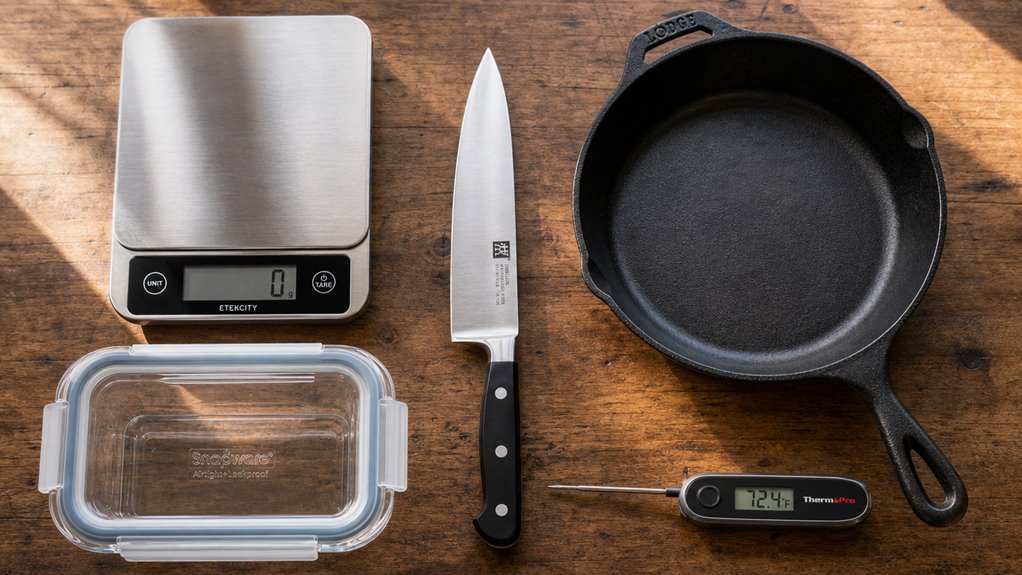
Tools that replace a recurring expense tend to pay for themselves faster than tools that simply add convenience.
A coffee maker, for example, offsets the cost of daily café visits each time it’s used, while a quality chef’s knife reduces the need for pre-sliced or pre-portioned grocery items that carry a markup.
Equipment suited to bulk prep works in the same way, lowering dependence on convenience products that get purchased repeatedly.
The common factor is function: a tool earns its place when it actively cuts a repeating cost rather than sitting unused.
The details behind which tools deliver that return most reliably are worth examining closely. Adding a Food Saver allows bulk purchases to be portioned and vacuum‑packed, preserving freshness and preventing waste.
Coffee Gear, a Good Knife, and the Everyday Workhorses
Most days you’ll find yourself reaching for a coffee cup, a knife, or a pot, and each of those habits can be turned into a small, steady savings machine. A simple drip brewer and a grinder cost under $60, yet they replace a $3‑$5 café cup and pay for themselves in a few weeks. Pair that with a solid chef’s knife, and you’ll stop buying pre‑cut veggies or expensive slicers. The everyday workhorses, a stock pot, a sauté pan, and a reusable filter, cut energy use and waste.
- Coffee gear: $0.20 per cup vs $4 café
- Chef’s knife: 10‑year lifespan, no extra gadgets
- Stock pot: cooks bulk, saves bulk‑buy cost
- Reusable filter: eliminates disposable pods
The Instant Pot Pro is an 8‑quart pressure cooker and air fryer that can replace multiple appliances, saving both space and money.
Why a Tool That Earns Its Keep Beats One That Just Sits
Because a tool that actually replaces a recurring expense puts money back in your pocket, it outshines a gadget that just sits on the counter.
When you measure a payback period, you see the difference clearly. A high‑efficiency multi‑cooker eliminates a slow cooker, rice cooker and steamer, so you pay less for each meal and cut utility bills. A vacuum sealer lets you buy bulk meat and produce, then keep it fresh for months, shrinking waste and grocery trips. Cast‑iron skillets last decades, so the initial cost spreads over countless dinners. Reusable food‑storage containers replace disposable bags, lowering ongoing supply costs. Each of these tools that pay for themselves shows a short payback period, turning an expense into an asset.
How the Copycat Starbucks Math Beats the Drive-Thru
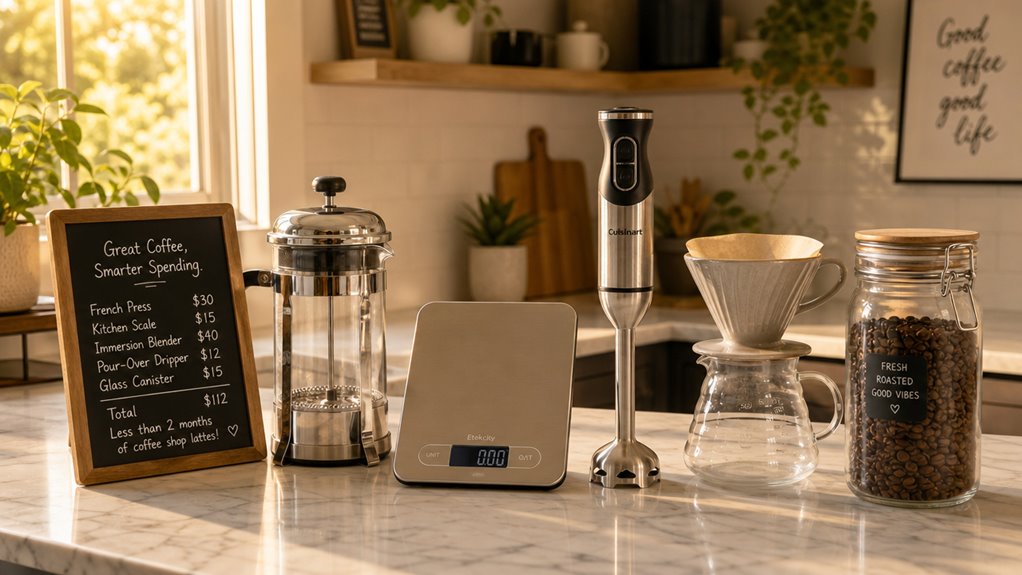
Making copycat Starbucks drinks at home typically costs under a dollar per cup, while a daily drive-thru latte runs in the mid-to-high single digits, meaning the per-cup savings compound quickly across a standard five-day work week.
The math shifts further once an entry-level milk frother and a reusable frothing pitcher are factored in, since both tools are widely available at budget price points and the combined cost is often recovered within the first few weeks of consistent home brewing.
Latte preparation technique and milk frothing consistency are the two variables that most directly affect whether the homemade version holds up as a practical substitute.
The details that follow break down how each factor shapes the overall savings picture.
Cost Per Cup at Home Versus the Daily Order
Swap a daily latte for a home‑brew and you’ll see the numbers line up fast. A moka pot can pull a rich espresso‑like shot, and with copycat Starbucks at home you add milk and syrup for under $1.00 per cup. Compare that to a $4‑$5 café drink and you save roughly $900‑$1,400 a year.
The math stays simple:
- $0.23 / cup for basic drip
- $0.75 / cup for specialty beans + milk
- $2.85 / cup for Starbucks brewed coffee
- $4.00 / cup for a typical latte
Your weekly spend drops from $20‑$25 to $5‑$7, and the upfront cost of a $30 moka pot pays off in weeks. The only downside is the learning curve to perfect extraction, but the savings are clear.
Why a Home Coffee Setup Pays Back the Café in Weeks
When you replace a $5 daily latte with a home‑brewed cup, the math starts to look good after just a few weeks. A basic home coffee setup, a grinder, an AeroPress, and copycat recipes, costs about $70. At $3 per‑cup savings, you recoup that in roughly 26 brews, which is under a month of daily use. If you step up to a $300 entry‑level machine, break‑even arrives after 100 drinks, or about 14 weeks at one cup a day. The numbers keep stacking: $0.50 per cup versus $5 means $180 yearly spend versus $1,825, a $1,645 gap you can invest elsewhere.
| Item | Cost | Brews to Break Even |
|---|---|---|
| AeroPress kit | $70 | 26 |
| Manual grinder + brewer | $120 | 40 |
| Entry‑level espresso machine | $300 | 100 |
You’ll notice the payback is swift because the recurring café expense disappears. The copycat recipes let you mimic café drinks without the premium price tag, and the gear stays useful for other brewing experiments. The downside? The grinder can wear out after a couple of years, but replacement parts are cheap. Overall, the setup pays itself in weeks, not years.
The Other Recurring Costs the Right Tools Erase
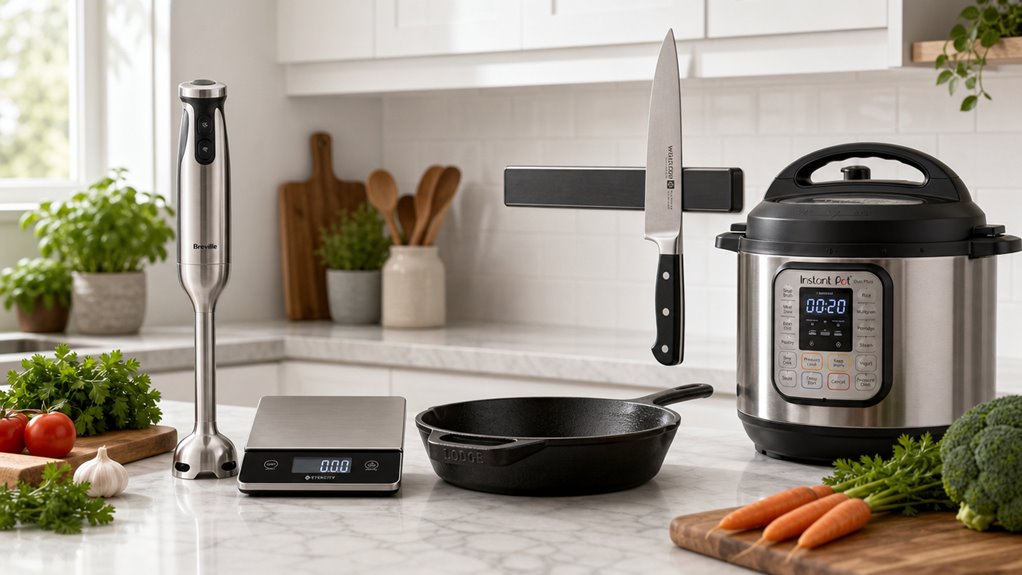
Recurring kitchen costs shrink when the right tools replace convenience purchases like boxed stock, pre-cut produce, store-bought bread, and daily takeout.
A sharp chef’s knife, a reliable cutting board, reusable storage containers, and a bread maker each address a specific category of spending by shifting the work back into the home kitchen.
Whole ingredients cost less than processed alternatives, and proper storage reduces food waste that quietly inflates the weekly grocery bill.
The trade-offs are minor, mainly blade maintenance and counter space, but the reduction in markup paid on convenience items typically offsets those demands within a handful of uses.
The factors that shape how much value each tool delivers are worth examining in detail.
Takeout, Boxed Stock, Pre-Cut Produce, and Store Bread
Cutting back on takeout, boxed stock, pre‑cut produce, and store‑bought bread starts with the tools that make home cooking feel less like a chore and more like a habit. You’ll notice that frugal kitchen tools lower your cost per use dramatically when they replace pricey convenience items.
- Sharp chef’s knife – slices veggies in seconds, cutting out pre‑cut packs.
- Bench scraper – transfers diced produce and portions dough without extra bowls.
- Stock pot with lid – lets you simmer broth from pantry beans, avoiding boxed soups.
- Baking sheet – bakes bread and roasts veggies, ending the need for store‑bought loaves.
Each piece costs a few dollars, but the savings add up. The knife dulls faster if you neglect honing, so maintain it to keep the payback steady.
Where Each Tool Pays Itself Back
You’ll see the payback math unfold as each tool slices away a recurring expense. A high‑quality chef’s knife cuts pre‑cut produce and waste, shaving 10–15 % off your grocery bill and letting you buy whole cuts that are 10–30 % cheaper per pound.
An electric pressure cooker replaces canned beans and pricey quick‑cook meats, letting you bulk‑cook cheap cuts and freeze meals, which cuts takeout costs by three‑to‑five times.
A high‑capacity storage system keeps leftovers fresh, slashing the 20–30 % waste that many households see and eliminating disposable bags and containers.
A water filtration pitcher swaps bottled water for filtered tap, saving hundreds annually and reducing mineral buildup on appliances.
Each of these kitchen essentials that pay for themselves shows how to save money cooking at home by erasing repeat purchases.
How to Choose Tools by Payback, Not Price
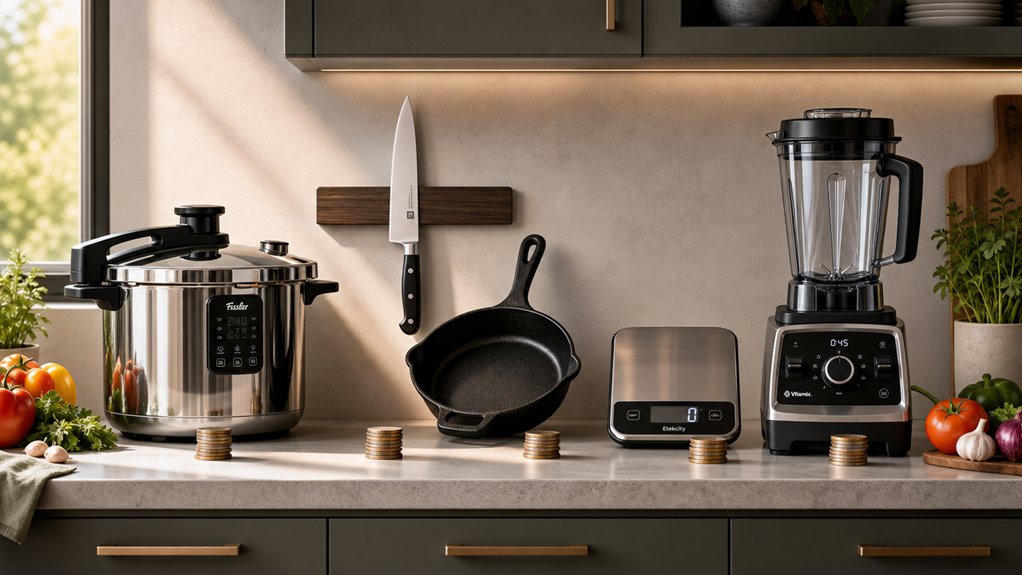
Choosing tools by payback rather than price means matching each recurring household expense to a specific tool whose cost is recovered through the savings it generates. A reusable item in the budget tier, for instance, typically offsets the ongoing cost of disposable alternatives within weeks rather than months, making the payback period a more reliable purchase signal than the sticker price alone.
The strength of this approach depends on identifying exact recurring costs first, whether daily café drinks, disposable food storage, or pre-cut produce, and then selecting a tool that directly reduces that spending. Keeping purchases within a modest price ceiling sharpens the discipline further, since a lower upfront cost shortens the recovery window and reduces the risk of buying something that never earns its place.
The sections ahead examine how to apply this payback framework across common household spending patterns.
Spotting the Recurring Spend a Tool Replaces
Most people don’t realize how much a tiny daily habit adds up, but the math is simple: track the recurring spend you want to eliminate, then divide the tool’s price by the monthly savings it creates.
First, list the costs you see on your bank statement: café drinks, takeout meals, pre‑cut produce, bottled water. Those line items are the targets.
Next, estimate how much you’d spend each month without the tool.
Finally, do the division; a low number means a quick payoff.
- Coffee maker – replaces daily café drinks.
- Chef’s knife – cuts out pre‑cut produce.
- Reusable containers – eliminates takeout boxes.
- Blender – swaps bottled smoothies for homemade.
Focus on the recurring spend, not the sticker price.
Matching the Pay-for-Themselves Picks to the Under-$30 Ceiling
When you line up a tool against the recurring cost it eliminates, the math does the heavy lifting, not the price tag. Start by listing every repeat purchase you track: daily coffee, weekly take‑out, disposable wrap. Then match each expense to a multitasker under $30 that can replace it.
A hand blender doubles as a whisk, pureer, and emulsifier, wiping out bottled sauces and store‑bought smoothies. A reusable filter for your coffee maker cuts out paper pods and saves a few dollars per cup. Sheet pans serve roasting, baking, and one‑pan meals, removing the need for separate bakeware.
Count how many uses it takes to offset the upfront cost; if it’s under six months, you’ve hit the sweet spot. Note any drawback, like a plastic pan warping at high heat, so you stay realistic. This pay‑back‑first method keeps you under the ceiling while actually saving money.
Sharpening changes the math. A budget knife kept sharp can outlast the upgrade.
Open the calculator →Frequently Asked Questions
How Do I Calculate Payback for Non‑Coffee Tools?
You calculate payback by adding the tool’s total cost, estimating yearly savings from replacing the recurring expense, then dividing cost by savings; convert years to months for a quicker household view.
What Frequency of Use Is Needed for a Tool to Break Even?
You need to use the tool often enough that the savings per use multiplied by the number of uses exceed its cost; typically daily use breaks even in weeks, while weekly use may take months.
Can I Combine Multiple Tools for Faster Payback?
Pair your AeroPress with a sturdy grinder, a sharp chef’s knife, and a cast‑iron pan; each tool amplifies the others, slashing coffee and meal costs, delivering payback in weeks.
Do I Need Specialty Accessories for Each Tool?
No, you don’t need specialty accessories for each tool; stick to basics like a sturdy board, simple honing steel, and a reusable filter, and you’ll still hit fast payback without extra clutter.
How to I Track Ongoing Savings Accurately?
You track savings by logging each tool‑related purchase, noting the price, servings, and avoided spend, then subtracting the tool’s cost from cumulative savings until the break‑even point is reached.
Conclusion
You’ve seen how each gadget pays for itself in weeks, turning daily coffee and pre‑cut costs into savings you can actually track. The French press brews a latte‑grade cup for pennies, the chef’s knife slices veggies without the $4.99 pre‑cut premium, and the airtight containers keep leftovers fresh far beyond the grocery store’s “sell‑by” date. Even the budget‑friendly blender, though noisy, replaces pricey store‑bought smoothies. In the end, these tools aren’t just accessories, they’re tiny profit centers that keep your wallet healthier than a coffee‑shop loyalty card ever could.
| MOSFiATA 8″ Super Sharp Chef's Knife with Guard and Sharpener |  | Premium Set | Blade Length: 8 in | Blade Material: High-carbon German stainless steel (EN1.4116) | Edge Type: Plain | VIEW LATEST PRICE | Read Our Analysis |
| Leking 8″ Chef Knife with Sharpener and Guard | 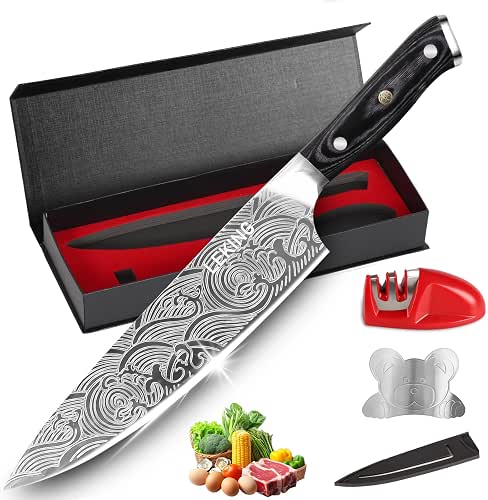 | Professional Grade | Blade Length: 8 in | Blade Material: High-carbon stainless steel | Edge Type: Plain | VIEW LATEST PRICE | Read Our Analysis |
| Farberware Edgekeeper 8″ Chef Knife with Self-Sharpening Cover |  | Self-Sharpening | Blade Length: 8 in | Blade Material: High-carbon stainless steel | Edge Type: Plain | VIEW LATEST PRICE | Read Our Analysis |
Links to Amazon are affiliate links. Buying through one costs you nothing extra and helps fund the research.

Michael Haralson worked in professional kitchens from 1979 to 1992: San Diego restaurants, six years with a catering company beside an Austrian chef, and two summers as a cook on the Finland to Sweden cruise route. He then built a fifteen-year career at Nokia. It began in product marketing and product management, where technical specifications and supplier evaluation were part of the work, and grew from a few countries to a region to global roles, then into sales and corporate strategy. That took him to Beijing for three years, where he spent many weekends in a different province trying the local food and took cooking classes. He has eaten in more than 40 countries and has been shown the kitchens of restaurants in Southern Europe. At home in Finland he cooks Cantonese, Sichuan and Mediterranean food, and still uses the cast iron skillet he bought in 1992. He is the author of Buy It Once, Book One of The Researched Kitchen, and writes here about the balance between kitchen tools that cost too much and those that fail too soon.