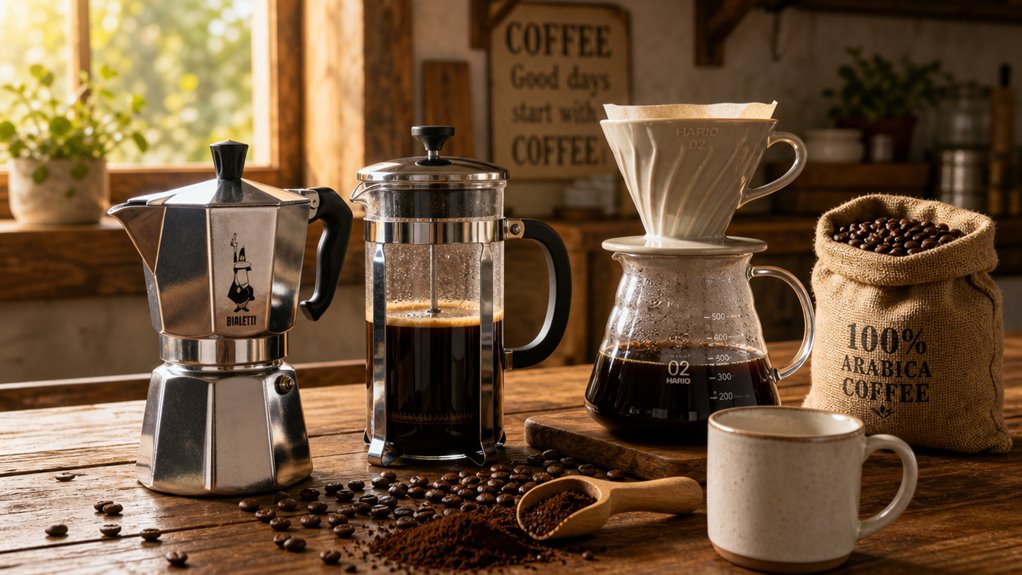

Café-quality coffee at home depends on choosing the right brewing method for your taste, equipment budget, and tolerance for technique. Three manual methods, the moka pot, the French press, and the pour-over, each extract flavor differently and suit different drinkers.
- Moka pot produces an espresso-like, syrupy cup with a bold, bittersweet-chocolate edge by forcing pressurized water through finely ground coffee.
- French press steeps coarse grounds in hot water, retaining natural oils and fine particles that create a full-bodied, heavy mouthfeel.
- Pour-over passes hot water through a paper filter, removing oils and fines to deliver a clean, bright brew with low viscosity.
The moka pot requires careful heat management. Too high a flame extracts harsh, bitter compounds that overwhelm the cup’s natural richness. Keeping the heat low and removing the pot from the burner at the right moment preserves the syrupy texture the method is known for.
The French press rewards patience and a consistent coarse grind. Oils that a paper filter would trap remain in the cup, contributing body and flavor complexity. Decanting the brew promptly after pressing prevents sediment from turning the cup gritty.
The pour-over offers precise control over brew strength through grind size and pour rate. Paper filters produce a cleaner cup but require regular replacement. Dialing in grind size takes practice, though the method remains accessible at a budget price point.
The French press design has remained largely unchanged since it was patented in Italy in roughly the 1920s, suggesting the steep-and-press method is a durable and reliable approach to full-immersion brewing.
Cheap or expensive is the wrong question. Cost per use is the honest one. Check out our new Calculator.
Cost-Per-Use Calculator →Key Points
- Use a fine‑medium grind (≈table‑salt texture) and a 20 g coffee : 345 g water ratio in a moka pot; control heat to avoid over‑extraction and bitterness.
- For a French press, choose a coarse grind and steep 1 : 15 coffee‑to‑water ratio for 4 minutes; press slowly to retain oils for a full‑bodied cup.
- In pour‑over, employ a medium grind with a paper filter and a 1 : 16 ratio; pour water in stages to preserve acidity and clarity.
- Match brew strength to desired milk‑based drinks: moka pot yields espresso‑like concentration, French press gives heavy body, pour‑over provides bright, low‑viscosity liquid.
- Maintain equipment: replace moka pot gaskets, clean French press mesh to prevent sediment, and use fresh paper filters for consistent pour‑over results.
What a Moka Pot Brews and Who It Suits
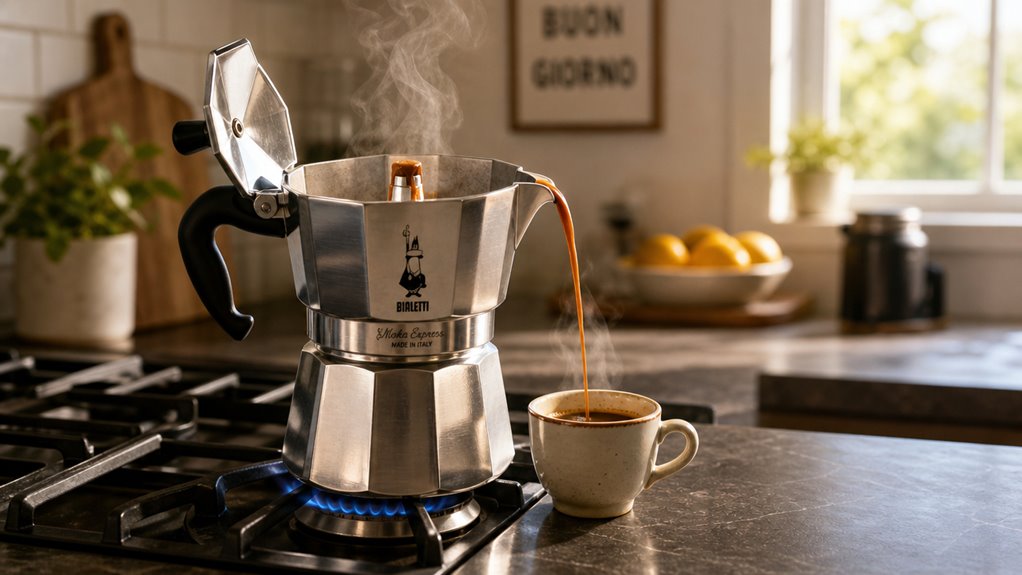
A Moka pot brews a concentrated, espresso-style coffee on a stovetop, producing a bold, full-bodied result that suits drinkers who want strong coffee without investing in a dedicated espresso machine. The metal construction holds up well over time and requires minimal maintenance, making it a practical option in the budget to mid-range price tier.
Because the brew is dense and bitter, it integrates well into milk-based drinks, though the same intensity can read as harsh to anyone who prefers a smoother cup. Heat control is the key variable: running the stovetop temperature too high increases the risk of over-extraction, which sharpens bitterness beyond what most drinkers find palatable.
Understanding how each element of the brewing process affects the final cup helps clarify whether this method fits a given coffee preference. The Moka Pot typically operates at 1.5–2 bars of pressure, which is lower than espresso machines.
Concentrated, Espresso-Style Coffee on the Stovetop
Steam the water in the bottom chamber and watch the pressure push it through the medium‑fine grounds, delivering a thick, espresso‑style shot straight into the top chamber.
You’ll get a concentrated brew that lands between drip coffee and true espresso, about 2–4 % TDS, with a rich, chocolatey body.
The three‑chamber design uses vapor pressure, so you don’t need a pump; just heat on low‑medium and let the steam rise.
Use a medium‑fine grind, roughly table‑salt texture, and a 20‑gram coffee to 345‑gram water ratio for a balanced extraction.
The result is a strong, espresso‑style coffee you can sip solo or dilute for an Americano, and it pairs well with milk for latte‑style drinks. A limitation: the pot can over‑extract if the heat is too high, producing bitterness.
Medium roasts work best for moka pots, delivering a smooth, balanced flavour without over‑extraction.
The Simple Build That Lasts for Years
The classic moka pot’s three‑chamber design is built from aluminum or stainless steel, so it takes a few knocks and years of stovetop use without falling apart. You’ll get a concentrated brew that sits between espresso and drip, with the strength many crave. Its simple metal construction means you only clean three parts, rinse the gasket, and replace the rubber seal when it wears. That durability beats a typical French press, which has more moving pieces and a glass carafe that can crack. You’ll appreciate the low‑maintenance routine and the fact that the pot lasts for years without needing pods or filters. The steam pressure used in a moka pot forces water through the grounds more quickly than drip methods, creating its distinctive intensity.
| Feature | Moka Pot | French Press |
|---|---|---|
| Build | Aluminum or stainless steel | Glass body, metal mesh |
| Parts | Three chambers, gasket, valve | Carafe, plunger, mesh |
| Maintenance | Rinse, replace gasket occasionally | Disassemble, clean mesh |
| Lifespan | Decades with care | Years, glass may break |
| Strength | Strong, espresso‑like | Medium, full‑bodied |
How a French Press and Pour-Over Compare
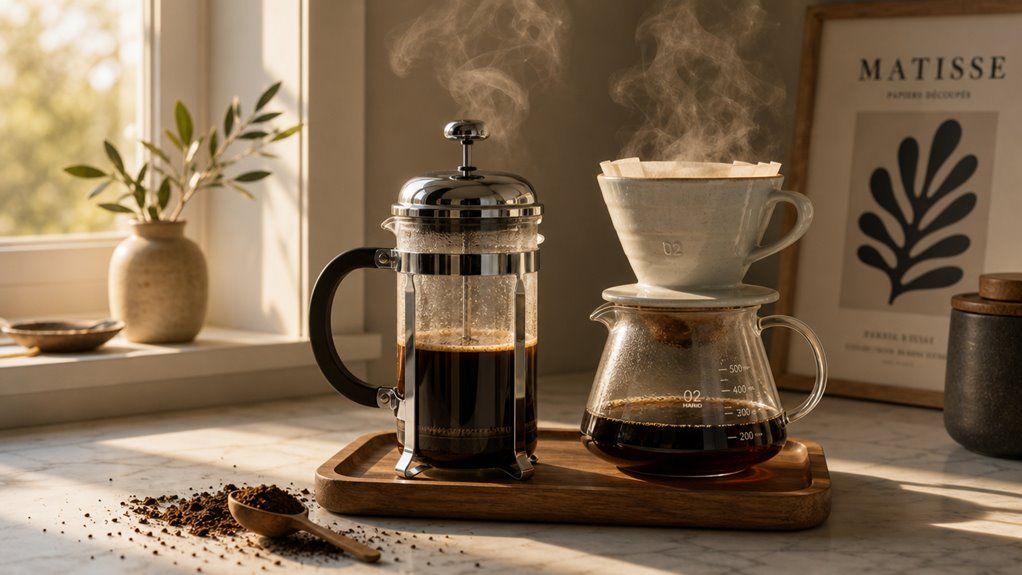
French press and pour-over coffee differ primarily in how each method filters the brew, and that single difference shapes the flavor, texture, and effort involved.
A French press steeps grounds directly in hot water, then uses a metal mesh plunger to separate them, allowing natural oils and fine particles to pass through into the cup. The result is a full-bodied, heavier brew that can carry a small amount of sediment at the bottom.
A pour-over routes hot water through a paper filter, which traps those same oils and fine particles, producing a cleaner, brighter cup with noticeably less texture.
Understanding how filter material and brewing technique interact helps clarify which approach suits a given preference or situation. The French press typically uses a coarse grind for optimal extraction.
Full-Bodied Immersion Versus a Clean Filtered Cup
Steeping coffee in a French press immerses the grounds completely, pulling oils and fines into the brew for a thick, almost creamy mouthfeel. The metal mesh lets those suspended particles stay in the cup, so you get a full‑bodied, heavier texture that feels almost viscous.
With a pour‑over, water filters once through the grounds and a paper barrier catches most oils and micro‑fines, delivering a clean, sediment‑free cup that feels lighter and smoother. Because immersion allows longer contact, the French press extracts more solubles at a coarser grind, which rounds out flavor and adds body. The pour‑over’s percolation limits that contact, preserving acidity and bright notes.
Expect a French press to leave a bit of grit if you don’t decant carefully, while a pour‑over will never give you that sediment. The mesh filter in a French press retains natural oils, contributing to its bold, full‑bodied flavor.
Why Pour-Over Gives a Clean Cup Where a French Press Leaves It Heavy
Why does a pour‑over feel clean while a French press comes across heavy? You get a paper filter that traps most fines and oils, so the brew stays bright and clear. The French press relies on a metal mesh filter, letting micro‑fines and lipids slip through, which adds body and sediment. Longer immersion in the press extracts heavier compounds, deepening mouthfeel but also creating a thicker, sometimes gritty cup. In contrast, the pour‑over’s gravity‑driven flow limits contact time, preventing over‑extraction and keeping the cup light.
| Method | Filter type | Typical result |
|---|---|---|
| Pour‑over | paper filter | clean, bright |
| French press | metal mesh filter | full‑bodied, heavy |
| Moka pot | metal screen | strong, espresso‑like |
| Aeropress | paper or metal | balanced, low sediment |
| Cold brew | metal mesh | smooth, mellow |
How a Moka Pot Stacks Up Against the Other Two
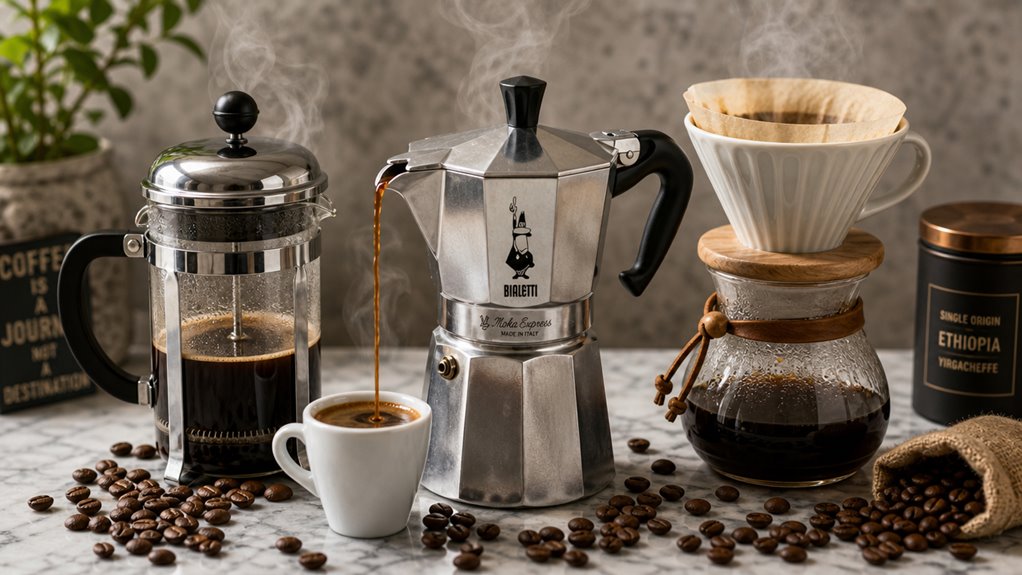
The moka pot produces a concentrated, full-flavored cup by using around 1.5 to 2 bars of pressure to push hot water through compacted grounds, extracting more dissolved solids than either the immersion method of a French press or the gravity-fed drip of a pour-over.
Brew strength and body vary significantly across these three methods because pressure, filter type, and contact time each shape what ends up in the cup.
A French press retains coffee oils and fine particles through its metal mesh, producing a heavier mouthfeel, while a pour-over uses paper or metal filters to produce a cleaner, brighter result.
Cleanup follows a similar pattern of difference. The moka pot typically requires only a quick rinse, whereas the French press leaves an oily plunger to scrub and the pour-over adds a spent filter to discard.
The sections below examine each of these variables in closer detail.
Strength, Body, and Cleanup Across All Three
If you’re chasing a coffee that feels like a tiny espresso shot without buying a machine, the moka pot delivers the strongest brew of the three, thanks to its stovetop pressure and tight 1:8‑1:12 coffee‑to‑water ratio. Its fine grind and pressure give a syrupy mouthfeel and a pronounced bittersweet‑chocolate edge, but you’ll have to disassemble the basket and rinse the metal parts after each use.
The French press, an immersion brewing method, yields the heaviest body because its metal mesh lets oils and fines stay in the cup; cleanup is just a quick dump of the grounds, though you may notice a gritty sediment layer.
The pour‑over shines for clarity and low‑viscosity texture, using a paper filter that traps most oils; it’s the easiest to clean, since you just discard the filter and rinse the dripper, but you’ll need to adjust grind and ratio to reach the strength of the other two.
Why a Moka Pot Brews Strong and a French Press Brews Full-Bodied
Because a moka pot forces steam through a compact coffee bed at roughly 1.5–2 bar, the water extracts solubles far more intensely than the gentle immersion of a French press.
The aluminum moka pot pushes hot water at higher temperature, so you get a concentration that rivals espresso, giving a sharp, strong cup.
A French press, by contrast, lets coarse grounds sit in water for minutes, and its metal mesh lets oils and fines stay suspended, creating the silky, full‑bodied coffee you notice on the tongue.
Both methods have trade‑offs: the moka pot can become bitter if you over‑heat, while the press may leave sediment.
- Pressure‑driven extraction → higher TDS
- Medium‑fine grind → faster solubles release
- Full immersion → oils retained, body increased
- Metal mesh filter → some fines stay, texture thickened
The Cost and Durability Case for Brewing at Home
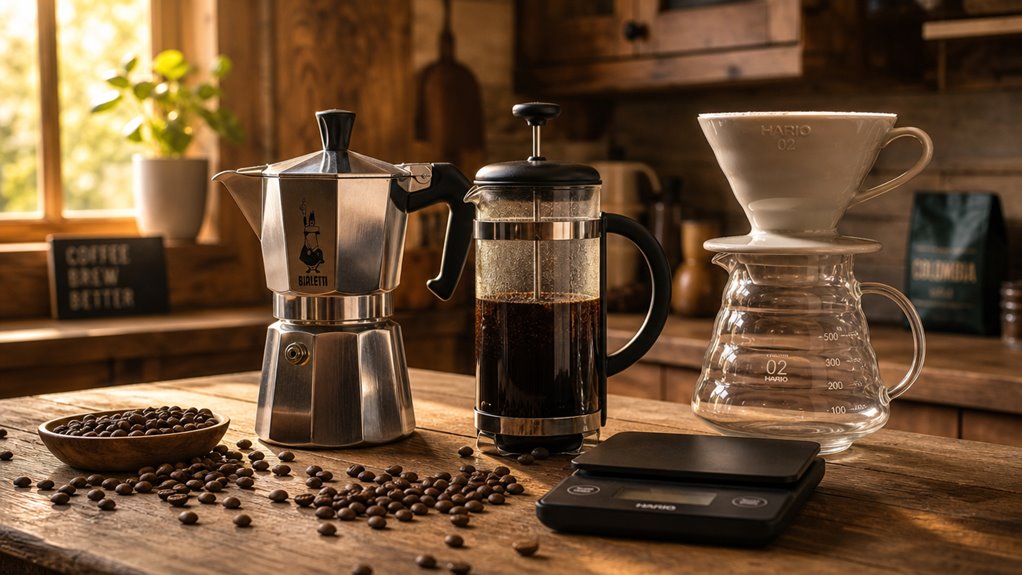
Brewing at home delivers a lower cost per cup than café purchases because the upfront investment in equipment stays low and ongoing consumables remain minimal. A stainless-steel moka pot typically costs under budget-range pricing and requires only ground coffee to operate, while a French press adds glass construction to the equation, which introduces a trade-off between affordability and fragility.
Metal builds tend to survive repeated stovetop use over many years, whereas a glass carafe can crack from a single drop, so material choice shapes long-term value as much as purchase price does. The balance between durability and daily brewing cost varies depending on how a brewer is made, how it’s used, and what consumables it demands over time. The factors that drive these outcomes deserve a closer look.
Cheap Gear, No Pods, and Years of Use
You’ll find that a budget moka pot, French press, or pour‑over dripper can replace a daily café habit in just a few weeks. All three cost far less than a pod machine, and you’ll never buy a single pod again. You’ll spend just pennies per cup on beans, while the gear lasts years with simple maintenance.
- Upfront savings – the gear pays for itself within a few weeks of replacing one café drink.
- No consumables – No pods, just beans and occasional filter paper.
- Durable build – Aluminum or stainless pots, glass or steel presses, and sturdy drippers survive years.
- Easy upkeep – Rinse, replace a gasket or mesh, and you’re good to go.
The trade‑off? A pour‑over needs paper filters, adding a small recurring cost.
Where a Flimsy Brewer Cracks and a Solid One Lasts
When you compare a cheap plastic French press with a solid stainless‑steel moka pot, the difference shows up fast. The plastic handle warps after a few weeks on the stove, and the mesh filter bends, letting sediment through.
A stainless‑steel moka pot tolerates stovetop coffee heat without cracking, and its silicone gasket stays elastic for years. The cheap French press may crack when you pour boiling water into a borosilicate cup, while the metal version resists thermal shock.
Those durability gaps translate into real savings: you replace a flimsy brewer every few months, but a solid one lasts years, making home brewing truly cost‑effective.
How to Choose the Brewer That Fits Your Taste
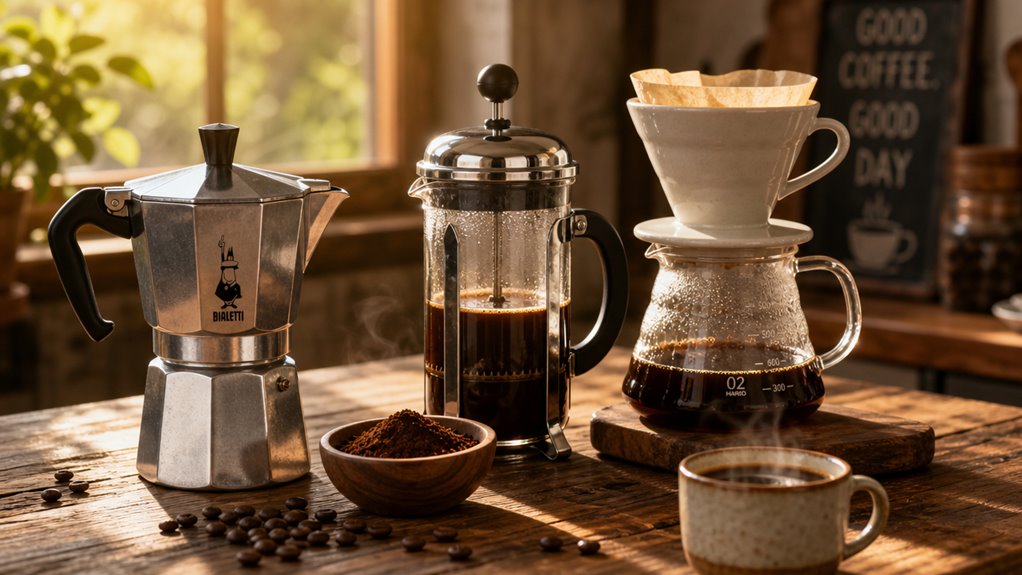
Choosing a brewer comes down to matching the cup strength and body you prefer to the method that produces it: a moka pot concentrates coffee into an espresso-like result, a French press yields a heavy, oily mouthfeel, and a pour-over produces a clean, bright cup with noticeable clarity.
Each approach demands a different grind size, and that requirement shapes both the flavor outcome and how much cleanup effort follows.
Material also plays a role, since solid metal and glass construction keeps any of these options in a budget-friendly price tier while influencing durability and heat retention.
The moka pot’s fine-grind requirement tends to make it the more maintenance-intensive option compared to the other two.
Understanding these variables in greater detail helps narrow the choice to what actually fits your routine.
Matching Strength and Body to How You Like Coffee
If you prefer a coffee that hits you with a thick, espresso‑like punch without buying a machine, the moka pot is your go‑to. Its pressurized percolation yields a syrupy brew that feels stronger than drip but milder than true espresso.
Use a medium‑fine coffee grind size; finer grinds boost extraction, but over‑extraction can turn the cup bitter. French press gives you a heavy, oily body because the metal mesh lets fines through, while pour‑over offers a clean, bright cup with paper filtering that strips those oils.
- Choose moka pot for intensity and quick prep.
- Pick French press for full‑bodied texture and minimal equipment.
- Opt pour‑over for clarity and easy flavor tweaking.
- Match grind size to method: fine‑ish for moka, coarse for press, medium for pour‑over.
Matching a Durable Home Brewer to the Under-$30 Ceiling
Moka pots, French presses, and pour‑over drippers all stay under $30, but each one leans on a different strength that matches a particular coffee taste and a durability priority.
If you want strong, espresso‑like coffee, a stovetop Moka pot gives you concentrated brew with a simple metal body that lasts years, but the aluminum version can corrode if you leave water inside.
For a full‑bodied cup, a French press uses immersion and a metal mesh filter; it’s cheap and sturdy, yet glass models may shatter when dropped.
A pour‑over dripper offers clean, bright flavor and replaceable paper filters, and its minimal parts mean easy cleanup, though plastic cones can warp under high heat.
Choose the one that fits your taste and how you’ll treat it. Any of these three is a solid way to make café-quality coffee at home for under $30.
Frequently Asked Questions
Can I Use a Moka Pot for Cold Brew?
You can’t make true cold brew in a moka pot; it uses high heat and pressure. Brew hot, then chill or pour over ice for an iced coffee, but the flavor will be stronger and more bitter.
Does Grind Size Affect French Press Sediment?
You’ll see less sediment when you grind coarser. Picture a beach, where larger shells settle cleanly while fine sand stays suspended. A burr‑grind, coarse setting cuts fines, giving a clearer French press cup.
Are Paper Filters Recyclable?
You can recycle clean, unused paper filters, but most curbside programs reject used ones because grounds and moisture contaminate them. Check your local guidelines; otherwise, compost them or switch to a reusable metal or linen filter.
How Often Should I Replace a Moka Pot Gasket?
You should replace the Moka pot gasket every 3–12 months, depending on how often you brew and how harshly you clean it; check for leaks, deformation, or discoloration and swap it out promptly.
Can I Brew Tea in a Pour‑Over Dripper?
You can brew tea in a pour‑over dripper, and 78% of coffee lovers say it gives a cleaner cup. Just rinse a paper filter, add loose leaf, pour water at the right temperature, and enjoy a crisp, sediment‑free brew.
Conclusion
You’ll end up with a brew that matches your taste, not your wallet. The moka pot gives you espresso‑like punch but can scorch delicate beans if you’re not careful. The French press delivers a full, silky body yet leaves a sediment layer you may not like. The pour‑over offers clean clarity, though it needs consistent pour technique. The proof is in the cup: pick the method that matches your taste, and you get coffee you can trust, built to last.

Michael Haralson worked in professional kitchens from 1979 to 1992: San Diego restaurants, six years with a catering company beside an Austrian chef, and two summers as a cook on the Finland to Sweden cruise route. He then built a fifteen-year career at Nokia. It began in product marketing and product management, where technical specifications and supplier evaluation were part of the work, and grew from a few countries to a region to global roles, then into sales and corporate strategy. That took him to Beijing for three years, where he spent many weekends in a different province trying the local food and took cooking classes. He has eaten in more than 40 countries and has been shown the kitchens of restaurants in Southern Europe. At home in Finland he cooks Cantonese, Sichuan and Mediterranean food, and still uses the cast iron skillet he bought in 1992. He is the author of Buy It Once, Book One of The Researched Kitchen, and writes here about the balance between kitchen tools that cost too much and those that fail too soon.