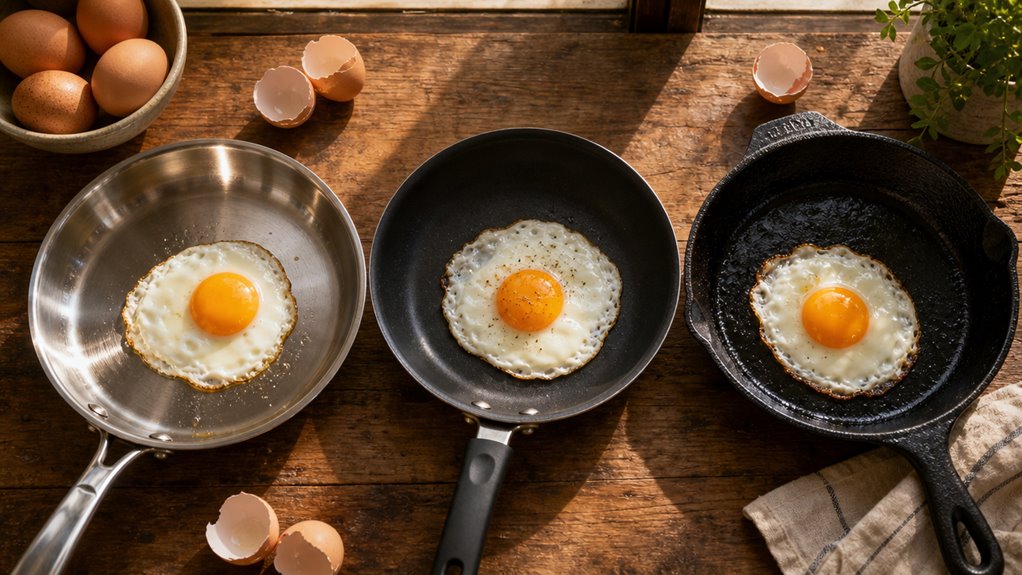
Choosing the right pan for eggs depends on how much technique, maintenance, and cooking frequency you bring to the kitchen. Each pan material handles heat, fat, and release differently, which shapes the results on the plate.
- Stainless steel requires a proper preheat and a thin layer of oil to achieve clean egg release without sticking.
- Non-stick coatings allow eggs to release with minimal fat, though the surface typically degrades after two to three years of regular use.
- Cast iron builds a durable, seasoned surface over time that resists sticking and retains heat well across extended cooking sessions.
Stainless steel pans rely on the water-bead test to confirm the surface has reached the right temperature before fat is added. Cooking eggs around 300 to 320 °F in a preheated stainless pan creates a clean release without scorching the whites. The technique takes practice, but the pan itself lasts for decades with basic care.
Non-stick pans lower the barrier to cooking eggs by reducing the fat and attention required. High-heat use accelerates coating breakdown, which shortens the functional lifespan of the pan. Cast iron demands regular seasoning and longer warm-up time, but it rewards consistent use with a naturally non-sticky cooking surface.
The pan that fits a kitchen depends on the balance between technique, upkeep, and the dishes cooked most often.
Cast iron skillets have been documented in use for roughly 2,000 years, making them one of the oldest surviving cookware materials still in common kitchen use today.
Cheap or expensive is the wrong question. Cost per use is the honest one. Check out our new Calculator.
Cost-Per-Use Calculator →Key Points
- Non‑stick pans give instant release with minimal fat, but the coating degrades in 2‑3 years and can flake, exposing sticky metal.
- Stainless steel can rival non‑stick when pre‑heated to the water‑bead stage, then a thin film of oil is added; this creates a temporary low‑friction surface and lets eggs release cleanly.
- Cast iron requires longer pre‑heat and a well‑seasoned surface; once seasoned, it offers reliable release and excellent browning, but heat adjustments are slower.
- For everyday convenience and low‑fat cooking, non‑stick wins; for durability, high‑heat searing, and developing fond, stainless steel or cast iron are superior.
- If you’re willing to master timing and heat control, stainless steel provides the best balance of longevity and performance for eggs.
| Victoria 6.5″ Pre-Seasoned Cast Iron Skillet |  | Best Overall | Material: Cast iron | Pre‑Seasoned Surface: Pre‑seasoned with kosher flaxseed oil | Oven‑Safe: Oven‑safe up to 750 °F | VIEW LATEST PRICE | Read Our Analysis |
| Lodge 6.5″ Cast Iron Skillet – PFAS‑Free Non‑Toxic |  | Professional Grade | Material: Cast iron | Pre‑Seasoned Surface: Pre‑seasoned with natural vegetable oil | Oven‑Safe: Oven‑safe | VIEW LATEST PRICE | Read Our Analysis |
| Cast Iron 10″ Skillet with Pour Spouts and Silicone Grip |  | Premium Quality | Material: Cast iron | Pre‑Seasoned Surface: Pre‑seasoned (PFAS‑free) | Oven‑Safe: Oven‑safe | VIEW LATEST PRICE | Read Our Analysis |
Links to Amazon are affiliate links. Buying through one costs you nothing extra and helps fund the research.
How a Stainless Steel Pan Handles Eggs Differently
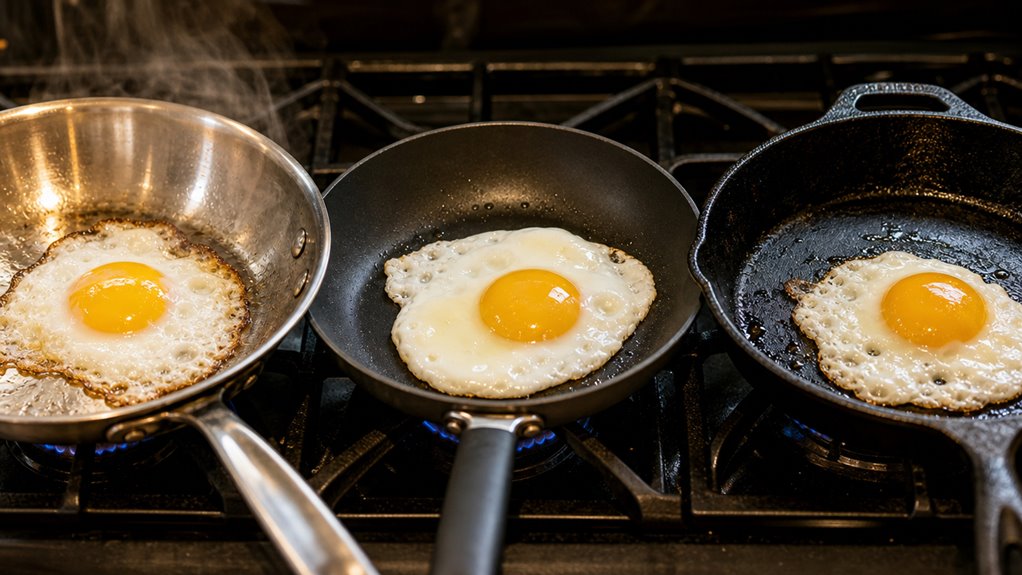
Stainless steel pans cause eggs to stick when the cooking surface is either too cool or coated with too little fat, because the metal’s microscopic pores bond directly with egg proteins as they set.
Heat management is the central factor: warming an empty stainless pan until a water droplet beads and rolls across the surface signals that the metal has expanded enough to close those pores and accept a fat layer evenly.
Adding oil or butter at that point creates a thin film that behaves similarly to a non-stick surface, separating the egg proteins from direct contact with the metal.
Lowering the heat the moment eggs enter the pan then allows the proteins to set gradually and release on their own without scorching.
Understanding how temperature and fat interact across each stage of cooking shapes every result that follows.
A medium-low setting around 320 °F holds a gentle sizzle and keeps the whites from turning rubbery.
Why Eggs Stick and How Heat Control Prevents It
Heat the pan before you add anything, then watch the water droplets bead and roll across the surface; that simple test tells you the stainless steel is hot enough to keep egg proteins from latching onto the metal.
Once the pan settles at medium‑low, the proteins in the whites coagulate quickly but don’t have a chance to bind to the metal because the fat you add creates a slick barrier.
If you start too cold, the eggs sit on a bare surface and the proteins grip the tiny irregularities, causing stubborn sticking.
Too hot, and the proteins burn, forming a crust that clings.
The initial sticking phase occurs when raw egg proteins are loose and grab the pan’s microscopic pores.
The Technique That Makes Stainless Behave Like Nonstick
Mastering the water‑bead test lets your stainless steel pan behave almost like a nonstick surface. Heat the pan over medium‑high, then sprinkle a few drops of water. When the droplets bead and glide across the surface, that is the Leidenfrost effect. The pan is ready. Reduce the heat to medium‑low, add butter or oil, and let it melt before the egg hits the surface. The fat spreads into a thin barrier that keeps egg proteins from bonding to the metal, so they slide out cleanly. Timing matters; add fat after the beads form, not before, or you’ll smoke the oil and lose the non‑stick illusion. This technique prevents sticking by ensuring the pan reaches the Leidenfrost temperature before any food contacts it.
| Step | Temperature | Action |
|---|---|---|
| 1 | Medium‑high | Preheat pan |
| 2 | Medium‑high | Water‑bead test (Leidenfrost) |
| 3 | Medium‑low | Lower heat |
| 4 | Medium‑low | Add fat |
| 5 | Medium‑low | Cook egg |
| Pre-Seasoned Cast Iron Skillet 5 Inch Mini Deep Pan with Handle Black |  | Compact Choice | Material: Cast iron | Pre‑Seasoned Surface: Pre‑seasoned natural non‑stick | Oven‑Safe: Oven‑safe | VIEW LATEST PRICE | Read Our Analysis |
| Pre-Seasoned Cast Iron Skillet Black 6 Inch Mini Frying Pan with Handle |  | Outdoor Ready | Material: Cast iron | Pre‑Seasoned Surface: Pre‑seasoned natural non‑stick | Oven‑Safe: Oven‑safe (max 250 °C) | VIEW LATEST PRICE | Read Our Analysis |
| Hiceeden 4‑Pack Mini Cast Iron Skillets 4‑inch Non‑stick | 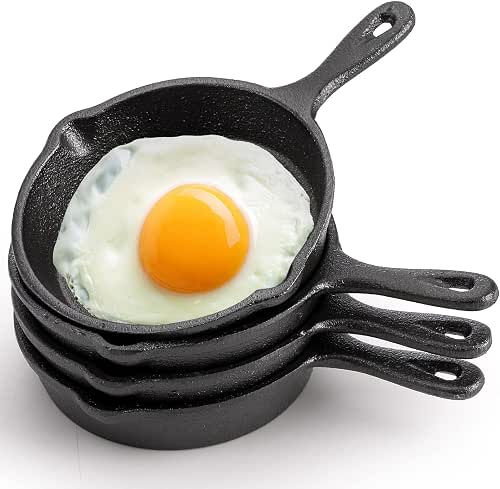 | Small‑Batch Excellence | Material: Cast iron | Pre‑Seasoned Surface: Pre‑seasoned (hand‑polished) | Oven‑Safe: Oven‑safe | VIEW LATEST PRICE | Read Our Analysis |
Links to Amazon are affiliate links. Buying through one costs you nothing extra and helps fund the research.
What Each Surface Does With an Egg
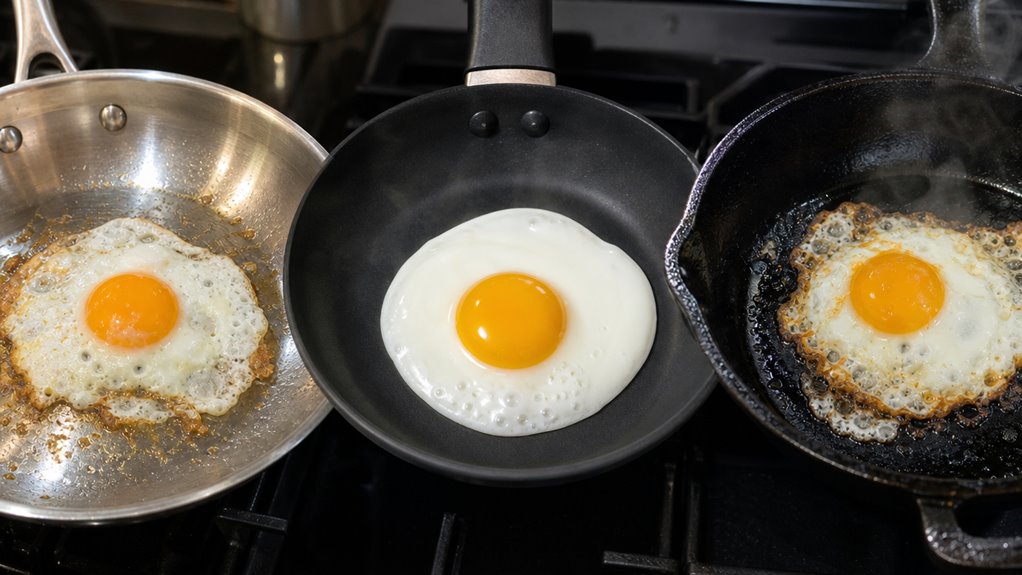
Each cooking surface interacts with an egg differently based on its material properties and the technique it demands. Non-stick coatings release eggs with minimal fat because the surface resists adhesion by design, though the coating typically degrades after two to three years of regular use.
Cast iron builds a polymerized oil layer through repeated seasoning, which creates reliable egg release and can hold up for generations with consistent maintenance.
Stainless steel requires a preheated pan, a quick water‑droplet test to confirm temperature, and a thin layer of fat. When those conditions align, eggs release cleanly, and the surface also develops fond that supports browning in other cooking. The details behind each material’s behavior, and what shapes long‑term performance, are worth examining closely.
Nonstick Release, Cast Iron Seasoning, and Stainless Skill
When you pour a beaten egg onto a non‑stick pan, the PTFE or ceramic coating does most of the work, letting the protein slide with barely a whisper of fat. The coating’s ultra‑low surface energy smooths out microscopic bumps, so you need only a thin smear of butter to keep the egg gliding. On a cast‑iron skillet, the magic comes from a seasoned layer of polymerized oil that fills the pores and creates a carbon‑rich, hydrophobic film. Heat the pan, add a splash of oil, and the egg releases cleanly once it sets. A stainless steel pan demands a different trick: preheat until a water droplet beads, drop the heat, then coat the surface with oil. That temporary film acts as a non‑stick barrier, letting the egg slide without sticking. Each surface works, but you must respect its technique.
Why Nonstick Releases Eggs Easiest but Cast Iron Lasts Generations
Usually the egg slides out of a non‑stick pan with almost no effort because the PTFE coating has an ultra‑low surface energy that repels the protein and moisture.
The coating’s hydrophobic, oleophobic nature creates a thin lubricating film, so weak Van der Waals forces are the only thing holding the egg to the surface.
In contrast, a cast iron skillet relies on a polymerized seasoning layer that mimics a thin plastic barrier. That layer isn’t as perfect as PTFE, so you may need a little more oil, but it protects the metal and can be rebuilt indefinitely.
The seasoning’s durability means the skillet can last generations, while the nonstick pan’s coating wears away after a few years of use.
When a Stainless Steel Pan Beats Nonstick and Cast Iron
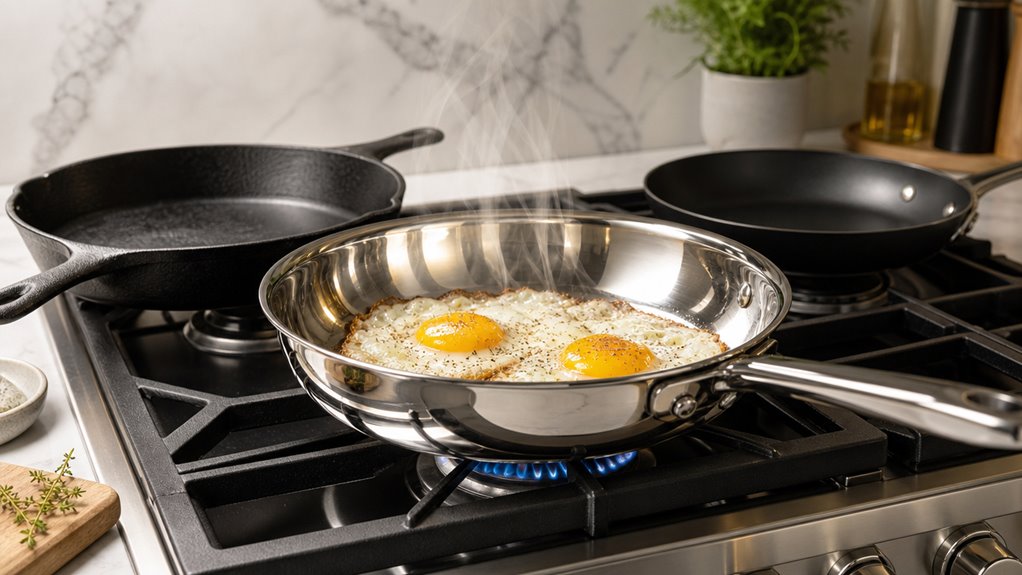
Stainless steel outperforms nonstick and cast iron for eggs when the goal is a crisp, lacy edge and a developed fond. A nonstick coating actively prevents both, and cast iron’s slower thermal response makes them harder to control.
A well-preheated stainless pan reaches the surface temperature needed for proteins to release cleanly without any coating, while the bare metal surface remains open to deglazing and high-heat sautéing once the eggs are done.
That versatility depends entirely on mastering the preheat-and-fat technique; without it, the same properties that create fond cause sticking.
The details behind getting that technique right shape every outcome worth understanding here.
Fond, Browning, and the Jobs Beyond Eggs
Stainless steel lets you build a quick, crisp edge on eggs while simultaneously laying down a caramelized fond you can deglaze for sauces. The fond forms as browned bits that dissolve into a pan sauce, giving you flavor that nonstick simply can’t provide.
You’ll notice the browning is fast and controllable, unlike cast iron’s heavy heat retention which can overshoot. When you finish eggs and add wine or broth, the deglaze pulls those caramelized bits into a silky gravy. Nonstick keeps the surface clean, but it suppresses that browning and limits post‑egg sauces.
Cast iron holds heat well for searing steaks, yet it’s slower to respond when you need to shift from egg to sauce. Stainless offers the best balance for versatile, flavor‑building cooking.
Why a Stainless Steel Pan Cooks Eggs Cleanly Only With the Right Heat
The caramelized edge a cast iron skillet delivers can be reproduced in stainless steel, but only if you respect its narrow temperature sweet spot. Preheat the pan until a water droplet beads and rolls. That tells you the metal has expanded and the microscopic pores are sealed. Then lower the heat, add a thin layer of oil, let it shimmer, and finally slide in room‑temperature eggs. The fat creates a temporary low‑friction film, so the eggs set, contract slightly, and release cleanly, mimicking nonstick behavior without a coating. Mastering this heat window makes stainless a viable alternative to nonstick for eggs, though it demands patience and a reliable stove.
| Step | What to Do |
|---|---|
| 1. Preheat | Medium heat, 2 min, water bead test |
| 2. Cool Slightly | Reduce to low‑medium‑low |
| 3. Fat & Egg | Add oil, then butter, pour eggs |
The Durability Trade-Off Behind Each Pan
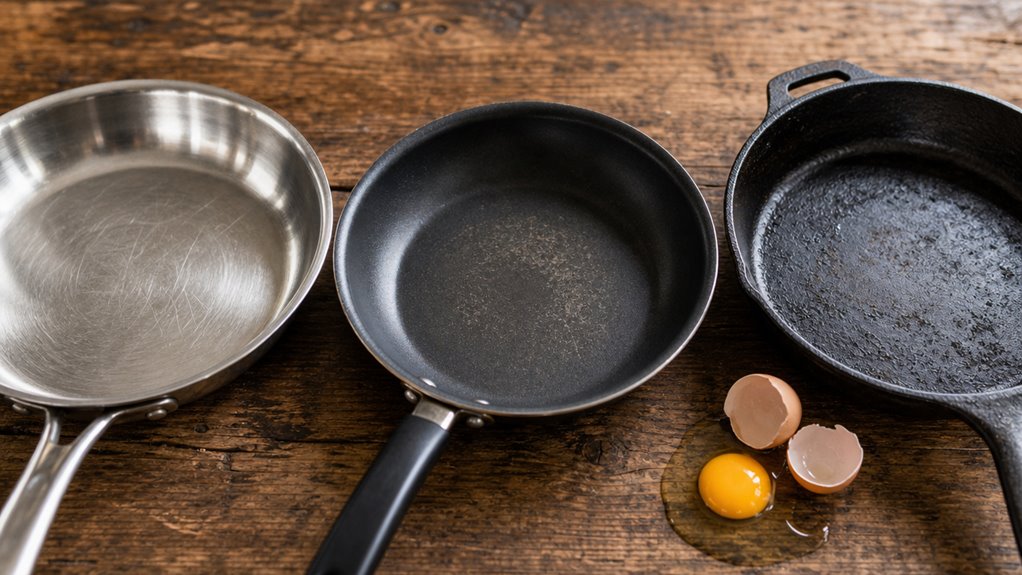
Every pan material involves a durability trade-off between short-term convenience and long-term surface integrity. Non-stick coatings typically degrade within a few years, eventually causing food to stick and the coating itself to flake.
Cast iron and stainless steel maintain their cooking surfaces for decades. Cast iron does it through a renewable polymerized oil layer built up over time, and stainless steel through a hard alloy composition that resists peeling by design. Choosing between these materials means weighing how much daily ease you’re willing to trade for how little maintenance you want to perform over the life of the pan.
The details behind each surface type reveal why that trade-off plays out differently depending on how and what you cook.
Coatings That Peel Versus Surfaces That Last
When you heat a nonstick skillet past its design limit, the thin PTFE or ceramic film starts to crack and lift, and every scratch from a metal spatula or a rough scrubber widens those cracks.
That coating wear signals the end of pan durability; once the film peels, you’re left with exposed metal that sticks and can trap food.
Uncoated stainless steel and cast iron avoid this failure mode because they’ve no bonded layer to separate.
Stainless relies on a self‑healing chromium oxide skin that endures decades, while cast iron’s seasoning is a polymerized oil layer you can rebuild if it wears.
The trade‑off is clear: coated pans give instant release but eventually need replacement; uncoated surfaces demand technique but last generations.
Where Nonstick Wears Out and Cast Iron and Stainless Endure
If you push a non‑stick skillet past its design temperature, the PTFE or ceramic coating starts to crack, peel, and lose its slickness within a couple of years. The coating’s life usually caps at two to three years, especially if you overheat, use metal utensils, or toss it in the dishwasher. Correcting those three habits is most of what day-to-day non-stick pan care amounts to, and it is the difference between a two-year pan and a five-year one.
Scratches and stacked storage speed the wear, so you’ll notice eggs sticking sooner than expected.
Cast iron and stainless steel don’t have that single‑point failure. A seasoned cast‑iron pan can be renewed indefinitely, and a well‑made stainless pan tolerates high heat and metal tools without coating loss.
Their durability hinges on warping or handle quality, not surface breakdown. Non‑stick fails at the coating; cast iron and stainless steel endure far longer.
Which Pan Wins for Your Eggs (And Your Kitchen)
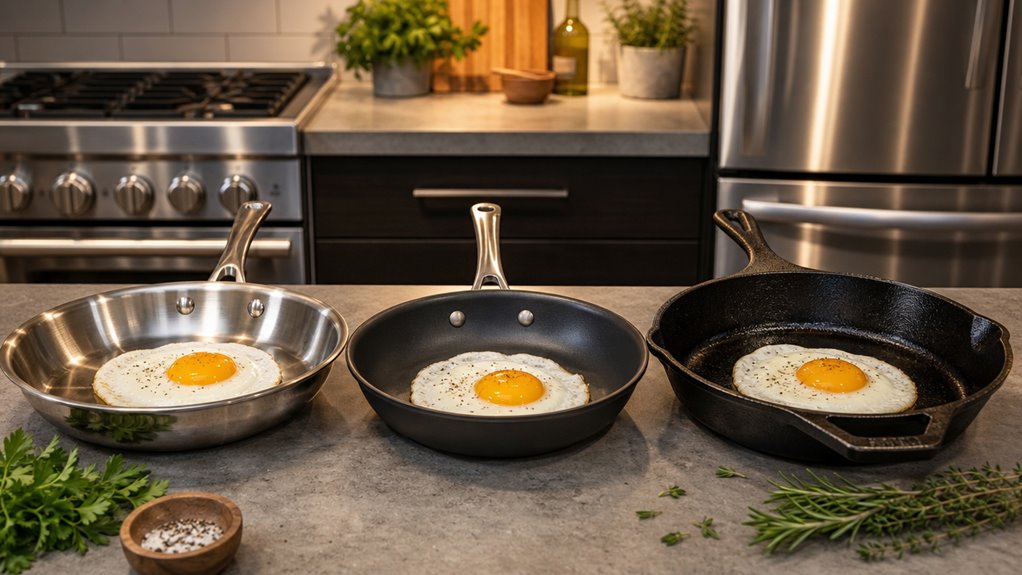
The pan that works for cooking eggs depends on the material, how it handles heat, and how much maintenance a cook is willing to do. Cast iron holds heat well and can last a lifetime, but it requires regular seasoning and a properly heated surface before the eggs go in.
Stainless steel allows for browning and works across many cooking tasks, though it demands adequate preheating and enough fat to prevent sticking. Non-stick coatings release eggs with minimal effort, making them a practical choice for everyday use, but the coating typically thins over time and will eventually need replacing.
Each material involves a real trade-off between ease of use, durability, and cooking performance that the sections ahead examine in detail.
Matching the Pan to Skill, Patience, and What Else You Cook
Because your kitchen routine, how patient you are, and what else you cook all shape which skillet will actually work for you, the choice isn’t just about “best egg pan.” A non‑stick pan lets you toss an egg in and slide it out with almost no fuss, but the coating wears down after a few years and you have to avoid metal tools and high heat.
- Stainless steel – requires a hot pan, a thin oil film, and a water‑droplet test before the egg hits. It rewards precision and lets you sear sauces later.
- Cast iron – relies on a well‑built seasoning layer; you must preheat slowly and keep the surface oiled.
- Non‑stick – minimal skill needed, but the coating degrades and limits high‑heat tasks.
- Your other dishes – if you deglaze or bake, stainless or cast iron fit better, while non‑stick stays limited to low‑heat, quick‑flip meals.
Matching the Right Egg Pan to the Under-$30 Ceiling
You’ll find the best egg pan under $30 by weighing three things: how easy the pan lets the egg slide out, how long the surface will hold up, and what else you’ll cook with it. A budget non‑stick skillet gives the smoothest release right out of the box, but the coating will thin after a couple of years and can’t handle high heat. A cheap stainless pan can last decades, yet you’ll need to preheat until a water droplet beads, add fat, then add the egg. Skip that order and it sticks. The same weighing of material against upkeep runs through our compact cookware picks for small kitchens. A pre‑seasoned cast‑iron skillet under $30 will hold up forever, but you must heat it slowly and season it regularly; yes, eggs can stick to cast iron if the seasoning is uneven. Choose the best pan for eggs that matches your patience and the other dishes you plan to make.
Frequently Asked Questions
Can I Use Metal Utensils on Each Pan Without Damage?
You can use metal utensils on stainless and cast‑iron pans without damage, but avoid sharp edges on cast iron until it’s seasoned. Non‑stick pans require silicone, wood, or nylon tools to preserve the coating.
How Does a Pan’s Weight Affect Egg Cooking Speed?
You’ll notice that heavier pans keep temperature steady, so once preheated they cook eggs faster and more evenly, while lighter pans heat up quickly but lose heat when the eggs hit, slowing the set.
Do I Need to Pre‑Season a Stainless Pan Before the First Egg?
You don’t have to pre‑season a stainless pan, but a quick oil‑heat “dance” before the first egg creates a thin, non‑stick film. Preheat, add butter, then let the egg glide effortlessly.
What Is the Best Oil Type for Seasoning Cast Iron for Eggs?
You should start with a thin flaxseed‑oil layer, then build a lard‑or‑tallow finish; both give a durable, non‑stick surface that lets eggs slide easily while lasting generations.
Can I Transition a Non‑Stick Pan to Cast‑Iron Seasoning?
No, and you should not try. The coating can’t transform into cast‑iron; trying will damage the surface, release fumes, and ruin the pan.
Conclusion
You’ll see the egg glide from a well‑heated stainless pan, but only if you add enough fat and wait for the surface to shimmer. Cast iron gives a similar glide once its seasoning is thick, though it needs regular oiling and a longer warm‑up. Non‑stick slides instantly, yet its coating wears out within two to three years. Choose the pan that matches how much care you’re willing to give your breakfast.
| 10‑Inch Cast Iron Skillet with Pour Spouts Natural Nonstick | 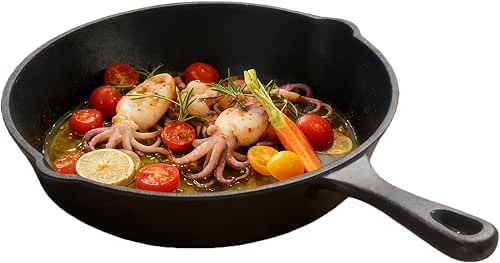 | Best For Beginners | Material: Cast iron | Pre‑Seasoned Surface: Unseasoned (requires initial seasoning) | Oven‑Safe: Oven‑safe (any temperature) | VIEW LATEST PRICE | Read Our Analysis |
| 4-Pack Mini Cast Iron Skillet Set 6‑Inch Pre‑Seasoned Non‑Stick | 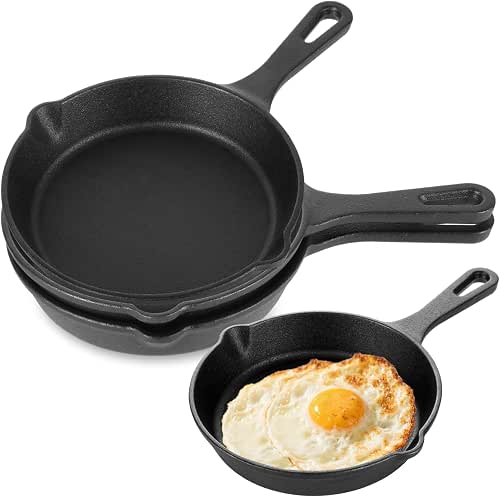 | Value Pack | Material: Cast iron | Pre‑Seasoned Surface: Pre‑seasoned non‑stick | Oven‑Safe: Oven‑safe | VIEW LATEST PRICE | Read Our Analysis |
| Mercer Culinary Pre-Seasoned Cast Iron Skillet 8-Inch | 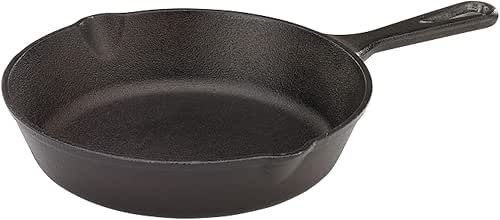 | Chef’s Choice | Material: Cast iron | Pre‑Seasoned Surface: Pre‑seasoned with natural vegetable oil | Oven‑Safe: Oven‑safe | VIEW LATEST PRICE | Read Our Analysis |
Links to Amazon are affiliate links. Buying through one costs you nothing extra and helps fund the research.

Michael Haralson worked in professional kitchens from 1979 to 1992: San Diego restaurants, six years with a catering company beside an Austrian chef, and two summers as a cook on the Finland to Sweden cruise route. He then built a fifteen-year career at Nokia. It began in product marketing and product management, where technical specifications and supplier evaluation were part of the work, and grew from a few countries to a region to global roles, then into sales and corporate strategy. That took him to Beijing for three years, where he spent many weekends in a different province trying the local food and took cooking classes. He has eaten in more than 40 countries and has been shown the kitchens of restaurants in Southern Europe. At home in Finland he cooks Cantonese, Sichuan and Mediterranean food, and still uses the cast iron skillet he bought in 1992. He is the author of Buy It Once, Book One of The Researched Kitchen, and writes here about the balance between kitchen tools that cost too much and those that fail too soon.